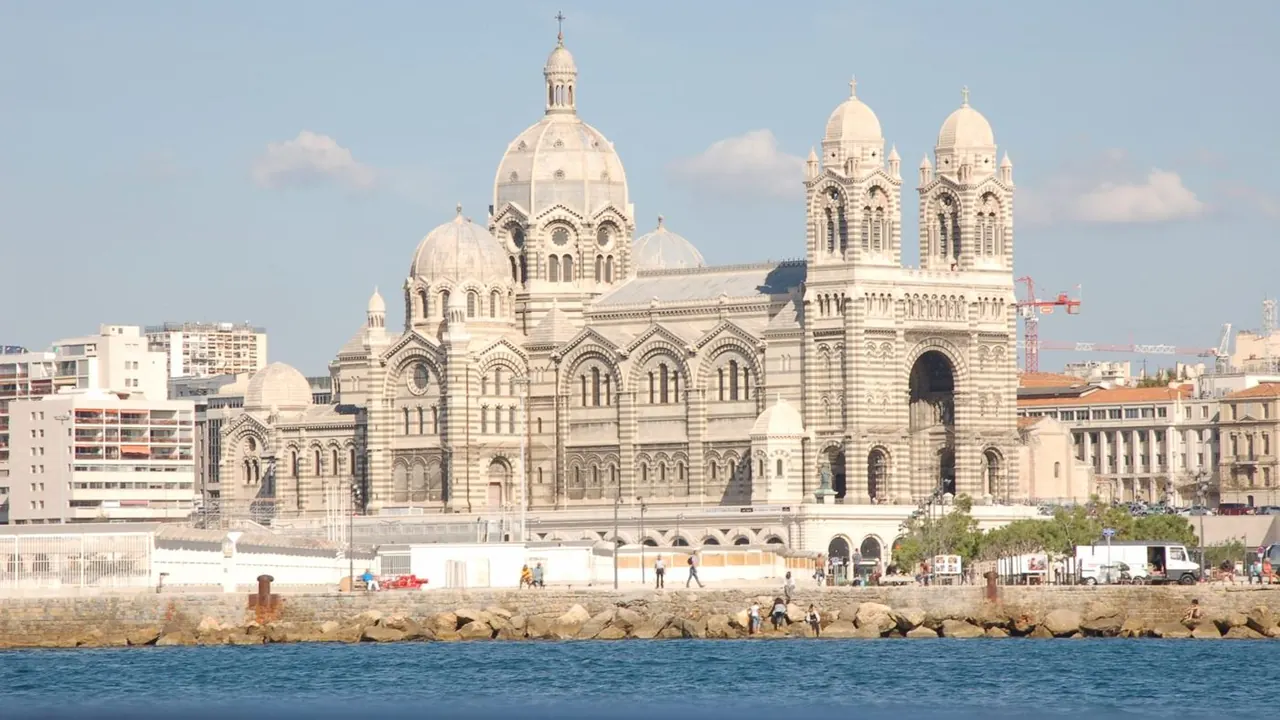
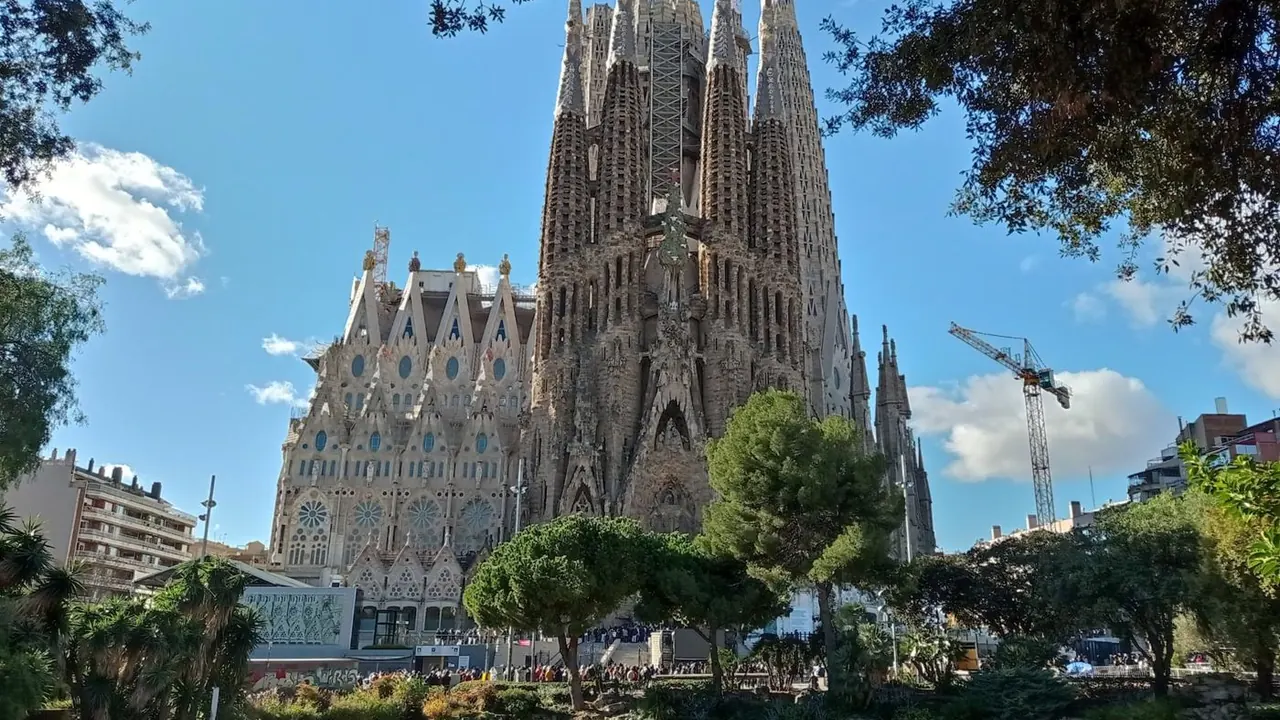
Photos: Marseille by Charlotte Noblet, CC BY-SA 3.0, cropped; Barcelona by Canaan, CC BY-SA 4.0, cropped.
Marseille or Barcelona?
Our verdict in twelve categories, each scored against the same fixed benchmark cities, and the climate month by month, so you can choose for your trip.
Choose Marseille for
- nature and the outdoors
- day trips
- prices
Marseille suits travellers who care more about the landscape around a city than the sights inside it. The Calanques national park starts at the southern suburbs, so a day can be a cliff path and a swim in a turquoise inlet, and Aix, Arles, Avignon and Cassis make it a natural base for Provence. You need to be fine with a louder, rougher port city that takes more effort to get around.
Choose Barcelona for
- shopping
- families
- nightlife
Barcelona is the better pick when the city itself is the reason for going. Gaudí's buildings and the Gothic Quarter could fill a week, the food and late nights run deeper, the metro takes you almost everywhere, and children have plenty to do. The beach is an easy afternoon add-on rather than the main event.
Scoreboard
Twelve categories on one fixed scale from 0 to 100. The shaded stretch is the gap between the two.
Your match
Pick a travel style or drag the sliders, and both match scores follow your weighting.
Wins on nature and the outdoors and day trips with your weighting.
Wins on shopping and families with your weighting.
What matters to you?
Category by category
What the scores mean for a trip.
Beaches & swimming
On the beach the two are close, but they feel different. Barcelona has one long run of sandy city beaches, from Barceloneta to Mar Bella, reached by metro or on foot and good for a swim after sightseeing. In midsummer they are crowded, with pickpockets and hawkers on the sand. The quieter sand is a short train ride away in Sitges or along the Maresme.
Marseille's city beaches at the Prado are shingle and imported sand, and locals also swim off the rocks at the Vallon des Auffes. The real attraction is the Calanques. The swimming there is far more beautiful, in clear water beneath white cliffs, but getting there by boat or on foot takes up half a day.
Food & drink
Barcelona is the stronger food city. Catalan cooking has a complete repertoire of its own, from suquet to calçots, and there is a whole network of covered markets beyond the Boqueria. Sant Antoni, Poble Sec and Gràcia are full of good places, from cheap workers' set lunches to some of Europe's most ambitious tasting menus.
Marseille's cooking is narrower but has more character. Bouillabaisse is a long, sit-down meal in the Corniche harbours, and everyday eating means panisses, wood-fired pizza and the North African bakeries and grocers of Noailles. In both cities, avoid the tourist menus on the main strip: the Rambla in one, the Vieux-Port quays in the other.
Culture & sights
For sights, Barcelona is well ahead. The Modernista buildings, from the Sagrada Família to La Pedrera and the Palau de la Música, exist nowhere else, and underneath them sit the Roman walls and medieval squares of the Gothic Quarter. Add the Picasso Museum and the MNAC's Romanesque frescoes, and a week goes by easily.
Marseille is older, founded by Greek sailors, but its heritage is spread across a working city rather than gathered in one preserved centre. Notre-Dame de la Garde, the forts and MuCEM at the harbour mouth, Le Panier's Vieille Charité and Le Corbusier's Cité Radieuse are each worth the trip. Seen together, though, they fill two or three days rather than a week.
Nightlife
Barcelona's nights are bigger and later. Dinner runs to eleven, the clubs only fill around two, and each district has its own crowd: cellar cocktail bars in the Born, scruffy bars in the Raval, outdoor drinking in Gràcia's squares and pintxos along Blai street. Serious electronic club nights keep going all year.
Marseille is about terraces and the street. You drink pastis on the Vieux-Port in the evening sun or sit at graffiti-covered bars around Cours Julien and La Plaine. Its club nights are smaller and spread across warehouses and rooftops, the scene thins out in winter, and many people take a taxi home late at night.
Nature & outdoors
Marseille has the edge for nature, because it has a national park inside its own city limits. The Calanques coastal path, the inlets of Morgiou and En-Vau, world-class sport climbing and kayaking or diving around the Riou archipelago are all close to town. Sainte-Victoire and the Sainte-Baume forest are within an hour.
Barcelona's outdoors is gentler. There is the wooded Collserola park with the flat Carretera de les Aigües, the gardens of Montjuïc and watersports off Mar Bella. Montserrat's pinnacles and the Costa Brava coves are further out. Neither city is good for hiking in midsummer, and in Marseille the massifs can close on days of high fire risk.
Day trips
Both are excellent bases. Marseille just edges ahead because so many famous names are so close. Aix is half an hour away, Cassis even closer, and Arles and Avignon are about an hour by train. Nîmes, the Pont du Gard and the Luberon villages fit into a long day, though the villages really need a car.
Barcelona's day trips are spread across Catalonia instead. The fast train reaches Girona's walled town in under forty minutes, and Figueres has the Dalí museum. You can also head to Tarragona's Roman amphitheatre, take a half-day at Montserrat, or visit the cava cellars of the Penedès.
Good for families
Barcelona is much the easier city with children. It has a proper aquarium, the hands-on CosmoCaixa, a zoo in the Ciutadella park and a funicular up to the Tibidabo funfair, with PortAventura's theme parks an hour south. Spanish restaurants also welcome children late into the evening.
Marseille has none of those big attractions, and its museums are aimed at adults. Days there are built around the Prado beaches, Parc Borély's lake and boat trips to the Château d'If. Steep streets and heavy traffic make a pushchair harder work there than in Barcelona's old town, which is itself already cramped.
Getting around
Barcelona is far simpler to move around. The centre is flat, so you can walk from the Gothic Quarter up the Eixample's grid to Gràcia in under an hour. The metro is extensive, and bike lanes cover the longer stretches. Only Park Güell, Montjuïc and Tibidabo involve a climb.
Marseille's walkable core is steep in places, and it has just two metro lines. The beaches and Calanques trailheads depend on buses that get stuck in traffic, and some coves are a long walk from the last stop. The small ferries across the port and out to Pointe Rouge help. Unlike in Barcelona, a car is genuinely useful here, though only for getting out to Provence.
Shopping & style
Barcelona offers far more shopping. The Passeig de Gràcia has the big fashion houses among Modernista façades, and the Born, Gràcia and the Raval have independent designers, craft shops and vintage. You can take home espadrilles and ceramics.
Marseille is better for a few local things than for fashion: green cubes of olive-oil soap, santon figures from the Le Panier workshops and the fabrics and teas packed into Noailles. Rue Paradis and La Joliette cover the basics, but anyone after a long boutique afternoon will run out of streets quickly.
Affordability
Overall costs are much the same, but the money goes in different places. In Barcelona the sightseeing itself is expensive: the entry fees for the Gaudí buildings and the city tourist tax add up quickly. Set lunches, tapas bars and transport passes help balance that out.
In Marseille the main attraction costs nothing, since walking in the Calanques is free, and several museums charge little. Sit-down meals cost what they normally do in France. In both cities, rooms near the seafront rise sharply in July and August.
Live music & performing arts
Barcelona offers more big occasions. There is opera and ballet at the historic Liceu, concerts under the stained glass of the Palau de la Música, and early summer brings Sónar and Primavera Sound, with the Grec festival on Montjuïc's open-air stage. Most spoken theatre is in Catalan or Spanish.
Marseille's arts lean popular and Mediterranean. It has an art deco Opéra, serious drama at La Criée and a mixed programme at the Friche la Belle de Mai, a converted tobacco factory. The city has deep roots in French hip-hop, and the autumn Fiesta des Suds brings in music from around the world.
Wellness & relaxation
Neither city is a place to rest, and both are noisy at the centre with no bathing tradition of their own. Barcelona has a few Arab-style bath houses in the old town that visitors use. Marseille's hammams belong mostly to locals.
The quiet moments differ too. In Barcelona they are evening walks in Collserola or a terrace in a Gràcia square. In Marseille it is a long lunch at a Corniche harbour. Anyone who mainly wants to rest is better off staying in Sitges or another coastal town near Barcelona, or in Cassis or a country house near Marseille.
When should you go?
Pick your month. The climate figures are measured averages, not a forecast.
Marseille in July
Barcelona in July
Daytime high, °C
Rainfall in the month, mm
Temperature and rainfall are climate normals, averaged over the years shown. Marseille: 1991-2020 normals, Marseille / Marignane (20.6 km from centre). Barcelona: 1991-2020 normals, Barcelona / Aeropuerto (14.4 km from centre).
Both cities have the same basic Mediterranean year, but Marseille goes to extremes. Its summer is hotter, with highs around 31°C in July, and much drier, with only about 11mm of rain that month. It is also noticeably sunnier from spring to autumn. Barcelona stays a degree or two cooler in midsummer, and its sea is warmer: it reaches about 25°C in August, against roughly 22°C off Marseille. Barcelona's water is pleasant from June to late September. In Marseille the sea is cooler and the mistral can chill it from one day to the next.
For walking the streets and the hills, May, June and late September to October are the best months in both. July and August are hard work on foot, and harder in Marseille. Heavy autumn rain arrives in both in September and October, at about 80mm a month. Barcelona dries out in November, but Marseille stays wet. Winters are mild in both, though Marseille is a little colder and Barcelona gets slightly less winter sun.
Which traveller are you?
For a food and nightlife trip, Barcelona is clearly the better choice. Catalan cooking, the market counters and a serious tasting-menu scene lead into bars that fill after eleven and clubs that run until dawn. Marseille's terraces around Cours Julien are good fun but smaller, and they quieten down in winter.
On a family trip with children, Barcelona makes things far easier. The aquarium, CosmoCaixa, the zoo and the Tibidabo funfair are all reached by metro, and PortAventura is an hour away. Marseille has no zoo, aquarium or theme park, so families there rely mostly on the Prado beaches and boat trips.
On an outdoors trip, Marseille wins. You can walk to Sugiton or En-Vau from the city's own edge, climb the limestone cliffs, or kayak and dive around the Riou islands. Barcelona has Collserola and Montserrat, which are pleasant and worthwhile but not as dramatic.
Before you go
| Measure | Marseille | Barcelona |
|---|---|---|
| Official language | French | Spanish |
| Currency | Euro (EUR) | Euro (EUR) |
| Sockets | CE230 V, 50 Hz | CF230 V, 50 Hz |
| Driving side | Right | Right |
| Time zone | UTC+1, UTC+2 in summer | UTC+1, UTC+2 in summer |
| Emergency number | 112 | 112 |
| Elevation | 0 m | 9 m |
| Main airport | Marseille Provence Airport (MRS)21 km from centre126 non-stop destinations | Josep Tarradellas Barcelona-El Prat Airport (BCN)13 km from centre235 non-stop destinations |
| Public holidays this year | 11 days | 14 days |
By the numbers
| Measure | Marseille | Barcelona |
|---|---|---|
| City population | 886,040 | 1,731,649 |
| People per km² | 3,683 | 17,094 |
| Museums within 10 km | 27 | 95 |
| UNESCO World Heritage sites within 50 km | 1 | 3 |
| Swim season, months above 21 °C | 2 months | 3 months |
Where else could you go?
Every comparison below shares a destination with this one, so you can follow Marseille or Barcelona somewhere new.