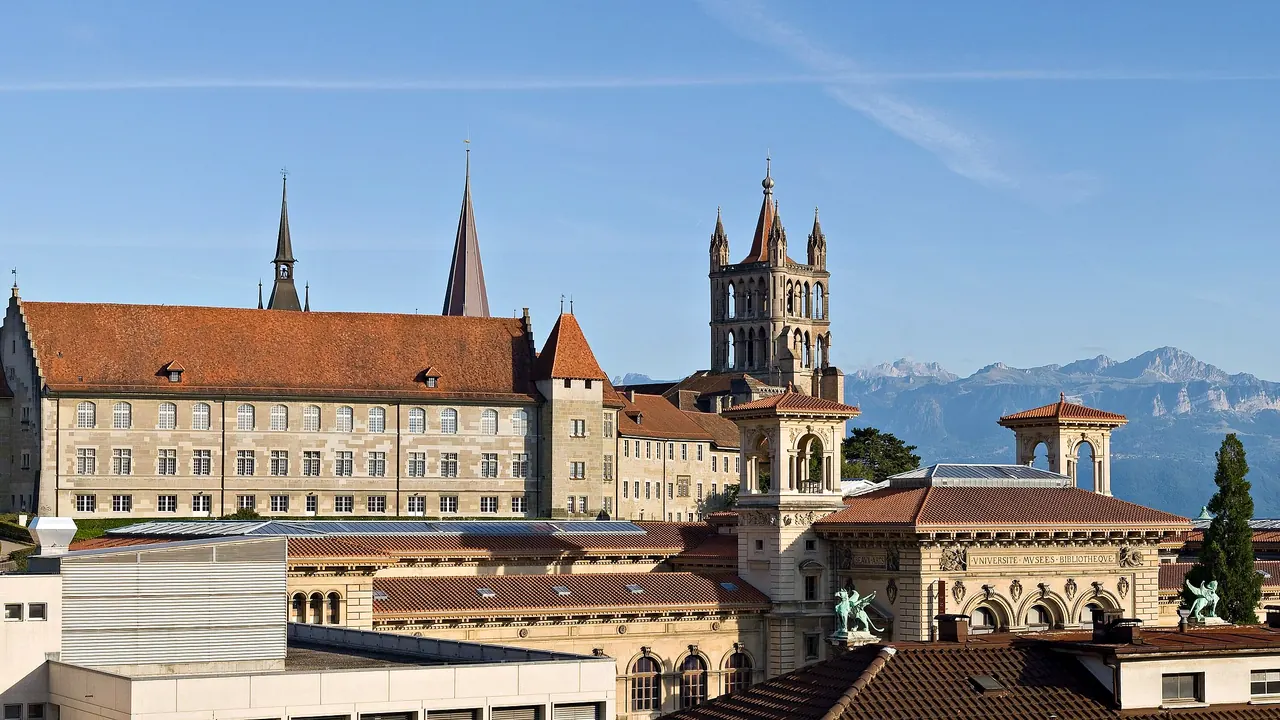
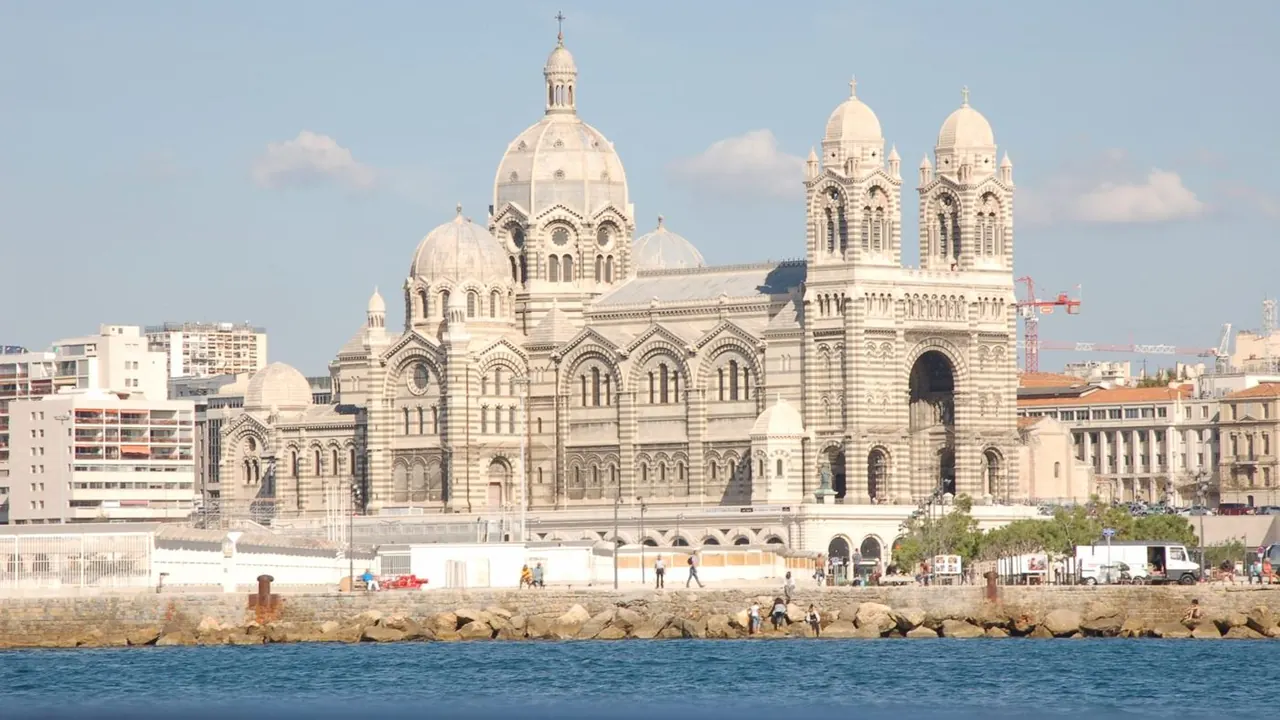
Photos: Lausanne by Christian Mehlführer, CC BY-SA 3.0, cropped; Marseille by Charlotte Noblet, CC BY-SA 3.0, cropped.
Lausanne or Marseille?
Our verdict in twelve categories, each scored against the same fixed benchmark cities, and the climate month by month, so you can choose for your trip.
Choose Lausanne for
- getting around
- families
- wellness
Lausanne suits travellers who want things to run smoothly. The compact lakeside city has a metro that climbs the hill for you, trains to Alpine resorts and Swiss old towns, and the Lavaux vineyards on the doorstep. It works well with children and for anyone after calm lake days and mountain air. The price of all that order is a very large bill, so it is best for a shorter stay or a comfortable budget.
Choose Marseille for
- prices
- beaches
- nightlife
Choose Marseille for the sea, the south and a city with rough edges. It has real swimming from the Prado beaches to the Calanques inlets, a port kitchen that eats cheaply as well as grandly, older and broader heritage, and late terrace nights around Cours Julien. Your money goes much further than in Switzerland, as long as you can live with traffic, noise and some scruffy streets.
Scoreboard
Twelve categories on one fixed scale from 0 to 100. The shaded stretch is the gap between the two.
Your match
Pick a travel style or drag the sliders, and both match scores follow your weighting.
Wins on getting around and families with your weighting.
Wins on prices and beaches with your weighting.
What matters to you?
Category by category
What the scores mean for a trip.
Beaches & swimming
In Lausanne you swim in Lake Geneva, not the sea. You go in from lawns, piers and pebble shores at Vidy, Bellerive and along towards Lutry, and the old Bellerive lido makes a fine summer afternoon. The season is short, though, and a swim fits around the rest of your stay rather than being the point of it.
Marseille is a real seaside city. The Prado beaches give families sand, shingle and lawns, swimmers dive off the rocks at the Vallon des Auffes, and the clear inlets of the Calanques and the Frioul islands make a half-day outing. The only drawbacks are the mistral, which can chill the water overnight, and beach closures after heavy rain.
Food & drink
Lausanne's table is Alpine and lake-based: perch fillets, papet vaudois, fondue in winter, and very good chocolate. Its real strength is Chasselas tasted at growers' caveaux in Lavaux. Away from the top restaurants, the middle range is ordinary and cheap meals are hard to find.
Marseille offers more variety and more fun. You can have a slow bouillabaisse in a Corniche harbour, chickpea panisses and wood-fired pizza for very little, and North African, Comorian and Armenian food in the Noailles market streets, with the morning catch landed on the Vieux-Port quay. Watch out for the tired set menus around the old port.
Culture & sights
Lausanne has a tight, tidy core. Its Gothic cathedral, where a night watchman still calls the hours, stands over steep old lanes. Most of the interest lies in its museums: the Olympic Museum at Ouchy, the Plateforme 10 cluster by the station and the strange Collection de l'Art Brut. Two or three days covers it.
Marseille has more history and more range. It has 2,600 years behind it, the hilltop basilica of Notre-Dame de la Garde, the MuCEM and its harbour forts, the Vieille Charité in Le Panier, the crypts of Saint-Victor, the Château d'If and Le Corbusier's Cité Radieuse. It is spread across a working city rather than kept in a neat old quarter, so expect to walk between sights.
Nightlife
Lausanne's nights out centre on the Flon, a valley of old warehouses that fills with students in its clubs and late bars on Fridays and Saturdays. The old town has wine bars for a quieter evening. Midweek the city goes quiet and drinks cost a lot.
Marseille goes out more often and more loosely. Graffiti-covered bars and pavement tables around Cours Julien and La Plaine stay busy until late, people drink pastis on Vieux-Port terraces, and summer brings warehouse and rooftop parties. A taxi home is wise from some central streets.
Nature & outdoors
Both cities sit right on the edge of first-class scenery, but the landscapes are very different. Lausanne has mountains and vines. The French Alps rise across the lake, the Lavaux terrace path runs to Saint-Saphorin, and the Vaud Alps and the Jura are about an hour away for skiing, glacier trips and long hikes, in winter as well as summer.
Marseille's wild country is limestone above the sea. The Calanques national park starts in the city's suburbs and offers coastal walks to Sugiton and En-Vau, famous sport climbing, and kayaking and diving around Riou. Spring and autumn are the seasons to go, because summer heat and fire risk can close the trails.
Day trips
Both make excellent bases. The difference is how you travel and what you see. From Lausanne, fast trains reach Montreux and the Château de Chillon, Geneva, the arcaded streets of Bern and the cheese dairies of Gruyères, and a boat crosses the lake to Évian, all without a car.
From Marseille you get Provence: Aix and Cassis are close, and there are Roman Arles, the papal palace at Avignon and the Pont du Gard. The towns are easy by rail, but the Luberon hill villages, Les Baux and the Bandol estates really need a car.
Good for families
Lausanne is clearly the easier city with children. The Olympic Museum is built for hands-on play, the aquarium-vivarium shows river and lake life, and Sauvabelin has animals, pedal boats and a wooden lookout tower. Paddle steamers make an outing of their own. The steep streets are hard with a pushchair, and family meals out are expensive.
Marseille has the Prado beaches, Parc Borély and boat trips to the Frioul islands, but no zoo, aquarium or theme park, and its museums are aimed at adults. Traffic, narrow pavements and dirty central streets push most families out to the southern seafront.
Getting around
Lausanne is small, and the m2 metro deals with its one problem by climbing more than 300m from the lakeshore at Ouchy to the upper town. Buses and lake boats cover the rest, and the station links straight into punctual Swiss trains, so you never need a car.
Marseille's centre, from the Vieux-Port to Cours Julien, is walkable, and the metro, trams and port ferries help. The city sprawls, though. Buses to the beaches and Calanques trailheads get stuck in traffic, and driving and parking in the centre are stressful.
Shopping & style
Neither city is a place for serious fashion shopping, but the souvenirs are very different. In Lausanne, Rue de Bourg is the street for a Swiss watch or good chocolate, and a bottle of Lavaux wine is the natural thing to take home.
Marseille's buys are humbler and more local: green cubes of olive-oil soap, painted clay santons from workshops in Le Panier, and fabrics, teas and spices in the packed streets of Noailles. Cours Julien adds a few independent boutiques that Lausanne largely lacks.
Affordability
This is the widest gap between the two cities. Lausanne is expensive in every respect, from rooms and wine to a simple lunch, and the efficient metro does little to bring the total down. Budget visitors picnic by the lake and keep restaurant meals for special occasions.
Marseille is an ordinary French big city for prices. Market food, pizza and North African snacks are cheap, transport costs little, the Calanques are free, and several museums charge little. The main thing to watch is the cost of rooms near the port and beaches in July and August.
Live music & performing arts
The two are close, but they lean in different directions. Lausanne's strength is dance: it is home to the Béjart Ballet and the Prix de Lausanne. The lakeside Théâtre de Vidy stages contemporary work that tours Europe, there is a full opera season, and the Montreux Jazz Festival is a short train ride away in July.
Marseille is more popular and Mediterranean in taste. It has the art deco Opéra, drama at La Criée in the old fish market, and mixed programmes at the Friche la Belle de Mai, along with a strong hip-hop and world music scene that peaks at the Fiesta des Suds in autumn.
Wellness & relaxation
Lausanne is the better place to slow down. You have quiet lakeside promenades, walks through the Lavaux vines and large spas in the grand hotels. Thermal springs are close by at Yverdon-les-Bains and at Lavey-les-Bains, the hottest in Switzerland.
Marseille has a few local hammams and some hotel spas, but the city is loud and dense, and rest comes mainly from a long harbour lunch on the Corniche. Visitors who want real quiet usually stay in Cassis and come into the city for the day.
When should you go?
Pick your month. The climate figures are measured averages, not a forecast.
Lausanne in July
Marseille in July
Daytime high, °C
Rainfall in the month, mm
Where the figures come from
Lausanne's temperatures are measured 40 km from the centre, at Payerne.
Lausanne has no rain gauge within 25 km of the centre, so its rainfall comes from a gridded climate dataset read at the city rather than from a gauge further away.
Temperature and rainfall are climate normals, averaged over the years shown. Lausanne: 1991-2020 (sunshine 1961-1990) normals, Payerne (39.7 km from centre). Marseille: 1991-2020 normals, Marseille / Marignane (20.6 km from centre).
Lausanne is a summer and early autumn city. Only from June to August do days reach the mid-twenties, with July around 26°C, which is warm enough for lake swimming and long evenings on the shore. Rain is spread through the year and is actually heaviest in summer, at about 115mm in July, so expect showers between the sunny spells. From November to February days are cold and grey, with little sunshine in town, and that is when the mountains above the fog come into their own.
Marseille is warmer and much sunnier all year. The sea is pleasant from June to September and peaks at about 22°C in August. July is very dry at around 11mm, but highs near 31°C make midday walking hard work, so late spring and September suit sightseeing and Calanques hikes better. The rain comes in autumn, with heavy showers from September to November, while winter stays mild and bright enough for city walks, unlike Lausanne's grey months.
Which traveller are you?
On a beach and sun trip, Marseille is the obvious choice. It has warm sea from June to September, sandy and shingle beaches at the Prado, and turquoise Calanques coves, while Lausanne offers only a short season of lake swimming from lawns and piers.
On a family trip with young children, Lausanne is easier. It has the hands-on Olympic Museum, an aquarium-vivarium, and pedal boats and animals at Sauvabelin, plus a clean, safe centre and a metro up the hill. Marseille has beaches but little else aimed at children.
On a tight budget, Marseille wins by a wide margin. Snacks from Noailles, cheap public transport and free walking in the Calanques keep costs down, whereas in Lausanne even a simple lunch out hurts and most visitors end up picnicking.
Before you go
| Measure | Lausanne | Marseille |
|---|---|---|
| Official language | French, German, Italian, Romansh | French |
| Currency | Swiss Franc (CHF) | Euro (EUR) |
| Sockets | CJ230 V, 50 Hz | CE230 V, 50 Hz |
| Driving side | Right | Right |
| Time zone | UTC+1, UTC+2 in summer | UTC+1, UTC+2 in summer |
| Emergency number | 112 | 112 |
| Elevation | 495 m | 0 m |
| Main airport | Geneva International Airport (GVA)52 km from centre150 non-stop destinations | Marseille Provence Airport (MRS)21 km from centre126 non-stop destinations |
| Public holidays this year | 9 days | 11 days |
By the numbers
| Measure | Lausanne | Marseille |
|---|---|---|
| City population | 144,873 | 886,040 |
| People per km² | 3,499 | 3,683 |
| Museums within 10 km | 31 | 27 |
| UNESCO World Heritage sites within 50 km | 3 | 1 |
| Swim season, months above 21 °C | - | 2 months |
Where else could you go?
Every comparison below shares a destination with this one, so you can follow Lausanne or Marseille somewhere new.
- Genevavs Lausanne
- Chamonixvs Lausanne
- Bernvs Lausanne
- Annecyvs Lausanne
- Avignonvs Marseille
- Interlakenvs Lausanne