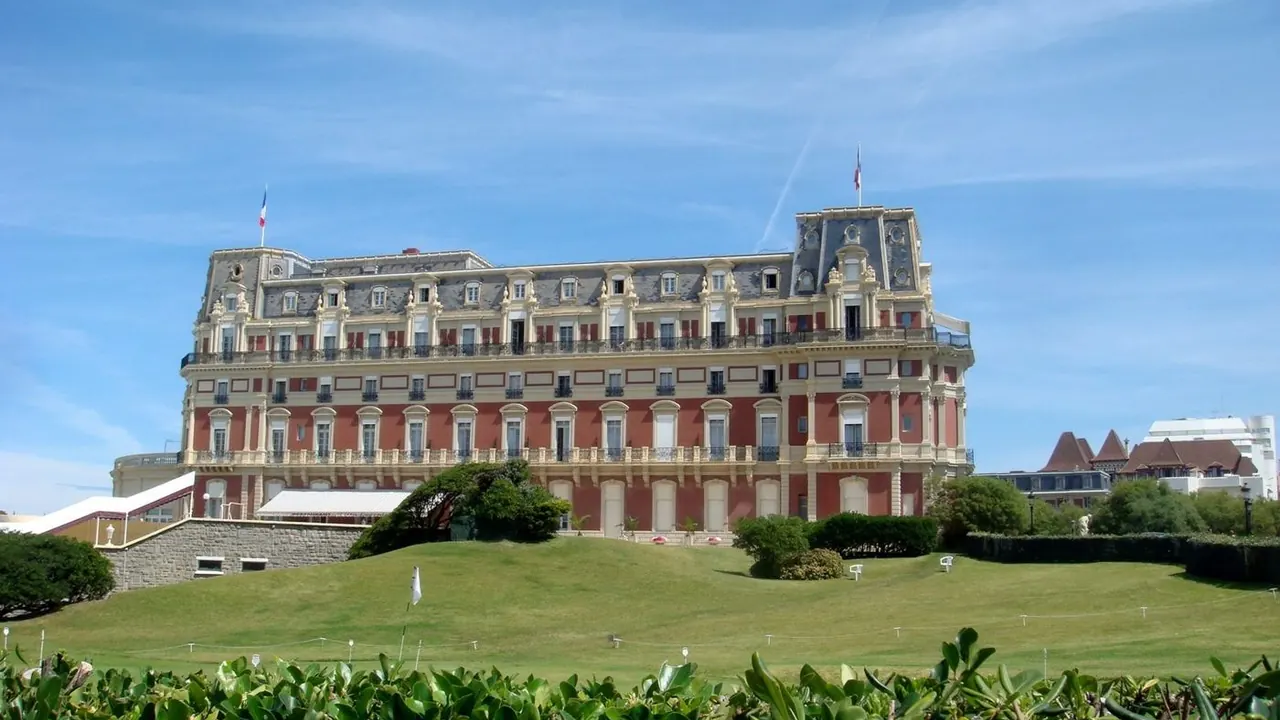
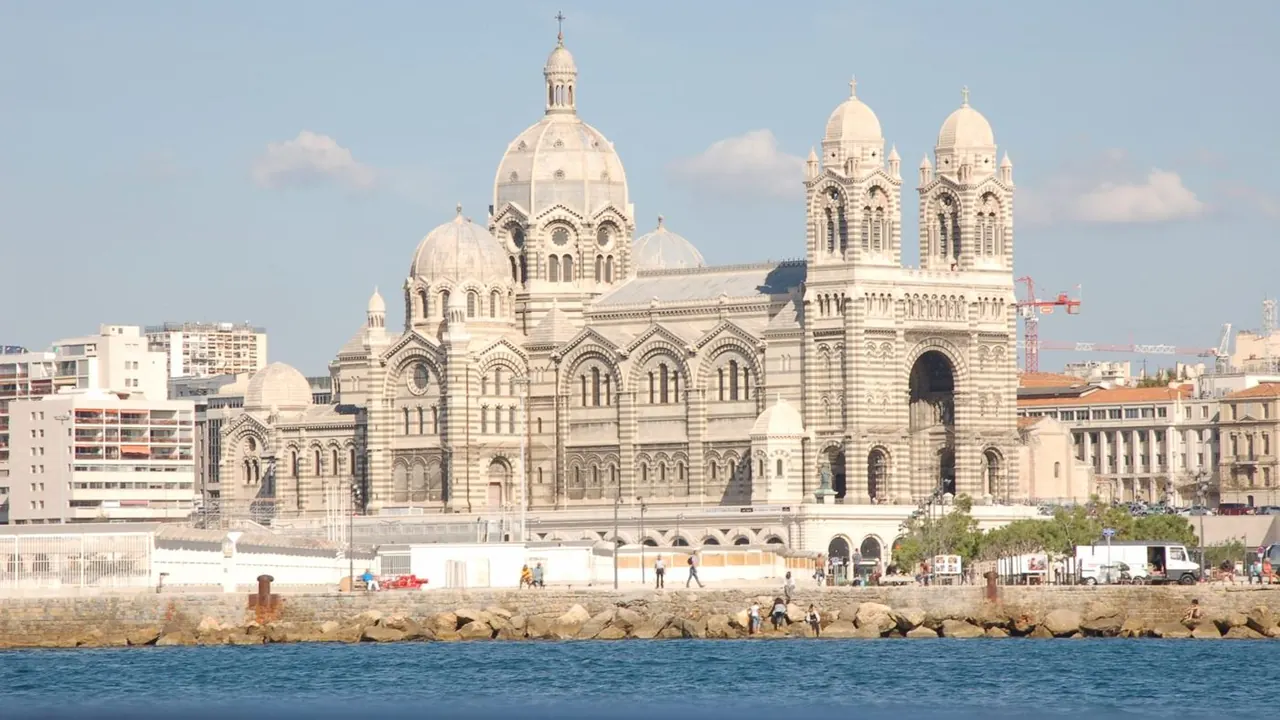
Photos: Biarritz by Lilipiapia, CC BY-SA 3.0, cropped; Marseille by Charlotte Noblet, CC BY-SA 3.0, cropped.
Biarritz or Marseille?
Our verdict in twelve categories, each scored against the same fixed benchmark cities, and the climate month by month, so you can choose for your trip.
Choose Biarritz for
- wellness
- families
- getting around
Biarritz suits a slower, gentler seaside trip: surf lessons, seawater spa days, long Basque lunches, and children paddling in a sheltered cove. It is the better pick for families and for anyone who wants to unwind, as long as they accept Atlantic weather and resort prices.
Choose Marseille for
- culture and sights
- nightlife
- live music and the arts
Travellers who want a real city behind the beach should choose Marseille. It has far more to see, a livelier night out and stronger stages. The Calanques offer serious walking and swimming, Provence is on the doorstep, and it all costs noticeably less. In return you get noise, high-summer heat and a rougher edge.
Scoreboard
Twelve categories on one fixed scale from 0 to 100. The shaded stretch is the gap between the two.
Your match
Pick a travel style or drag the sliders, and both match scores follow your weighting.
Wins on wellness and families with your weighting.
Wins on culture and sights and nightlife with your weighting.
What matters to you?
Category by category
What the scores mean for a trip.
Beaches & swimming
Both give you a proper summer sea, but of very different kinds. Biarritz has wide sandy beaches below the old imperial villa that carry on north into Anglet. This is real Atlantic surf with strong currents, so you swim between the lifeguard flags, and the Port Vieux cove is the only truly calm spot.
Marseille's city beaches at the Prado are shingle and imported sand, and locals also swim from the rocky Corniche inlets. The best swimming is in the clear turquoise Calanques, a half-day outing on foot or by boat. The water there is calmer than in Biarritz, though the mistral can chill it overnight.
Food & drink
Biarritz cooks one regional cuisine well, while Marseille eats like a port that draws on the whole Mediterranean. In Biarritz that means Les Halles, with Bayonne ham, sheep's cheese and Espelette pepper, pintxos at the market counters, and Basque dishes such as axoa and chipirons. Beyond Basque and French cooking there is little else.
Marseille has the wider range. You can sit down to a two-course bouillabaisse in a Corniche fishing harbour, or eat panisses and wood-fired pizza standing up, and Noailles is full of North African, Comorian and Armenian shops. Each has its tourist traps on the water: ordinary seafront terraces in Biarritz, the tired set menus of the Vieux-Port in Marseille.
Culture & sights
This is where Marseille pulls well ahead. Biarritz's heritage is the Second Empire resort itself: the imperial villa, the Art Deco casino, the Russian Orthodox church and the Rocher de la Vierge. Add the aquarium and a small Asian art collection, and two or three days is plenty.
Marseille has some twenty-six centuries of history to explore. There is the MuCEM beside Fort Saint-Jean, the stepped lanes of Le Panier, the early Christian crypts of Saint-Victor, Notre-Dame de la Garde and Le Corbusier's Cité Radieuse. It is spread through a working city rather than neatly preserved, but there is far more of it.
Nightlife
Evenings in Biarritz depend on the season and are fairly modest. In summer there is wine and pintxos around Les Halles, sundowners above the Côte des Basques, a few clubs and the casino. Out of season most nights end after dinner, and people looking for a bigger night head to Bayonne or San Sebastián.
Marseille has a real scene of its own around Cours Julien and La Plaine, with graffiti-covered bars and small music bars full of students. In summer there are also electronic nights in old warehouses and parties on rooftops. It is rougher around the edges, and taking a taxi home late is wise.
Nature & outdoors
Biarritz has surf and the green Pyrenean foothills. Marseille has a whole limestone national park, and that gives it the edge. Life in Biarritz revolves around the waves, with beginner breaks and surf schools along the front. On land there is the Basque Corniche path towards Spain, and La Rhune is within half an hour.
The white limestone Calanques start inside Marseille's city limits. They have one of the great coastal walks of the Mediterranean, famous sport climbing, and kayaking and diving around Riou, and Sainte-Victoire is within an hour. Marseille's limits are summer heat and fire-risk closures. In Biarritz, the limit is rain.
Day trips
From Marseille you can reach the classic towns of Provence, and that list of famous names puts it slightly ahead. Aix is half an hour away, and Arles and Avignon's Palais des Papes are an hour or less by train. Cassis is closer still. Nîmes and the Pont du Gard make a long day, but the bridge itself needs a car or a bus from Nîmes or Avignon.
Biarritz gives you two countries in one stay. San Sebastián is under an hour away, Bayonne is next door, Saint-Jean-de-Luz is a short train ride, and Espelette and Ainhoa lie inland. From either base, the villages are far easier to reach with a car.
Good for families
Biarritz is the more comfortable choice with children. The town is small and calm, with the aquarium's seals and sharks and the ocean science centre for wet days. Older children can take surf lessons, the sheltered Port Vieux cove suits the youngest, and the steep streets are the main nuisance.
Marseille offers the Prado beaches, the lake and lawns of Parc Borély, and boat trips to the Château d'If. It has no aquarium or zoo, though, and its traffic, heat and grubby central streets mean families tend to stay in the south of the city.
Getting around
Neither is hard to get around, but the scale is very different. Biarritz is a compact, hilly town you cover on foot. Buses run to Anglet and Bayonne, the airport is on the edge of town, and coastal trains run south towards Spain.
Marseille sprawls across hills and bays. It has two metro lines, trams and small ferries across the Vieux-Port, but the buses to the beaches and Calanques trailheads crawl in traffic. In both places a car is the practical way to reach the inland villages.
Shopping & style
Neither is a fashion destination, so the difference is in kind. Biarritz shops like a smart seaside town, with surf shops and boutiques between the Place Clemenceau and the market. The things to take home are striped Basque linen, handmade espadrilles, and chocolate or gâteau basque from the bakeries. Bayonne next door adds a few more streets.
Marseille's local buys are green cubes of olive-oil soap and the painted santon figures made in workshops around Le Panier, and Noailles packs fabrics, teas and North African goods into narrow streets. What Biarritz lacks is a big city's everyday shopping: the department stores on Rue Paradis and the large shopping centre at La Joliette.
Affordability
Marseille is easier on the wallet. Biarritz is a fashionable resort, and its summer hotel rooms and seafront meals are priced to match. The main savings come from eating at the market bars, going outside July and August, or staying in Anglet or Bayonne.
Marseille sits mid-range for a large city. Street food from pizza to North African snacks is cheap, public transport and several museums cost little, and walking in the Calanques is free.
Live music & performing arts
For an evening at the theatre or a concert, Marseille offers much more. There is a full opera season in an art deco house, serious drama at La Criée and contemporary work at the Friche la Belle de Mai. The city also has a strong hip-hop and world music scene, and the Fiesta des Suds runs in autumn.
Biarritz's one real strength is dance. Its national choreographic centre and ballet company perform at the Gare du Midi, and the autumn dance festival is worth planning a trip around. Otherwise the town has touring shows and summer events on the seafront.
Wellness & relaxation
Biarritz is the clear choice for rest. It is one of the homes of French thalassotherapy, with large seafront spas offering heated seawater pools, algae wraps and cures lasting several days. Outside summer the town slows to headland walks and long lunches.
Marseille has no bathing tradition beyond a few local hammams and some hotel spas, and the city is loud and dense. Its quiet moments are a lunch by a small Corniche harbour, or a night or two in Cassis.
When should you go?
Pick your month. The climate figures are measured averages, not a forecast.
Biarritz in July
Marseille in July
Daytime high, °C
Rainfall in the month, mm
Temperature and rainfall are climate normals, averaged over the years shown. Biarritz: 1999-2020 (sunshine 1991-2020, rainfall 1991-2020) normals, Biarritz (2.5 km from centre). Marseille: 1991-2020 normals, Marseille / Marignane (20.6 km from centre).
Biarritz stays mild and green all year, which also means wet. Rain falls in every month and peaks at about 224mm in November. Only June to August is clearly drier, with afternoons in the mid-twenties and the beaches at their best. By September the rain is back to its usual level, although the sea is still warm. It is almost never too hot for walking, and spring and autumn suit the coast path if you can live with showers.
Marseille is far sunnier, and in summer much drier. July brings barely 11mm of rain but highs of about 31°C, which is too hot for long walks at midday or for the Calanques trails. Late May, June and September are the best months there, and the heaviest rain comes in autumn. The sea reaches about 22°C in August on both coasts, so the swimming season is much the same, but Marseille has a lot more sunshine to enjoy it in.
Which traveller are you?
On a family trip with young children, Biarritz is the easier choice. The town is small and safe. The aquarium covers rainy days, surf schools suit older children and the calm Port Vieux cove suits toddlers. Marseille's traffic, heat and steep streets wear families down.
For a culture and arts trip, Marseille wins clearly. France's oldest city has the MuCEM, Le Panier and the Vieille Charité, Notre-Dame de la Garde, an opera house and a national theatre. Biarritz's sights can be covered in two days.
On a relaxing and wellness trip, Biarritz is the place. Its seafront thalassotherapy centres, with heated seawater pools and cures lasting several days, are worth building a stay around, and out of season the town slows right down. Marseille has a few hammams and plenty of noise.
Before you go
| Measure | Biarritz | Marseille |
|---|---|---|
| Official language | French | French |
| Currency | Euro (EUR) | Euro (EUR) |
| Sockets | CE230 V, 50 Hz | CE230 V, 50 Hz |
| Driving side | Right | Right |
| Time zone | UTC+1, UTC+2 in summer | UTC+1, UTC+2 in summer |
| Emergency number | 112 | 112 |
| Elevation | 0 m | 0 m |
| Main airport | Biarritz Pays Basque airport (BIQ)3 km from centre25 non-stop destinations | Marseille Provence Airport (MRS)21 km from centre126 non-stop destinations |
| Public holidays this year | 11 days | 11 days |
By the numbers
| Measure | Biarritz | Marseille |
|---|---|---|
| City population | 26,206 | 886,040 |
| People per km² | 2,240 | 3,683 |
| Museums within 10 km | 8 | 27 |
| UNESCO World Heritage sites within 50 km | 2 | 1 |
| Swim season, months above 21 °C | 2 months | 2 months |
Where else could you go?
Every comparison below shares a destination with this one, so you can follow Biarritz or Marseille somewhere new.