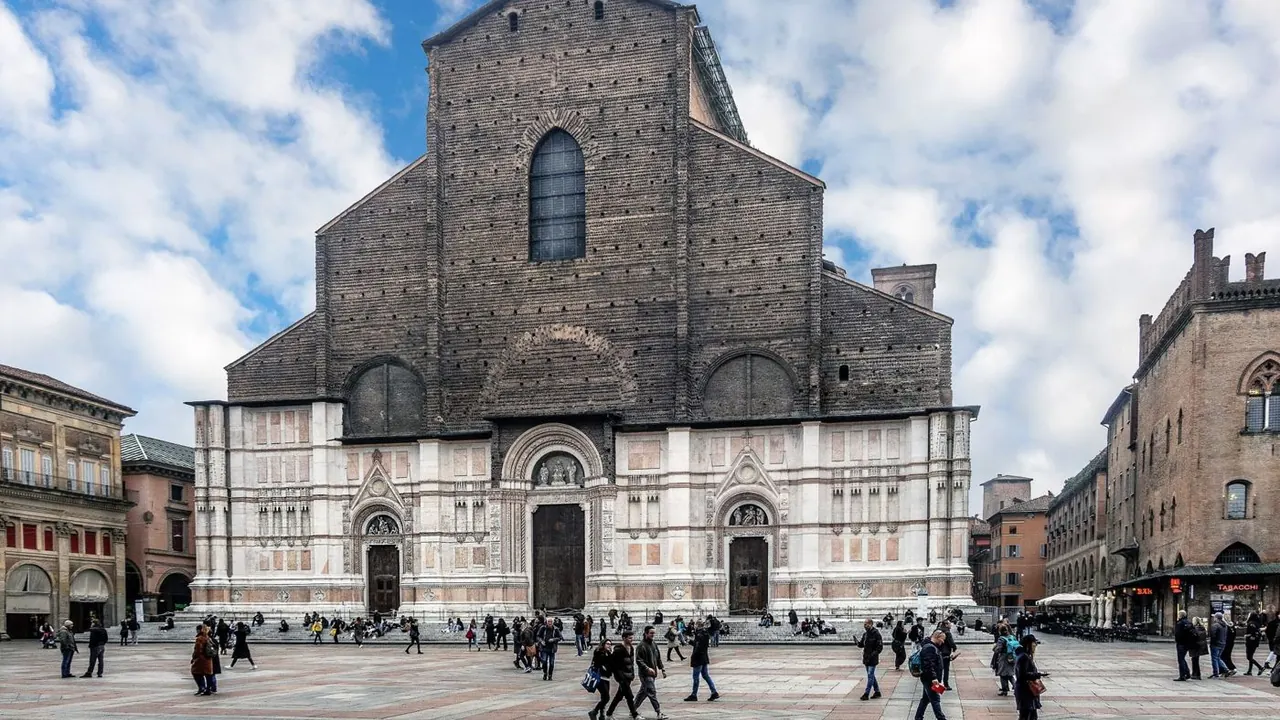
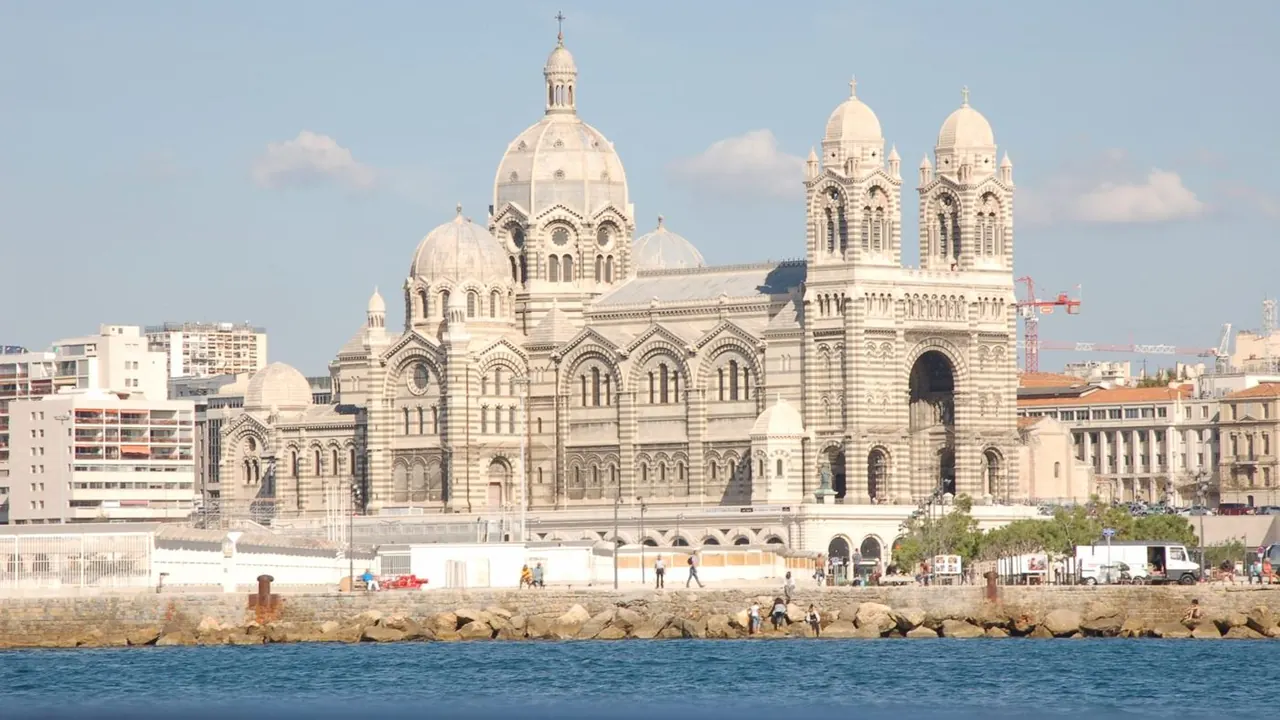
Photos: Bologna by Vanni Lazzari, CC BY-SA 4.0, cropped; Marseille by Charlotte Noblet, CC BY-SA 3.0, cropped.
Bologna or Marseille?
Our verdict in twelve categories, each scored against the same fixed benchmark cities, and the climate month by month, so you can choose for your trip.
Choose Bologna for
- getting around
- food and drink
- culture and sights
Bologna suits travellers who plan their days around the table and the train timetable. Its intact brick centre and porticoes are a pleasure to walk, the Emilian cooking is a reason to come in itself, and fast trains put Florence, Ravenna, Verona and Venice within a day's reach. It is the better base for a culture-led trip through northern Italy, as long as swimming is not on the list.
Choose Marseille for
- beaches
- nature and the outdoors
Choose Marseille if the sea and the wild coast are what you want from a southern city. The Calanques give you clear coves, cliff paths and diving at the edge of town, and there are city beaches for an evening swim. It is rougher and harder to get around than Bologna and its sights are more scattered, but for outdoor days and a sunnier climate it is clearly ahead.
Scoreboard
Twelve categories on one fixed scale from 0 to 100. The shaded stretch is the gap between the two.
Your match
Pick a travel style or drag the sliders, and both match scores follow your weighting.
Too close to call, level with your weighting
Wins on getting around and food and drink with your weighting.
Wins on beaches and nature and the outdoors with your weighting.
What matters to you?
Category by category
What the scores mean for a trip.
Beaches & swimming
Bologna is inland, and for a swim you take the train for about an hour to Rimini or Cervia. There the Adriatic is warm and shallow but lined with organised lidos, and the water is often green rather than clear. It works as a day out on a hot day, not as a beach vacation.
Marseille has the sea on its doorstep. Families use the shingle-and-sand Prado beaches, locals swim off the rocks at the Vallon des Auffes, and the Calanques and Frioul islands have clear coves reached on foot or by boat. The mistral can chill the water suddenly, and after heavy rain the city beaches are sometimes closed.
Food & drink
Bologna is the stronger city for eating. Tagliatelle al ragù, tortellini in brodo and mortadella are cooked with care in family trattorias, the Quadrilatero lanes are full of delicatessens, and Parmigiano and Parma ham are made in towns nearby. Its weakness is range, because almost everything is Emilian and rich.
Marseille offers more variety but less consistency. A proper bouillabaisse in a Corniche harbour is a serious meal, Noailles has North African, Comorian and Armenian food, and panisses make a cheap snack. Against that, many of the set menus around the Vieux-Port are tired.
Culture & sights
Bologna's strength is that it all hangs together. The red-brick medieval centre with its UNESCO-listed porticoes, Piazza Maggiore, the Two Towers and the anatomical theatre of the Archiginnasio feels like one place. You can see it well in two or three days, and the Pinacoteca adds Bolognese painting.
Marseille, France's oldest city, was founded by Greek sailors around 600 BC, but its heritage is spread through a working port instead of being kept together in one old centre. The highlights are Notre-Dame de la Garde above the city, the MuCEM between the old forts, the Vieille Charité in Le Panier and Le Corbusier's Cité Radieuse. They're worth the effort, but you have to cross town more to see them.
Nightlife
The two cities are about equal for going out, and both are informal and student-led rather than polished. In Bologna the action is around Piazza Verdi and the small taverns of Via del Pratello, starting with aperitivo in the Quadrilatero. Marseille has Cours Julien and La Plaine, with pastis on the Vieux-Port terraces, and more for clubbers in its warehouse electronic nights and summer parties by the sea.
The seasons work in opposite directions. Bologna goes quiet in August when the students leave, while Marseille is at its liveliest in summer and thins out in winter. Some streets in central Marseille also feel edgy late at night, which is less of a concern in Bologna.
Nature & outdoors
Marseille is far ahead here. The Calanques national park begins in its southern suburbs, with white limestone ridges, the inlets of Sormiou, Sugiton and En-Vau, a famous coastal walk, sport climbing on the cliffs, and diving around the Riou archipelago. Montagne Sainte-Victoire and the Sainte-Baume forest are within an hour.
Bologna's countryside is gentler. You can walk up to San Luca, follow paths through the Colli Bolognesi and see the gypsum caves of the Parco dei Gessi, and the Via degli Dei starts in Piazza Maggiore. The Apennines at Corno alle Scale add summer hiking and modest skiing.
Day trips
Both cities are excellent bases, and Bologna has the edge because almost everything is reachable by fast train. Florence is barely half an hour away, Ravenna's mosaics and Ferrara's walls are close, Modena and Parma are on the Via Emilia line, and Venice and Verona are each about an hour and a half away.
Marseille's region is Provence. Aix and Cassis are close, and Arles and Avignon are an easy train ride. The hilltop villages of the Luberon, Les Baux and the Bandol estates are much easier with a car, so a Marseille day trip often takes more planning than one from Bologna.
Good for families
For families the two come out level, but for different reasons. Bologna is easy to move around in, with a flat, largely car-free centre and shady porticoes, but it has little made for children apart from climbing the Asinelli tower. For bigger outings, families go to the Mirabilandia theme park or the beach at Rimini.
Marseille has the beach and Parc Borély right in town, and boat trips to the Château d'If or along the Calanques go down well. The trade-off is the city itself: steep streets, narrow pavements and heavy traffic make pushing a buggy hard work.
Getting around
Bologna is the easier city to get around. Nearly everything is inside a small, flat medieval centre that you can walk under cover, and the main station sits on the edge of the old town. There is no metro, but you will hardly miss it.
Marseille has two metro lines, trams and small ferries across the Vieux-Port, but it sprawls over hills and bays. The beaches and the Calanques trailheads are served by buses that get stuck in traffic, and driving in the centre is stressful.
Shopping & style
Neither city is a shopping destination, though Bologna offers a little more. Its food is the real souvenir: mortadella, aged Parmigiano and balsamic vinegar from the Quadrilatero. Via Farini and the Galleria Cavour have a small but refined cluster of luxury fashion, and Piazza Santo Stefano holds an antiques market on some weekends.
Marseille's best buys are local crafts: green cubes of Marseille soap, santon figures from the Le Panier workshops, and fabrics and teas in the narrow streets of Noailles. There are department stores on Rue Paradis and a shopping centre at La Joliette, but fashion runs out quickly.
Affordability
Overall costs are much the same, and in both cities eating is the good news. In Bologna, aperitivo comes with food and the trattorias cost less than in Italy's main tourist cities. In Marseille, panisses, pizza and market food keep everyday meals cheap.
The two cities differ in when rooms get expensive. In Bologna, prices jump when the large trade fairs are on. In Marseille, they rise in July and August near the port and the beaches. Walking the Calanques costs nothing, and Bologna's churches and squares are mostly free to enter.
Live music & performing arts
The two scenes are similar in size but different in character. Bologna leans towards the classical and jazz: the Teatro Comunale is one of Italy's historic opera houses, jazz plays most nights in basement clubs, and summer brings concerts and film screenings to Piazza Maggiore.
Marseille's scene is more Mediterranean and popular. It has an art deco Opéra and serious drama at La Criée, but its distinctive side is hip-hop, world music and the arts complex at the Friche la Belle de Mai, with the Fiesta des Suds bringing music from around the world each autumn.
Wellness & relaxation
Neither city is built for rest, and both are loud in places. Bologna has the advantage of thermal springs nearby: Castel San Pietro Terme is about twenty minutes away, and the old spa town of Porretta Terme is a green train ride into the Apennines.
Marseille has a few local hammams and some hotel spas, but its calm moments come from the sea, such as a slow lunch by a small harbour on the Corniche. Visitors who want real quiet tend to stay in Cassis and come into the city for the day.
When should you go?
Pick your month. The climate figures are measured averages, not a forecast.
Bologna in July
Marseille in July
Daytime high, °C
Rainfall in the month, mm
Where the figures come from
Bologna has no rain gauge within 25 km of the centre, so its rainfall comes from a gridded climate dataset read at the city rather than from a gauge further away.
Bologna's sunshine is measured 82 km from the centre, at Cervia.
Temperature and rainfall are climate normals, averaged over the years shown. Bologna: 1991-2020 normals, Bologna / Borgo Panigale (5.5 km from centre). Marseille: 1991-2020 normals, Marseille / Marignane (20.6 km from centre).
Bologna is at its best in late spring. May brings warm, fairly dry days for walking under the porticoes, and early June is still pleasant before the heat builds. July and August are humid and heavy on the plain, with highs around 32°C, and winters are raw, with January afternoons near 7°C. September stays warm but turns wet, and with October it is the rainiest part of the year, with showers peaking in November.
Marseille is milder at both ends of the year, with winter highs around 12°C, and it gets clearly more sunshine in every month. The sea is warm enough to swim in from June to September, reaching about 22°C in August, and July is almost dry at 11mm. For walking in the Calanques, go in April, May or October, because high summer is too hot for long hikes. The autumn rains reach Marseille at about the same time as Bologna.
Which traveller are you?
On a beach and sun trip, Marseille is the obvious choice. The Prado beaches and the Corniche inlets are inside the city, the turquoise Calanques coves are close by, and summers are sunnier. From Bologna, the sea means an hour's train ride to Rimini's rows of sunbeds.
For a food and nightlife trip, Bologna wins on the food. You get hand-rolled tagliatelle, tortellini and mortadella in old osterie, then aperitivo and student bars along Via del Pratello. Marseille's evenings are just as lively, but its cooking is less reliable, especially around the old port.
On an outdoors trip, Marseille has a national park within its city limits, with the coastal path through the Calanques, sport climbing, sea kayaking and diving. Bologna offers easy hill walks and the start of the Via degli Dei to Florence, but nothing as dramatic.
Before you go
| Measure | Bologna | Marseille |
|---|---|---|
| Official language | Italian | French |
| Currency | Euro (EUR) | Euro (EUR) |
| Sockets | CFL230 V, 50 Hz | CE230 V, 50 Hz |
| Driving side | Right | Right |
| Time zone | UTC+1, UTC+2 in summer | UTC+1, UTC+2 in summer |
| Emergency number | 112 | 112 |
| Elevation | 54 m | 0 m |
| Main airport | Bologna Guglielmo Marconi Airport (BLQ)6 km from centre98 non-stop destinations | Marseille Provence Airport (MRS)21 km from centre126 non-stop destinations |
| Public holidays this year | 13 days | 11 days |
By the numbers
| Measure | Bologna | Marseille |
|---|---|---|
| City population | 387,971 | 886,040 |
| People per km² | 2,754 | 3,683 |
| Museums within 10 km | 68 | 27 |
| UNESCO World Heritage sites within 50 km | 3 | 1 |
| Swim season, months above 21 °C | - | 2 months |
Where else could you go?
Every comparison below shares a destination with this one, so you can follow Bologna or Marseille somewhere new.