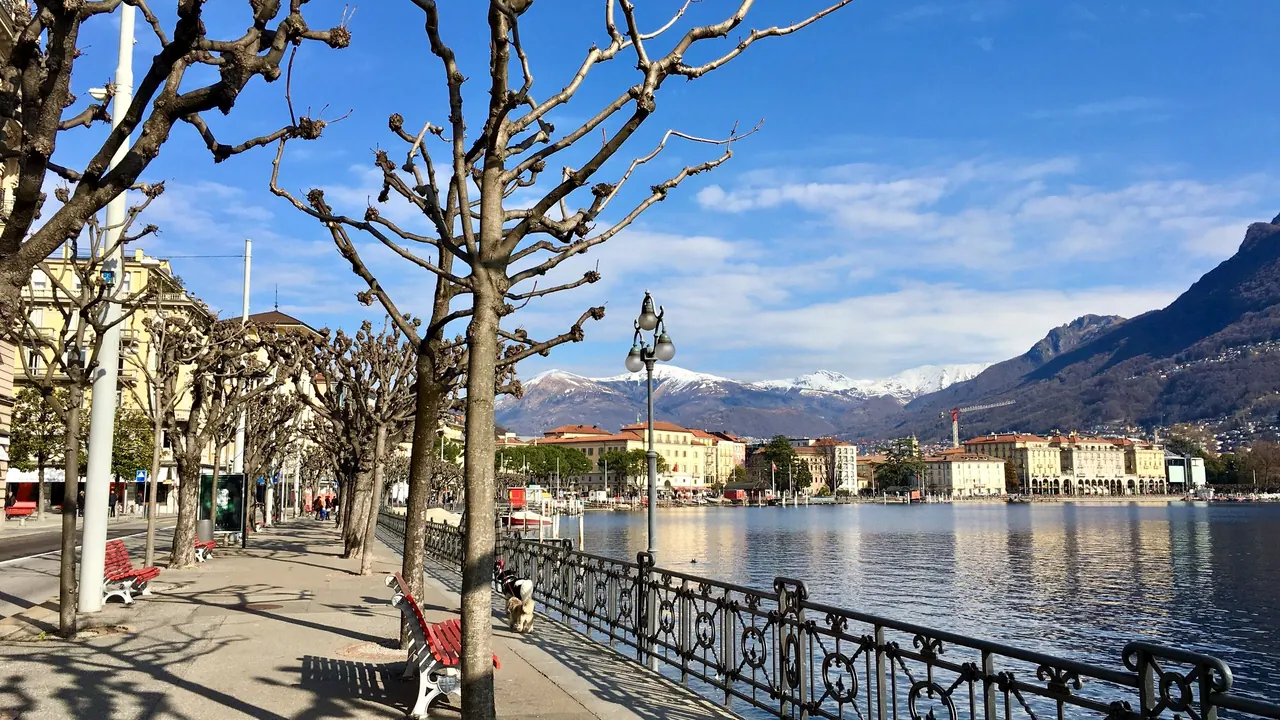
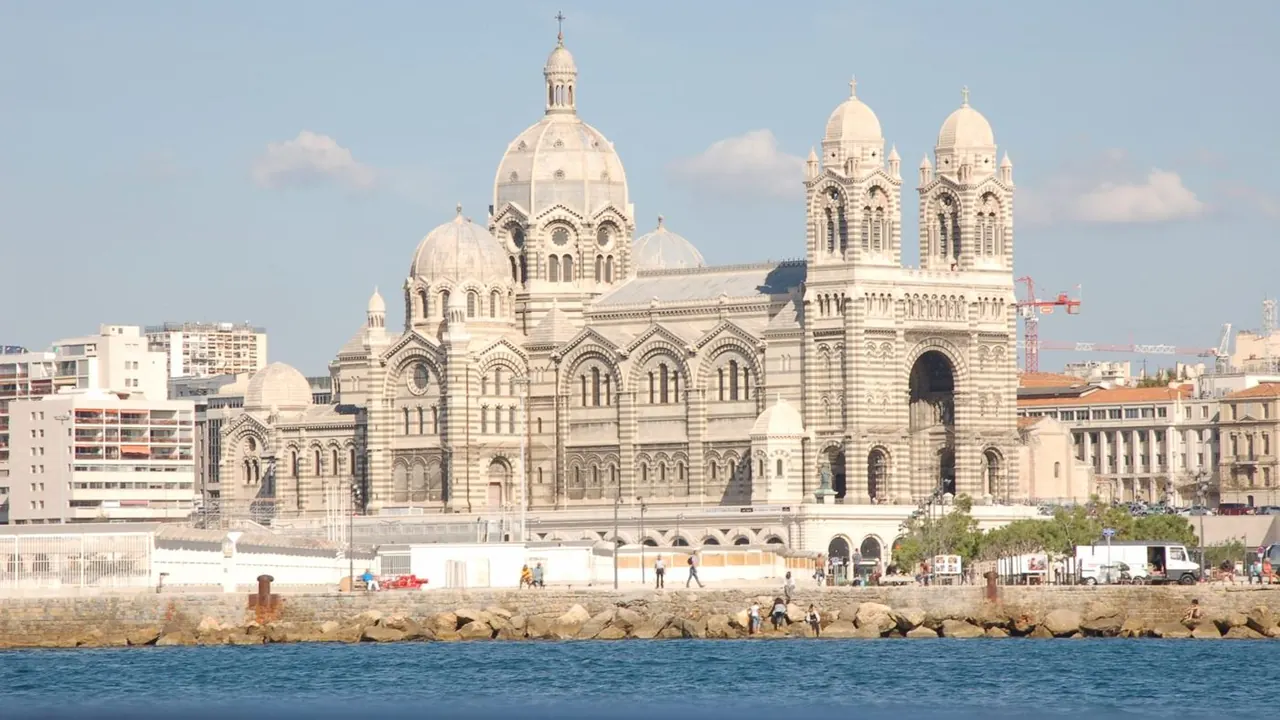
Photos: Lugano by Thomas Woodtli from Zürich, Switzerland, CC BY-SA 2.0, cropped; Marseille by Charlotte Noblet, CC BY-SA 3.0, cropped.
Lugano or Marseille?
Our verdict in twelve categories, each scored against the same fixed benchmark cities, and the climate month by month, so you can choose for your trip.
Choose Lugano for
- getting around
- families
- wellness
Lugano suits a calm, scenic stay where the lake and the mountains are the whole point: funiculars up Monte Brè and San Salvatore, boats to Gandria and Morcote, and long lunches in a grotto. It is the easier choice for families and for anyone who wants a tidy, walkable base. You need a budget that can take Swiss prices and you have to be happy with evenings that end early.
Choose Marseille for
- prices
- nightlife
- beaches
Travellers who want a real city by a real sea will do better in Marseille. You can swim in the Calanques and walk 2,600 years of history from the Vieux-Port up through Le Panier. The food is cheaper and more varied, and the nights run late around Cours Julien. Marseille is rougher, louder and harder to get around than Lugano, but you get far more for your money and the hot, dry summer lasts longer.
Scoreboard
Twelve categories on one fixed scale from 0 to 100. The shaded stretch is the gap between the two.
Your match
Pick a travel style or drag the sliders, and both match scores follow your weighting.
Wins on getting around and families with your weighting.
Wins on prices and nightlife with your weighting.
What matters to you?
Category by category
What the scores mean for a trip.
Beaches & swimming
Lugano swims in its lake, from lidos with lawns, wooden decks and ladders into the water at the mouth of the Cassarate and along the shore towards Castagnola and Paradiso. It is lovely on a hot afternoon, but the season is short and there is no sand at all.
Marseille has the Mediterranean. The broad Prado beaches make an easy family day, and the rocky Corniche inlets are close to the centre. The clear turquoise coves of the Calanques are a half-day outing on foot or by boat. The mistral can cool the water overnight, and heavy rain sometimes closes the city beaches.
Food & drink
Eating in Lugano means the grotto: polenta, braised meats and Ticino Merlot at granite tables under chestnut trees. It is good, but the range is narrow and expensive, with little street food or cooking from other countries.
Marseille has far more range. Bouillabaisse in a small Corniche harbour is the big meal, while panisses, wood-fired pizza and the spice shops and North African bakeries of Noailles feed you well every day. The one trap is the tired set menus aimed at visitors around the Vieux-Port.
Culture & sights
Lugano's sights fit comfortably into a day. There is the arcaded old town around Piazza della Riforma and the cathedral of San Lorenzo above it. Add Luini's Passion fresco and the art collection split between LAC and Palazzo Reali.
Marseille, founded by Greek sailors around 600 BC, has much more to see, though it is scattered through a working city. Notre-Dame de la Garde, the harbour forts and the MuCEM, the Vieille Charité in Le Panier, the crypts of Saint-Victor and Le Corbusier's Cité Radieuse easily fill several days.
Nightlife
A night out in Lugano is an aperitivo by the lake followed by a long dinner, and most nights the town is quiet before midnight. Young locals who want more go to Milan.
Marseille stays up late. Cours Julien and La Plaine fill with students at bars painted with graffiti and at pavement tables, and the terraces on the Vieux-Port keep going. Electronic nights in old warehouses and summer rooftop parties add some clubbing. Some central streets feel edgy late at night, so take a taxi home.
Nature & outdoors
Both have superb landscapes on the doorstep, but of very different kinds. Lugano's is lake and wooded mountain: funiculars up Monte Brè and San Salvatore, the rack railway on Monte Generoso and the ridge walk from Monte Lema to Monte Tamaro. The green water of the Verzasca valley is about an hour away.
Marseille's is a national park of white limestone above the sea. The coastal path runs past Sormiou, Morgiou and En-Vau, and there is sport climbing, sea kayaking and diving around Riou. On days of high fire risk in summer the massifs can close to walkers, while summer in Lugano is merely humid.
Day trips
Both make excellent bases, and from Lugano your day trips cross a border. By train or boat you can reach Milan's cathedral and The Last Supper, Lake Como, the castles of Bellinzona and Lake Maggiore, all without a car.
Marseille opens up Provence instead: Aix, Cassis, the Roman arena at Arles, the Palais des Papes in Avignon and the Pont du Gard. The towns are easy by rail, but the Luberon villages and Les Baux are much easier with a hire car.
Good for families
Lugano is the easier choice with children. It is safe and calm, and the days fill themselves with boat trips, lido slides, funiculars and the park of Swiss landmarks in miniature at Melide. The steep streets are tiring with a pushchair.
Marseille has the Prado beaches, Parc Borély and boat trips to the Château d'If. But traffic, narrow pavements, dirty streets and summer heat make the centre hard going, so families usually stay near the southern beaches. Neither city has a big zoo or aquarium.
Getting around
Lugano is compact and easy to get around. The lakefront promenade links most of the sights, and a short funicular lifts you up to the station. Boats and mountain railways cover the rest, and Swiss trains handle longer trips.
Marseille's centre is walkable from the Vieux-Port to Cours Julien, and the metro, trams and harbour ferries help. The beaches and Calanques trailheads, though, rely on buses that crawl through traffic, and some coves are a long walk from the last stop.
Shopping & style
Neither city is a shopping destination, and they fall short in opposite ways. Lugano is all polish: Swiss watchmakers, jewellers and Italian fashion under the arcades of Via Nassa, plus a designer outlet near Mendrisio. There is little that is cheap or handmade.
Marseille is about local things: green cubes of olive-oil soap, santon figures from the workshops of Le Panier, and the fabrics and teas of Noailles. Rue de Rome has the chains, but there are few luxury names.
Affordability
Lugano charges Swiss prices for everything, from a lakeside room to the ride up Monte Generoso, and you notice the gap as soon as you cross into Italy. A grotto or a set lunch is the gentler way to eat well. Many visitors save their restaurant spending for Como or the other Italian lakeside towns on a day trip.
Marseille is a mid-priced French city, well short of the most expensive corners of France, so a week there costs much less than a week on Lake Lugano. A central hotel is fair value outside summer, and a sit-down dinner costs what it would anywhere else in France. July and August are the time to budget more, because rooms by the Vieux-Port and the beaches cost far more then.
Live music & performing arts
Lugano's stage life is centred on LAC, home of the Orchestra della Svizzera italiana. The programme is mostly classical, and much of the theatre is in Italian. In summer the free Estival Jazz concerts fill Piazza della Riforma.
Marseille offers more variety. There is opera at the art deco Opéra, serious drama at La Criée in the old fish market and contemporary work at the Friche la Belle de Mai. The city also has deep roots in hip-hop and Mediterranean music, celebrated each autumn at the Fiesta des Suds.
Wellness & relaxation
Lugano has no thermal springs, but north of town near Rivera there is a large indoor complex with pools and saunas, which is useful on a wet day. Otherwise the rest comes from the slow rhythm of the place: a morning coffee under the old-town arcades, then an hour on a bench in Parco Ciani watching the boats.
The closest Marseille comes to a bathing culture is a handful of hammams run by its North African community. Locals use them far more than visitors do, and the city has nothing like the Rivera pools. Rest in Marseille means an afternoon on a terrace in the sun, or a quiet Calanques path outside the summer heat.
When should you go?
Pick your month. The climate figures are measured averages, not a forecast.
Lugano in July
Marseille in July
Daytime high, °C
Rainfall in the month, mm
Temperature and rainfall are climate normals, averaged over the years shown. Lugano: 1991-2020 normals, Lugano (1.2 km from centre). Marseille: 1991-2020 normals, Marseille / Marignane (20.6 km from centre).
Lugano warms to about 27°C in July and August. That is when the lake is best for swimming, and the lidos are open from June to early September. It is a wet place, though. From April to November rain is heavy almost every month, peaking at 178mm in May. Winter is drier but cold and grey, so spring and early autumn are the times for walking, as long as you are ready for some wet days.
Marseille is warmer, drier and much sunnier all year round. July reaches 31°C with only 11mm of rain, and the sea is warm enough to swim from June to September, reaching about 22°C in August. Midsummer is hot for climbing its steep streets, so May and October are the better months for sightseeing on foot. The rain comes back in September and stays through the autumn, and winters stay milder than Lugano's.
Which traveller are you?
On a trip on a tight budget, Marseille is the clear choice. Cheap everyday food from Noailles and the bakeries, cheap public transport, free walks in the Calanques and museums that charge little all keep costs down. In Lugano there is simply no cheap way to stay.
For a relaxing and wellness trip, Lugano suits better. The palm-lined lakefront, afternoons at the lido, slow grotto lunches and the hotel spas make an unhurried stay easy. Marseille is loud and dense, and most of its calm moments happen outside the city.
On a food and nightlife trip, Marseille is the easy winner. Bouillabaisse in the Corniche harbours, the markets of Noailles and late nights in the bars of Cours Julien and La Plaine beat Lugano's grotti and its aperitivo evenings, which end early.
Before you go
| Measure | Lugano | Marseille |
|---|---|---|
| Official language | French, German, Italian, Romansh | French |
| Currency | Swiss Franc (CHF) | Euro (EUR) |
| Sockets | CJ230 V, 50 Hz | CE230 V, 50 Hz |
| Driving side | Right | Right |
| Time zone | UTC+1, UTC+2 in summer | UTC+1, UTC+2 in summer |
| Emergency number | 112 | 112 |
| Elevation | 283 m | 0 m |
| Main airport | Milan Malpensa International Airport (MXP)46 km from centre208 non-stop destinations | Marseille Provence Airport (MRS)21 km from centre126 non-stop destinations |
| Public holidays this year | 15 days | 11 days |
By the numbers
| Measure | Lugano | Marseille |
|---|---|---|
| City population | 63,495 | 886,040 |
| People per km² | 837 | 3,683 |
| Museums within 10 km | 17 | 27 |
| UNESCO World Heritage sites within 50 km | 5 | 1 |
| Swim season, months above 21 °C | - | 2 months |
Where else could you go?
Every comparison below shares a destination with this one, so you can follow Lugano or Marseille somewhere new.
- Comovs Lugano
- Aix-en-Provencevs Marseille
- Milanvs Lugano
- Bergamovs Lugano
- Avignonvs Marseille
- Zermattvs Lugano