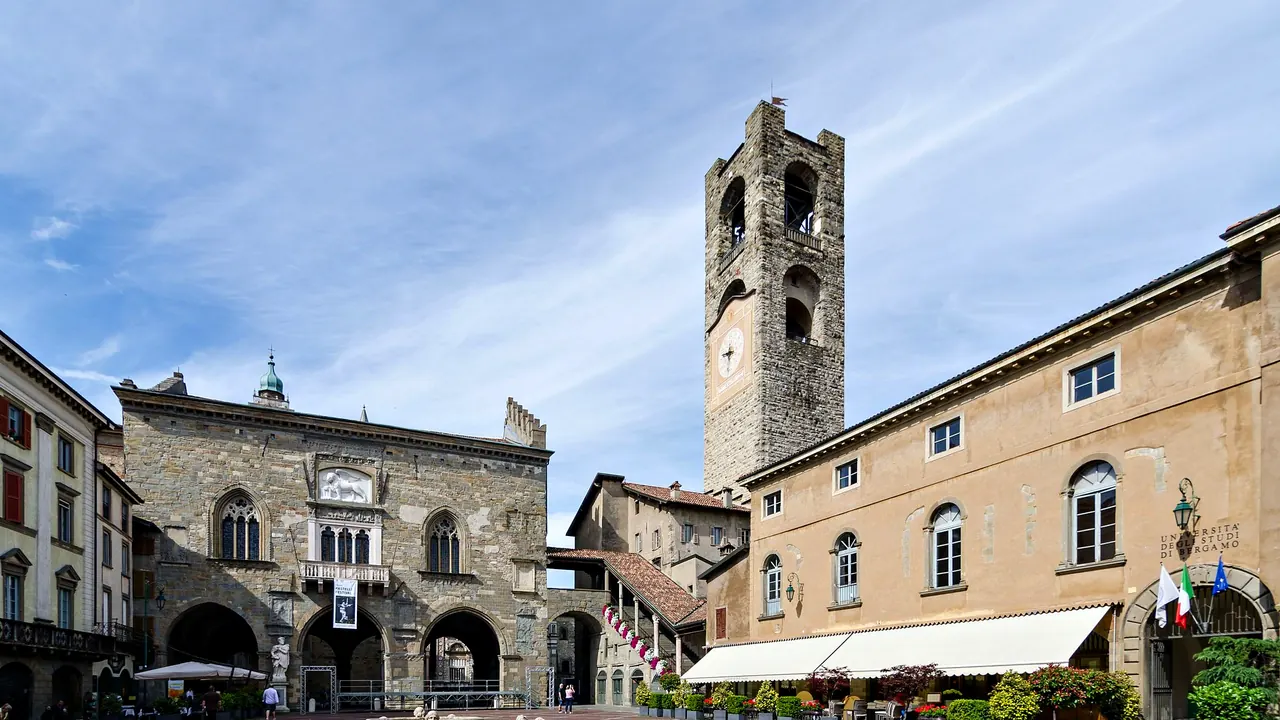
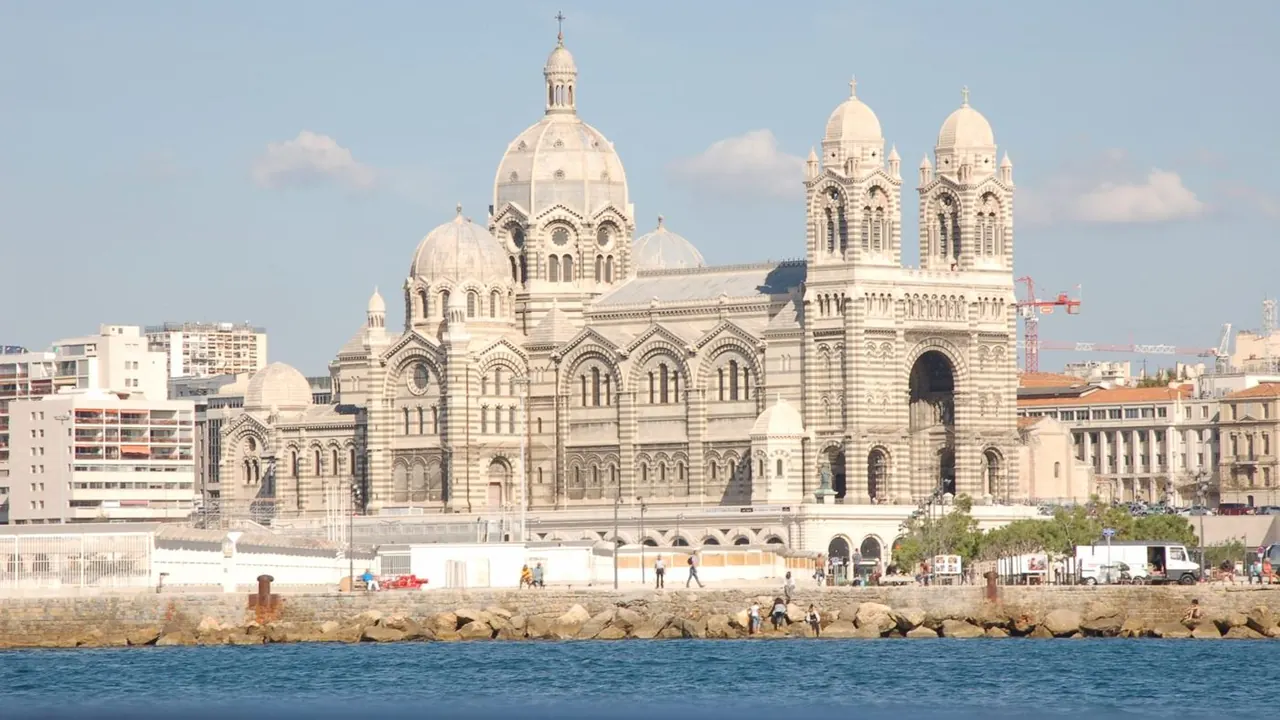
Photos: Bergamo by Steffen Schmitz, CC BY-SA 4.0, cropped; Marseille by Charlotte Noblet, CC BY-SA 3.0, cropped.
Bergamo or Marseille?
Our verdict in twelve categories, each scored against the same fixed benchmark cities, and the climate month by month, so you can choose for your trip.
Choose Bergamo for
- wellness
- getting around
- prices
Bergamo is for travellers who want a compact, calm old town and then a different outing each day. The walled Città Alta, the Accademia Carrara and the Lombard cheese counters fill a short stay. Milan, Lake Iseo, Lake Como and the Orobie valleys are all close by. It is easier to get around, a little kinder on the budget and quieter in the evening, and the spa towns of Val Brembana sit within reach.
Choose Marseille for
- beaches
- nightlife
- nature and the outdoors
Marseille suits people who want the sea and a city with rough edges. Here the attraction is swimming in the Calanques, walking a national park that starts in the suburbs, eating in Noailles and drinking late around Cours Julien. It is louder, hotter and harder work, but it gives you beaches, a real night out and a stronger stage than Bergamo can.
Scoreboard
Twelve categories on one fixed scale from 0 to 100. The shaded stretch is the gap between the two.
Your match
Pick a travel style or drag the sliders, and both match scores follow your weighting.
Wins on wellness and getting around with your weighting.
Wins on beaches and nightlife with your weighting.
What matters to you?
Category by category
What the scores mean for a trip.
Beaches & swimming
These two are far apart. Bergamo is inland, so swimming means a day trip to the lidos and grassy shores of Lake Iseo or the Lecco arm of Lake Como. You swim from pebble beaches, lawns or concrete platforms, and it is a hot-day treat rather than a reason to go.
Marseille has the Mediterranean on its doorstep. Families use the broad Prado beaches, locals swim before work at the Catalans and the Vallon des Auffes, and the clear inlets of the Calanques and the Frioul coves are the real reward. The mistral and heavy rain can spoil a day, but for water this is the city to pick.
Food & drink
Marseille has the broader and more exciting table. Its food comes from the whole Mediterranean, from a long two-course bouillabaisse in a Corniche harbour to panisses, North African bakeries and the spice shops of Noailles, with fish sold each morning on the Vieux-Port quay. The one catch is the tired set menus around the old port.
Bergamo goes deep rather than wide. It is mountain cooking: casoncelli in sage butter, polenta with braised game, and some of Italy's finest cheeses, Taleggio and Strachitunt among them. The wines are Valcalepio and nearby Franciacorta. You will eat very well, but there is little beyond Lombard and Italian food.
Culture & sights
The two are broadly level, but the experience is very different. Bergamo keeps its heritage in one piece. The walled Città Alta inside its UNESCO-listed Venetian ramparts is gathered around Piazza Vecchia and the Cappella Colleoni, and the Accademia Carrara holds Raphael and Bellini. You can see all of it in a day or two.
Marseille spreads its history across a working port city that is 2,600 years old. Notre-Dame de la Garde looks down on the forts of the Vieux-Port, the MuCEM and the stepped lanes of Le Panier, and further out are the Château d'If and Le Corbusier's Cité Radieuse. It takes more legwork and has less polish, but there is more variety.
Nightlife
Marseille is clearly the better night out. The graffiti-painted bars of Cours Julien and La Plaine stay full until late, the Vieux-Port terraces carry on after sunset, and in summer there are warehouse electronic nights and parties by the sea. Some central streets feel edgy late at night, so a taxi home is sensible.
In Bergamo an evening means a long aperitivo, a wine bar on Via XX Settembre or a drink on the walls of the upper town. It is mostly over by midnight, and anyone after a club goes to Milan.
Nature & outdoors
Both cities have serious outdoors close by, but Marseille's is more dramatic and nearer. A national park begins inside the city limits, with the coastal path to Sormiou, Sugiton and En-Vau, famous sport climbing, and kayaking and diving around the Riou islands. Its limits are the summer heat and fire closures.
Bergamo's appeal is the mountains. Woodland paths climb from the upper town to San Vigilio, and Val Brembana and Val Seriana lead to rifugi, high lakes and the Serio waterfall. There is cycling in the foothills and small ski areas in winter, but you will want a car for most of it.
Day trips
Both make excellent bases. The choice is between Lombardy and Provence. From Bergamo, Milan's Duomo and Last Supper are under an hour by train, Lake Iseo's car-free Monte Isola and the Como shore are closer still, and Brescia, Cremona and Verona all make easy rail days.
From Marseille, Aix-en-Provence and Cassis are very close, while Arles and Avignon's Palais des Papes are an hour or less by train. Most of the Provence trips are by rail, but the Luberon hill villages, Les Baux and the Bandol estates are easier with a car, as Bergamo's mountain valleys are.
Good for families
Neither is a natural family city, and Bergamo is slightly the easier of the two. It is small and calm, children love the funiculars, and Leolandia's rides and the Le Cornelle wildlife park are both short drives away. The steep cobbles of the upper town are the main trial for a buggy.
Marseille's strengths for children are outdoors: the gentle Prado beaches, Parc Borély's lake and boat trips to the Château d'If. It has no zoo, aquarium or theme park, though. Traffic, heat and narrow pavements also wear parents down, so families tend to base themselves in the south.
Getting around
Bergamo is the simpler city to move around. The lower town and the Città Alta are each easy to walk, two funiculars handle the climbs, and the airport is a short bus ride away. Direct trains run to Milan, Brescia and Lecco.
Marseille's central core from the Vieux-Port to Cours Julien walks well, and the metro, trams and little port ferries help. The beaches and Calanques trailheads are another matter, reached by buses that sit in traffic, and driving in the centre is stressful.
Shopping & style
Neither city is a shopping destination, and what you bring home differs. Bergamo's best buys are edible: cheeses, salumi and Valcalepio wine from the delis on the upper town's main lane. Fashion is mid-range chains along the Sentierone, and Milan is close for anything more.
Marseille has more variety for browsing. Visitors buy green cubes of Marseille soap and santon figures from Le Panier workshops, fabrics and teas in Noailles, and independent design from Cours Julien. Rue Paradis adds department stores and a few luxury names.
Affordability
Bergamo is a little easier on the wallet. Lower-town hotels are fair for a base with this much nearby, and trattorias, buses and the funicular cost little, although rooms in the Città Alta and summer weekends cost more.
Marseille is mid-priced for a large French city. Rooms near the port and the beaches rise sharply in July and August, but you can eat cheaply on pizza, North African snacks and market food. The Calanques cost nothing to walk.
Live music & performing arts
Marseille has the wider stage. There is a full season at the art deco Opéra, serious drama at La Criée in the old fish market, and contemporary dance and concerts at the Friche la Belle de Mai. It also has a strong place in French hip-hop and in Mediterranean music, with the Fiesta des Suds each autumn.
Bergamo's stage life rests on Donizetti, who was born here. The Teatro Donizetti stages opera and an autumn festival of his works that draws devotees, and Bergamo Jazz is a long-established spring festival. Otherwise the programme is provincial, with La Scala an easy evening trip away.
Wellness & relaxation
Bergamo is the better place to unwind. The Belle Époque spa at San Pellegrino Terme is about forty minutes up the valley, and Trescore Balneario's sulphur springs have been used since Roman times. The quiet mornings in the Città Alta and walks along the walls set a slow pace.
Marseille has no spa tradition beyond a few local hammams and hotel spas, and its central streets are noisy. Rest there means a long harbour lunch on the Corniche, or staying in Cassis and coming into the city for the day.
When should you go?
Pick your month. The climate figures are measured averages, not a forecast.
Bergamo in July
Marseille in July
Daytime high, °C
Rainfall in the month, mm
Where the figures come from
Bergamo has no rain gauge within 25 km of the centre, so its rainfall comes from a gridded climate dataset read at the city rather than from a gauge further away.
Bergamo's sunshine is measured 64 km from the centre, at Lugano.
Temperature and rainfall are climate normals, averaged over the years shown. Bergamo: 1991-2020 normals, Bergamo / Orio Al Serio (3.9 km from centre). Marseille: 1991-2020 normals, Marseille / Marignane (20.6 km from centre).
Bergamo has a proper Alpine-edge climate. Summers are warm, with highs around 29°C in July and August, and winters are cold enough to make long days on the streets a chore. Rain is heaviest in late spring and again from September to November, when October brings about 129mm. The most comfortable walking months are May, June and early September, though even these can be showery. July and August are the sunniest stretch and the time for the lakes.
Marseille is warmer and much sunnier all year. Winter highs stay around 12°C, so a cool-season city break is pleasant. Summer is the reverse of Bergamo's: July is close to bone dry at 11mm, the days run past 30°C and the sea reaches about 22°C, which makes June to September the beach season. The rain comes in autumn, from September, and spring and late autumn are the best times for walking the Calanques.
Which traveller are you?
For a beach and sun trip, Bergamo can offer only a lido or a grassy shore on Lake Iseo, which makes a pleasant outing on a hot day. Marseille is the clear choice, with the Prado beaches, early swims off the Corniche rocks, the turquoise Calanques inlets and far more sunshine.
On a relaxing and wellness trip, Bergamo sets the gentler pace. Evenings wind down by midnight, and a slow day can be a boat out to car-free Monte Isola on Lake Iseo. Marseille runs loud and hot, so finding rest there takes effort.
For a short city break, Bergamo is easier. The airport is a short bus ride away, a funicular climbs to the walled Città Alta, and the Accademia Carrara sits below the hill, so two days are enough. Marseille's sights are spread across a sprawling city with heavy traffic.
Before you go
| Measure | Bergamo | Marseille |
|---|---|---|
| Official language | Italian | French |
| Currency | Euro (EUR) | Euro (EUR) |
| Sockets | CFL230 V, 50 Hz | CE230 V, 50 Hz |
| Driving side | Right | Right |
| Time zone | UTC+1, UTC+2 in summer | UTC+1, UTC+2 in summer |
| Emergency number | 112 | 112 |
| Elevation | 249 m | 0 m |
| Main airport | Il Caravaggio International Airport (BGY)4 km from centre146 non-stop destinations | Marseille Provence Airport (MRS)21 km from centre126 non-stop destinations |
| Public holidays this year | 13 days | 11 days |
By the numbers
| Measure | Bergamo | Marseille |
|---|---|---|
| City population | 119,534 | 886,040 |
| People per km² | 2,973 | 3,683 |
| Museums within 10 km | 21 | 27 |
| UNESCO World Heritage sites within 50 km | 6 | 1 |
| Swim season, months above 21 °C | - | 2 months |
Where else could you go?
Every comparison below shares a destination with this one, so you can follow Bergamo or Marseille somewhere new.
- Aix-en-Provencevs Marseille
- Milanvs Bergamo
- Comovs Bergamo
- Luganovs Bergamo
- Avignonvs Marseille
- Saint-Tropezvs Marseille