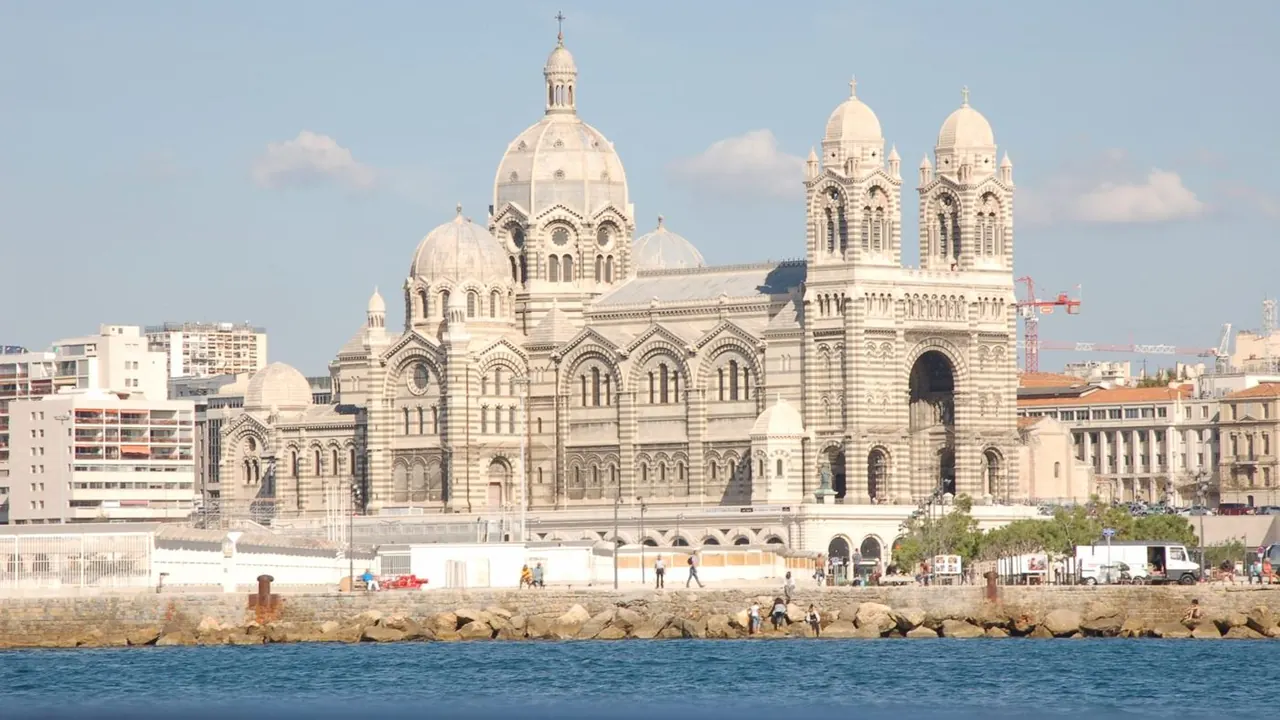
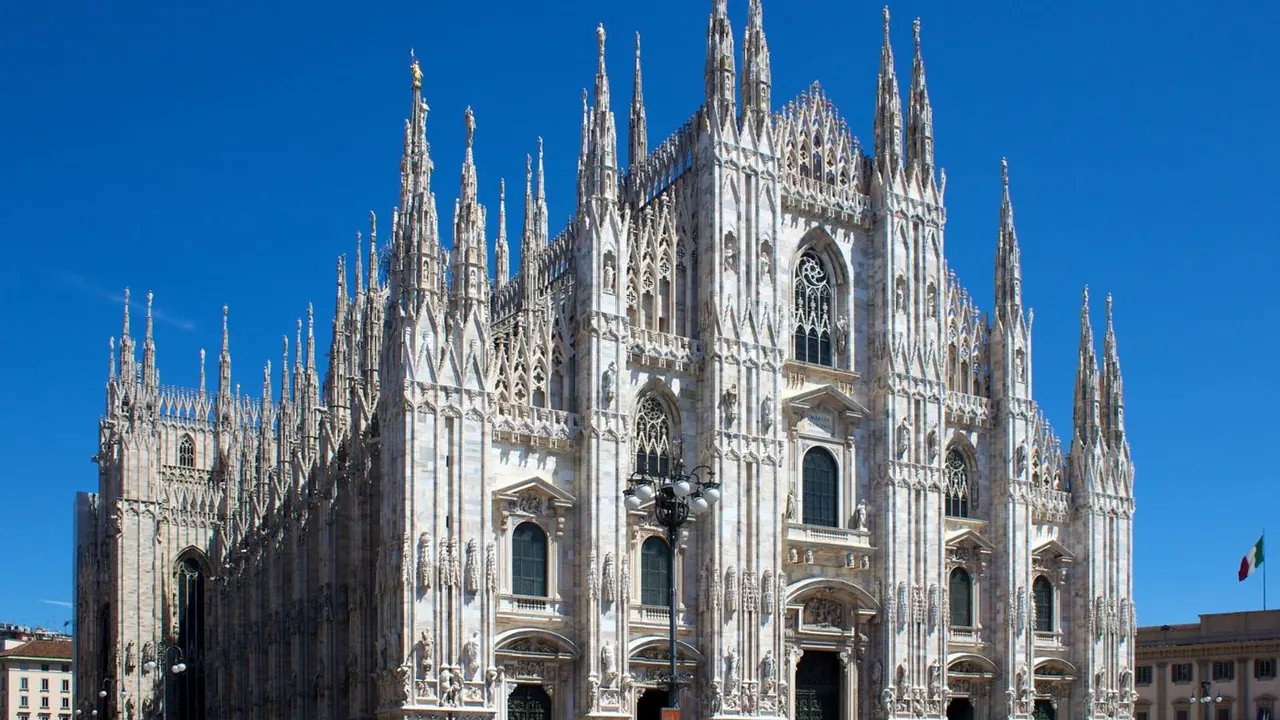
Photos: Marseille by Charlotte Noblet, CC BY-SA 3.0, cropped; Milan by Jiuguang Wang, CC BY-SA 3.0, cropped.
Marseille or Milan?
Our verdict in twelve categories, each scored against the same fixed benchmark cities, and the climate month by month, so you can choose for your trip.
Choose Marseille for
- beaches
- nature and the outdoors
- prices
Marseille is the pick for sea, sun and the outdoors. You can swim at the Prado or in the Calanques, walk the white limestone coast of a national park that starts in the suburbs, and finish the day over fish stew in a small Corniche harbour. It suits travellers who like a raw, working port with North African markets more than polish, and it costs less than Milan.
Choose Milan for
- shopping
- live music and the arts
- getting around
Travellers drawn to fashion, opera and great art will get more from Milan. The Quadrilatero della Moda, La Scala and the Last Supper are all a short walk or tram ride apart, the metro makes the city easy to use, and fast trains reach Verona, Turin and the lakes. It is the better city break for anyone who wants style and cultural depth and accepts a higher bill.
Scoreboard
Twelve categories on one fixed scale from 0 to 100. The shaded stretch is the gap between the two.
Your match
Pick a travel style or drag the sliders, and both match scores follow your weighting.
Wins on beaches and nature and the outdoors with your weighting.
Wins on shopping and live music and the arts with your weighting.
What matters to you?
Category by category
What the scores mean for a trip.
Beaches & swimming
This is where the two cities differ most. Marseille lives beside the sea, with the broad Prado beaches for families, Plage des Catalans and the Corniche inlets for a swim before work, and the clear water of the Calanques for a half-day outing. The mistral and the odd closure after heavy rain are the only catches.
Milan has no coast. In summer the locals use the Idroscalo basin and open-air pools, and the real swimming is in Lake Como or Lake Maggiore, about an hour away by train. For Milan a swim is a planned outing. In Marseille it can be part of most summer days.
Food & drink
Milan eats better overall. The rich, butter-based northern cooking of saffron risotto, ossobuco and cotoletta comes with good cooking from every other Italian region, a serious fine-dining scene and the evening ritual of aperitivo in Brera, Isola and along the Navigli. The weak spot is the ordinary cheap food near the Duomo.
Marseille's strengths are the sea and the street. Bouillabaisse eaten slowly in a Corniche harbour, panisses, the North African bakeries and spice shops of Noailles and the morning fish sellers on the quay make it more of a market city than Milan. Avoid the tired set menus around the Vieux-Port.
Culture & sights
What sets Milan apart is the quality of its sights: a few world-famous works, close together. Marseille's heritage is older, going back to its Greek founding, but it is scattered through a working port. You find it in Notre-Dame de la Garde on its hill, the forts and the MuCEM at the Vieux-Port, the Vieille Charité in Le Panier, the Château d'If and Le Corbusier's Cité Radieuse, mostly while exploring the city rather than on a planned round of sights.
In Milan the masterpieces are the reason to go. The rooftop among the Duomo's spires, the Last Supper, the Brera paintings and Michelangelo's Rondanini Pietà in the Castello Sforzesco could fill several days on their own. The Ambrosiana's Leonardo drawings and the basilica of Sant'Ambrogio add depth around them.
Nightlife
Milan has the more polished and varied night out. It starts with aperitivo, moves on to the canal-side bars of the Navigli or the gay scene around Porta Venezia, and can end at a dressy club on Corso Como where the door matters, or at a warehouse night out of town.
Marseille is louder and more casual, centred on the graffiti-covered bars and pavement tables of Cours Julien and La Plaine, with pastis on the Vieux-Port terraces. Its clubs are fewer and more scattered, the scene fades in winter, and some streets feel edgy late at night. Milan's quiet patch is August.
Nature & outdoors
Marseille has the landscape right on its doorstep. The Calanques national park starts at the edge of the city, with ridge paths to Sormiou, Sugiton and En-Vau, famous sport climbing, and kayaking and diving around the Riou islands. Sainte-Victoire and the Sainte-Baume forest are within an hour. Fire closures in high summer are the main limit.
Around Milan the land is flat, often hazy plain, and you need a train to reach the good outdoors: the wooded shores of Como and Maggiore, the Grigne ridges for via ferrata, and ski resorts that take a full day. It is good walking country, but it starts an hour away.
Day trips
Both are excellent bases, and the difference is in the kind of trip. From Milan, high-speed trains make whole cities easy without a car: Verona, Turin and Bologna, plus Bergamo, Mantua, the lake villages and even Lugano across the Swiss border.
From Marseille, the trips are Provence: Aix half an hour away, Arles and Avignon by train, and Cassis just down the coast. The Luberon hill villages, Les Baux and the Bandol vineyards are much easier with a car, so Marseille offers more countryside and Milan easier car-free travel.
Good for families
Neither city is built around children, and each works for families in a different way. Marseille is a summer choice: the gentle water and lawns of the Prado, Parc Borély's lake and boat trips to the Château d'If. But there is no zoo or aquarium, and steep streets and narrow pavements are hard work with a buggy.
Milan's flat centre and trams make getting around with a pushchair easier. The science and technology museum, with its submarine, is a good wet-day option, and Leolandia and Gardaland are within reach for older children. Milan lacks a beach, and its humid summers can be heavy going.
Getting around
Marseille takes more effort. The centre, from the Vieux-Port through Le Panier to Cours Julien, is walkable but steep in places, and the metro and trams serve it well. They do not reach the beaches or the Calanques trailheads, though, and the buses that do get stuck in traffic. The summer ferries to Pointe Rouge and L'Estaque are the pleasant way round, and a car helps for the Provence villages, even if driving in the centre is stressful.
Milan is much simpler. Its flat, compact centre puts the Duomo, Brera and the Castello a short walk apart, five clear metro lines and the old orange trams cover the rest, and direct trains run to the lakes, so you never need a car. The only real nuisances are the long transfer from Malpensa and the summer heat underground.
Shopping & style
Milan is in another class here. The great Italian fashion houses have flagships in the Quadrilatero della Moda, La Rinascente stands beside the Duomo, there are vintage shops in Brera and Porta Ticinese, and design showrooms across the city, so serious shoppers could easily give a whole trip to it.
Marseille is better for local crafts. Buy green cubes of olive-oil soap and santon figures from Le Panier workshops, and browse fabrics and teas in the narrow streets of Noailles. Beyond Rue Paradis and a few independent boutiques, a fashion hunter soon runs out of places to go.
Affordability
Marseille costs noticeably less, though it is not a budget city. Hotels are reasonable outside July and August, pizza, North African snacks and market food make cheap meals, walking in the Calanques is free and many museums charge little to get in.
Milan is Italy's most expensive city. Room rates jump during the trade fairs and fashion weeks, and dinners in Brera and drinks in smart bars are priced to match. Aperitivo snacks as a light supper, office-worker set lunches and a hotel near a metro stop outside the centre all help to keep costs down.
Live music & performing arts
Milan is the clear choice for a night of opera or theatre. La Scala's season of opera, ballet and concerts, the Piccolo Teatro, a fine symphony orchestra and big stadium concerts at San Siro give it a calendar with real highlights, and gallery seats make La Scala possible without a big budget.
Marseille's stages are solid and more popular in style: the art deco Opéra, drama at La Criée, mixed programmes at the Friche la Belle de Mai, and a strong hip-hop and world-music scene. Summer gives Marseille the Festival de Marseille just as Milan's opera and concert season goes quiet.
Wellness & relaxation
Neither is a place to unwind, and in both the real rest is outside the city. Milan does have more to offer within its limits: a thermal spa complex with outdoor pools and saunas, and the restored 1930s pools of the Bagni Misteriosi in summer, with lakeside villas an hour away.
Marseille has a few neighbourhood hammams used mostly by locals and some hotel spas. Its calm comes from a long lunch by a Corniche harbour, and many visitors who want quiet stay in Cassis or a country house and come into the city for the day.
When should you go?
Pick your month. The climate figures are measured averages, not a forecast.
Marseille in July
Milan in July
Daytime high, °C
Rainfall in the month, mm
Where the figures come from
Milan has no rain gauge within 25 km of the centre, so its rainfall comes from a gridded climate dataset read at the city rather than from a gauge further away.
Milan's sunshine is measured 41 km from the centre, at Novara / Cameri.
Temperature and rainfall are climate normals, averaged over the years shown. Marseille: 1991-2020 normals, Marseille / Marignane (20.6 km from centre). Milan: 1991-2020 normals, Milano / Linate (8 km from centre).
Marseille has a long, bright summer. Swimming weather runs from June to September, with the sea at about 22°C in August. July reaches 31°C, so the middle of the day is too hot for walking the streets or the Calanques paths, and the most comfortable walking is in April, May and October. The rain arrives in September, at around 82mm, and autumn stays fairly wet. Winters are mild and still reasonably sunny.
Milan has a sharper swing between the seasons. Winter is cold and grey, with highs around 7°C and little sunshine. Summer is warm and often humid, and May and autumn are wet, with rain peaking at 128mm in November. Late spring and early September are the best times for walking the city. Marseille is a few degrees warmer and much sunnier than Milan in every month.
Which traveller are you?
For a beach and sun trip, Marseille wins easily. It has city beaches at the Prado, turquoise inlets in the Calanques and coves on the Frioul islands. Milan is landlocked, so swimming there means an artificial lake, a public pool or a train to Como.
On a shopping trip, choose Milan. The flagships of Via Montenapoleone, the old shops of the Galleria and the design showrooms make shopping a reason to go. In Marseille the best buys are olive-oil soap, santon figures and the stalls of Noailles.
For a culture and arts trip, Milan offers more: the Duomo, Leonardo's Last Supper, the Brera paintings and an evening at La Scala or the Piccolo Teatro. Marseille has history going back to its Greek founding and the MuCEM, but its sights are more scattered.
Before you go
| Measure | Marseille | Milan |
|---|---|---|
| Official language | French | Italian |
| Currency | Euro (EUR) | Euro (EUR) |
| Sockets | CE230 V, 50 Hz | CFL230 V, 50 Hz |
| Driving side | Right | Right |
| Time zone | UTC+1, UTC+2 in summer | UTC+1, UTC+2 in summer |
| Emergency number | 112 | 112 |
| Elevation | 0 m | 138 m |
| Main airport | Marseille Provence Airport (MRS)21 km from centre126 non-stop destinations | Milan Malpensa International Airport (MXP)40 km from centre208 non-stop destinations |
| Public holidays this year | 11 days | 13 days |
By the numbers
| Measure | Marseille | Milan |
|---|---|---|
| City population | 886,040 | 1,354,196 |
| People per km² | 3,683 | 7,453 |
| Museums within 10 km | 27 | 88 |
| UNESCO World Heritage sites within 50 km | 1 | 4 |
| Swim season, months above 21 °C | 2 months | - |
Where else could you go?
Every comparison below shares a destination with this one, so you can follow Marseille or Milan somewhere new.