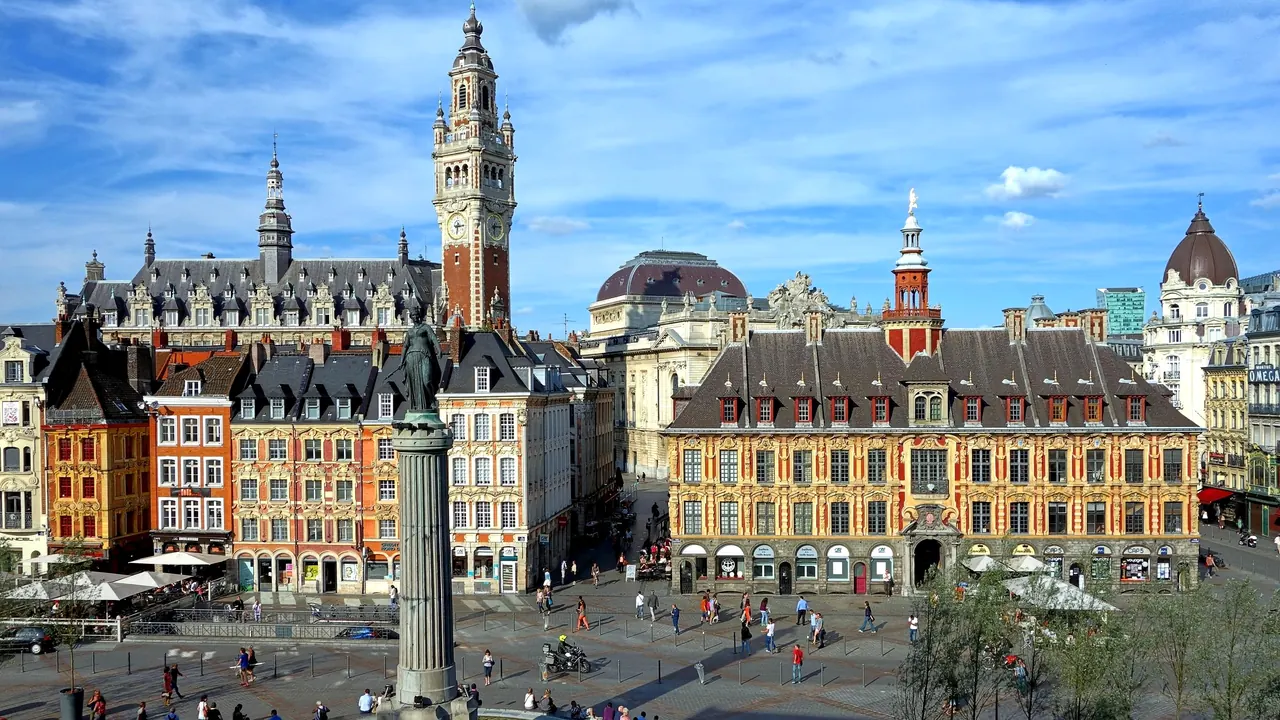
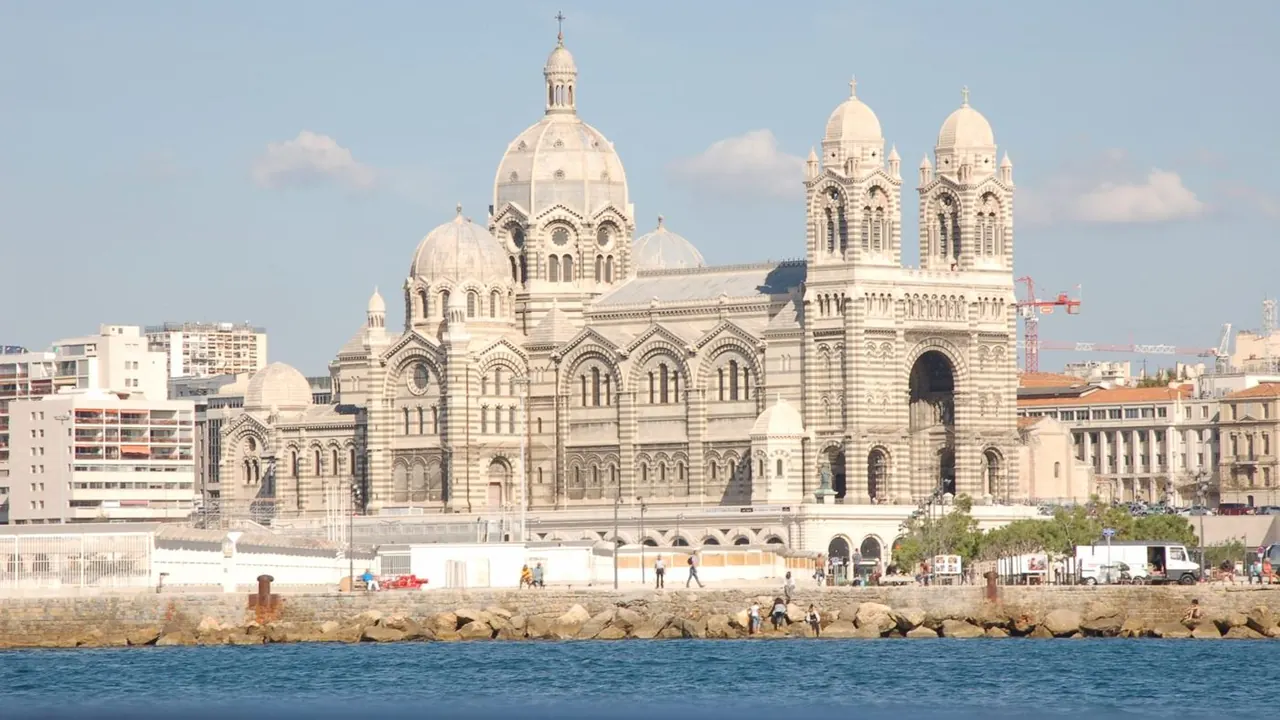
Photos: Lille by Velvet, CC BY-SA 3.0, cropped; Marseille by Charlotte Noblet, CC BY-SA 3.0, cropped.
Lille or Marseille?
Our verdict in twelve categories, each scored against the same fixed benchmark cities, and the climate month by month, so you can choose for your trip.
Choose Lille for
- getting around
- shopping
- day trips
Lille suits a compact, unhurried trip built on trains and good food. The flat old centre, the Flemish taverns and beer, and one of France's great fine-art museums fill a long weekend. The two stations side by side put Brussels, Ghent, Bruges and Paris within easy reach. It also works out of season, when most of the pleasure is indoors.
Choose Marseille for
- beaches
- nature and the outdoors
- wellness
Marseille is for travellers who want the sea and the open air as much as the city. The Calanques, with clear inlets for swimming and a famous coastal path, start at the edge of town, and Provence fills the days beyond. In return it is hillier, louder and harder to get around, and it rewards visitors who can live with rough edges.
Scoreboard
Twelve categories on one fixed scale from 0 to 100. The shaded stretch is the gap between the two.
Your match
Pick a travel style or drag the sliders, and both match scores follow your weighting.
Wins on getting around and shopping with your weighting.
Wins on beaches and nature and the outdoors with your weighting.
What matters to you?
Category by category
What the scores mean for a trip.
Beaches & swimming
Beaches are no reason to choose Lille. The nearest sand is at Dunkirk, and the North Sea there stays cold even in August. The Opal Coast dunes are better for a windy walk or sand yachting than for a swim.
Marseille is a real seaside city. You can swim from the Prado beaches and the little coves along the Corniche, or spend half a day reaching the turquoise water of the Calanques on foot or by boat. Two drawbacks remain: the mistral can chill the water overnight, and the city beaches sometimes close after heavy rain.
Food & drink
Lille's cooking is hearty northern food from the old Flemish tradition, served in wood-panelled estaminets. Expect beer-braised carbonnade, potjevleesch, the welsh and plenty of pungent Maroilles cheese, with Belgian and northern ales rather than wine. It is satisfying, but the range beyond regional dishes is narrow.
Marseille gives a food lover more to explore. It has the ceremony of a proper bouillabaisse by a Corniche harbour, a high-end tier built around fish, and everyday food from all over the Mediterranean, with panisses and pizza and the spice shops and grocers of Noailles. Its weak spot is the tired set menus around the Vieux-Port.
Culture & sights
The two are well matched, but the experiences are different. In Lille the treasures are gathered close together: the Palais des Beaux-Arts with its Flemish masters, a preserved brick-and-stone baroque old town, the UNESCO-listed belfry, and La Piscine in Roubaix a metro ride away. Two or three days covers them all.
Marseille's history goes back further, to its Greek founding, but it is scattered through a working city. You climb to Notre-Dame de la Garde, cross the footbridges from Fort Saint-Jean to the MuCEM, wander the stepped lanes of Le Panier and take a boat to the Château d'If. It is less about paintings and more about the port and its long past.
Nightlife
In Lille the students set the tone, and in Marseille the weather does. Lille's busiest nights are the cheap, loud Thursdays on Rue Masséna and Rue Solférino. Vieux-Lille has calmer beer cafés and cocktail bars in old brick cellars, and for serious clubbing people have traditionally crossed into Belgium.
Marseille goes out on terraces and in the street, around Cours Julien and La Plaine, with pastis on the Vieux-Port quays, electronic nights in old warehouses and summer parties by the sea. It is at its best on warm nights and thins out in winter. Some central streets feel edgy late at night, so a taxi home is sensible.
Nature & outdoors
Lille's outdoors is gentle: the green loop of the Citadel park and Bois de Boulogne, level towpath cycling along the Deûle, and short walks on the low Monts de Flandre. The chalk cliffs of Cap Blanc-Nez are the nearest real scenery, and they take a long day.
Marseille is in another league. The white limestone ridges and deep blue inlets of the Calanques national park begin in its southern suburbs, and Sainte-Victoire and the Sainte-Baume forest are within an hour. Go in spring or autumn, because summer heat and fire risk can close the massifs.
Day trips
Both make excellent bases, but the trips are different in kind. From Lille they cross borders by fast train: Brussels is about half an hour away, Ghent and Bruges an hour or a little more, and Paris around an hour by TGV. On the French side, the arcaded squares of Arras, the Gothic cathedral at Amiens and the Louvre-Lens make easy days out by rail. The exception is the First World War battlefields and memorials around Ypres, Vimy and the Somme, which need a car or a tour.
From Marseille the trips go deeper into Provence instead of abroad. Aix, Arles, Avignon and the little harbour of Cassis are simple by train or bus. Much of the region's best is countryside, though, and the Luberon hill villages, Les Baux and the Bandol wine estates are far easier with a car.
Good for families
Neither city is built for children, but each suits a different kind of family day. Lille has the small zoo and playgrounds in the Citadel park, a hands-on science centre by metro, and Pairi Daiza and the Nausicaá aquarium within reach, so a rainy day is easy to fill. The cobbles of Vieux-Lille are the main nuisance.
Marseille is a summer outdoor choice: the Prado beaches, the lake and lawns of Parc Borély, and boat trips to the islands. It has no zoo or aquarium, and with steep streets, traffic and heat, families with a buggy are best off staying near the southern beaches.
Getting around
Lille is much the easier city to move about in. The centre is flat and compact enough to walk everywhere, the two main stations stand a short stroll from the old town, and the automated VAL metro and the tram cover the suburbs.
The centre of Marseille is walkable but steep, and the metro and trams mostly serve the centre and the north. The beaches and Calanques trailheads depend on buses that crawl through traffic, although the summer ferries across the bay are a pleasant way round it. A car is a burden in town and useful only for the villages beyond.
Shopping & style
Lille is the better place to shop. The narrow streets of Vieux-Lille hold independent fashion, design shops and delicatessens, and Rue Neuve and Euralille cover the chains. Each September the Braderie turns the whole city into a vast flea market.
Marseille's shopping is about local goods rather than fashion: green cubes of Marseille soap, painted santon figures from Le Panier, and the fabrics and teas of Noailles. Anyone after boutiques or designer names will run out of streets quickly.
Affordability
Costs are similar in both, comfortable rather than cheap. The difference lies in when prices rise. In Lille, rooms fill up and cost more during the Braderie and the big trade fairs. In Marseille the jump comes in July and August near the Vieux-Port and the beaches. Marseille also makes a tight budget easier, with cheap street food, low museum entry and free walking in the Calanques.
Live music & performing arts
Lille's stages lean classical, and Marseille's lean popular and Mediterranean. In Lille the grand Opéra on the Place du Théâtre, the Orchestre National's symphonic season and the Théâtre du Nord form the core, with contemporary dance in Roubaix and Tourcoing.
Marseille has its own art deco Opéra and the national theatre of La Criée, in the old fish market. Its character comes from elsewhere, though: the converted tobacco factory of the Friche la Belle de Mai, a strong place in French hip-hop and world music, and festivals such as the Fiesta des Suds.
Wellness & relaxation
Neither city is a place to come for rest. Lille offers hotel spas, tea rooms and café terraces in Vieux-Lille, and its one real thermal bath is a short train ride away at Saint-Amand-les-Eaux.
Marseille is noisy and intense in the centre, but it gives a slow day more to work with: a long lunch by a little harbour on the Corniche, a morning swim, a local hammam. Many visitors who want real calm stay in Cassis and come into the city by day.
When should you go?
Pick your month. The climate figures are measured averages, not a forecast.
Lille in July
Marseille in July
Daytime high, °C
Rainfall in the month, mm
Temperature and rainfall are climate normals, averaged over the years shown. Lille: 1991-2020 normals, Lille (7.8 km from centre). Marseille: 1991-2020 normals, Marseille / Marignane (20.6 km from centre).
Lille has a mild, grey climate with no real heat. Summer highs reach only about 24°C, so walking the streets is comfortable from May to September, which is also when the days are longest and brightest. Rain falls through the whole year and is heaviest in late autumn and winter. Then the short, dull days make museums and taverns the natural place to be.
Marseille is warmer and much sunnier in every month. July is the hottest month, at around 31°C and almost dry. That is too hot for long walks at midday but ideal for the sea, which reaches about 22°C in August and is warm enough to swim in from June to September. Spring and early autumn are best for walking, though the rain arrives in earnest from September, at around 82mm. Winter is mild rather than warm, with highs of about 12°C. It is still clearly softer than a Lille winter, with more than twice the sunshine.
Which traveller are you?
For a beach and sun trip, Marseille is the clear choice. Its sea is warm enough to swim in all summer, from the Prado beaches to the Calanques coves, while Lille's nearest sand is a windy North Sea beach an hour away.
On an outdoors trip, Marseille has a national park inside the city. It offers cliff-top coastal walks, sport climbing, kayaking and diving. Around Lille the land is flat and farmed, so the outdoors means canal towpaths, park loops and low hills.
For a short city break, Lille is easier. You arrive in the middle of town, and the museum, Vieux-Lille and the best taverns all sit within a flat, compact walk. Marseille's sights are spread across steep hills, and buses get stuck in traffic.
Before you go
| Measure | Lille | Marseille |
|---|---|---|
| Official language | French | French |
| Currency | Euro (EUR) | Euro (EUR) |
| Sockets | CE230 V, 50 Hz | CE230 V, 50 Hz |
| Driving side | Right | Right |
| Time zone | UTC+1, UTC+2 in summer | UTC+1, UTC+2 in summer |
| Emergency number | 112 | 112 |
| Elevation | 17 m | 0 m |
| Main airport | Lille Airport (LIL)8 km from centre61 non-stop destinations | Marseille Provence Airport (MRS)21 km from centre126 non-stop destinations |
| Public holidays this year | 11 days | 11 days |
By the numbers
| Measure | Lille | Marseille |
|---|---|---|
| City population | 238,246 | 886,040 |
| People per km² | 6,846 | 3,683 |
| Museums within 10 km | 23 | 27 |
| UNESCO World Heritage sites within 50 km | 6 | 1 |
| Swim season, months above 21 °C | - | 2 months |
Where else could you go?
Every comparison below shares a destination with this one, so you can follow Lille or Marseille somewhere new.
- Brugesvs Lille
- Ghentvs Lille
- Avignonvs Marseille
- Brusselsvs Lille
- Saint-Tropezvs Marseille
- Antwerpvs Lille