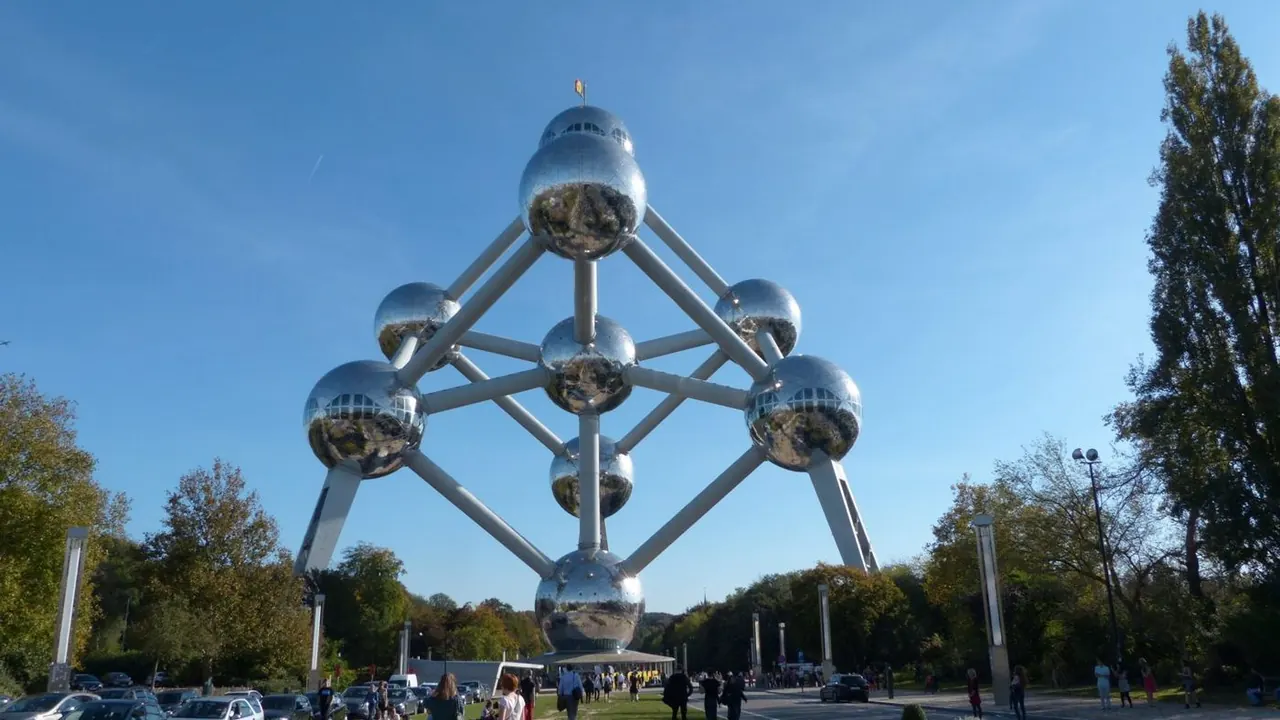
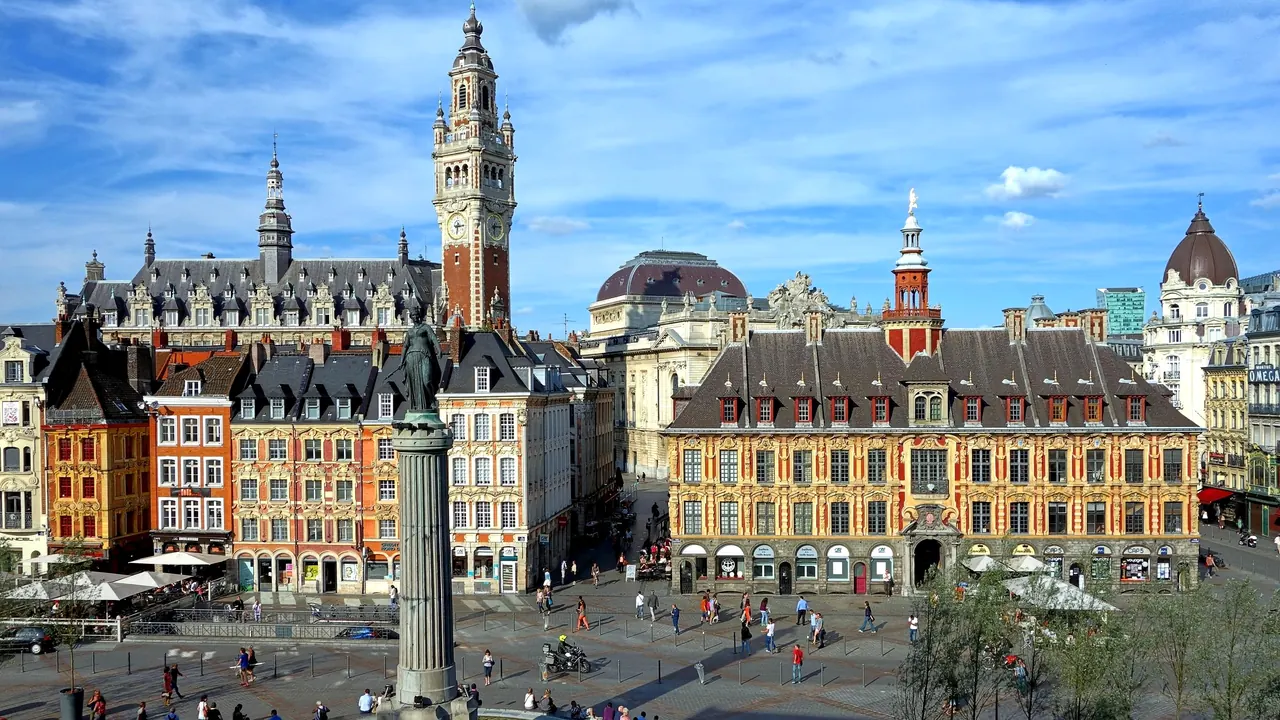
Photos: Brussels by Ettanghe, CC BY-SA 4.0, cropped; Lille by Velvet, CC BY-SA 3.0, cropped.
Brussels or Lille?
Our verdict in twelve categories, each scored against the same fixed benchmark cities, and the climate month by month, so you can choose for your trip.
Choose Brussels for
- live music and the arts
- food and drink
- nature and the outdoors
Brussels is the better choice for a fuller trip with more depth in the evenings. Its museums run from Bruegel and Magritte to Horta's Art Nouveau houses, its opera and concert halls carry real weight, and its food goes well beyond the Flemish classics into Congolese, Moroccan and Turkish cooking. Families also get more to do, and the Sonian Forest gives a proper walk without leaving the city.
Choose Lille for
- prices
- getting around
- day trips
Lille suits a traveller who wants a compact, easy base that costs a little less. The flat old town, the Palais des Beaux-Arts and the estaminets of Vieux-Lille fill two or three relaxed days. With both stations a short walk from the Grand Place, it makes a very convenient springboard for Flanders, Paris and the First World War battlefields.
Scoreboard
Twelve categories on one fixed scale from 0 to 100. The shaded stretch is the gap between the two.
Your match
Pick a travel style or drag the sliders, and both match scores follow your weighting.
Wins on live music and the arts and food and drink with your weighting.
Wins on prices and getting around with your weighting.
What matters to you?
Category by category
What the scores mean for a trip.
Beaches & swimming
Neither city has any beach life, and in both the sea means a breezy North Sea day out rather than swimming. From Brussels it is a little over an hour by train to the long sandy beaches at Ostend, De Haan or Knokke. From Lille it is about an hour to Malo-les-Bains at Dunkirk, with the Opal Coast dunes further on. Brussels has the edge for swimming in town, with its Art Deco indoor pools and summer open-air basins.
Food & drink
Both cities cook the same Flemish dishes, carbonnade and waterzooi among them, and in both beer counts for more than wine. Brussels takes it further. It has the city's own lambics and gueuzes in old brown cafés, the praline makers of the Sablon, and serious French-Belgian cooking. Its immigrant quarters add Congolese food in Matonge and Moroccan and Turkish kitchens in Saint-Josse and Schaerbeek.
Lille's strength is the estaminet: potjevleesch, the cheese-and-beer welsh and Maroilles in everything, eaten in small wood-panelled rooms in Vieux-Lille. The Sunday market at Wazemmes is a fine morning. Beyond regional cooking, though, the choice thins out quickly.
Culture & sights
Brussels has more to see and more variety. The gilded Grand-Place and the Galeries Royales Saint-Hubert are in the lower town. Up the hill, the Royal Museums hold Bruegel and Rubens beside a whole museum for Magritte. Add Horta's Art Nouveau houses, the Cinquantenaire museums and the comic murals, and a week passes easily, though the cityscape between them is patchy.
Lille is smaller but more of a piece. Vieux-Lille's Flemish baroque brick hangs together better than central Brussels. The Palais des Beaux-Arts is a major museum, and La Piscine in Roubaix is memorable. It is a city for two or three days rather than a week.
Nightlife
Both are bar cities rather than club cities, and the difference is in the crowd. Brussels drinks in wood-panelled taverns pouring strong ales and lambics, around Saint-Géry, Flagey and the cafés of Saint-Gilles. It also has a respected techno club in the Marolles and a queer scene on Rue du Marché au Charbon.
Lille's nights are shaped by its huge student population. Rue Masséna and Rue Solférino are loud and cheap on Thursdays, while the cellar bars of Vieux-Lille are calmer. For a serious late night, Lille-goers have traditionally crossed into Belgium.
Nature & outdoors
Brussels gets more out of its surroundings. The Sonian Forest, a partly UNESCO-listed beech forest with tall trees and long trails, starts at the city's edge. The hills and rivers of the Meuse valley around Dinant and Namur make a proper day of hiking or kayaking.
Lille's outdoors is gentler: level towpaths along the Deûle canal, the Citadel park and short walks on the low Monts de Flandre. The chalk cliffs of Cap Blanc-Nez and Cap Gris-Nez are the real scenery, but they take a long day.
Day trips
This is where the two cities come closest, and both are outstanding bases. From Brussels, Ghent, Antwerp, Leuven and Mechelen are within an hour and Bruges just about. Lille reaches Brussels itself in about half an hour and Ghent and Bruges in roughly an hour.
The difference lies in which side of the border you want. Brussels adds Waterloo, Namur and Dinant to the south. Lille adds Arras, Amiens cathedral, the Louvre-Lens and the battlefields of Ypres, Vimy and the Somme. It also brings Paris slightly closer and puts London within an ambitious day by Eurostar.
Good for families
Brussels gives children more to do. The Atomium and Mini-Europe sit side by side, and the Natural Sciences museum has its herd of Iguanodons. There are also Train World and the comic murals, with Walibi and Pairi Daiza an easy outing.
Lille is pleasant with children but thinner. Its best asset is the Citadel park, with its small zoo, playgrounds and flat paths for scooters, plus a science centre reached by metro. Both old towns are cobbled and awkward with a pushchair.
Getting around
Lille is the easier city to get about on foot. Its centre is flat and compact, and both main stations stand within walking distance of the old town, so arriving and setting off on day trips takes very little effort. The automated VAL metro and the tram cover the outskirts.
Brussels also has a walkable core, but the climb from the lower to the upper town is steep. Visitors use metro and trams more, with the trams to Ixelles and Saint-Gilles the nicest rides. In both cities a car is more trouble than help.
Shopping & style
The two are evenly matched, and both are good for browsing rather than designer fashion. Brussels is the place for chocolate in the Sablon and the Galeries, antiques, the daily flea market on Place du Jeu de Balle and Belgian designers along Rue Antoine Dansaert.
Lille has the chains on Rue Neuve, the Euralille mall and independent shops in Vieux-Lille. Its standout is the Braderie each September, when the whole city becomes one vast flea market for a weekend.
Affordability
Lille is the gentler on the wallet. Hotels are reasonable for most of the year, and estaminet meals, beer, the metro and museum entry are all fairly priced, though nothing is truly cheap.
Brussels costs more, mainly for weekday hotels aimed at EU and business travellers and for sit-down restaurants. Weekends, frites and the immigrant neighbourhoods narrow the gap.
Live music & performing arts
Brussels is a real destination for performance, and Lille is not. La Monnaie is known for adventurous opera and has its place in Belgian history. Bozar, Flagey and the spring Queen Elisabeth Competition anchor classical music, and the city is strong in contemporary dance and theatre in two languages, with an old marionette theatre on the side.
Lille offers a dependable season instead. The Opéra de Lille, the Orchestre National de Lille, the Théâtre du Nord and touring acts at the Zénith and Aéronef are worth an evening if you are already there, but few plan a trip around them.
Wellness & relaxation
Neither city is a place to unwind, and neither has a bathing tradition of its own. Brussels has a little more on hand, with North African hammams, handsome Art Deco pools and the Sonian Forest for a quiet walk, though its traffic and working-capital pace get in the way.
Lille has the more easygoing pace and slow afternoons in Vieux-Lille tea rooms. For a real thermal bath you take the short train to Saint-Amand-les-Eaux.
When should you go?
Pick your month. The climate figures are measured averages, not a forecast.
Brussels in July
Lille in July
Daytime high, °C
Rainfall in the month, mm
Temperature and rainfall are climate normals, averaged over the years shown. Brussels: 1991-2020 normals, Uccle (5.2 km from centre). Lille: 1991-2020 normals, Lille (7.8 km from centre).
The two cities have almost the same climate, so when you go matters more than which one you pick. Neither has a beach season. Late May to September is the time for walking the streets, with summer highs around 23°C and the longest, sunniest days in June and July. April, October and November are cool but fine for sightseeing, though November days are short and dim. From December to February, daytime highs sit around 6°C to 8°C, daylight is scarce and a trip leans on museums and taverns.
It rains in every month in both cities, but Brussels is noticeably wetter, especially in late summer and winter. In August it gets about 90mm against 69mm in Lille. Lille is also a degree warmer in both midwinter and high summer. For the driest walking in either city, April is the safest bet.
Which traveller are you?
On a culture and arts trip, Brussels has the stamina for a week. Mornings can go to a different museum, from musical instruments to military history, and evenings to dance, theatre or a classical concert. Lille runs out after three days.
On a tight budget, Lille is the cheaper of two mid-priced cities, though not a cheap one. Walk the flat centre, make a tavern lunch the main meal, graze at Wazemmes market on Sunday and dodge the Braderie weekend.
For a short city break, Lille is the easier fit. You step off the train a few minutes from Vieux-Lille, and the main sights sit close together on level ground. A weekend covers the Palais des Beaux-Arts, the Grand Place and La Piscine without rushing.
Before you go
| Measure | Brussels | Lille |
|---|---|---|
| Official language | French, German, Dutch | French |
| Currency | Euro (EUR) | Euro (EUR) |
| Sockets | CE230 V, 50 Hz | CE230 V, 50 Hz |
| Driving side | Right | Right |
| Time zone | UTC+1, UTC+2 in summer | UTC+1, UTC+2 in summer |
| Emergency number | 112 | 112 |
| Elevation | 70 m | 17 m |
| Main airport | Brussels Airport (BRU)11 km from centre191 non-stop destinations | Lille Airport (LIL)8 km from centre61 non-stop destinations |
| Public holidays this year | 14 days | 11 days |
By the numbers
| Measure | Brussels | Lille |
|---|---|---|
| City population | 195,546 | 238,246 |
| People per km² | 5,908 | 6,846 |
| Museums within 10 km | 106 | 23 |
| UNESCO World Heritage sites within 50 km | 11 | 6 |
Where else could you go?
Every comparison below shares a destination with this one, so you can follow Brussels or Lille somewhere new.