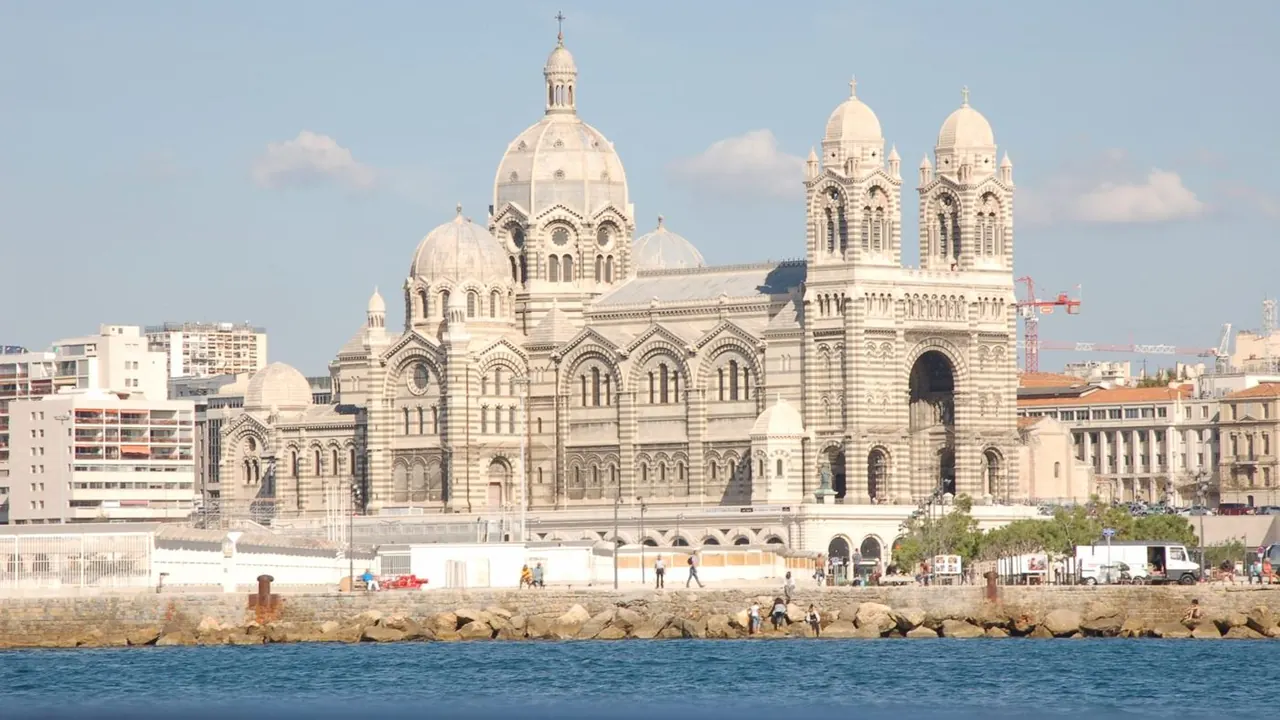
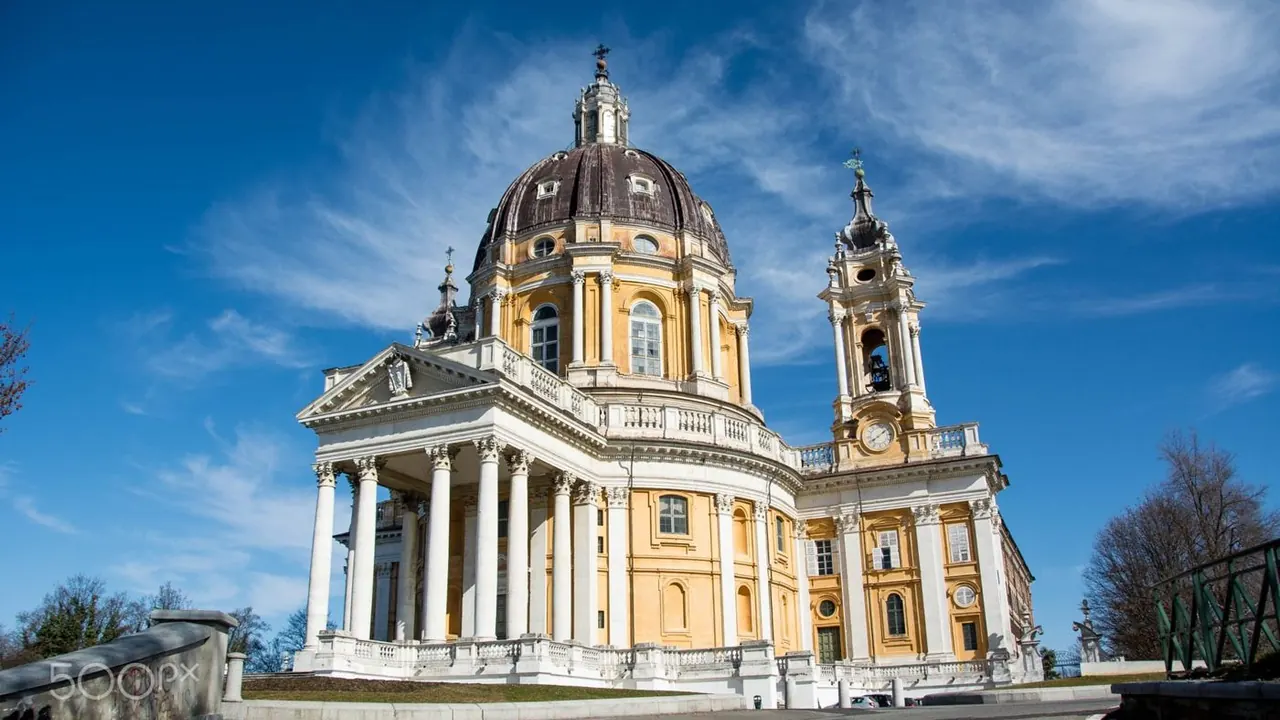
Photos: Marseille by Charlotte Noblet, CC BY-SA 3.0, cropped; Turin by Konstantin Dacosta, CC BY 3.0, cropped.
Marseille or Turin?
Our verdict in twelve categories, each scored against the same fixed benchmark cities, and the climate month by month, so you can choose for your trip.
Choose Marseille for
- beaches
- nightlife
- nature and the outdoors
Marseille suits travellers who want the sea and the rock at the edge of a big city. You can swim off the Corniche before breakfast, walk into the Calanques, take a ferry out to the Frioul islands and reach Provence by train. It is rougher and less polished than Turin. What you get for that is a real summer beach city with a loud, informal night out on the terraces of Cours Julien.
Choose Turin for
- culture and sights
- food and drink
- prices
Turin is the better pick for a trip built around museums, food and an easy, orderly centre. The Museo Egizio and the Savoy palaces, Piedmontese cooking and the aperitivo under the arcades, and a flat grid you can cross on foot make it the more comfortable stay. It is also the gentler city on the budget, and the Alps and the Langhe wine hills are close by. It has no sea at all.
Scoreboard
Twelve categories on one fixed scale from 0 to 100. The shaded stretch is the gap between the two.
Your match
Pick a travel style or drag the sliders, and both match scores follow your weighting.
Too close to call, 1 point apart
Wins on beaches and nightlife with your weighting.
Wins on culture and sights and food and drink with your weighting.
What matters to you?
Category by category
What the scores mean for a trip.
Beaches & swimming
On this the two are far apart. Marseille has the broad Prado beaches with lawns behind them, swimming spots along the Corniche such as the Vallon des Auffes, coves on the Frioul islands and the turquoise inlets of the Calanques. You can swim from June to September, though the mistral can chill the water from one day to the next.
Turin is inland on the Po plain. The Ligurian coast is nearly two hours away, so a swim means a lake such as Avigliana, or a separate stay by the sea.
Food & drink
Turin has the stronger table. Piedmontese cooking is precise and rich: agnolotti del plin, vitello tonnato, bollito misto and white truffles from the Langhe in autumn, with Barolo and Barbaresco to drink. Vermouth and the aperitivo were born here, and gianduja and bicerin are still served in the arcaded cafés.
Marseille eats in a looser, more mixed way. Bouillabaisse is a set-piece meal in the small harbours of the Corniche, and the everyday food runs from panisses to the North African, Comorian and Armenian grocers of Noailles. Its cheap street-level eating is more varied than Turin's, but the set menus around the Vieux-Port are best avoided.
Culture & sights
Turin has the deeper collection of sights. The Museo Egizio alone draws visitors from abroad, and around it stand the Royal Palace, Palazzo Madama, the cathedral of the Shroud and the UNESCO-listed Savoy residences led by Venaria. The Mole's Cinema Museum and the Castello di Rivoli's contemporary art add to all this, set in a stately baroque centre.
Marseille's history goes back further, to Greek sailors around 600 BC, but it is spread through a working city. Its highlights are Notre-Dame de la Garde, the harbour forts beside the MuCEM, Le Panier and the Vieille Charité, the Château d'If and Le Corbusier's Cité Radieuse. It is a city to read on foot rather than a sequence of great museums.
Nightlife
Marseille has the livelier night out, and it is loud and street-based. Cours Julien and La Plaine fill with students and locals until late, the Vieux-Port terraces carry on into the night, and in summer there are warehouse electronic nights and parties by the sea. Some central streets feel edgy late on, so many people take a taxi home.
Turin's evenings are gentler and start with the aperitivo. People then move on to wine bars in the Quadrilatero Romano, the pavements of San Salvario and, in summer, the Murazzi along the Po.
Nature & outdoors
Both have serious outdoors close at hand, but of different kinds. Marseille's is coastal and starts inside the city limits. The Calanques national park offers limestone ridges, the great coastal path, sport climbing, and kayaking and diving around Riou. It is best in spring and autumn, because on high fire-risk days in summer the massifs can close.
Turin's is alpine. The Gran Paradiso, with its ibex, the Susa valley and the Via Lattea slopes are roughly an hour or so away, for skiing in winter and hut-to-hut hiking in summer. Close to town there are only the hills up to Superga and the Mandria forest.
Day trips
Both are excellent bases, so the real choice is Provence or Piedmont. From Marseille, Aix is half an hour away and Cassis is closer still. Arles and Avignon are easy train trips, and a car opens up the Luberon villages and Les Baux.
From Turin you head south to the Langhe for Alba, Barolo and Bra, or west to the Sacra di San Michele on its rock. Milan is about an hour away on the fast train, and Genoa and Aosta make longer days.
Good for families
Turin is the easier city with children. Its flat grid and long arcades suit pushchairs in rain or sun. The glass lift through the Mole, the car museum, the Egyptian mummies and the planetarium give plenty to do indoors, and the Zoom Torino zoo park is a drive away.
Marseille's family appeal is outdoors and mostly in summer: the Prado beaches, the lake and lawns of Parc Borély, and boat trips to the Frioul islands and the Château d'If. Steep streets, heavy traffic and heat make the centre hard work with small children.
Getting around
Turin is simpler to get around. The centre is flat and gridded under kilometres of arcades, so most sights are a walk apart from Porta Nuova. The driverless metro and the trams fill the gaps, and the stations link well to the rest of Italy.
Marseille's core is walkable but steep, and the city spreads across hills and bays. Buses to the beaches and the Calanques trailheads get stuck in traffic. The small summer ferries to Pointe Rouge and L'Estaque are the pleasant way to avoid the roads.
Shopping & style
Turin offers more to browse. It has the big labels under the arcades of Via Roma, the long pedestrian Via Garibaldi, small boutiques around Via Lagrange, antique dealers on Via Maria Vittoria and the Balon flea market. Its chocolate makers and truffle delicatessens make the best souvenirs.
Marseille's buys are local: green cubes of olive-oil soap, clay santon figures from Le Panier workshops, and fabrics and teas in the lanes of Noailles. Neither city suits a hunt for designer fashion.
Affordability
Turin goes easier on the wallet. A generous aperitivo can stand in for dinner, the neighbourhood trattorie and Porta Palazzo market are good value, and central hotels are fairly priced except during big trade fairs.
Marseille is mid-range, but sit-down meals cost what they do anywhere in France, and rooms near the Vieux-Port and the beaches climb in July and August. Its cheap end is market food and North African snacks, plus free walking in the Calanques.
Live music & performing arts
Marseille's stages lean popular and Mediterranean, while Turin keeps up a fuller, more classical programme all year. In Marseille, the art deco Opéra and La Criée in the old fish market cover opera and serious drama, and the Friche la Belle de Mai mixes contemporary dance, theatre and concerts. The city's own voice is heard in hip-hop, world music, the summer Festival de Marseille and the autumn Fiesta des Suds.
For an evening of opera or orchestral music, Turin is the surer bet. The Teatro Regio stages opera and ballet, the RAI National Symphony Orchestra plays in its own auditorium, and Renzo Piano's Lingotto hall adds more concerts, with jazz clubs scattered through the centre. Only the Teatro Stabile's plays, almost all in Italian, are harder going for visitors.
Wellness & relaxation
Neither is a spa city, and both send visitors elsewhere for proper rest: Cassis or a country house inland from Marseille, and Acqui Terme or the Aosta valley baths from Turin. The difference is the mood of the city itself. Turin's long café breaks and evening walks under the arcades make it calm to stay in. Dense, noisy Marseille offers its slow moments mainly over a long harbour lunch on the Corniche.
When should you go?
Pick your month. The climate figures are measured averages, not a forecast.
Marseille in July
Turin in July
Daytime high, °C
Rainfall in the month, mm
Where the figures come from
Turin has no rain gauge within 25 km of the centre, so its rainfall comes from a gridded climate dataset read at the city rather than from a gauge further away.
Temperature and rainfall are climate normals, averaged over the years shown. Marseille: 1991-2020 normals, Marseille / Marignane (20.6 km from centre). Turin: 1991-2020 normals, Torino / Caselle (15.4 km from centre).
Marseille is a summer city by the sea. The water is pleasant from late June to September and is warmest in August at about 22°C. July is hot at around 31°C, almost dry and very sunny, which makes long walks in the Calanques heavy going. Spring and October are the kinder months for exploring the streets and the trails. The rain arrives in heavy bursts from September to November, and winters stay mild and fairly bright.
Turin has colder winters, with January highs near 7°C, and it is damp for much of the year. May is the wettest month, and autumn is wet too, with November bringing about 88mm. Summer reaches the high twenties and can feel close on the plain. Late spring, June and the start of autumn are the most comfortable months for walking the arcades. For most of the year Marseille is the warmer, drier and sunnier of the two.
Which traveller are you?
For a beach and sun trip, Marseille is the only real choice of the two. It has a warm sea all summer, family beaches at the Prado, morning swims off the Corniche and the clear inlets of the Calanques. Turin's nearest sea is a long day out in Liguria.
On a culture and arts trip, Turin packs more into each day. The Museo Egizio, the Savoy palaces, the Cinema Museum inside the Mole and a full Teatro Regio season all sit in a compact centre. Marseille's heritage is scattered across a sprawling, hilly city.
On a trip on a tight budget, Turin makes money go further. A generous aperitivo can replace dinner, Porta Palazzo market feeds you cheaply and central hotels stay fairly priced most of the year. In Marseille, summer rooms near the port and sit-down French meals cost more.
Before you go
| Measure | Marseille | Turin |
|---|---|---|
| Official language | French | Italian |
| Currency | Euro (EUR) | Euro (EUR) |
| Sockets | CE230 V, 50 Hz | CFL230 V, 50 Hz |
| Driving side | Right | Right |
| Time zone | UTC+1, UTC+2 in summer | UTC+1, UTC+2 in summer |
| Emergency number | 112 | 112 |
| Elevation | 0 m | 239 m |
| Main airport | Marseille Provence Airport (MRS)21 km from centre126 non-stop destinations | Turin Airport (TRN)14 km from centre65 non-stop destinations |
| Public holidays this year | 11 days | 13 days |
By the numbers
| Measure | Marseille | Turin |
|---|---|---|
| City population | 886,040 | 841,600 |
| People per km² | 3,683 | 6,474 |
| Museums within 10 km | 27 | 72 |
| UNESCO World Heritage sites within 50 km | 1 | 4 |
| Swim season, months above 21 °C | 2 months | - |
Where else could you go?
Every comparison below shares a destination with this one, so you can follow Marseille or Turin somewhere new.