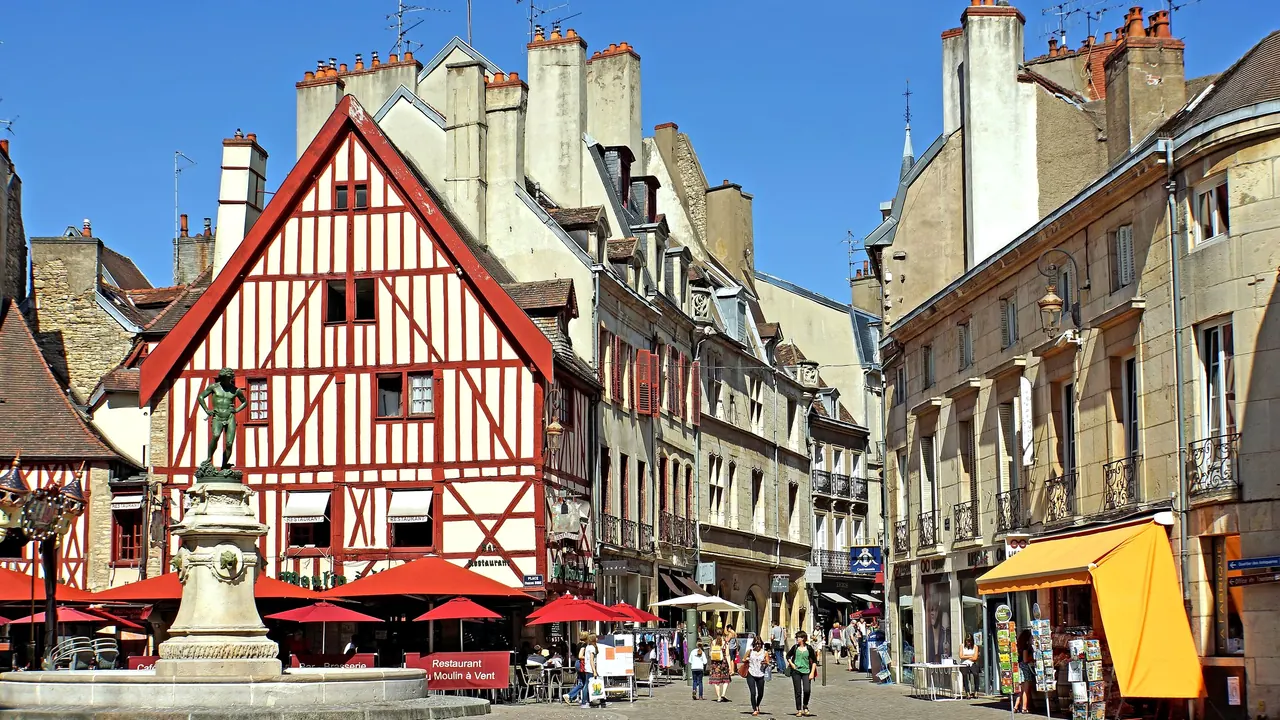
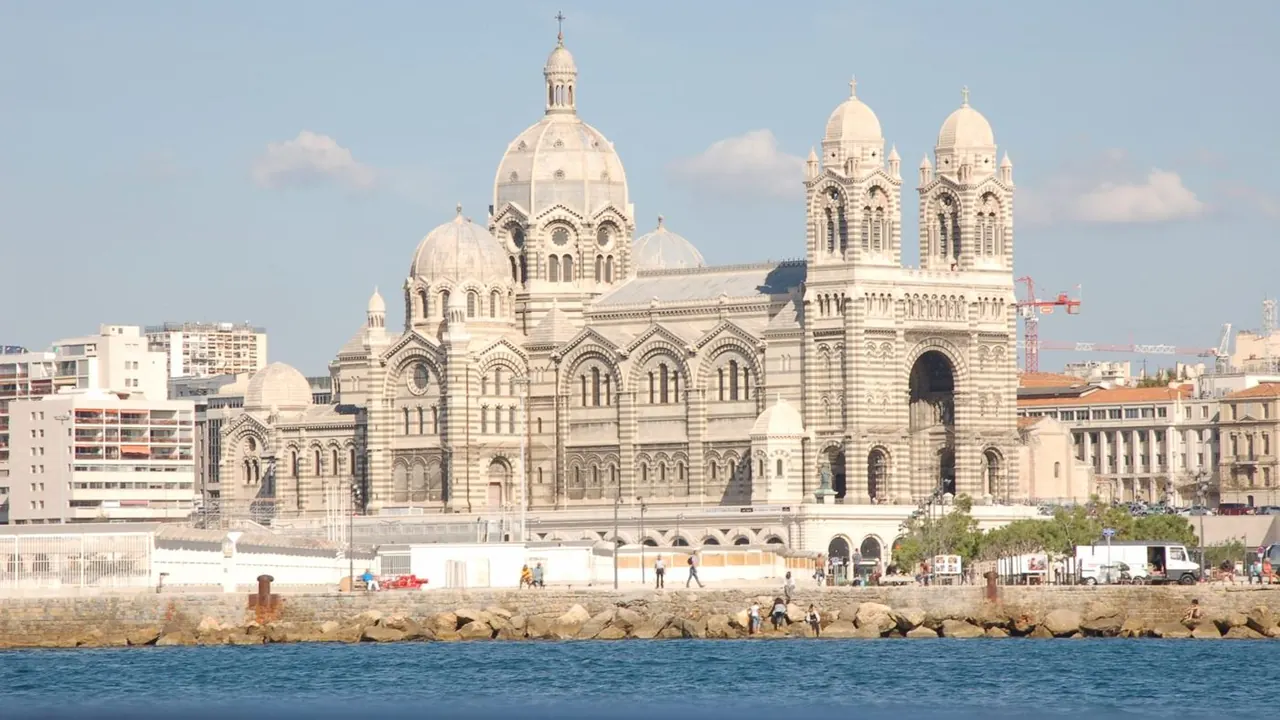
Photos: Dijon by Dennis G. Jarvis, CC BY-SA 2.0, cropped; Marseille by Charlotte Noblet, CC BY-SA 3.0, cropped.
Dijon or Marseille?
Our verdict in twelve categories, each scored against the same fixed benchmark cities, and the climate month by month, so you can choose for your trip.
Choose Dijon for
- getting around
- prices
- food and drink
Dijon suits travellers who want a compact, walkable French city built around food and wine. The old ducal centre can be seen on foot in a couple of days, Les Halles and the wine bars show Burgundian cooking at its best, and the Grands Crus villages and Beaune start just south of town. It is the calmer, easier and slightly cheaper choice, good for couples and wine lovers who need neither a beach nor late nights.
Choose Marseille for
- beaches
- nature and the outdoors
- nightlife
Choose Marseille when the sea and the outdoors matter. It has swimming from city beaches and in the Calanques, a national park for hiking, climbing and kayaking, a livelier night out and a longer list of Provence towns within reach. In return you get a rougher, louder and more spread-out city, and it pays to come in the warmer months.
Scoreboard
Twelve categories on one fixed scale from 0 to 100. The shaded stretch is the gap between the two.
Your match
Pick a travel style or drag the sliders, and both match scores follow your weighting.
Wins on getting around and prices with your weighting.
Wins on beaches and nature and the outdoors with your weighting.
What matters to you?
Category by category
What the scores mean for a trip.
Beaches & swimming
On beaches, the two cities could hardly be further apart. Dijon is hours from any coast. Its only open-water swim is the supervised lawn-and-sand strip at Lac Kir, which is fine for a hot afternoon but not a reason to come.
Marseille has the Mediterranean on its doorstep. The broad Prado beaches suit families, locals swim early off the Plage des Catalans and the Vallon des Auffes, and the turquoise inlets of the Calanques make a half-day outing on foot or by boat. The mistral can chill the water from one day to the next, and the city beaches sometimes close after heavy rain.
Food & drink
Both cities eat very well, but in different ways. Dijon is about Burgundian classics and wine: boeuf bourguignon, snails, Époisses from Les Halles, and village Burgundies poured by the glass, with the vineyards starting at the city's edge.
Marseille is a port kitchen, with a wider range and cheaper everyday food. It has the spice shops and North African bakeries of Noailles, panisses and wood-fired pizza, and bouillabaisse as the big sit-down meal. Pick Dijon for wine and French regional cooking and Marseille for variety and street food, and avoid the tired set menus around the Vieux-Port.
Culture & sights
The two are evenly matched here. The difference is in how their history is laid out. Dijon keeps it in one tidy, well-preserved centre: the ducal palace with the Valois tombs in the Musée des Beaux-Arts, half-timbered streets and the lucky owl on Notre-Dame, all within a short walk of each other.
Marseille, France's oldest city, spreads its sights across a working, rougher city. There is Notre-Dame de la Garde on its hill, the forts and the MuCEM at the harbour mouth, the Vieille Charité in Le Panier, and Le Corbusier's Cité Radieuse further out. Dijon is easier to take in over two or three days. Marseille takes more legwork but covers more ground, from its Greek beginnings to modern architecture.
Nightlife
Marseille gives you the bigger night out. Students and locals fill the graffiti-painted bars of Cours Julien and La Plaine until late, terraces on the Vieux-Port carry on into the night, and there are electronic nights in warehouses and summer parties by the sea. Some central streets feel edgy late at night, so a taxi home is sensible.
Dijon's evenings are smaller and gentler: wine bars and pubs on Rue Berbisey, terraces around Place Émile Zola, and a late dinner. There are few clubs, and outside term time the streets are quiet by midnight.
Nature & outdoors
For the outdoors, Marseille is much stronger. The Calanques national park starts in its southern suburbs, with the coastal path to Sormiou, Sugiton and En-Vau, well-known sport climbing, and kayaking and diving around the Riou islands. Sainte-Victoire and the Sainte-Baume are within an hour, though the massifs can close in summer on days of high fire risk.
Dijon's surroundings are gentler. You can walk and climb in the combes just west of town, cycle flat stretches of the Burgundy Canal towpath or ride through the vineyards towards Beaune. The lakes and granite hills of the Morvan are further off.
Day trips
Both make excellent bases, and Marseille has the wider choice. Aix, Cassis, Arles and Avignon are all within about an hour, and the Pont du Gard, the Luberon villages and Les Baux fill longer days. Between them they cover Roman ruins, the papal palace, painters' towns and the coast.
Dijon's day trips centre on wine: the Route des Grands Crus to Beaune and Meursault, with Fontenay Abbey, Semur-en-Auxois and Alésia to the north-west. From either city the larger towns are on the railway, but the villages are easier by car.
Good for families
Marseille gives children more to do, mainly in summer. There are the Prado beaches with gentle water, the lake and lawns of Parc Borély, and boat trips to the Frioul islands and the Château d'If. The catch is the traffic, steep streets and heat, which make pushing a buggy hard work, so families tend to stay near the southern beaches.
Dijon is the calmer city to walk with small children. It has a pedestrian centre, the planetarium at the Jardin de l'Arquebuse and paddling at Lac Kir. Once those are done, though, the vineyards and art museums will hold the parents' attention more than the children's.
Getting around
Dijon is the easier city to get around. The station, market, palace and cathedral are a few minutes apart on foot, two tram lines serve the outskirts, and trains run down the wine route to Beaune. You only need a car for the villages off the railway.
Marseille's centre is walkable but hilly, and it has two metro lines, trams and harbour ferries. Beyond the core the city sprawls. Buses to the beaches and Calanques trailheads get stuck in traffic, and driving and parking in the centre are stressful.
Shopping & style
Neither city is a fashion destination, but Marseille has a little more range. Noailles is packed with fabrics, teas and North African goods, Le Panier has santon workshops and Marseille soap, and Cours Julien adds independent design. The department stores are on Rue Paradis, and there is a large shopping centre at La Joliette.
In Dijon, most of the shopping is food and drink: mustard, pain d'épices, cassis, Burgundy from the wine merchants and cheese around Les Halles. Rue de la Liberté has the chains.
Affordability
Dijon is the somewhat cheaper stay. Hotels are moderately priced, bistro set lunches are a fair-priced way to eat well, and wine by the glass is good value. The bill only climbs with cellar tastings, wine tours and serious restaurants.
Marseille costs a little more, mostly because rooms near the Vieux-Port and the beaches cost much more in July and August. It makes some of that back with cheap street food, inexpensive public transport, free walking in the Calanques and low museum entry charges.
Live music & performing arts
Marseille has more on stage and a wider mix of styles. There is the art deco Opéra, serious drama at La Criée, contemporary work at the Friche la Belle de Mai, and a strong hip-hop and world music scene. The Festival de Marseille runs in summer and the Fiesta des Suds in autumn.
Dijon's season is respectable for a city its size, built around opera and concerts at the Grand Théâtre and the Auditorium. It follows the academic year, though, and thins out to outdoor events in summer.
Wellness & relaxation
Nobody comes to either city for spa treatments, but Marseille has a little more. There are neighbourhood hammams run by its North African community and a few hotel spas, and a swim in a cove or a long lunch by a Corniche harbour is restful in its own way. The city itself is loud, and many who want quiet stay in Cassis instead.
Dijon has only a handful of hotel spas, some with grape-based treatments, and no bathing culture. Its calm comes from the slow provincial pace, quiet squares and lazy afternoons in the vineyards.
When should you go?
Pick your month. The climate figures are measured averages, not a forecast.
Dijon in July
Marseille in July
Daytime high, °C
Rainfall in the month, mm
Temperature and rainfall are climate normals, averaged over the years shown. Dijon: 1991-2020 normals, Dijon (7 km from centre). Marseille: 1991-2020 normals, Marseille / Marignane (20.6 km from centre).
Dijon has a continental climate. Winters are cold and grey, with highs around 6°C and little sun from November to February. It is at its best from May to September, when afternoons reach a comfortable 27°C in July, which is ideal for walking the old town and cycling the vineyards. Rain is spread through the year and is a little heavier in May, October and November.
Marseille is warmer and much sunnier in every month. The sea is good for swimming from June to September and is warmest in August at 22°C. July is almost dry, but highs of 31°C make midday sightseeing and Calanques hikes hard going. Spring and early autumn are best for walking, though the rain arrives in earnest in September, with 82mm that month. Unlike Dijon's, Marseille's winter is mild enough for comfortable sightseeing.
Which traveller are you?
On a beach and sun trip, Marseille is the only real option. It has city beaches at the Prado, swimming spots along the Corniche, the turquoise Calanques and long, sunny summers. Dijon is hours from any coast and offers only a bathing lawn by a lake.
For an outdoors trip, Marseille comes out ahead again. The Calanques national park begins in its suburbs, with coastal hiking, sport climbing, kayaking and diving, and Sainte-Victoire is within an hour. Dijon's combes, canal towpath and vineyard cycling are pleasant but much gentler.
For a short city break, Dijon is the easier pick. In its compact pedestrian centre the ducal palace, Les Halles and the old streets are minutes apart. The TGV gets you to Paris quickly, and an afternoon among Beaune's vineyards fits neatly into two days.
Before you go
| Measure | Dijon | Marseille |
|---|---|---|
| Official language | French | French |
| Currency | Euro (EUR) | Euro (EUR) |
| Sockets | CE230 V, 50 Hz | CE230 V, 50 Hz |
| Driving side | Right | Right |
| Time zone | UTC+1, UTC+2 in summer | UTC+1, UTC+2 in summer |
| Emergency number | 112 | 112 |
| Elevation | 220 m | 0 m |
| Main airport | Lyon Saint-Exupéry Airport (LYS)178 km from centre141 non-stop destinations | Marseille Provence Airport (MRS)21 km from centre126 non-stop destinations |
| Public holidays this year | 11 days | 11 days |
By the numbers
| Measure | Dijon | Marseille |
|---|---|---|
| City population | 161,830 | 886,040 |
| People per km² | 3,890 | 3,683 |
| Museums within 10 km | 8 | 27 |
| UNESCO World Heritage sites within 50 km | 1 | 1 |
| Swim season, months above 21 °C | - | 2 months |
Where else could you go?
Every comparison below shares a destination with this one, so you can follow Dijon or Marseille somewhere new.