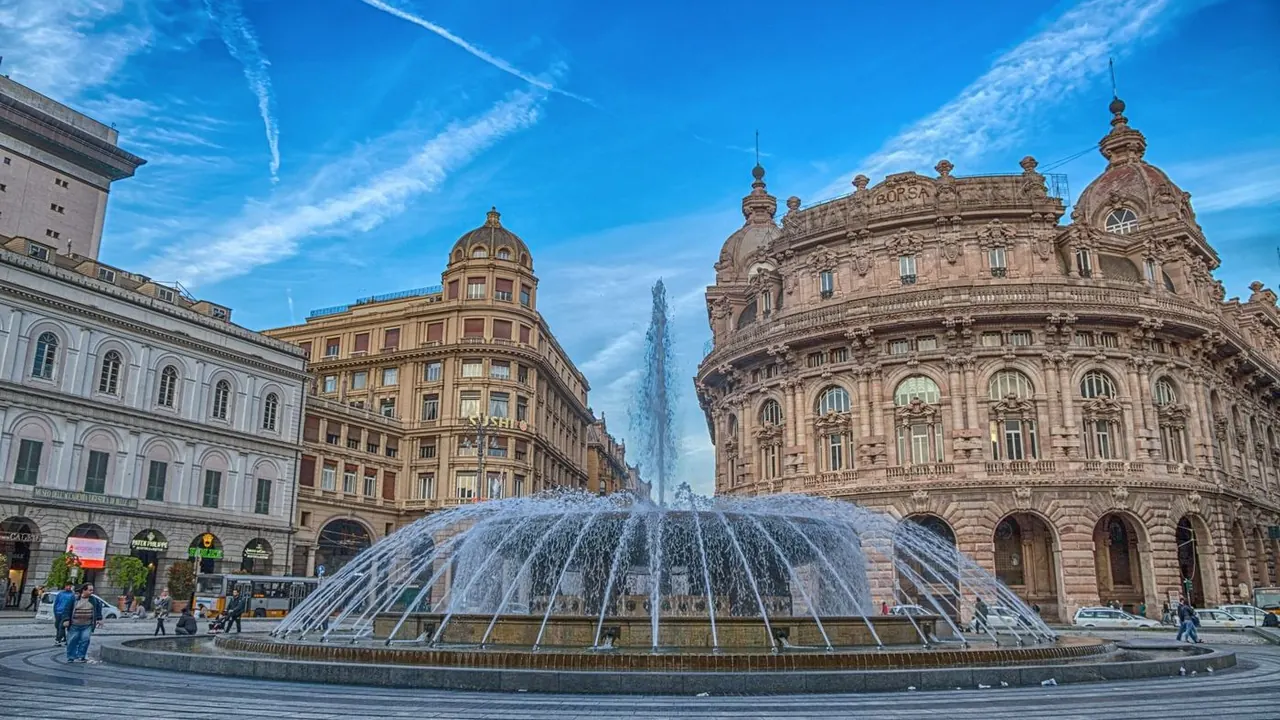
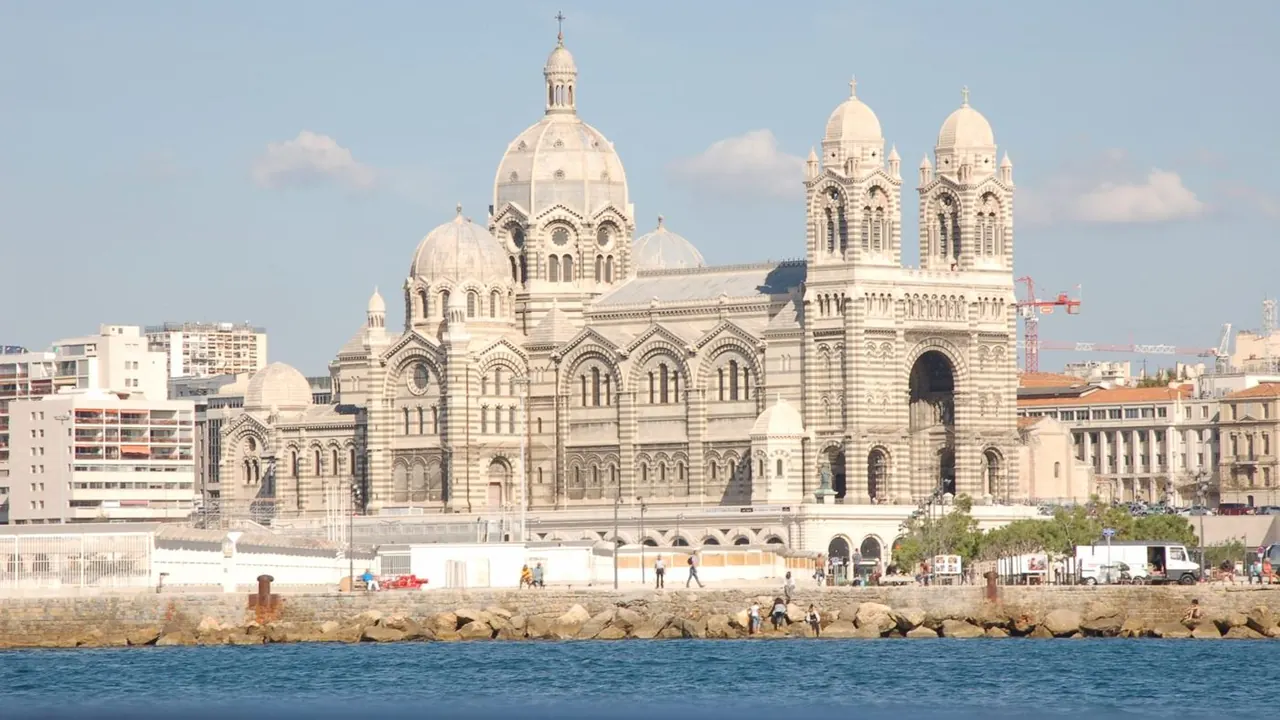
Photos: Genoa by Faber1893, CC BY-SA 4.0, cropped; Marseille by Charlotte Noblet, CC BY-SA 3.0, cropped.
Genoa or Marseille?
Our verdict in twelve categories, each scored against the same fixed benchmark cities, and the climate month by month, so you can choose for your trip.
Choose Genoa for
- families
- culture and sights
- prices
Genoa suits a traveller who wants a real old city to explore on foot, with the medieval caruggi, the palace museums of the Strade Nuove and a famous stretch of Riviera on the same railway line. It is the easier choice with children, the cheaper of the two, and simpler to get around, with funiculars and lifts doing the climbing. Evenings are gentle, built around aperitivo in old squares.
Choose Marseille for
- nightlife
- beaches
- nature and the outdoors
Marseille is the better pick for someone who wants the sea as a landscape rather than a backdrop: a national park of limestone inlets at the city's edge, broader city beaches and long sunny summers. It has more life after dark, a looser and more multicultural street energy, and Provence on the doorstep, though families and anyone who wants things tidy and easy will find it harder going.
Scoreboard
Twelve categories on one fixed scale from 0 to 100. The shaded stretch is the gap between the two.
Your match
Pick a travel style or drag the sliders, and both match scores follow your weighting.
Too close to call, 1 point apart
Wins on families and culture and sights with your weighting.
Wins on nightlife and beaches with your weighting.
What matters to you?
Category by category
What the scores mean for a trip.
Beaches & swimming
Marseille is the better swimming city. The Prado beaches give it a long, broad stretch of shingle and sand with lawns behind, and the Calanques add white cliffs and turquoise inlets you reach on foot or by boat, which is real scenery rather than a place to cool off. The Frioul islands add a few more coves a short ferry away.
Genoa's swimming is more improvised: the small pebble cove at Boccadasse, bathing decks built over the rocks along Corso Italia, and platforms below the Nervi promenade. The nicer bays at Camogli or Sestri Levante mean a train ride and a rented lounger. Its sea is a touch warmer in August, but it works best for an afternoon swim around city sightseeing.
Food & drink
Both port cities eat well, and they even share a chickpea fritter, panissa in Genoa and panisse in Marseille. The difference is breadth. Genoa's cooking is tightly regional, pesto with trofie, oily focaccia at breakfast, farinata by the slice from old friggitorie, with Vermentino to drink and little in the way of fine dining.
Marseille is more of a mix, shaped by arrivals from across the Mediterranean, with Noailles full of North African bakeries and Armenian and Comorian grocers. It also has a serious high-end tier and bouillabaisse as a ceremonial meal, though you need to steer clear of the tired set menus around the Vieux-Port.
Culture & sights
Genoa offers the richer sightseeing. Its medieval centre is preserved as one huge, shadowy maze of caruggi, with the UNESCO-listed palaces of Via Garibaldi and Via Balbi above it, the striped cathedral of San Lorenzo, and the sculpture of Staglieno cemetery. You can spend days on it without leaving the old town.
Marseille's history goes back further, to its Greek founding, but what survives is spread through a rougher modern city: the basilica of Notre-Dame de la Garde on its hill, the MuCEM beside Fort Saint-Jean, the Vieille Charité in Le Panier and Le Corbusier's Cité Radieuse. It has strong individual sights rather than a whole historic quarter to wander.
Nightlife
Marseille is the livelier city at night. Cours Julien and La Plaine fill with students and locals at graffiti-covered bars and small music venues, and in summer there are electronic nights in old warehouses and parties on rooftops and by the sea. Some central streets feel edgy late on, so a taxi home is wise.
Genoa's evenings are more reserved and mostly about aperitivo. Small bars around Piazza delle Erbe and the university lanes get busy at weekends and the Corso Italia comes alive in summer, but weeknights are quiet and there are few clubs.
Nature & outdoors
Both put serious walking within easy reach, in different landscapes. Marseille has the Calanques National Park inside its city limits, with bare limestone ridges, the coastal path to En-Vau and Sugiton, world-class sport climbing and diving off the Riou archipelago. Sainte-Victoire and the Sainte-Baume forest are about an hour away, but summer fire risk can close the massifs.
Genoa is greener and steeper. A funicular takes you to Righi and the ring of hilltop fortresses, the Portofino promontory leads down to San Fruttuoso, and the Cinque Terre trails are a train ride away. Boats from the harbour go whale and dolphin watching in the Pelagos Sanctuary, something Marseille cannot match.
Day trips
Both are excellent bases, and the choice comes down to coast or country. From Genoa, almost everything is a seaside town on one railway line: Camogli, Santa Margherita, Portofino and the Cinque Terre to the east, medieval Finale Ligure Borgo and Noli to the west, with Milan or Turin an easy day for museums.
Marseille opens up Provence instead: Aix about half an hour away, Roman Arles and Avignon's Palais des Papes about an hour by train, Cassis close by under its cliffs. The Luberon hill villages, Les Baux and the Pont du Gard are better with a car, which Genoa's coastal outings never need.
Good for families
Genoa is the easier choice with children, mainly thanks to the Porto Antico. The aquarium, one of Europe's largest, sits beside a children's science centre, a tropical biosphere and the Galata museum's submarine, and the funiculars and public lifts are fun in their own right. Away from the harbour, though, the steep, dark lanes are hard work with a pushchair.
Marseille has nothing comparable to fill a rainy day, and its museums are aimed at adults. Family life centres on the Prado beaches and Parc Borély, plus boat trips to the Château d'If, while heavy traffic and dirty central streets push most families south.
Getting around
Genoa is simpler to manage. What visitors come for is packed into the old town and the Porto Antico, funiculars, a rack railway and public lifts take the strain out of the hills, and the coastal railway reaches Nervi and the Riviera towns without a car.
Marseille's core from the Vieux-Port to Cours Julien is walkable, and it has more metro, with two lines plus trams. But the city sprawls across bays and hills, and the beaches and Calanques trailheads depend on buses that get stuck in traffic. The summer ferries across the harbour and out to Pointe Rouge are the pleasant exception.
Shopping & style
Neither is a place for designer shopping, and both are better for things you can only buy locally. In Genoa that means candied fruit, olive oil and pesto from long-established shops in the old town, silver filigree and coral, with the arcades of Via XX Settembre for mainstream Italian labels.
Marseille's local buys are green cubes of olive-oil soap and painted santon figures from the Le Panier workshops, plus fabrics and teas in the crowded streets of Noailles. It also has a little more independent design, in the boutiques of Cours Julien.
Affordability
Genoa is the cheaper city to stay in. Focaccia and farinata make lunch almost trivial, trattorias charge fairly, and central hotels cost less than in Italy's most visited cities. The costs that add up are lounger hire and the smart Riviera resorts in summer.
Marseille is mid-range for a big Western European city. Street food and market snacks are cheap and walking in the Calanques costs nothing, but sit-down meals are priced as in any French city, and rooms near the port and beaches go up sharply in July and August.
Live music & performing arts
The two are roughly equal here, and both are good for an evening or two rather than a whole trip. Genoa's offer is classical and rooted in tradition: opera and ballet at the Teatro Carlo Felice on Piazza De Ferrari, concerts in honour of Paganini, and small clubs that keep alive the city's singer-songwriter tradition.
Marseille is broader and more popular in taste. The art deco Opéra and the Théâtre de la Criée handle the classics, the Friche la Belle de Mai mixes dance and concerts in an old tobacco factory, and the city's hip-hop and world-music roots come out at the Fiesta des Suds.
Wellness & relaxation
Neither city is a place to rest, and neither has much of a spa culture. Genoa's quiet corner is Nervi, with its villa gardens and seafront promenade, and the historic thermal waters of Acqui Terme are a little over an hour inland.
Marseille has a few neighbourhood hammams but feels more relentless in the centre. Visitors after calm usually stay in Cassis or a country house and come into the city for the day.
When should you go?
Pick your month. The climate figures are measured averages, not a forecast.
Genoa in July
Marseille in July
Daytime high, °C
Rainfall in the month, mm
Where the figures come from
Genoa has no rain gauge within 25 km of the centre, so its rainfall comes from a gridded climate dataset read at the city rather than from a gauge further away.
Genoa's sunshine is measured 80 km from the centre, at Capo Mele.
Temperature and rainfall are climate normals, averaged over the years shown. Genoa: 1991-2020 normals, Genova / Sestri (6.7 km from centre). Marseille: 1991-2020 normals, Marseille / Marignane (20.6 km from centre).
Both cities share the same Mediterranean rhythm, but Marseille runs hotter and sunnier. From June to September either is warm enough for swimming, with Marseille reaching about 31°C in July, which makes midday walking hard work, while Genoa stays a little gentler in the high twenties. The sea off Genoa is actually the warmer of the two in late summer, around 25°C in August, and the mistral can chill the water at Marseille without warning. Marseille also has noticeably more sunshine through spring and summer.
May, June and late September are the sweet spot in both for walking city streets and coastal paths. Autumn is where they part: Genoa turns properly wet in October and November, peaking at about 195mm, while Marseille's heaviest rain comes earlier, in September, and its winters are drier and brighter. Winter days in both hover in the low teens, fine for museums and palaces but not for the beach.
Which traveller are you?
On a culture and arts trip, Genoa is the stronger choice. Its medieval old town survives as a whole, and the Rolli palaces on Via Garibaldi combine painted halls with Van Dyck and Rubens, while Marseille's heritage is scattered across a sprawling working city.
For a food and nightlife trip, Marseille has the edge. The eating is level between them, but Marseille adds the Noailles markets, bouillabaisse by the Corniche harbours and late nights around Cours Julien and La Plaine, where Genoa's evenings end with a quiet glass of wine.
On a family trip with children, Genoa is the easier city. The Porto Antico puts the large aquarium, a science centre and a walk-through submarine side by side, and the funiculars feel like rides, while Marseille has no aquarium or zoo and leaves families on the Prado beaches.
Before you go
| Measure | Genoa | Marseille |
|---|---|---|
| Official language | Italian | French |
| Currency | Euro (EUR) | Euro (EUR) |
| Sockets | CFL230 V, 50 Hz | CE230 V, 50 Hz |
| Driving side | Right | Right |
| Time zone | UTC+1, UTC+2 in summer | UTC+1, UTC+2 in summer |
| Emergency number | 112 | 112 |
| Elevation | 20 m | 0 m |
| Main airport | Genoa Cristoforo Colombo Airport (GOA)7 km from centre25 non-stop destinations | Marseille Provence Airport (MRS)21 km from centre126 non-stop destinations |
| Public holidays this year | 13 days | 11 days |
By the numbers
| Measure | Genoa | Marseille |
|---|---|---|
| City population | 558,745 | 886,040 |
| People per km² | 2,325 | 3,683 |
| Museums within 10 km | 51 | 27 |
| UNESCO World Heritage sites within 50 km | 1 | 1 |
| Swim season, months above 21 °C | 4 months | 2 months |
Where else could you go?
Every comparison below shares a destination with this one, so you can follow Genoa or Marseille somewhere new.