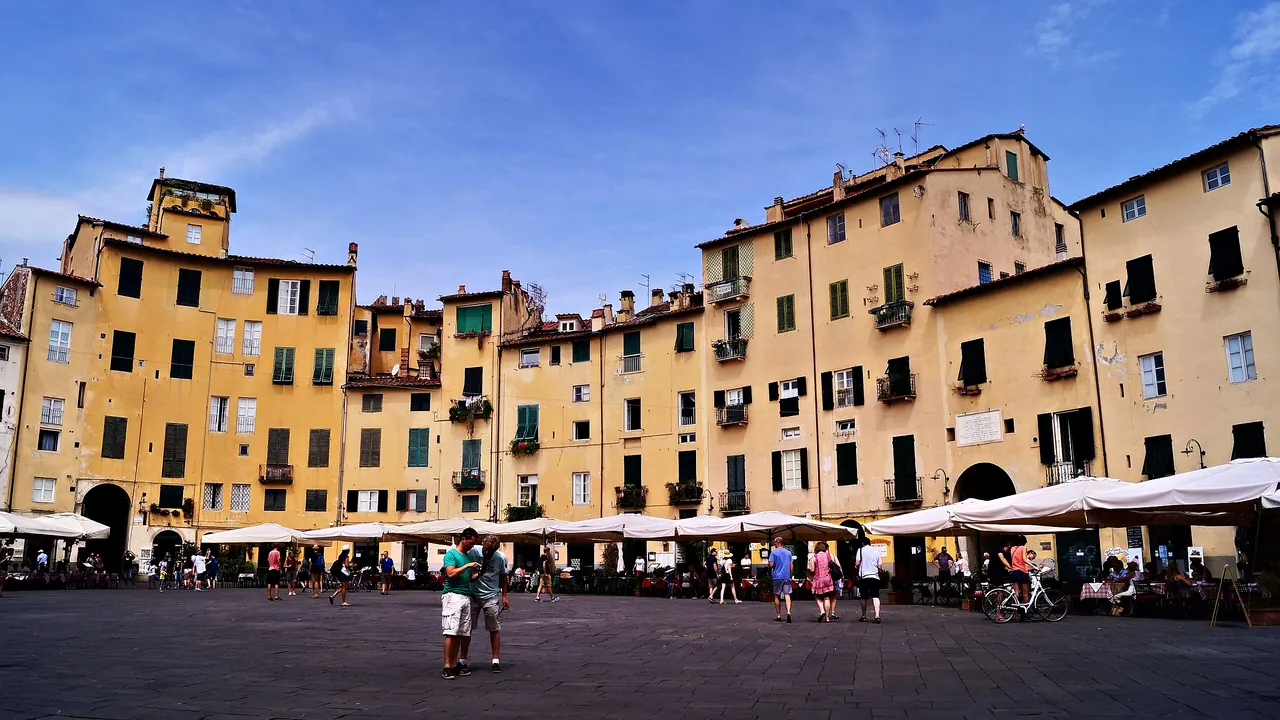
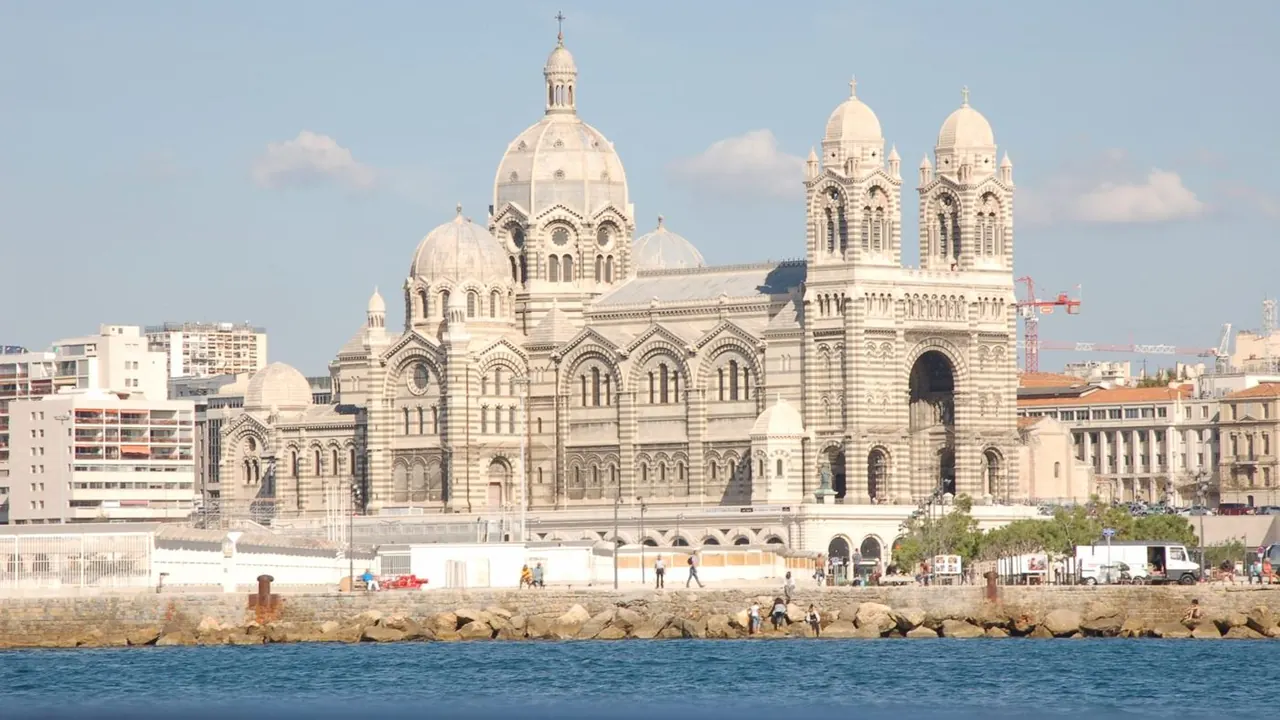
Photos: Lucca by Stefano Sansavini, CC BY-SA 4.0, cropped; Marseille by Charlotte Noblet, CC BY-SA 3.0, cropped.
Lucca or Marseille?
Our verdict in twelve categories, each scored against the same fixed benchmark cities, and the climate month by month, so you can choose for your trip.
Choose Lucca for
- getting around
- wellness
- families
Lucca is for travellers who want a slow, contained vacation: a walled town you can cross on foot or by bike, quiet evenings, and Pisa, Florence and the Tuscan villas a short train ride away. It suits couples, families with young children and anyone who wants an easy base for touring more than a city that keeps them busy at night.
Choose Marseille for
- nightlife
- beaches
- nature and the outdoors
Pick Marseille if you want the sea and the wild coast on the doorstep and a city with real energy. The Calanques give it swimming and walking that Lucca can only reach by a day out. It also has the busier evenings and the wider mix of food. The trade-off is noise, steep streets and a centre that takes more effort to enjoy.
Scoreboard
Twelve categories on one fixed scale from 0 to 100. The shaded stretch is the gap between the two.
Your match
Pick a travel style or drag the sliders, and both match scores follow your weighting.
Wins on getting around and wellness with your weighting.
Wins on nightlife and beaches with your weighting.
What matters to you?
Category by category
What the scores mean for a trip.
Beaches & swimming
From Lucca, the beach is an outing rather than part of daily life: a short train to Viareggio, then long, gently shelving sand on the Versilia coast, mostly laid out in rows of umbrellas at beach clubs. It is comfortable and easy for paddling, but it is the same kind of beach from one resort to the next.
Marseille has the sea inside the city. You can swim before breakfast in the rocky inlets off the Corniche, spend a family afternoon on the Prado shingle, or take half a day to reach the turquoise coves of the Calanques. The swimming is clearer and more varied, though the water is cooler and the city beaches close now and then after heavy rain.
Food & drink
Lucca's cooking is honest and local: farro soup, tordelli in ragù, chickpea cecina and buccellato, with good olive oil and hill wines. It is reliable and fairly priced, but it stays within one provincial tradition, and after a few days the menus start to repeat.
Marseille offers much more variety. Bouillabaisse is a serious meal in its own right. Panisses, wood-fired pizza and the North African, Comorian and Armenian shops of Noailles fill the everyday gaps. There is an ambitious high-end tier too. The catch is the tired set menus around the Vieux-Port, which are easy to avoid.
Culture & sights
The two are broadly level, but the experience is very different. Lucca is a single preserved piece: complete Renaissance walls around a medieval grid, with the carved Romanesque façades of San Michele and San Martino and the oval amphitheatre piazza. You can cover it on foot in two unhurried days.
Marseille's heritage is older and more scattered. It runs from Greek origins to the hilltop basilica, the forts and MuCEM at the port, and on to Le Corbusier's Cité Radieuse. It is spread across a working city, so it takes more travel and gives less of the feeling of walking through a single period.
Nightlife
Lucca's evenings end with dinner and a walk on the walls, and the centre is quiet by midnight. Anyone who wants to dance has to go to the Versilia coast and arrange a late ride back.
Marseille has a real night out. The graffiti-covered bars and pavement tables of Cours Julien and La Plaine fill until late, and the Vieux-Port terraces keep going too. In summer there are warehouse electronic nights and rooftop parties. Some central streets feel rough late at night, so a taxi home is sensible.
Nature & outdoors
Lucca's everyday outdoors is gentle: the tree-lined ring of the walls, cycle paths along the Serchio and olive-grove hills. The more dramatic landscape, the marble peaks of the Apuan Alps and the Garfagnana forests, is about an hour away.
Marseille has the drama at the end of a bus line. The Calanques national park offers white limestone ridges, one of the Mediterranean's great coastal walks, sport climbing, and kayaking and diving around Riou. Sainte-Victoire and the Sainte-Baume forest are within an hour, although summer fire risk can close the massifs.
Day trips
Both are excellent bases, and the difference is mostly in how you travel. From Lucca, Pisa, Pistoia, Montecatini and Florence can all be reached by direct regional train, so a week of Tuscan towns needs no car. The villas and Collodi, Pietrasanta and Carrara are close too, and with an early start the Cinque Terre and San Gimignano are within reach.
From Marseille, Aix, Arles and Avignon are easy by rail, and Cassis is just along the coast. The villages that make Provence memorable, such as those of the Luberon, Les Baux and Saint-Rémy, are much easier with a hire car.
Good for families
Lucca is the easier choice with children. The centre is small, flat and mostly free of cars, and riding a family quadricycle around the walls is an outing children love. The Pinocchio Park at Collodi and the sandy Versilia beaches are both close by.
Marseille has good moments for families: the Prado lawns, Parc Borély, and boat trips to the Château d'If. But steep streets, heavy traffic and narrow pavements make the centre tiring with a buggy, and families tend to stay near the southern beaches.
Getting around
Inside its walls, Lucca needs nothing but your feet or a rented bike, and the station sits just outside the southern gate. The only weak point is reaching the hill villages and the Garfagnana, where buses are sparse.
Marseille has a metro, trams and handy little port ferries, but the city sprawls over hills and bays. Buses to the beaches and Calanques trailheads get stuck in traffic, and some coves still mean a long walk from the last stop.
Shopping & style
Neither is a destination for fashion, and the appeal is local in both. Lucca's best moment is its monthly antiques market around the cathedral. Otherwise there are the old shopfronts of Via Fillungo and delicatessens for olive oil and farro.
Marseille is bigger and earthier. It has green cubes of Marseille soap, painted santon figures from Le Panier workshops and the crowded fabric and spice lanes of Noailles. Rue de Rome and La Joliette add the department stores and chains that Lucca lacks.
Affordability
Overall costs are much the same, and the money goes in different places. In Lucca, accommodation is the main pressure, because there are few rooms inside the walls and they fill up for summer and the festivals, while meals and trains stay fair.
Marseille is easier to do cheaply day to day, with pizza, North African snacks, inexpensive transport and free walks in the Calanques. Rooms near the port and beaches, though, climb sharply in July and August.
Live music & performing arts
Both offer a similar amount, but in different styles. Lucca is all about Puccini: arias in a central church most evenings, the historic Teatro del Giglio, star concerts in Piazza Napoleone in July, and open-air opera by the lake at Torre del Lago.
Marseille is broader and more popular in taste. It has its art deco Opéra and serious drama at La Criée, plus contemporary work at the Friche la Belle de Mai, a deep hip-hop and world-music tradition, and the Fiesta des Suds in autumn.
Wellness & relaxation
Lucca is the more restful place. The car-free streets, long lunches and evening walks on the shaded walls make the town itself calming. Real thermal bathing is close by in belle époque Montecatini, the cave pools of Monsummano and the steam grottoes of Bagni di Lucca.
Marseille offers little of this. Apart from a few local hammams and hotel spas, it is loud and dense, and visitors looking for rest usually sleep in Cassis or inland and visit the city for the day.
When should you go?
Pick your month. The climate figures are measured averages, not a forecast.
Lucca in July
Marseille in July
Daytime high, °C
Rainfall in the month, mm
Temperature and rainfall are climate normals, averaged over the years shown. Lucca: 1991-2020 normals, Pisa / S. Giusto (21.4 km from centre). Marseille: 1991-2020 normals, Marseille / Marignane (20.6 km from centre).
The two share almost the same calendar of heat. Both are pleasant for walking from April to early June and again in late September and October. Both warm to about 30°C in July and August, which makes sightseeing in the middle of the day hard work. Swimming runs from June to September in both, but the Versilia coast near Lucca is the warmer sea, reaching around 25°C in August against about 22°C off Marseille, where the mistral can also chill the water suddenly.
The big difference is rain and light. Marseille is drier and sunnier all year, with only 11mm of rain in July and brighter winters. Lucca turns properly wet from September, peaking at about 132mm in November, so for an autumn or winter trip Marseille is the safer bet for dry days.
Which traveller are you?
For a food and nightlife trip, Marseille is the clear pick. Noailles, the fish quay and bouillabaisse by the Corniche give it far more range than Lucca's trattorias, and Cours Julien keeps going long after Lucca's piazzas have gone quiet.
On a relaxing and wellness trip, choose Lucca. Its traffic-free streets and shaded walls set an unhurried pace, and the old spa towns of Montecatini and Bagni di Lucca are close by. Marseille is loud and intense, and its locals go elsewhere to unwind.
For an outdoors trip, Marseille wins easily. A national park starts at its southern edge, with coastal paths, climbing cliffs and kayaking among the Calanques. Lucca's best hiking is in the Apuan Alps, a separate day out by car.
Before you go
| Measure | Lucca | Marseille |
|---|---|---|
| Official language | Italian | French |
| Currency | Euro (EUR) | Euro (EUR) |
| Sockets | CFL230 V, 50 Hz | CE230 V, 50 Hz |
| Driving side | Right | Right |
| Time zone | UTC+1, UTC+2 in summer | UTC+1, UTC+2 in summer |
| Emergency number | 112 | 112 |
| Elevation | 19 m | 0 m |
| Main airport | Pisa International Airport (PSA)21 km from centre82 non-stop destinations | Marseille Provence Airport (MRS)21 km from centre126 non-stop destinations |
| Public holidays this year | 13 days | 11 days |
By the numbers
| Measure | Lucca | Marseille |
|---|---|---|
| City population | 88,798 | 886,040 |
| People per km² | 478 | 3,683 |
| Museums within 10 km | 20 | 27 |
| UNESCO World Heritage sites within 50 km | 4 | 1 |
| Swim season, months above 21 °C | 4 months | 2 months |
Where else could you go?
Every comparison below shares a destination with this one, so you can follow Lucca or Marseille somewhere new.