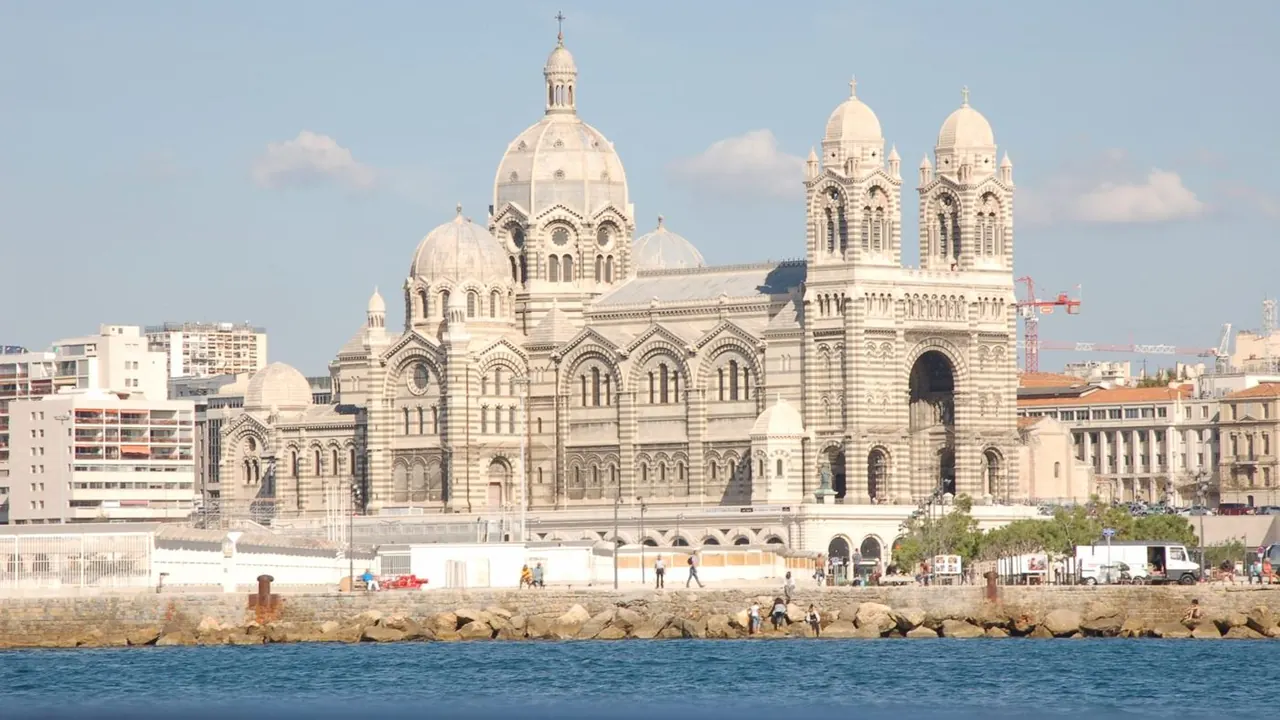
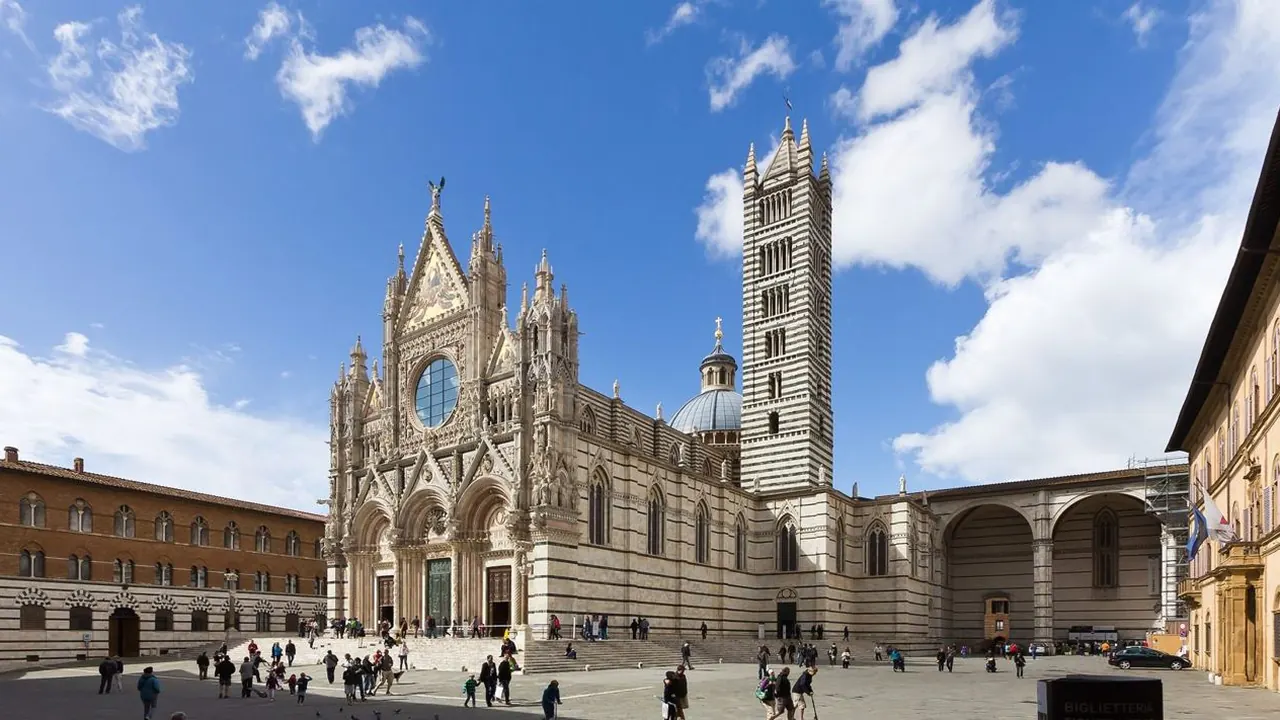
Photos: Marseille by Charlotte Noblet, CC BY-SA 3.0, cropped; Siena by Raimond Spekking, CC BY-SA 4.0, cropped.
Marseille or Siena?
Our verdict in twelve categories, each scored against the same fixed benchmark cities, and the climate month by month, so you can choose for your trip.
Choose Marseille for
- beaches
- nightlife
- live music and the arts
Marseille is the choice for a trip that mixes city and sea. It has swimming on its doorstep, a national park of limestone inlets inside its limits, livelier evenings and a broader stage programme. It suits travellers who don't mind a rough-edged, noisy port city in return for the Calanques, boat trips to the islands and a fish lunch by a small harbour. It also works better with children in summer, thanks to the Prado beaches and the park behind them.
Choose Siena for
- wellness
- culture and sights
- day trips
Siena gives you a near-complete medieval town and the Tuscan countryside around it. Its art and architecture are on another level, and the hill towns, wine villages, abbeys and hot springs within reach make it an even richer base for day trips than Marseille. It is the better pick for slow travellers, wine lovers and anyone who wants quiet evenings and a soak in thermal pools. Those who want the sea, a proper night out or a big-city choice of things to do should look elsewhere.
Scoreboard
Twelve categories on one fixed scale from 0 to 100. The shaded stretch is the gap between the two.
Your match
Pick a travel style or drag the sliders, and both match scores follow your weighting.
Wins on beaches and nightlife with your weighting.
Wins on wellness and culture and sights with your weighting.
What matters to you?
Category by category
What the scores mean for a trip.
Beaches & swimming
This is where the two differ most. Marseille has a long seafront: shingle and sand at the Prado, the small Plage des Catalans, the rocky Vallon des Auffes, coves on the Frioul islands and the clear inlets of the Calanques, which take half a day to reach on foot or by boat.
Siena has no beach of its own. A swim on the Maremma coast near Castiglione della Pescaia takes a full day. If the sea matters, plan a few nights on the coast or settle for the pool at your agriturismo.
Food & drink
Both cities eat well, but in different ways. Marseille is a Mediterranean port with food from many places: bouillabaisse in the Corniche harbours, panisses and wood-fired pizza, and the North African, Comorian and Armenian shops of Noailles. Its range runs from street snacks to serious seafood cooking.
Siena sticks to its own cooking: pici, ribollita, cinta senese pork, and panforte and ricciarelli from old pastry shops. It is stronger on wine, with Chianti Classico, Brunello and Vino Nobile poured by the glass, but it has little international food. In both places, avoid the restaurants facing the main square or port.
Culture & sights
Marseille is the older city, founded by Greek sailors around 600 BC. Its sights are scattered through a working port rather than gathered in one preserved centre. Notre-Dame de la Garde looks down on the forts of the Vieux-Port and on the MuCEM beside Fort Saint-Jean. Le Panier has the Vieille Charité, and the Château d'If and Le Corbusier's Cité Radieuse lie further out. Many visitors find all this more interesting than beautiful.
For sightseeing, Siena is the stronger choice. Its medieval centre is UNESCO-listed as a whole. The Campo, the Palazzo Pubblico with its Good and Bad Government frescoes, and the Duomo with its inlaid floor and Piccolomini Library are a few minutes' walk apart. Two or three days cover the main sights well.
Nightlife
Marseille is the place for a night out. The graffiti-covered bars and pavement tables of Cours Julien and La Plaine stay busy until late, the Vieux-Port terraces fill at sunset, and in summer there are warehouse electronic nights and parties by the sea. Some central streets feel edgy late at night, so a taxi home is wise.
Siena's evenings are a long dinner and a glass of wine on the Campo, with a few student pubs and the centre quiet before midnight. The Palio nights are the exception.
Nature & outdoors
Marseille has wilder country closer at hand. The Calanques national park starts in its southern suburbs, with coastal paths to Sormiou and En-Vau, sport-climbing cliffs, and kayaking and diving around the Riou archipelago. Sainte-Victoire and the Sainte-Baume forest are within an hour.
Siena's landscape is gentler, farmed and more pastoral: the bare clay hills of the Crete Senesi and the Val d'Orcia. Its outdoor speciality is cycling on the strade bianche. It has no coast or high mountains, but its countryside is also less likely than Marseille's massifs to close in summer because of fire risk.
Day trips
Both are excellent bases, and Siena is slightly better. San Gimignano, Monteriggioni, the Chianti villages, Volterra, Pienza, Montalcino and Montepulciano are all close, with abbeys such as Sant'Antimo and San Galgano in between and Florence a bus ride away.
Marseille's day trips are spread a little wider across Provence. Aix and Cassis are close, Arles and Avignon are about an hour by train, and the Luberon villages and the Pont du Gard make longer days out. In both regions the towns are on public transport, but the villages and wineries really need a car.
Good for families
Neither is an easy family city, but Marseille gives children more to do. In summer it has the gentle water of the Prado beaches, the lake and lawns of Parc Borély, and boat trips to the Château d'If and along the Calanques. The catch is traffic, heat and narrow pavements.
Siena is safer, almost car-free and welcoming in every trattoria. Beyond climbing the Torre del Mangia, though, there is little for younger children, and the steep lanes make pushchairs hard work. A farmhouse with a pool works better.
Getting around
They are about as easy to get around as each other, in different ways. Marseille is a large, spread-out city with two metro lines, trams and harbour ferries, but the buses to the beaches and Calanques trailheads get stuck in traffic and driving in the centre is stressful.
Siena is a small town you see on foot, with the main sights a few minutes apart and escalators up from the station, but it has steep ridges and thin regional trains. In both places a car is most useful outside the city.
Shopping & style
For a long afternoon of shopping, Marseille goes further, though its fashion offer is thin. Rue Paradis and Rue de Rome have department stores and chains, La Joliette has a large shopping centre, and Noailles is good for fabrics, teas and kitchenware. Green cubes of Marseille soap and santon figures from Le Panier are the classic souvenirs.
Siena is smaller and simpler. Banchi di Sopra has Italian clothing, shoe and leather shops, and the local buys are majolica ceramics, contrada scarves and food to take home, such as panforte and pecorino.
Affordability
Costs are much the same in both, and neither is a budget trip, but the savings come in different places. In Marseille, everyday eating from the market, pizza ovens and North African bakeries is cheap, public transport costs little and the Calanques paths are free. Hotels near the port and beaches cost a lot more in high summer.
In Siena, the few rooms inside the walls are expensive, especially around the Palio, and the museum tickets add up. An osteria lunch with house wine and a bed in an agriturismo outside town keep costs down.
Live music & performing arts
Marseille has the bigger stage. The art deco Opéra runs a full season, the Théâtre de la Criée stages national-level drama, and the Friche la Belle de Mai mixes dance, concerts and theatre. The city is also known for French hip-hop and Mediterranean music, with the Festival de Marseille and the Fiesta des Suds as yearly highlights.
Siena's music is fine but small in scale: summer concerts by the Accademia Chigiana in palaces and churches, Siena Jazz, and winter seasons at the Rinnovati and Rozzi. Opera means a trip to Florence.
Wellness & relaxation
Siena is much better for rest. The town is calm once the day visitors leave, and warm water is close by: the travertine pools of Rapolano Terme, the steaming medieval bath at Bagno Vignoni, the free limestone pools of Bagni San Filippo and the hot sulphur river at Petriolo.
Marseille has no real bathing tradition beyond a few local hammams and hotel spas. Its quiet moments are a long harbourside lunch on the Corniche, and many visitors looking for rest stay out in Cassis instead.
When should you go?
Pick your month. The climate figures are measured averages, not a forecast.
Marseille in July
Siena in July
Daytime high, °C
Rainfall in the month, mm
Where the figures come from
Siena's temperatures are measured 45 km from the centre, at Arezzo.
Siena has no rain gauge within 25 km of the centre, so its rainfall comes from a gridded climate dataset read at the city rather than from a gauge further away.
Temperature and rainfall are climate normals, averaged over the years shown. Marseille: 1991-2020 normals, Marseille / Marignane (20.6 km from centre). Siena: 2006-2017 (rainfall 1991-2020) normals, Arezzo (45 km from centre).
The two get about equally hot in summer, both reaching around 31°C in July, so midsummer is better spent swimming in Marseille than climbing Siena's steep lanes at midday. Marseille is the drier and sunnier of the two, with almost no rain in July. Its sea is warm enough to swim from June to September and peaks at about 22°C in August. Late May, June and September are the best months there, warm enough for the beach and still fine for walking. Spring and autumn suit hikers in the Calanques best.
Siena has no sea and gets more rain all year. Spring is green but showery, and late autumn is the wettest stretch, with about 127mm in November. The best months for walking the town and touring the countryside are May, June, September and early October. Winters are a little colder than on the coast, around 9°C in January, but quiet and often clear. Autumn rain arrives in September in both places, and Marseille stays the milder and brighter of the two through the winter.
Which traveller are you?
For a beach and sun trip, Marseille is the obvious choice. It has city beaches at the Prado, swimming spots along the Corniche and the turquoise Calanques inlets. Siena is well over an hour from the Maremma coast, so swimming there mostly means a pool.
For a culture and arts trip, Siena has the edge. Its whole centre is UNESCO-listed, and the Duomo, Lorenzetti's frescoes and Duccio's Maestà are among the great works of medieval art. Marseille's heritage is real but spread through a working city.
On a relaxing and wellness trip, Siena wins easily. Its evenings are quiet and farmhouse stays are close by, and warm springs at Rapolano, Bagno Vignoni and Bagni San Filippo are within easy reach. Marseille is loud and dense, with no bathing tradition to speak of.
Before you go
| Measure | Marseille | Siena |
|---|---|---|
| Official language | French | Italian |
| Currency | Euro (EUR) | Euro (EUR) |
| Sockets | CE230 V, 50 Hz | CFL230 V, 50 Hz |
| Driving side | Right | Right |
| Time zone | UTC+1, UTC+2 in summer | UTC+1, UTC+2 in summer |
| Emergency number | 112 | 112 |
| Elevation | 0 m | 322 m |
| Main airport | Marseille Provence Airport (MRS)21 km from centre126 non-stop destinations | Florence Airport, Peretola (FLR)55 km from centre46 non-stop destinations |
| Public holidays this year | 11 days | 13 days |
By the numbers
| Measure | Marseille | Siena |
|---|---|---|
| City population | 886,040 | 52,812 |
| People per km² | 3,683 | 446 |
| Museums within 10 km | 27 | 30 |
| UNESCO World Heritage sites within 50 km | 1 | 5 |
| Swim season, months above 21 °C | 2 months | - |
Where else could you go?
Every comparison below shares a destination with this one, so you can follow Marseille or Siena somewhere new.