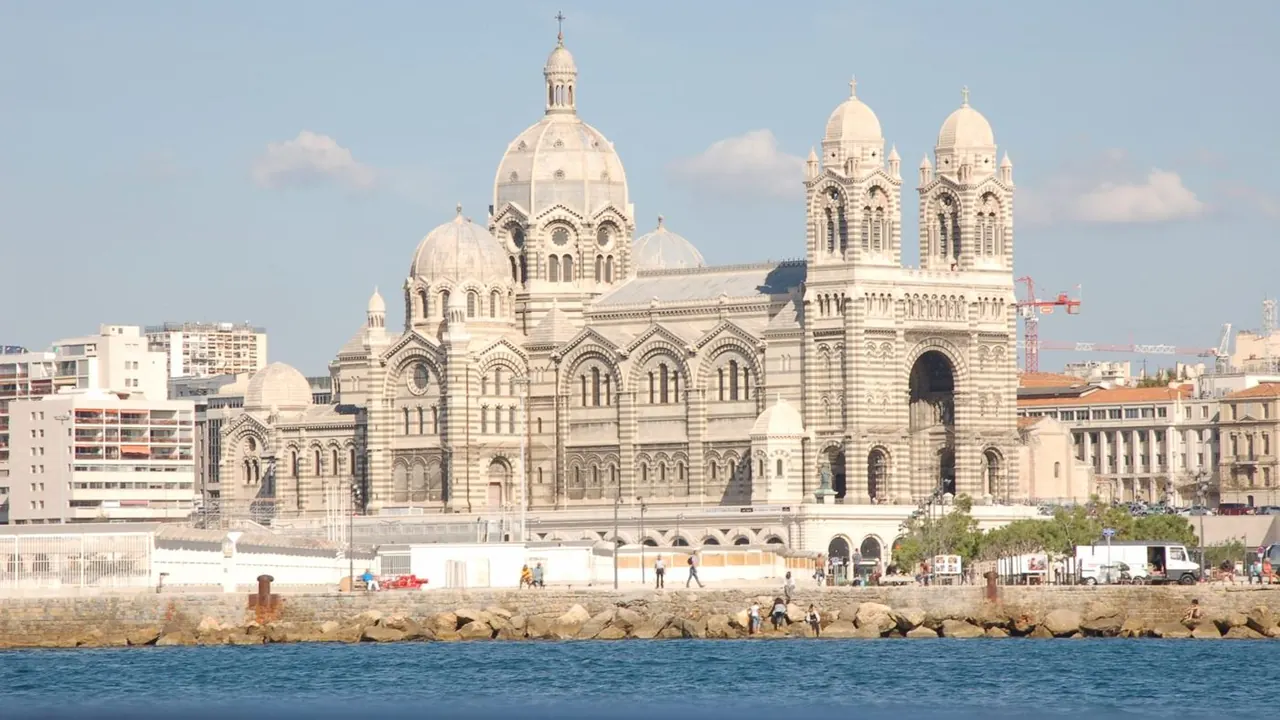
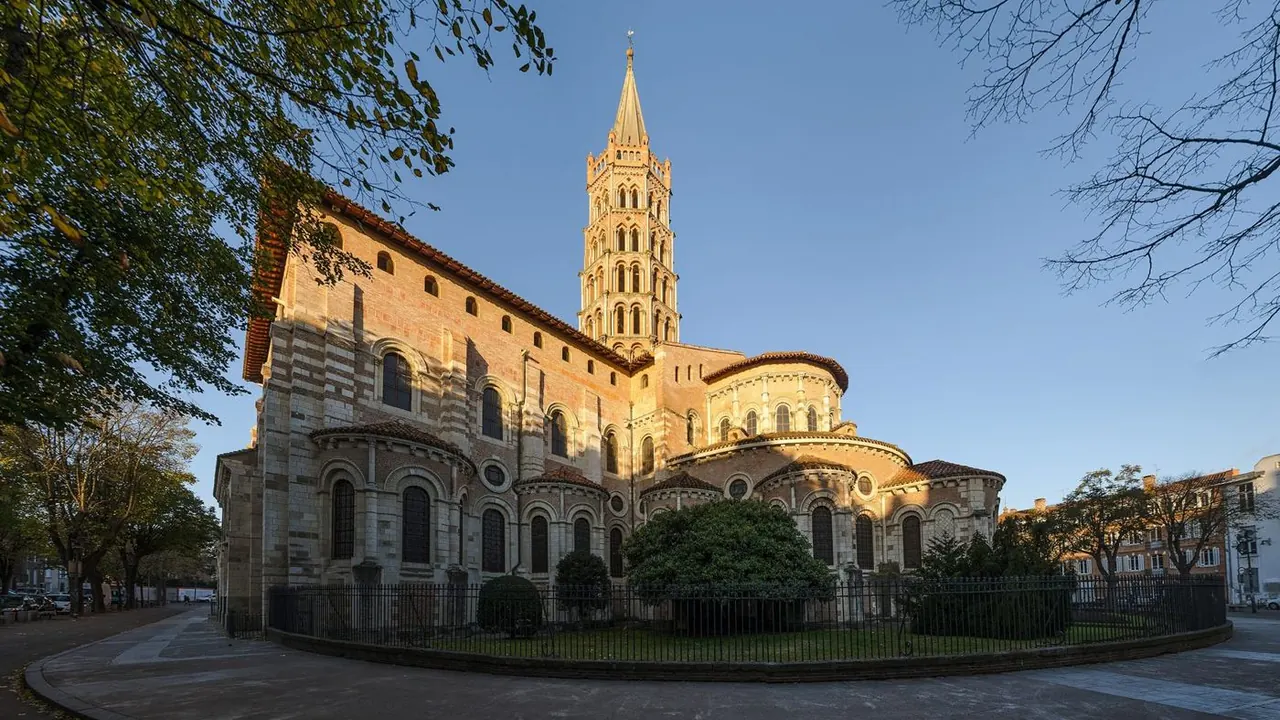
Photos: Marseille by Charlotte Noblet, CC BY-SA 3.0, cropped; Toulouse by ZbebVial, CC BY-SA 3.0, cropped.
Marseille or Toulouse?
Our verdict in twelve categories, each scored against the same fixed benchmark cities, and the climate month by month, so you can choose for your trip.
Choose Marseille for
- beaches
- nature and the outdoors
- day trips
Marseille is the choice when the sea and the hills matter as much as the city. You can swim off the Corniche before breakfast, walk the white limestone ridges of the Calanques to a turquoise inlet, and still reach Aix, Arles or Avignon for the day. In return you get a sprawling, steep and sometimes rough port, where reaching the beaches can mean slow buses.
Choose Toulouse for
- getting around
- families
- shopping
Toulouse suits travellers who want an easy, good-looking city with no beach to plan around. Its rose-brick centre is flat and compact, the metro is simple, and the aerospace museums keep children busy for days. Carcassonne and Albi are close by train, and the Pyrenees offer serious walking and winter skiing within two hours.
Scoreboard
Twelve categories on one fixed scale from 0 to 100. The shaded stretch is the gap between the two.
Your match
Pick a travel style or drag the sliders, and both match scores follow your weighting.
Wins on beaches and nature and the outdoors with your weighting.
Wins on getting around and families with your weighting.
What matters to you?
Category by category
What the scores mean for a trip.
Beaches & swimming
This is the biggest gap between the two cities. Marseille lives on its seafront. The broad Prado beaches with lawns behind them suit an easy afternoon, while locals swim off the rocks at the Vallon des Auffes and the Frioul islands have small coves. The Calanques inlets are worth giving half a day to.
Toulouse has no coast. Swimming means the supervised lakes at Sesquières and La Ramée, or a hotel pool, and Gruissan on the Mediterranean is a long day out of about two hours each way.
Food & drink
The two eat equally well, but they eat very different things. Marseille's table is the sea and the wider Mediterranean: bouillabaisse in the Corniche harbours, panisses, and the Comorian, Armenian and North African stalls of Noailles. It also has the stronger top tier, though the Vieux-Port has its share of tired set menus.
Toulouse cooks the meat-heavy food of the south-west: cassoulet, duck confit and foie gras, with Armagnac to finish. Its everyday strength is the cheap set lunch, ideally eaten upstairs at the Victor Hugo market.
Culture & sights
The two are about level, but the experience is different. Toulouse's heritage sits in one consistent rose-brick centre, with the great Romanesque basilica of Saint-Sernin, the palm-tree vault of the Jacobins and the Renaissance mansions. Two full days covers the essentials.
Marseille's 2,600 years are scattered through a working port. You climb to Notre-Dame de la Garde, cross the footbridge from Fort Saint-Jean to the MuCEM, take a boat to the Château d'If and travel out to Le Corbusier's Cité Radieuse. It takes more effort and gives you more contrast.
Nightlife
Both are informal student-and-terrace cities rather than clubbing destinations, and the main difference is the season. Marseille peaks in summer, with graffiti-covered bars around Cours Julien and La Plaine and parties by the sea or on rooftops. It thins out in winter, and some central streets feel edgy late at night.
Toulouse is busiest in term time, around the cheap bars of Place Saint-Pierre on the river and the wine bars of Carmes. It goes quiet in July and August, when the students leave.
Nature & outdoors
Marseille is far ahead here. The Calanques national park starts in its southern suburbs, with the coastal path to Sormiou, Sugiton and En-Vau, famous climbing cliffs, and kayaking and diving around the Riou islands. The one catch is summer, when fire risk can close the massifs.
Toulouse sits on gentle farmland, so the nearby pleasures are flat bike rides along the Canal du Midi towpath. Its real outdoors is the Pyrenees, where there is high-valley hiking and winter skiing that Marseille cannot offer, but they are a drive of up to two hours.
Day trips
Both make good bases, but Marseille has more within close reach. Aix is half an hour away and Cassis is nearer still. Arles and Avignon's papal palace are an hour or less by train, and the Luberon villages and Bandol vineyards are within a car ride.
Toulouse has fewer options, but two of them are outstanding: the walled Cité of Carcassonne and Albi's painted cathedral, each about an hour by train. Moissac's cloister and Cordes-sur-Ciel help fill a longer stay.
Good for families
Toulouse is the easier city with children, thanks largely to aerospace. The Cité de l'espace fills a whole day, families can walk inside a Concorde at the aircraft museum, and there is a safari park on the western edge. The flat centre suits pushchairs.
Marseille is at its best for children on the beach and the water: the Prado lawns and Parc Borély, and boat trips to the Frioul islands. Away from the shore there is no zoo or aquarium, and the steep, busy streets are tiring.
Getting around
Toulouse is much simpler to get around. Nearly everything sits inside the ring of boulevards, the centre is flat and easy to walk, and two automated metro lines and a bike scheme cover the rest. Only the aircraft sites and the lakes need a bus or a short drive.
In Marseille the core from the Vieux-Port to Cours Julien is walkable but steep. Beyond it the city spreads over hills and bays, and buses to the beaches and Calanques trailheads get stuck in traffic. The summer ferries to Pointe Rouge and L'Estaque are the pleasant way round this.
Shopping & style
Neither is a shopping city, and neither has a luxury district. Toulouse is slightly more rounded, with mainstream chains on Rue d'Alsace-Lorraine and independent boutiques and antiques around Saint-Étienne. Its best souvenirs are edible: violet sweets, duck confit and Armagnac.
Marseille's buys are craft rather than fashion: green cubes of olive-oil soap, painted santon figures from Le Panier, and fabrics and teas from the crowded lanes of Noailles.
Affordability
Costs are much the same in both, middling for France and not budget. The pressure falls at different times. Marseille's rooms near the port and beaches climb in July and August, while Toulouse's hotels fill up during trade fairs and aerospace events.
Both cities let you eat cheaply: North African snacks and market food in Marseille, the set lunch and the student quarters in Toulouse.
Live music & performing arts
Marseille's stages lean popular and Mediterranean, while Toulouse's lean classical. In Marseille that means the city's place in French hip-hop, theatre, dance and concerts under one roof at the Friche la Belle de Mai in the old tobacco factory, and world music at the Fiesta des Suds in autumn. The art deco Opéra and the national theatre in the old fish market at La Criée cover the formal side.
Toulouse is the better pick for an evening of opera, ballet or symphony. The Théâtre du Capitole has its own company, the Orchestre National du Capitole plays in the round Halle aux Grains, and the Jacobins cloister hosts a piano festival in late summer. Its riverside Rio Loco festival brings world music in early summer.
Wellness & relaxation
Neither city has a bathing tradition, but Marseille makes slowing down slightly easier. You can have a long lunch in a small Corniche harbour, sit on a terrace by the sea, or stay in Cassis nearby and come into the city by day.
Toulouse offers shaded squares and gentle bike rides along the Canal du Midi. Its real thermal springs, at Luchon and Ax-les-Thermes, are up to two hours away in the Pyrenees and work best as an overnight trip.
When should you go?
Pick your month. The climate figures are measured averages, not a forecast.
Marseille in July
Toulouse in July
Daytime high, °C
Rainfall in the month, mm
Temperature and rainfall are climate normals, averaged over the years shown. Marseille: 1991-2020 normals, Marseille / Marignane (20.6 km from centre). Toulouse: 1991-2020 normals, Toulouse / Blagnac (7 km from centre).
Marseille has the hotter, drier and much sunnier climate. Summer days reach 31°C in July and hardly any rain falls, so the beaches are at their best from July to September, when the sea is around 22°C. Midsummer is too hot for long climbs through Le Panier or for the Calanques paths, so May, June and early October are better for walking. The rain comes in autumn, with 82mm in September and similar totals through November, though winter stays bright for the season.
Toulouse is milder in summer, peaking around 28°C, but its rain is spread through the year, and late spring is the wettest stretch, with 74mm in May. It is noticeably greyer than Marseille from November to February. September and early October suit it best, with warm, dry-enough days for the streets and the canal towpaths.
Which traveller are you?
On a beach and sun trip, Marseille is the obvious pick. It has city beaches at the Prado, swimming coves along the Corniche and the clear inlets of the Calanques. Toulouse is inland, and its nearest sea is about two hours away.
For an outdoors trip, Marseille comes out ahead with a national park inside the city. That means coastal hiking, sport climbing, kayaking and diving. Toulouse's mountains are excellent, but the Pyrenees take up to two hours to reach.
On a family trip with children, Toulouse works better. The space centre's rocket and Mir module, the walk-through Concorde and the giant mechanical creatures entertain all ages, and the flat centre is kind to pushchairs. Marseille's steep streets and traffic are harder going.
Before you go
| Measure | Marseille | Toulouse |
|---|---|---|
| Official language | French | French |
| Currency | Euro (EUR) | Euro (EUR) |
| Sockets | CE230 V, 50 Hz | CE230 V, 50 Hz |
| Driving side | Right | Right |
| Time zone | UTC+1, UTC+2 in summer | UTC+1, UTC+2 in summer |
| Emergency number | 112 | 112 |
| Elevation | 0 m | 115 m |
| Main airport | Marseille Provence Airport (MRS)21 km from centre126 non-stop destinations | Toulouse-Blagnac Airport (TLS)7 km from centre84 non-stop destinations |
| Public holidays this year | 11 days | 11 days |
By the numbers
| Measure | Marseille | Toulouse |
|---|---|---|
| City population | 886,040 | 514,819 |
| People per km² | 3,683 | 4,352 |
| Museums within 10 km | 27 | 24 |
| UNESCO World Heritage sites within 50 km | 1 | 2 |
| Swim season, months above 21 °C | 2 months | - |
Where else could you go?
Every comparison below shares a destination with this one, so you can follow Marseille or Toulouse somewhere new.