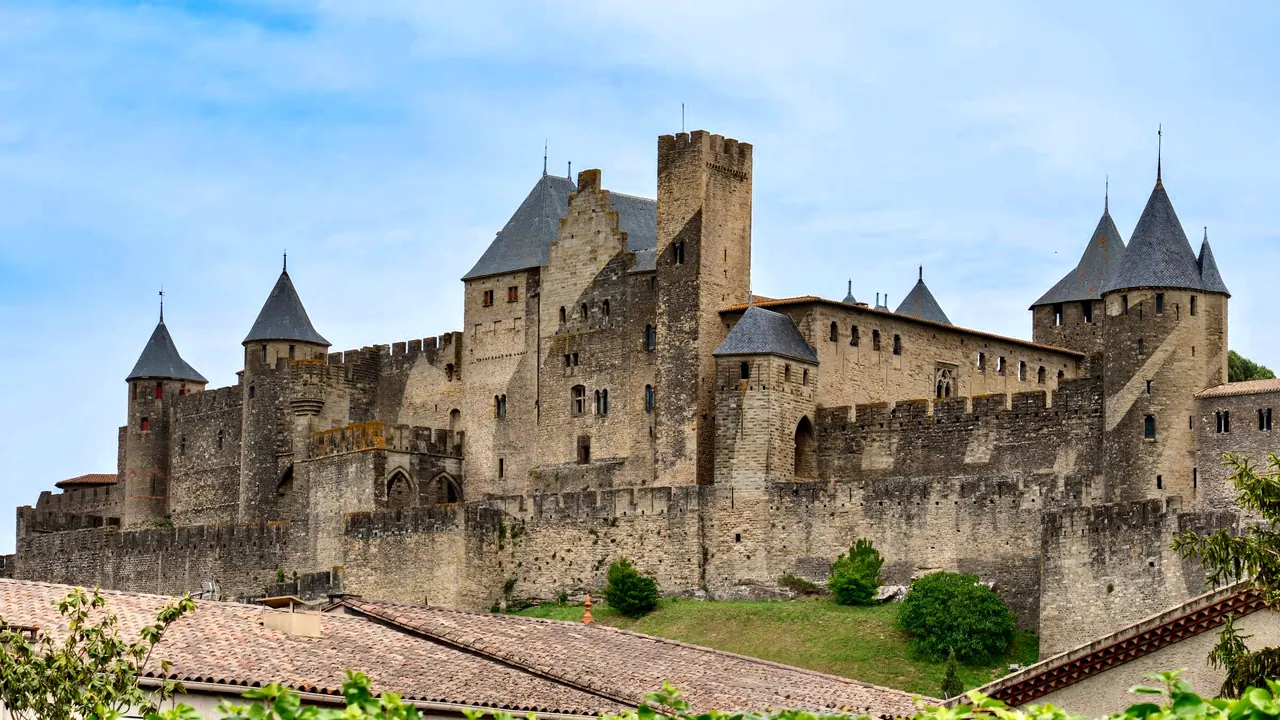
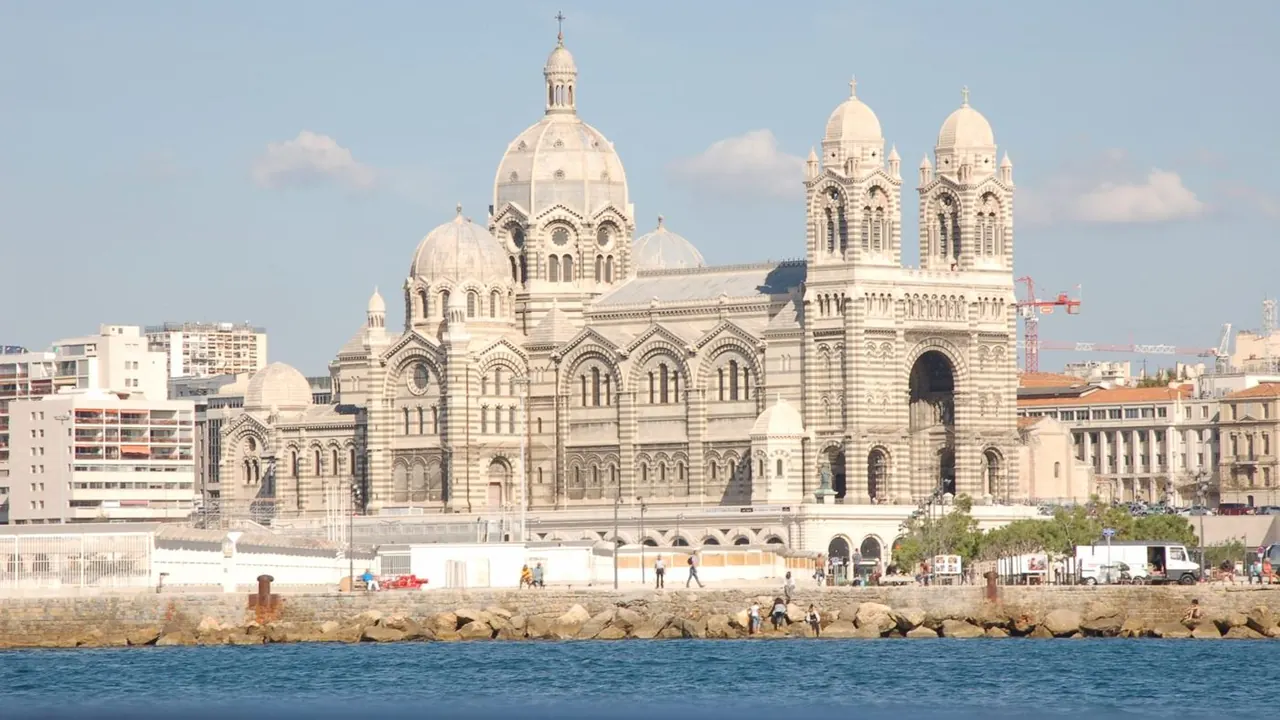
Photos: Carcassonne by Susanne Jutzeler, suju-foto, Pexels License; Marseille by Charlotte Noblet, CC BY-SA 3.0, cropped.
Carcassonne or Marseille?
Our verdict in twelve categories, each scored against the same fixed benchmark cities, and the climate month by month, so you can choose for your trip.
Choose Carcassonne for
- prices
- families
Carcassonne suits a slower, more focused trip built around one extraordinary sight. The walled Cité and the Cathar castles in the hills make a medieval vacation that hangs together in a way Marseille's scattered history does not. The town is small and calm, and money goes further, especially away from high summer. Bring a car and use it as a base for castles, wine villages and the Canal du Midi rather than for evenings out.
Choose Marseille for
- nightlife
- beaches
- live music and the arts
Pick Marseille if you want a real city with the sea at its door. It wins on swimming, eating, going out and walking. The Calanques lie within the city limits, there is Noailles for food and Cours Julien for late nights, and Aix, Arles and Avignon are close by train. It is louder, rougher and dearer, so it rewards travellers who enjoy a port city's energy more than those looking for quiet.
Scoreboard
Twelve categories on one fixed scale from 0 to 100. The shaded stretch is the gap between the two.
Your match
Pick a travel style or drag the sliders, and both match scores follow your weighting.
Wins on prices and families with your weighting.
Wins on nightlife and beaches with your weighting.
What matters to you?
Category by category
What the scores mean for a trip.
Beaches & swimming
Carcassonne is inland, and swimming there means the Lac de la Cavayère, a lifeguarded reservoir a short drive away. Otherwise it is a drive of about an hour to the long, shallow sandy beaches at Gruissan and Narbonne-Plage. That makes a fine day out but not a beach vacation.
Marseille has the sea in town: the shingle and sand of the Prado, early swims at Les Catalans and the Vallon des Auffes, and the clear limestone coves of the Calanques and the Frioul islands. The mistral can chill the water overnight, and the city beaches sometimes close after storms.
Food & drink
Carcassonne has a narrow menu, but it does it well: cassoulet, Corbières and Minervois reds, and blanquette from Limoux. Eat in the Bastide around Place Carnot and the market hall rather than at the set-menu restaurants inside the Cité.
Marseille has far more range. There is bouillabaisse in the Corniche harbours, panisses and wood-fired pizza, the spice shops and bakeries of Noailles, the morning fish sale on the quay and a serious top end. Both share one trap: tired set menus at the famous spot, which is the Cité walls in one city and the Vieux-Port in the other.
Culture & sights
The two are level in depth but opposite in shape. Carcassonne's heritage is concentrated in one place: the double-walled Cité with its fifty-two towers, the Château Comtal and the stained glass of Saint-Nazaire, with the gridded Bastide and the Canal du Midi below. It is a single magnificent ensemble, and two days covers it.
Marseille's history is older, going back to its Greek founding, but it is spread across a working city. There is Notre-Dame de la Garde, the forts and MuCEM at the Vieux-Port, the Vieille Charité in Le Panier, the crypts of Saint-Victor and Le Corbusier's Cité Radieuse. You get more museums, but it takes longer to piece together.
Nightlife
In Carcassonne, an evening means a floodlit walk on the walls and a glass of wine on a terrace. The cafés on Place Carnot liven up on summer weekends, but for clubs and late nights you go to Toulouse or Montpellier.
Marseille offers a proper night out. Cours Julien and La Plaine fill with students and locals in graffiti-painted bars until late, the Vieux-Port terraces carry on into the night, and in summer electronic parties take over warehouses and rooftops. Some central streets feel edgy late at night, so a taxi home is wise.
Nature & outdoors
Carcassonne is surrounded by good walking country: the forests and gorges of the Montagne Noire, the garrigue and Cathar ridges of the Corbières, and rafting in the upper Aude valley. Nearly all of it needs a car, though. The Canal du Midi towpath is the easy, flat option.
Marseille is stronger because the wild landscape starts at the city's edge. The Calanques national park offers coastal hikes to Sormiou, Sugiton and En-Vau, along with sport climbing, sea kayaking and diving, and Sainte-Victoire and the Sainte-Baume are within an hour. Summer heat limits walking in both places, and in Marseille high fire risk can close the hills to walkers.
Day trips
Both make excellent bases. Carcassonne's outings share a strong theme: the castles of Peyrepertuse, Quéribus and Lastours, villages such as Lagrasse and Minerve, and wine estates in between. Toulouse and Narbonne are easy by train, but almost everything else needs a car.
Marseille comes out ahead because so much is within easy reach by rail. Aix is about half an hour away, Arles and Avignon around an hour, and Cassis closer still. Nîmes, the Pont du Gard and the Luberon villages fill longer days with a car.
Good for families
Families find about as much to do in each, of a different kind. In Carcassonne the Cité is a ready-made castle adventure, with jousting and falconry in summer, backed up by the lake beach, a water park and an animal park. The cobbles and summer crowds are hard going with a pushchair.
In Marseille, family days centre on the Prado beaches, Parc Borély and boat trips to the Château d'If. There is no zoo or aquarium, and traffic, steep streets and dirty pavements make the centre tiring with a buggy.
Getting around
Carcassonne itself is simple. The Bastide is flat, the station sits beside the canal, and you can walk up to the Cité or take the seasonal shuttle. The catch is the countryside, where the castles and villages have very little public transport.
Getting around Marseille is easier overall, with two metro lines, trams, a single card for everything and summer ferries along the coast. But the buses to the beaches and the Calanques get stuck in traffic, and driving in the centre is stressful.
Shopping & style
Neither city is worth visiting for the shopping, but Marseille gives you more to browse. Carcassonne has the Cité's lanes of toy swords and trinkets and a modest high street in the Bastide. The best things to take home are wine, blanquette and tinned cassoulet.
Marseille has its olive-oil soap, santon figures from the workshops of Le Panier, the crowded fabric and tea shops of Noailles, independent boutiques around Cours Julien and department stores on Rue Paradis. Designer flagships are still scarce.
Affordability
Carcassonne is the cheaper of the two. It is priced like a provincial town, everything is within walking distance, local wine is cheap and lunch menus are good value. The costs gather in the Cité hotels, in July and August, and in the car hire most visitors need.
Marseille sits at the middle of big-city prices. Sit-down meals cost the usual French city rates, and rooms near the beaches are expensive in summer. You can win some of that back with cheap public transport, inexpensive street food and free walking in the Calanques.
Live music & performing arts
Carcassonne's stage life is mostly July. The Festival de Carcassonne fills the open-air theatre inside the walls, and on Bastille Day there are fireworks over the Cité. The rest of the year there is the municipal theatre and little else.
Marseille has a programme all year round. There is an art deco opera house, serious drama at La Criée and contemporary work at the Friche la Belle de Mai. The city also has a deep hip-hop and Mediterranean music scene, with the Fiesta des Suds every autumn.
Wellness & relaxation
Neither city is somewhere for a spa vacation, and the real difference is where you find calm. From Carcassonne, the small thermal villages of Rennes-les-Bains and Alet-les-Bains are within an hour. Outside high summer the town itself is unhurried, with the canal towpath by day and the quiet walls in the evening.
Marseille has a few local hammams and some hotel spas, but the city is loud. Its restful moments are a long lunch by a Corniche harbour, and many visitors who want quiet stay in Cassis instead.
When should you go?
Pick your month. The climate figures are measured averages, not a forecast.
Carcassonne in July
Marseille in July
Daytime high, °C
Rainfall in the month, mm
Where the figures come from
Carcassonne has no rain gauge within 25 km of the centre, so its rainfall comes from a gridded climate dataset read at the city rather than from a gauge further away.
Carcassonne's sunshine is measured 68 km from the centre, at Perpignan.
Temperature and rainfall are climate normals, averaged over the years shown. Carcassonne: 1999-2020 (sunshine 1991-2020, rainfall 1991-2020) normals, Carcassonne (2.8 km from centre). Marseille: 1991-2020 normals, Marseille / Marignane (20.6 km from centre).
Both cities follow the southern French rhythm, but Marseille is a little warmer and noticeably sunnier. Carcassonne is pleasant for walking from May. It peaks around 29°C in July and August, when the climb to the Cité is hard work at midday, and it turns wet in autumn, with October the rainiest month at 76mm. Spring and September are the best times for the ramparts and the Corbières hills. Winter is cool and grey rather than harsh.
Marseille reaches about 31°C in July. The sea is warm enough to swim from June to September and touches 22°C in August. Summer is very dry, but September brings the heaviest rain of the year, around 82mm, and wet weather carries on into November. May and late September to October are best for walking in the Calanques, and July and August are best for the beach.
Which traveller are you?
On a beach and sun trip, Marseille is the obvious choice. It has the city beaches at the Prado, swimming spots along the Corniche and the turquoise coves of the Calanques. Carcassonne has a lake beach and a drive of about an hour to Gruissan.
For a food and nightlife trip, Marseille wins again. It has bouillabaisse in the Corniche harbours, the North African and Armenian grocers of Noailles and late terraces around Cours Julien. Carcassonne has cassoulet and early, quiet evenings on Place Carnot.
On a trip on a tight budget, your money goes further in Carcassonne. Rooms in the Bastide are moderately priced outside summer, local wine and lunch menus are cheap, and you can walk everywhere. Just sleep and eat outside the Cité walls, where prices are higher.
Before you go
| Measure | Carcassonne | Marseille |
|---|---|---|
| Official language | French | French |
| Currency | Euro (EUR) | Euro (EUR) |
| Sockets | CE230 V, 50 Hz | CE230 V, 50 Hz |
| Driving side | Right | Right |
| Time zone | UTC+1, UTC+2 in summer | UTC+1, UTC+2 in summer |
| Emergency number | 112 | 112 |
| Elevation | 81 m | 0 m |
| Main airport | Carcassonne Salvaza Airport (CCF)4 km from centre10 non-stop destinations | Marseille Provence Airport (MRS)21 km from centre126 non-stop destinations |
| Public holidays this year | 11 days | 11 days |
By the numbers
| Measure | Carcassonne | Marseille |
|---|---|---|
| City population | 46,080 | 886,040 |
| People per km² | 708 | 3,683 |
| Museums within 10 km | 6 | 27 |
| UNESCO World Heritage sites within 50 km | 2 | 1 |
| Swim season, months above 21 °C | - | 2 months |
Where else could you go?
Every comparison below shares a destination with this one, so you can follow Carcassonne or Marseille somewhere new.
- Aix-en-Provencevs Marseille
- Toulousevs Carcassonne
- Avignonvs Marseille
- Saint-Tropezvs Marseille
- Montpelliervs Marseille
- Montpelliervs Carcassonne