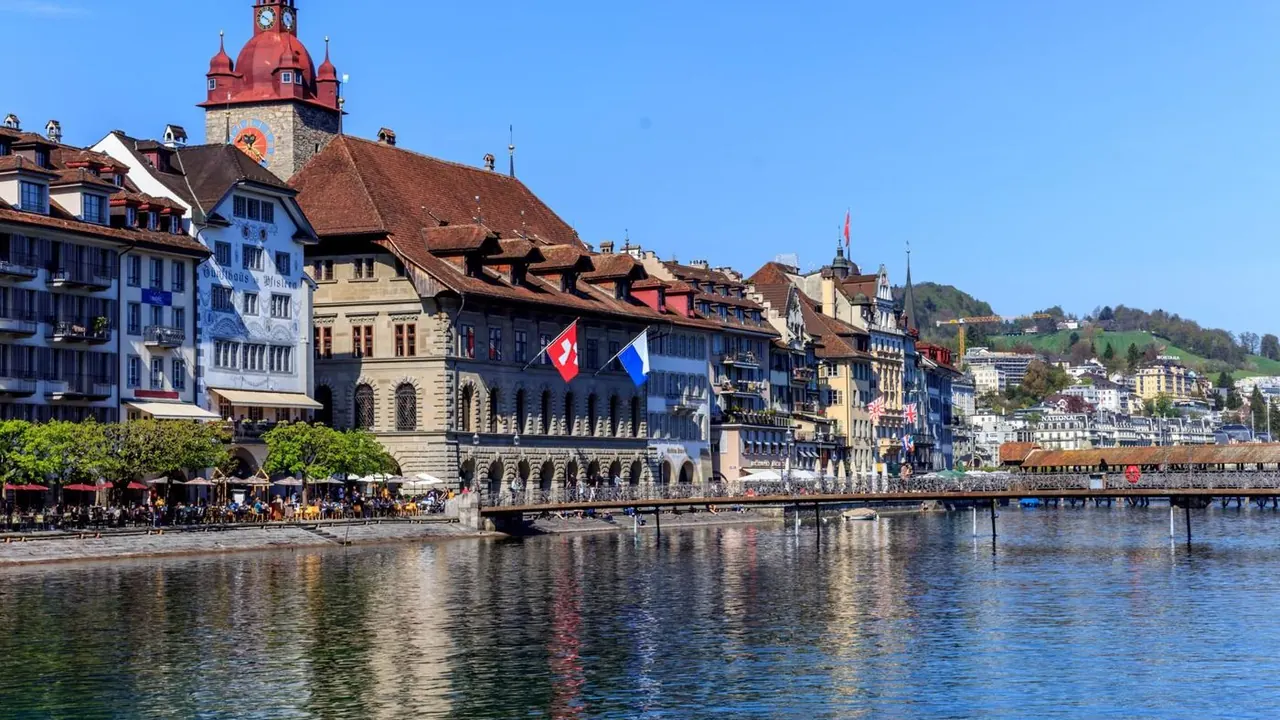
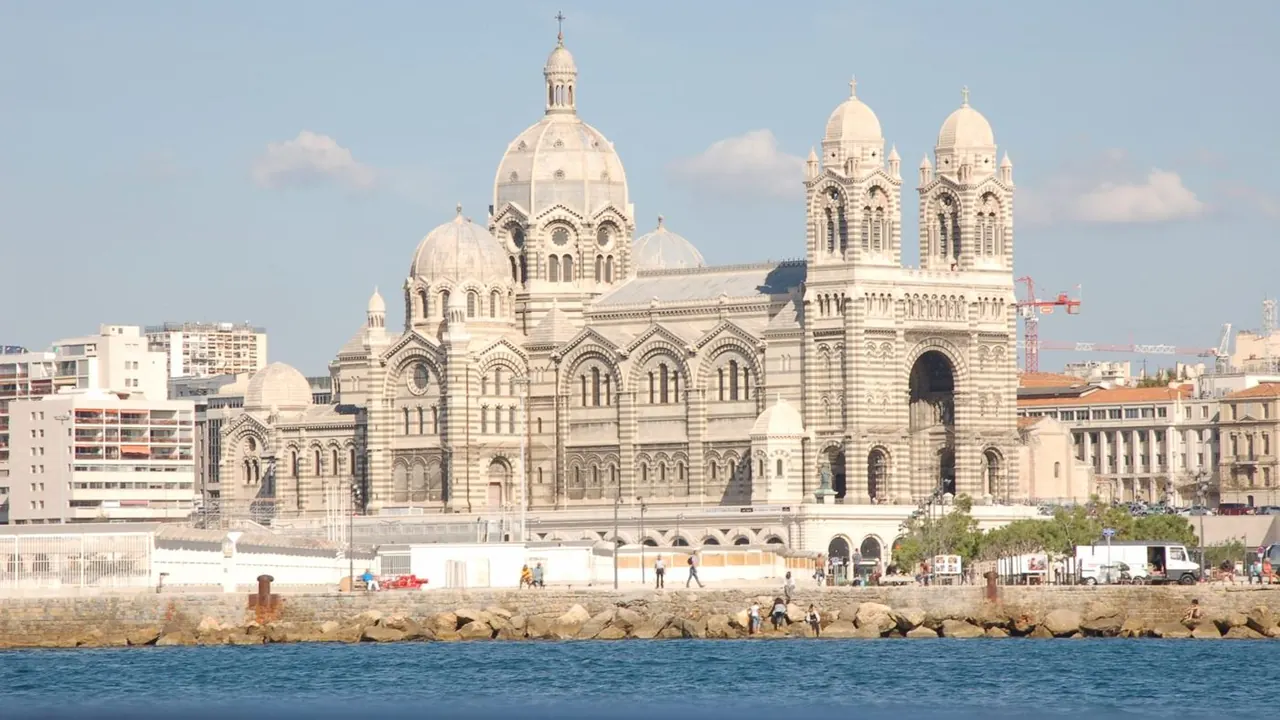
Photos: Lucerne by ILOVESwitzerland, Pexels License; Marseille by Charlotte Noblet, CC BY-SA 3.0, cropped.
Lucerne or Marseille?
Our verdict in twelve categories, each scored against the same fixed benchmark cities, and the climate month by month, so you can choose for your trip.
Choose Lucerne for
- getting around
- families
- live music and the arts
Lucerne suits travellers who come for the scenery and want it close at hand. The lake and the mountains are the reason to go, and boats, cogwheel trains and cable cars leave from almost the same spot as the trains. Families, walkers, classical music lovers and anyone after quiet evenings will be well served, provided the budget can take some of the highest prices in Europe.
Choose Marseille for
- beaches
- prices
- food and drink
Marseille is the better pick for a warmer, louder and cheaper trip built around the sea and the table. You get real swimming from city beaches and the Calanques, bouillabaisse and the markets of Noailles, late terraces around Cours Julien, and Aix, Arles and Avignon a short train ride away. It is rougher at the edges and harder work to get around, so it rewards travellers who like a city with some grit.
Scoreboard
Twelve categories on one fixed scale from 0 to 100. The shaded stretch is the gap between the two.
Your match
Pick a travel style or drag the sliders, and both match scores follow your weighting.
Wins on getting around and families with your weighting.
Wins on beaches and prices with your weighting.
What matters to you?
Category by category
What the scores mean for a trip.
Beaches & swimming
Lucerne has no sea, but on warm summer days people swim in Lake Lucerne from the Lido, the old wooden lake baths and the grass at Ufschötti. The water is clean and calm with mountains behind it, but the shore is lawn and jetty rather than sand, and the swimming season is short.
Marseille gives you a proper seaside. The Prado beaches suit families, locals swim from the rocks of the Corniche and the Vallon des Auffes, and the Calanques and the Frioul islands have clear coves worth half a day each. The mistral can chill the water suddenly, but you can count on swimming all summer here, which you cannot in Lucerne.
Food & drink
In Lucerne you eat well but within a narrow range: Chügelipastete, fondue, raclette, rösti and lake perch in wood-panelled guild houses, with river terraces for coffee or Swiss white wine. Around the Chapel Bridge many kitchens cater to coach tours, and there is little beyond the Swiss classics.
Marseille is a far richer place to eat. Bouillabaisse in the small harbours of the Corniche is a meal in itself, panisses and wood-fired pizza are cheap everyday food, and Noailles has North African, Comorian and Armenian shops as well as a daily market. Pastis and the rosés of Cassis and Bandol round it off, though the set menus on the Vieux-Port are best skipped.
Culture & sights
The two are broadly level, but the experience differs. Lucerne's sights are concentrated and very well kept: the Chapel Bridge and Water Tower, the Musegg Wall towers, the Lion Monument and the Picasso and Klee of the Rosengart Collection, all seen within a day or two of easy walking.
Marseille's heritage goes back to its Greek founding but is spread across a working, unpolished city. Notre-Dame de la Garde, the forts and the MuCEM at the Vieux-Port, the stepped lanes of Le Panier with the Vieille Charité, the crypts of Saint-Victor and Le Corbusier's Cité Radieuse take longer to reach, and give more to dig into on a longer stay.
Nightlife
Marseille is much the better place for going out. Cours Julien and the streets around La Plaine fill with students and locals at graffiti-covered bars and pavement tables until late, the Vieux-Port terraces carry on after sunset, and summer brings warehouse electronic nights and rooftop parties. Some central streets feel edgy late on, so a taxi home is sensible.
Lucerne's evenings are a drink by the river or a cocktail in the Neustadt, and the lakefront empties by midnight. Fasnacht is the one time the town stays up all night.
Nature & outdoors
Both have superb landscapes on the doorstep, and Lucerne's are the more dramatic. Pilatus by the steep cogwheel railway, the Rigi ridge walks, the open-top Stanserhorn cable car and the glacier on Titlis are all within easy reach, and paddle steamers let you combine boat, rail and hike in one day. Winter adds skiing, though low cloud can hide everything for days.
Marseille's strength is the Calanques national park within its own limits: white limestone ridges, the coastal path to Sugiton and En-Vau, sport climbing, sea kayaking and diving. Spring and autumn are the seasons for it, since summer heat and fire closures can shut the massifs.
Day trips
Marseille has the slightly richer choice of excursions. Aix-en-Provence and Cassis are very close, Arles and Avignon are about an hour by train, and the Pont du Gard, Les Baux and the Luberon villages fill longer days, though the villages really need a car.
From Lucerne the rail network makes Zurich, Bern and Basel easy under an hour, and the lake itself is an outing, with boats to Weggis, Brunnen and the Rütli meadow of the William Tell story. Here the trips mean Swiss old towns and mountains, where Marseille's mean Roman Provence and wine villages.
Good for families
Lucerne is the easier city with children. The Swiss Museum of Transport is a full day of trains, planes and a planetarium, the Glacier Garden's mirror maze and the Goldau wildlife park add more, and steamers, cogwheel trains and the Pilatus toboggan run turn travel into the entertainment. The flat, safe centre and lakeside lawns help, though rainy days can be a challenge.
Marseille works best in summer around the Prado beaches and Parc Borély, with boat trips to the Château d'If going down well. Steep streets, traffic and heat make buggies hard work, so families usually stay near the southern beaches.
Getting around
Lucerne is far simpler. The station, the steamer piers and the Old Town sit together on the lakefront, the sights are a flat walk along the Reuss, and one Swiss ticket system takes you from bus to boat to cable car without a car.
Marseille's core from the Vieux-Port to Cours Julien is walkable but hilly, and two metro lines, trams and the little port ferries cover the centre. Getting out to the beaches and Calanques trailheads means buses that get stuck in traffic and then a walk, so expect to lose time.
Shopping & style
Shopping is about as limited in one city as the other, but what you come home with differs. Lucerne is the place for Swiss watches, sold by the big jewellery houses on Schwanenplatz and along the lakefront next to army knives, chocolate and cuckoo clocks. A few independent boutiques in the Old Town lanes add some variety, but for clothes you will find only the basics.
Marseille's buys are humbler and more local: green cubes of Marseille soap, santon figures from the workshops of Le Panier, and the fabrics and spices of Noailles. Its high street is also bigger, with department stores and chains along Rue Paradis and Rue de Rome and a large shopping centre at La Joliette, though neither city offers much for anyone hunting designer flagships.
Affordability
Marseille is much easier on the wallet. Central hotels are reasonable outside July and August, pizza, North African snacks and market food keep everyday eating cheap, public transport costs little, and walking in the Calanques is free.
Lucerne is one of the costliest places you could choose. Rooms, simple meals and above all the mountain railways and cable cars quickly add up, and lake picnics and a Swiss travel pass soften this only a little.
Live music & performing arts
Lucerne has the edge for its classical music. The Lucerne Festival brings leading orchestras to Jean Nouvel's lakefront hall, known for its acoustics, which also has a year-round programme with the Lucerne Symphony Orchestra. Outside the festival weeks, though, it is a small city's calendar.
Marseille is broader and more popular in taste: the art deco Opéra, serious drama at the Théâtre de la Criée, mixed programmes at the Friche la Belle de Mai, plus hip-hop, world music and the autumn Fiesta des Suds. It suits travellers who want gigs and more choice from night to night more than a festival orchestra.
Wellness & relaxation
Neither city has a bathing tradition, but Lucerne is the calmer stay. Quiet evenings, lakeside promenades, an idle steamer afternoon and Mario Botta's mineral bath high on the Rigi make for real rest, once the midday tour groups leave the Old Town.
Marseille is loud and dense, with a few local hammams and hotel spas. Its restful moments are a long lunch in a Corniche harbour, and many visitors who want peace sleep in Cassis instead.
When should you go?
Pick your month. The climate figures are measured averages, not a forecast.
Lucerne in July
Marseille in July
Daytime high, °C
Rainfall in the month, mm
Where the figures come from
Lucerne has no rain gauge within 25 km of the centre, so its rainfall comes from a gridded climate dataset read at the city rather than from a gauge further away.
Lucerne's sunshine is measured 42 km from the centre, at Zurich Town / Ville..
Temperature and rainfall are climate normals, averaged over the years shown. Lucerne: 2005-2025 (sunshine 1991-2020, rainfall 1991-2020) normals, Emmen (4.2 km from centre). Marseille: 1991-2020 normals, Marseille / Marignane (20.6 km from centre).
Lucerne is a summer and early autumn city. July and August reach about 24°C, warm enough for a lake swim and long days on the mountains, but May to August is also the wettest stretch, with around 141mm a month and the risk of cloud hiding the peaks. September is often the sweet spot for hiking. From November to February the city is cold and grey, with little sun, which suits skiing and sledging more than strolling.
Marseille is warmer and far sunnier all year. The sea is swimmable from June to September, reaching about 22°C in August, while July highs of 31°C make midday walking and Calanques hikes hard going. Spring and early autumn are the best months for exploring on foot, though the rain arrives in September, at around 82mm, and lasts through November. Even winter stays mild enough for sightseeing, when Lucerne is at its bleakest.
Which traveller are you?
For a beach and sun trip, Marseille is the clear choice. It has a warm sea for four months, family beaches at the Prado, swimming coves along the Corniche and the turquoise inlets of the Calanques, while Lucerne offers only a short summer of lake bathing from lawns and jetties.
On a food and nightlife trip, Marseille again wins. Bouillabaisse, Noailles market food, pastis on the Vieux-Port and late bars around Cours Julien and La Plaine give far more to do than Lucerne's fondue taverns and lakeside drinks that wind down well before midnight.
On a family trip with young children, Lucerne is easier. The Swiss Museum of Transport fills a day, steamers and mountain railways feel like adventures, and the centre is flat, compact and very safe. In Marseille the steep streets, traffic and heat make outings harder work.
Before you go
| Measure | Lucerne | Marseille |
|---|---|---|
| Official language | French, German, Italian, Romansh | French |
| Currency | Swiss Franc (CHF) | Euro (EUR) |
| Sockets | CJ230 V, 50 Hz | CE230 V, 50 Hz |
| Driving side | Right | Right |
| Time zone | UTC+1, UTC+2 in summer | UTC+1, UTC+2 in summer |
| Emergency number | 112 | 112 |
| Elevation | 436 m | 0 m |
| Main airport | Zürich Airport (ZRH)49 km from centre226 non-stop destinations | Marseille Provence Airport (MRS)21 km from centre126 non-stop destinations |
| Public holidays this year | 12 days | 11 days |
By the numbers
| Measure | Lucerne | Marseille |
|---|---|---|
| City population | 86,234 | 886,040 |
| People per km² | 2,963 | 3,683 |
| Museums within 10 km | 14 | 27 |
| UNESCO World Heritage sites within 50 km | 1 | 1 |
| Swim season, months above 21 °C | - | 2 months |
Where else could you go?
Every comparison below shares a destination with this one, so you can follow Lucerne or Marseille somewhere new.