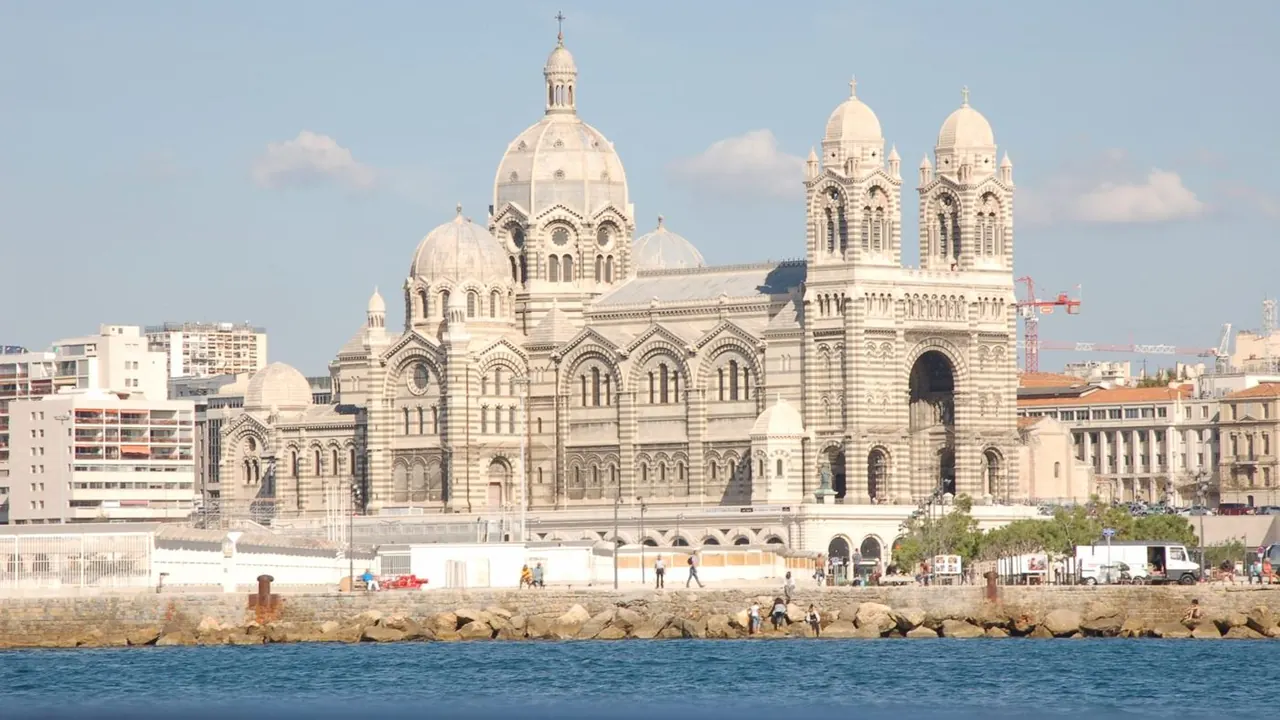
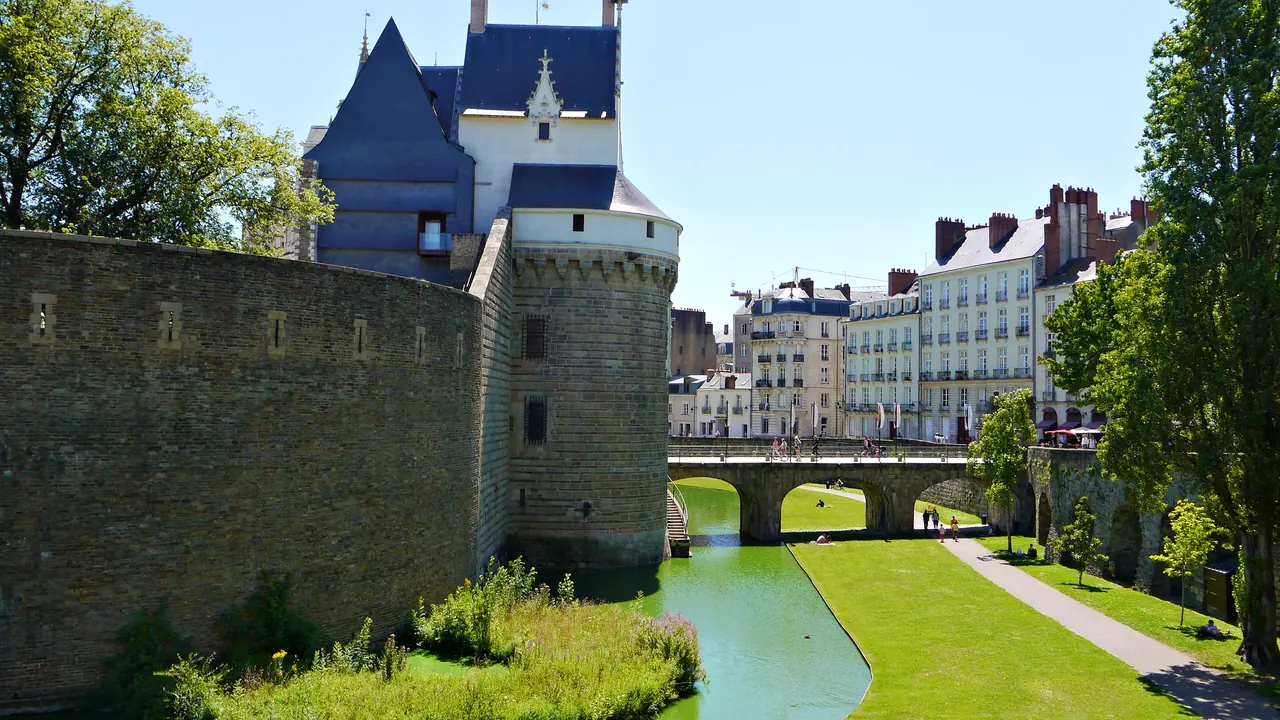
Photos: Marseille by Charlotte Noblet, CC BY-SA 3.0, cropped; Nantes by Carole44, CC BY-SA 3.0, cropped.
Marseille or Nantes?
Our verdict in twelve categories, each scored against the same fixed benchmark cities, and the climate month by month, so you can choose for your trip.
Choose Marseille for
- beaches
- nature and the outdoors
- day trips
Marseille suits a summer trip built around the sea and the hills. The Calanques national park starts at the edge of the city, so you can swim in clear inlets, walk limestone ridges and still be back for dinner. Aix, Arles and Avignon are all within easy reach by train. It is the better pick for travellers who like a big, loud port city with sharp edges and don't mind steep streets and traffic to get to the good parts.
Choose Nantes for
- getting around
- families
- shopping
Nantes is easier to get along with: flat, compact and quick to learn, with trams that take the effort out of a short stay. It works better for families, thanks to the mechanical elephant on the Ile de Nantes and Puy du Fou within a drive, and for anyone who would rather spend a weekend walking around a castle, eating beurre blanc and drinking Muscadet than climbing to a cove.
Scoreboard
Twelve categories on one fixed scale from 0 to 100. The shaded stretch is the gap between the two.
Your match
Pick a travel style or drag the sliders, and both match scores follow your weighting.
Wins on beaches and nature and the outdoors with your weighting.
Wins on getting around and families with your weighting.
What matters to you?
Category by category
What the scores mean for a trip.
Beaches & swimming
In Marseille, the sea is part of daily life. People swim off the rocks at the Vallon des Auffes before work, families spread out on the lawns behind the Prado beaches, and on a free day there are the clear limestone inlets of the Calanques or the small coves on the Frioul islands. The mistral and occasional closures after storms are the only drawbacks.
In Nantes, a beach means a planned outing. The sandy bay at La Baule and the coves around Pornic are wide, clean and good for children, but they are about an hour away by train. The Atlantic water there stays cooler for a shorter season.
Food & drink
Marseille has more range and more character on the plate. You can sit down to a two-course bouillabaisse in a Corniche fishing harbour, buy fish straight off the boats on the Vieux-Port, and browse Comorian, Armenian and North African stalls in Noailles, with pastis and Cassis rosé to drink. The drawback is the tired set menus aimed at visitors around the old port.
Nantes is more regional and more consistent. Beurre blanc was born here and is served with pike-perch, alongside oysters from the nearby coast, galettes and a glass of Muscadet from the vineyards just outside town. Fairly priced bistros in Bouffay and Graslin make it easy to eat well, though the city doesn't have Marseille's mix of cultures.
Culture & sights
The two are close in depth but very different in feel. In Marseille, 2,600 years of history are scattered through a working port city: the hilltop basilica of Notre-Dame de la Garde, the forts and the MuCEM at the harbour mouth, the Vieille Charité up in Le Panier, and Le Corbusier's Cité Radieuse further out. Seeing it all means crossing a lot of city.
Nantes keeps its heritage together. The moated Château des Ducs de Bretagne, the cathedral and the leaning merchant houses of the Ile Feydeau are all within a short walk. The history museum and the riverside memorial deal frankly with the city's part in the slave trade, and two or three days covers it all.
Nightlife
Marseille has the bigger and rougher night out. Graffiti-covered bars around Cours Julien and La Plaine spill onto the street until late, the Vieux-Port terraces fill at sunset, and in summer there are electronic nights in old warehouses and parties by the sea. Some central streets feel uneasy late at night, so a taxi home is sensible.
Nantes is friendlier and smaller in scale. Students fill the pubs and wine bars in the medieval lanes of Bouffay, then move to the clubs in the old banana warehouses on the Ile de Nantes. Midweek outside term it goes quiet.
Nature & outdoors
This is one of the widest gaps between the two. Marseille has a national park inside the city limits, with white limestone ridges, pine gullies and the inlets of Sormiou, Sugiton and En-Vau. Climbers, sea kayakers and divers come for the cliffs and the Riou archipelago, and Montagne Sainte-Victoire is within an hour. In high summer, fire risk can close the massifs.
Nantes offers gentler, flatter country. You can follow the Erdre past manor houses by canoe or boat, cycle the Loire à Vélo route, or take a punt through the reed beds of the Brière marshes. The Côte Sauvage cliff paths are the most dramatic it gets.
Day trips
Marseille gives you the big names of Provence on short train rides. The Roman arena at Arles, the Palais des Papes in Avignon and Cézanne's Aix are all close, and Cassis is closer still. With a car you can add the Luberon hilltop villages and Les Baux.
Nantes is a good base too, with a quieter list. It has the salt marshes and walls of Guérande, the Apocalypse Tapestry in Angers, Saumur and the Loire châteaux, and the half-timbered streets of Vannes. Most are about an hour away rather than half an hour.
Good for families
Nantes is the easier city with children. The mechanical elephant and sea-creature carousel at the Machines de l'Ile were made for them, and trams make getting around with a buggy simple. Puy du Fou and the Port-Saint-Père safari park are good days out.
Marseille is harder work. The Prado beaches, Parc Borély's lake and a boat to the Château d'If all go down well. But the city has no zoo, aquarium or theme park, and its steep, narrow, traffic-heavy streets make a buggy hard going.
Getting around
Nantes is the simpler city to move around. The centre is flat and compact, most sights are within half an hour's walk, the tram network is easy to pick up straight away, and cycling along the river is straightforward.
Marseille's core around the Vieux-Port and Le Panier is walkable but steep, and the two metro lines barely reach the coast. Getting to the beaches and the Calanques trailheads means buses stuck in traffic, though the summer ferries to Pointe Rouge and L'Estaque are a good way around the roads.
Shopping & style
Neither city is a shopping destination, and both are better for local goods than for fashion. In Marseille that means green cubes of olive-oil soap, santon figures from the Le Panier workshops, and the fabrics and spices of Noailles. In Nantes it means browsing the three-level Passage Pommeraye and buying salted-butter biscuits, berlingots and Guérande salt to take home.
Affordability
Both sit in the middle of the French price range, so the money differs in where it goes rather than how much. In Marseille, street food, the Calanques paths and cheap museums keep a day affordable, while rooms near the port and the beaches cost much more in July and August. In Nantes, hotels are easy to find, set lunches are good value, and the beach trips are where summer prices rise.
Live music & performing arts
The two cities are evenly matched on stage, but their tastes differ. Marseille leans towards the popular and the Mediterranean: French hip-hop, the Fiesta des Suds world-music festival, serious drama at La Criée, and the mixed programme at the Friche la Belle de Mai.
Nantes is stronger on classical music. La Folle Journée fills a few winter days with short, cheap concerts, the regional opera performs at the Théâtre Graslin, and the city's tradition of giant street puppets brings spectacle into public squares.
Wellness & relaxation
Neither city is somewhere to come for spas, and each sends you out of town for real rest, though in different directions. Marseille is hard to unwind in: most central quarters are noisy and crowded, and its handful of hammams are neighbourhood places used mostly by locals. Its quiet lies beyond the city, along the coast towards Cassis or out in the Provençal countryside, so the restful way to do it is to stay outside and come in by day, saving the slow hours for a fish lunch in one of the little Corniche harbours.
Nantes is the gentler place to be day to day, with an unhurried centre where the banks of the Erdre and the Jardin des Plantes are easy places to do very little. For an actual treatment you go to the Atlantic, where La Baule and Pornic have a long tradition of thalassotherapy, the French seawater cure. In short, Marseille only gets quiet once you leave it, while Nantes is calm enough to live in and keeps its spa culture on the coast.
When should you go?
Pick your month. The climate figures are measured averages, not a forecast.
Marseille in July
Nantes in July
Daytime high, °C
Rainfall in the month, mm
Temperature and rainfall are climate normals, averaged over the years shown. Marseille: 1991-2020 normals, Marseille / Marignane (20.6 km from centre). Nantes: 1991-2020 normals, Nantes (6.6 km from centre).
Marseille has the true Mediterranean year. Beach weather runs from June to September, and the sea is at its warmest, about 22°C, in August. July and August are hot, with highs around 31°C and almost no rain, which is too hot for long walks in the city or across the Calanques. For walking, late spring and early autumn are better. Rain arrives with a jolt in September, at about 82mm, and the wetter weather lasts through November. Winters are mild and get plenty of sunshine for the season.
Nantes is cooler, greener and wetter all year. Summer highs stay around 25°C, which is comfortable for walking around the city but only just warm enough for the Atlantic beaches, where the sea stays noticeably cooler than off Marseille. From October the rain sets in, reaching about 101mm in December, and the winter days are short and grey. June to September is its best stretch. In midsummer, when Marseille is too hot for sightseeing, Nantes is the more pleasant of the two.
Which traveller are you?
On a beach and sun trip, Marseille is the clear choice. It has dependable summer heat and warm Mediterranean water, with the family beaches of the Prado in town and the turquoise Calanques inlets a walk or boat ride away. The nearest beach from Nantes is an hour away on the cooler Atlantic.
On a family trip with young children, choose Nantes. The rideable mechanical elephant and sea-creature carousel, the playgrounds in the Jardin des Plantes and the trams that take a buggy are all close together. Puy du Fou and a safari park are also within a drive, and Marseille's steep, busy centre can't compete.
For a short city break, Nantes is easier. The castle, cathedral, Bouffay and Ile de Nantes are all close together on flat ground, and Paris is about two hours away by fast train. In Marseille you lose time on hills and on buses stuck in traffic between scattered sights.
Before you go
| Measure | Marseille | Nantes |
|---|---|---|
| Official language | French | French |
| Currency | Euro (EUR) | Euro (EUR) |
| Sockets | CE230 V, 50 Hz | CE230 V, 50 Hz |
| Driving side | Right | Right |
| Time zone | UTC+1, UTC+2 in summer | UTC+1, UTC+2 in summer |
| Emergency number | 112 | 112 |
| Elevation | 0 m | 2 m |
| Main airport | Marseille Provence Airport (MRS)21 km from centre126 non-stop destinations | Nantes Atlantique Airport (NTE)8 km from centre97 non-stop destinations |
| Public holidays this year | 11 days | 11 days |
By the numbers
| Measure | Marseille | Nantes |
|---|---|---|
| City population | 886,040 | 327,734 |
| People per km² | 3,683 | 5,027 |
| Museums within 10 km | 27 | 11 |
| UNESCO World Heritage sites within 50 km | 1 | 0 |
| Swim season, months above 21 °C | 2 months | None |
Where else could you go?
Every comparison below shares a destination with this one, so you can follow Marseille or Nantes somewhere new.
- Avignonvs Marseille
- Saint-Tropezvs Marseille
- Montpelliervs Marseille
- Cannesvs Marseille
- Antibesvs Marseille
- Nicevs Marseille