Costa Brava or Provence?
Our verdict in twelve categories, each scored against the same fixed benchmark cities, and the climate month by month, so you can choose for your trip.
Choose Costa Brava for
- families
- prices
- beaches
The Costa Brava is the better pick when the sea is the point of the trip and children are coming along. Its coves around Begur and Calella de Palafrugell, together with the long shallow bays of Roses and Pals, make easy beach days. A summer there costs somewhat less than across the border, and Figueres, Girona and Barcelona are all close enough for a day away from the sand.
Choose Provence for
- shopping
- live music and the arts
- culture and sights
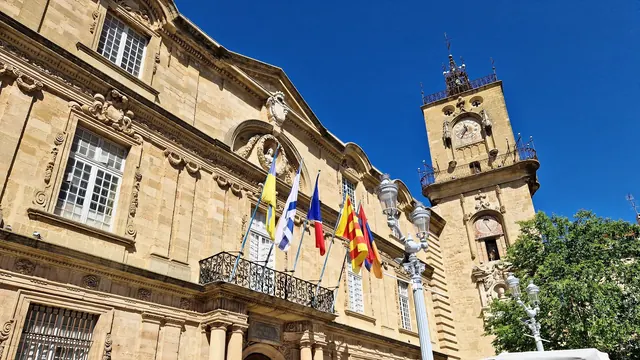
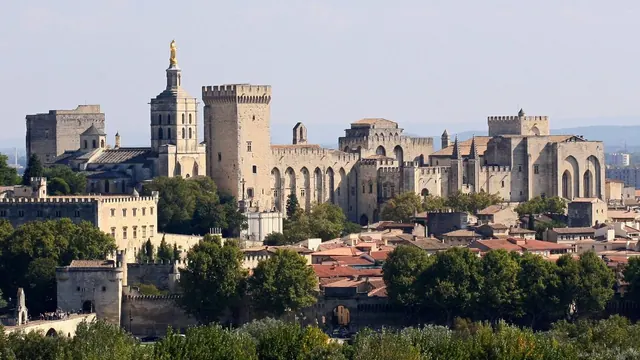
Travellers who want each day to be different will get more from Provence. Morning markets in Aix or Saint-Rémy, Roman theatres at Arles and Orange, the papal palace in Avignon and the gorge of the Verdon can all fit into one week, and July brings one of the world's great theatre festivals. Expect higher bills, and plan on a car and a fair amount of driving.
Scoreboard
Twelve categories on one fixed scale from 0 to 100. The shaded stretch is the gap between the two.
Your match
Pick a travel style or drag the sliders, and both match scores follow your weighting.
Wins on families and prices with your weighting.
Wins on shopping and live music and the arts with your weighting.
What matters to you?
Category by category
What the scores mean for a trip.
Beaches & swimming
Both coasts offer proper Mediterranean swimming, and the Costa Brava has a slight edge because the whole region faces the sea. There are pine-backed coves at Aiguablava, Sa Tuna and Tamariu, and long dunes at Pals and Sant Pere Pescador, all within reach of nearly any base.
Provence gives more variety but less convenience. You can choose between the deep turquoise calanques near Cassis, reached on foot or by boat, the pale sand of Porquerolles and the beach clubs of Pampelonne. If you stay inland in the Luberon or the Alpilles, though, the sea is a long drive away. Wind can spoil a few days in either place, the tramontana on the northern Costa Brava and the mistral in Provence.
Food & drink
Provence comes out ahead because eating shapes the whole day there. There are weekly markets in Aix, Apt and Carpentras, bouillabaisse in Marseille, winter truffles and the wines of Bandol and Châteauneuf-du-Pape. Away from Marseille, though, almost everything on offer is French or Provençal.
Empordà cooking is just as distinctive, with mar i muntanya dishes, red prawns from Palamós and anchovies from L'Escala, and Girona is known well beyond Spain for fine dining. The weak spot is the big resorts, where menus aimed at package tourists lower the standard, so the best meals are in the fishing villages and inland.
Culture & sights
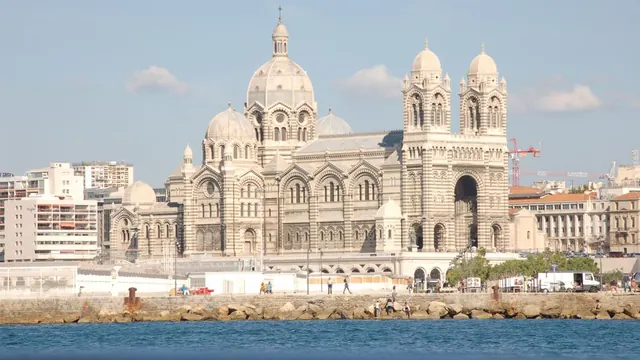
For sightseeing, Provence is far stronger. It has the Palais des Papes in Avignon, the Roman theatres at Arles and Orange, the excavated streets of Vaison-la-Romaine and Cézanne's Aix, as well as Marseille's MuCEM and the Cistercian abbeys of Sénanque and Le Thoronet. That is enough history for a week or more.
The Costa Brava has fewer major sights, but two are very good: the Dalí triangle centred on the Theatre-Museum in Figueres, and Girona's Gothic cathedral and Jewish quarter. Greek ruins at Empúries and walled Tossa de Mar add to them. In both regions you need a car to link the sights.
Nightlife
Most evenings in both regions end with a long dinner and a drink in a village square. The difference is in their few late-night places. On the Costa Brava they are package resorts, with big clubs and cheap bars in Lloret de Mar and Platja d'Aro, full of young crowds until dawn through the summer.
Provence's late nights have more of a city feel. Marseille has dive bars, rooftops and clubs around Cours Julien and La Plaine that are open all year. Saint-Tropez offers a short, expensive season of beach clubs and yacht crowds, and Aix has student bars.
Nature & outdoors
Provence has the wider range of landscapes. It has the 700m-deep Verdon gorge for rim walks and kayaking, the white cliffs of the Calanques, Mont Ventoux for cyclists, flamingos in the Camargue and lavender on the Valensole plateau. The drawbacks are summer heat and days when the massifs close because of fire risk.
The Costa Brava's outdoors is mostly along the shore, and it is very good there. The Camí de Ronda links Calella, Llafranc and Tamariu, Cap de Creus is wild and bare, and the Medes Islands reserve offers some of Spain's best diving and snorkelling. The Garrotxa volcanoes are about an hour inland.
Day trips
Provence is outstanding for day trips. From Avignon or the Luberon, Gordes, the ochre cliffs of Roussillon, L'Isle-sur-la-Sorgue and the wine villages of Gigondas are all within an hour. The Pont du Gard and Nîmes are just across the Rhône.
The Costa Brava offers fewer outings, but one is very big: Barcelona, less than an hour from Girona by high-speed train. Romanesque Besalú, the Garrotxa volcanoes and Collioure over the French border make good shorter days out.
Good for families
The Costa Brava is the easier choice for families, and has been for generations. The long, shallow bays of Roses, L'Estartit and Pals come with big campsites and family resorts, there are water parks near Lloret and Roses, and glass-bottom boats run round the Medes Islands.
Provence works best with a rented house and a pool, because there are few attractions and none on a large scale. Older children will enjoy canoeing in the Verdon and riding in the Camargue. Younger ones struggle with July heat, long car journeys and perched villages that are hard to manage with a pushchair.
Getting around
You need a car in both regions, because local buses are thin and the best villages and coves lie off the bus routes. The difference is the trains. In Provence, trains link Marseille, Aix, Avignon and Arles, so a car-free trip between the towns is possible.
On the Costa Brava the rail line runs inland through Girona and Figueres, and no beach town has a station. Once parked, though, you can walk between several villages on the coastal paths. In summer, expect jams on the roads down to Begur and Cadaqués, and into Saint-Tropez, where the gulf ferry is the better option.
Shopping & style
Provence has far more to buy. L'Isle-sur-la-Sorgue is one of France's largest antiques centres. The markets sell printed fabrics, olive-wood bowls and Marseille soap, and you can also find Moustiers faience and painted santons. Aix has good old-town shops, and Saint-Tropez has luxury boutiques in summer.
On the Costa Brava the main finds are the pottery workshops of La Bisbal d'Empordà, local produce at the weekly markets and the shops of Girona. For serious shopping, people take the train to Barcelona.
Affordability
Neither region is cheap in summer, but the Costa Brava leaves more room in the budget. Lloret de Mar and the large campsites around Roses and L'Estartit cost much less than the upmarket stays in Begur or Cadaqués.
In Provence, villas in the Luberon, boutique hotels in the Alpilles and the coast around Saint-Tropez are among the most expensive places to stay in France. Basing yourself in Marseille, Arles or Avignon brings costs down. In both regions, set lunches and market food help, while a hire car adds to the bill.
Live music & performing arts
Provence is much stronger here. In July the Avignon theatre festival fills the Cour d'honneur of the Palais des Papes and almost every courtyard in town. Aix stages opera of international rank in June and July, and Orange stages opera in its Roman theatre. Outside summer, Marseille has its opera house and a strong rap and world-music scene.
The Costa Brava's programme is mostly confined to July and August. It includes opera and ballet in the castle grounds at Peralada, big-name concerts in the garden at Cap Roig and havaneres sung on the beach at Calella de Palafrugell. For the rest of the year, Girona has most of what is on.
Wellness & relaxation
Provence suits a restful trip better. Days in the Luberon or the Alpilles move slowly between market, lunch, pool and vineyard walk, and many farmhouse hotels offer treatments with lavender and olive oil. There is a thermal spa on the site of Aix's Roman baths, and older spa towns at Gréoux-les-Bains and Digne-les-Bains.
On the Costa Brava, the best place to take the waters is the old spa town of Caldes de Malavella near Girona. Beyond that it is mostly hotel spas around S'Agaró and Begur. Both regions are crowded in August, so come in June or September if rest is the aim.
When should you go?
Pick your month. The climate figures are measured averages, not a forecast.
Costa Brava in July
Provence in July
Daytime high, °C
Rainfall in the month, mm
Where the figures come from
Provence has no rain gauge within 25 km of the centre, so its rainfall comes from a gridded climate dataset read at the destination rather than from a gauge further away.
Provence's sunshine is measured 53 km from the centre, at Nimes / Courbessac.
Temperature and rainfall are climate normals, averaged over the years shown. Costa Brava: 1991-2020 normals, Gerona / Costa Brava (23.2 km from centre). Provence: 2005-2020 (sunshine 1981-2010, rainfall 1991-2020) normals, Avignon / Morières-lès-Avignon (11.9 km from centre).
On the Costa Brava the beach season runs from late June to September. July and August reach about 31°C and the sea is warmest in August, while early June still feels fresh in the water. Rain picks up in September and October is the wettest month. Winter highs of about 14°C are mild enough for walking round Girona in comfort.
In Provence, where most visitors stay, midsummer is hotter and drier. July reaches about 32°C with very little rain and a great deal of sunshine, which makes afternoons in the inland towns hard work. May and late September are the best months for walking and sightseeing. Autumn is wetter than on the Costa Brava, with about 102mm in October, and winter days are a few degrees cooler.
Which traveller are you?
On a family trip with young children, the Costa Brava keeps the days simple. Almost every base is close to a sandy beach, and the cliff-top gardens at Blanes and Lloret make a change from the sand. Provence suits older children better.
For a culture and arts trip, the Costa Brava's sights fit into a few days based in Girona, a short train ride from Figueres. Provence rewards a week split between Avignon and Aix, both on the rail line, with a car only for the abbeys.
On a tight budget, the Costa Brava goes further in summer. A campsite behind the Bay of Roses puts the sand on the doorstep and leaves the hire car parked. Provence is kinder in spring or autumn, when prices fall and crowds thin.
Before you go
| Measure | Costa Brava | Provence |
|---|---|---|
| Official language | Spanish | French |
| Currency | Euro (EUR) | Euro (EUR) |
| Sockets | CF230 V, 50 Hz | CE230 V, 50 Hz |
| Driving side | Right | Right |
| Time zone | UTC+1, UTC+2 in summer | UTC+1, UTC+2 in summer |
| Emergency number | 112 | 112 |
| Main airport | Girona-Costa Brava Airport (GRO)18 non-stop destinations | Marseille Provence Airport (MRS)126 non-stop destinations |
| Public holidays this year | 14 days | 11 days |
By the numbers
| Measure | Costa Brava | Provence |
|---|---|---|
| Swim season, months above 21 °C | 3 months | - |
Where else could you go?
Every comparison below shares a destination with this one, so you can follow Costa Brava or Provence somewhere new.
- French Rivieravs Provence
- Menorcavs Costa Brava
- Mallorcavs Costa Brava
- French Alpsvs Provence
- Dordognevs Provence
- Ibizavs Costa Brava