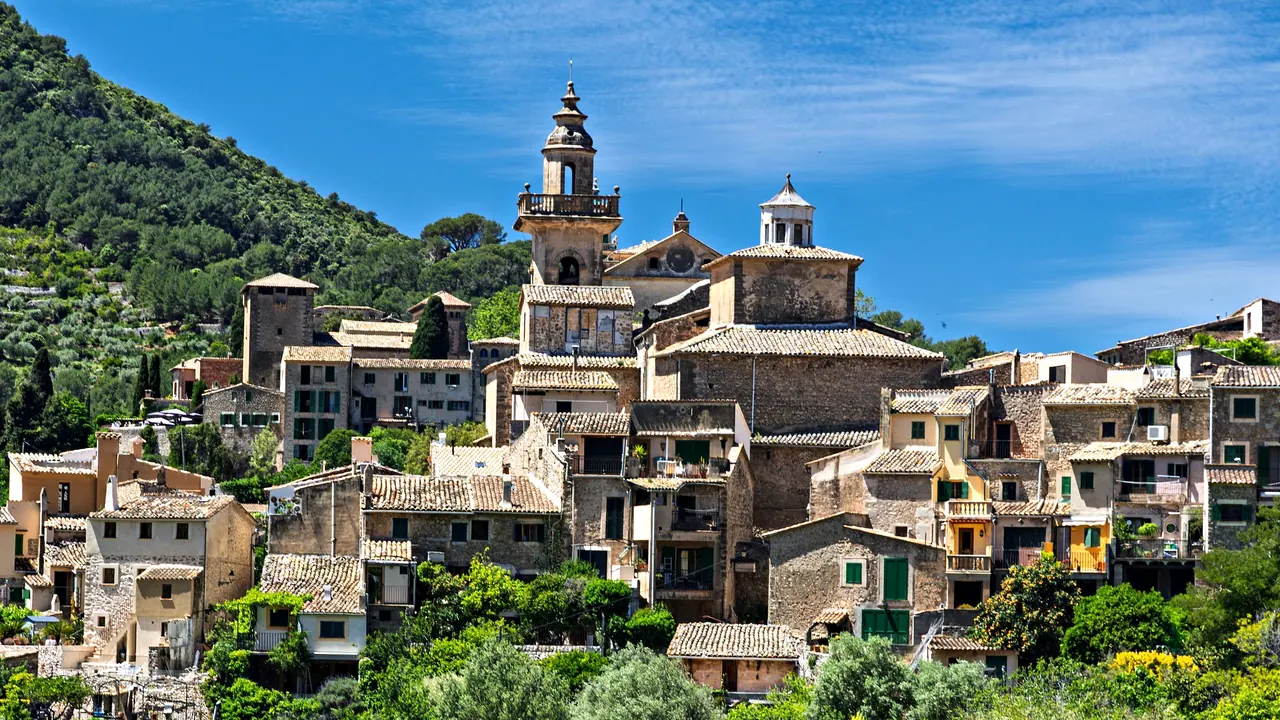
Photos: Mallorca by Guerrero De la Luz, Pexels License.
Costa Brava or Mallorca?
Our verdict in twelve categories, each scored against the same fixed benchmark cities, and the climate month by month, so you can choose for your trip.
Choose Costa Brava for
- food and drink
- day trips
- culture and sights
Choose the Costa Brava if you travel to eat and like to fill your days with outings. Empordà cooking, the red prawns of Palamós and the serious tables around Girona give it the edge at mealtimes. With Barcelona, Dalí's Figueres, medieval Girona and even French Collioure within a day out, it suits a driving vacation along a coast of pine-backed coves and cliff paths.
Choose Mallorca for
- shopping
- nightlife
- getting around
Mallorca is the easier pick for families and for anyone who wants mountains as well as beaches. The northern bays are made for small children, the Tramuntana offers proper hiking and cycling, and Palma gives you a real city for shopping, culture and late nights. Buses and trains also get you further here without a car.
Scoreboard
Twelve categories on one fixed scale from 0 to 100. The shaded stretch is the gap between the two.
Your match
Pick a travel style or drag the sliders, and both match scores follow your weighting.
Wins on food and drink and day trips with your weighting.
Wins on shopping and nightlife with your weighting.
What matters to you?
Category by category
What the scores mean for a trip.
Beaches & swimming
These are two of the Mediterranean's great cove coasts, and the difference is mostly in the water. Mallorca's southeastern calas, such as Caló des Moro and Cala Mondragó, have white sand and turquoise water, while Es Trenc gives you an undeveloped dune beach. Its sea is warmer and stays swimmable into October.
The Costa Brava's coves around Begur and Calella de Palafrugell sit in greener water over sand and rock, and the long sands of the Bay of Roses and Pals take the place of Alcúdia's bays. The tramontana wind can also spoil the northern beaches for days, something Mallorca's sheltered southeast rarely has to deal with.
Food & drink
The Costa Brava eats better. Empordà cooking is a regional cuisine with real character, from suquet and black rice to the anchovies of L'Escala. The Girona countryside has long drawn people who travel purely to eat.
Mallorca's food is simpler and earthier: sobrassada, pa amb oli, tumbet and an ensaïmada for breakfast. It is good in Palma's tapas bars and in the old cellers of Inca and Sineu. On both coasts the big resort strips are where standards fall.
Culture & sights
There is little between them in depth, but the sights are laid out very differently. Mallorca keeps most of its heritage in Palma, where La Seu, the Almudaina, Bellver Castle and the Miró studios can all be seen from one city base.
The Costa Brava spreads its sights across the province: the Dalí museum in Figueres and his house at Portlligat, Girona's cathedral and Jewish quarter, and the Greek ruins at Empúries. It rewards a car and several days rather than an afternoon on foot.
Nightlife
Mallorca has more to offer after dark, mainly because of Palma, which has wine bars in Santa Catalina and late clubs on the Paseo Marítimo, and stays lively through the winter. Magaluf and Playa de Palma add the loud resort scene for those who want it.
The Costa Brava's going-out is concentrated in Lloret de Mar and Platja d'Aro. Elsewhere, evenings end with a drink on the village square, and outside summer most of the coast shuts early.
Nature & outdoors
Mallorca has the bigger landscape. The Serra de Tramuntana rises to about 1,400m straight from the sea, with the GR221 running between stone villages, the Torrent de Pareis gorge and the famous cycling climb to Sa Calobra.
The Costa Brava's strengths are on a smaller scale and closer to the water. The Camí de Ronda between Calella, Llafranc and Tamariu is superb coastal walking, Cap de Creus is wild and wind-carved, and the Medes Islands reserve offers some of Spain's best snorkelling and diving.
Day trips
The Costa Brava has far more within reach, because it sits on the mainland. Barcelona is about an hour away, Girona is on the high-speed line, and you can cross into France for Collioure and Perpignan. Inland, Besalú, the Garrotxa volcanoes and Montserrat add variety.
Mallorca's outings stay on the island. The wooden train to Sóller, the hill towns of Pollença and Artà and the markets of Sineu and Santanyí are lovely, but they are similar in kind. The ferry from Alcúdia to Menorca is the main way off the island for a day.
Good for families
Mallorca is the easier family destination. Its northern and eastern resorts are designed around children, with pools, kids' clubs and flat promenades beside calm, shallow bays, and the aquarium and the underground lake at Drach make good rainy-day plans.
The Costa Brava works well too, especially at the campsites behind the Bay of Roses, Pals and L'Estartit, and the glass-bottom boats to the Medes Islands are popular with children. However, its prettiest coves are down long flights of steps, so families end up on the wide bays.
Getting around
On Mallorca you can manage without a car. Everything radiates from Palma, which is easy to walk and has good city buses, and regional buses and a few rail lines reach the main resorts. That is enough for a single-base stay with some outings.
On the Costa Brava, buses link only the bigger resorts and the railway runs inland, so no beach town has a station. A car is close to essential there, although once parked the compact villages and linking coastal paths are easy on foot.
Shopping & style
Mallorca is better for shopping, thanks to Palma's Passeig des Born, its old-town boutiques and espadrille makers, plus island crafts such as Inca leather, Manacor pearls and striped roba de llengües cloth.
The Costa Brava has the ceramics workshops of La Bisbal d'Empordà, Girona's independent shops and good weekly food markets. For anything more, people go to Barcelona.
Affordability
Both are priced like mainstream Western Europe in summer, and both split sharply between cheap package resorts and expensive boutique corners. The Costa Brava's budget end is Lloret and the big campsites, while Begur and Cadaqués are where costs climb.
Mallorca costs a little more than the mainland. Its country estates and hotels near the best coves are expensive in July and August, but the package resorts of the north and east are cheaper, and May, June and late September bring real savings while the sea is still warm.
Live music & performing arts
Neither is a serious destination for performances, and what differs is the setting. The Costa Brava's best moments are open-air summer events: opera and ballet in the castle grounds at Peralada, international acts in the cliff-top garden at Cap Roig, and havaneres sung on the beach at Calella de Palafrugell. Outside summer, the programme moves inland to Girona's auditorium and theatre, well away from the beach towns.
Mallorca's year-round programme is in Palma, the city most visitors pass through or stay in. The nineteenth-century Teatre Principal has a short opera season and the Balearic Symphony Orchestra plays through the winter. Its summer is gentler and mostly classical, with concerts in Bellver's courtyard and festivals in Valldemossa and Pollença's cloister.
Wellness & relaxation
Mallorca is slightly better for a restful stay. Its quiet country estates among the almond and olive groves, and the yoga and wellness retreats held through the year, give more choice than the Costa Brava's hotel spas around S'Agaró and Begur.
For actually taking the waters, though, the Costa Brava's inland spa town of Caldes de Malavella, with its Roman baths and historic spa hotels, has more to offer than Mallorca's single small spring at Font Santa.
When should you go?
Pick your month. The climate figures are measured averages, not a forecast.
Costa Brava in July
Mallorca in July
Daytime high, °C
Rainfall in the month, mm
Temperature and rainfall are climate normals, averaged over the years shown. Costa Brava: 1991-2020 normals, Gerona / Costa Brava (23.2 km from centre). Mallorca: 1991-2020 normals, Palma De Mallorca (3.6 km from centre).
Both coasts are beach destinations from late June to September, but Mallorca's summer is drier and sunnier. July there brings almost no rain, around 6mm, and the sea warms to about 26°C in August and stays swimmable into October. The Costa Brava is the hotter of the two in high summer, reaching 31°C in July and August, which makes midday sightseeing in Girona or Figueres heavy going, and its sea is fresher early in the season.
For walking, cycling and village-hopping, April, May and late September to October are best in both. Autumn is the wet season in both places, a little more so on the Costa Brava, where October brings about 86mm. In winter Mallorca stays a couple of degrees milder, which suits a quiet off-season stay in Palma better than the mostly shuttered Catalan resorts.
Which traveller are you?
On a family trip with young children, Mallorca is simpler to run. Families can settle in one resort on a northern bay, walk to the sand each morning and manage without a car. The Costa Brava usually means driving between campsite, bays and outings.
For a shopping trip, the Costa Brava means basing yourself inland in Girona or giving a whole day to Barcelona. On Mallorca you can stay in Palma itself, where the shops are on your doorstep and the island's craft towns are a short drive away.
For a food trip, stay on the Costa Brava in a fishing village or near Girona and drive out to long lunches across the Empordà. Mallorca's best cooking is mostly in Palma and the inland towns, so a beach base means travelling for a good meal.
Before you go
| Measure | Costa Brava | Mallorca |
|---|---|---|
| Official language | Spanish | Spanish |
| Currency | Euro (EUR) | Euro (EUR) |
| Sockets | CF230 V, 50 Hz | CF230 V, 50 Hz |
| Driving side | Right | Right |
| Time zone | UTC+1, UTC+2 in summer | UTC+1, UTC+2 in summer |
| Emergency number | 112 | 112 |
| Main airport | Girona-Costa Brava Airport (GRO)18 non-stop destinations | Palma de Mallorca Airport (PMI)201 non-stop destinations |
| Public holidays this year | 14 days | 13 days |
By the numbers
| Measure | Costa Brava | Mallorca |
|---|---|---|
| Population | - | 949,047 |
| People per km² | - | 262 |
| Swim season, months above 21 °C | 3 months | 5 months |
Where else could you go?
Every comparison below shares a destination with this one, so you can follow Costa Brava or Mallorca somewhere new.
- Ibizavs Mallorca
- Formenteravs Mallorca
- Menorcavs Mallorca
- Barcelonavs Mallorca
- Menorcavs Costa Brava
- Costa Blancavs Mallorca