Spain
Mallorca
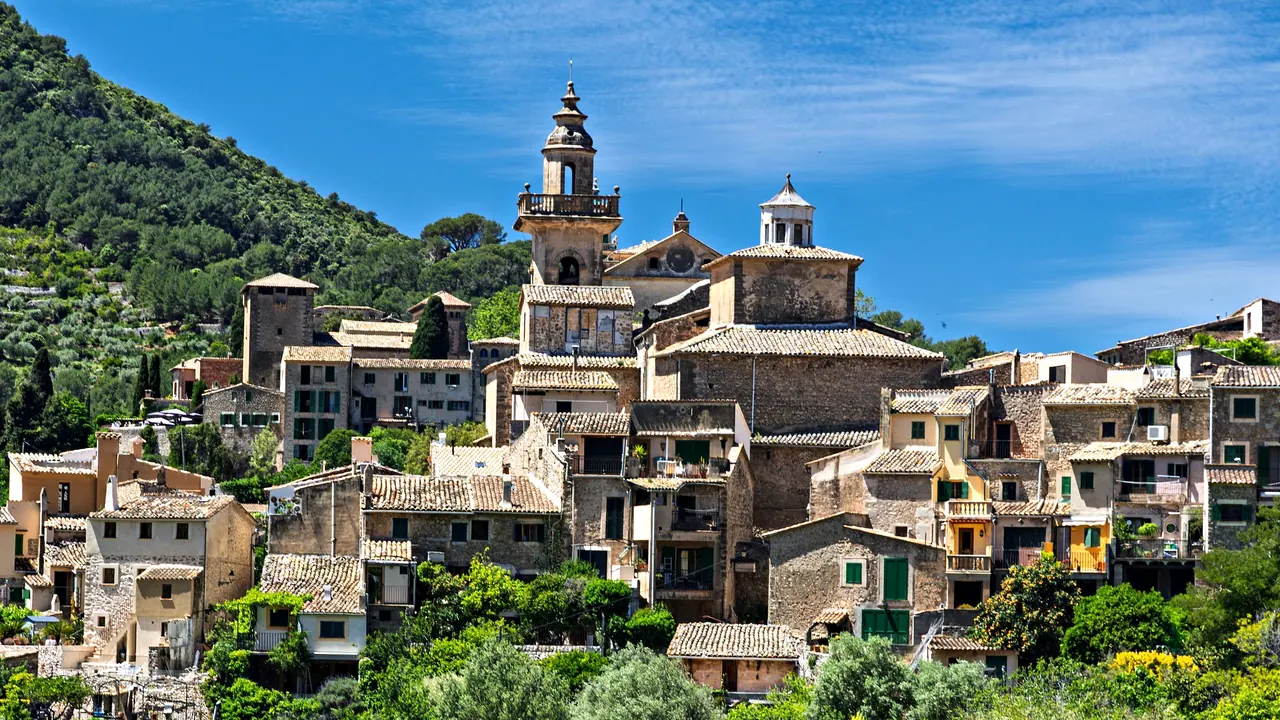
Valldemossa in the Serra de Tramuntana
- Beaches87
- Nature & outdoors82
- Families80
Photo: Guerrero De la Luz, Pexels License
Match
63
Every category weighted equally
- Beach & sun66
- Culture & arts59
- Food & nightlife59
- Family trip66
- Outdoors67
- Relax & unwind64
- Shopping & style60
- On a budget61
Mallorca in twelve categories
Our verdict on each, scored 0 to 100 against the same fixed benchmark cities, so a score means the same thing on every page.
Beaches & swimming. Scores 87 out of 100.
Food & drink. Scores 65 out of 100.
Culture & sights. Scores 62 out of 100.
Nightlife. Scores 66 out of 100.
Nature & outdoors. Scores 82 out of 100.
Day trips. Scores 68 out of 100.
Good for families. Scores 80 out of 100.
Getting around. Scores 55 out of 100.
Shopping & style. Scores 58 out of 100.
Affordability. Scores 42 out of 100.
Live music & performing arts. Scores 40 out of 100.
Wellness & relaxation. Scores 50 out of 100.
Mallorca category by category
Beaches & swimming
87The coastline is long and varied. The south and east coasts have the famous calas, narrow inlets of white sand and very clear turquoise water between pine-covered rocks, such as Caló des Moro, Cala Mondragó and Cala Llombards. In the south, Es Trenc is a long, undeveloped dune beach. The bays of Alcúdia and Pollença in the north have miles of shallow, calm sand. The northwest, along the Tramuntana, has mostly pebble coves under cliffs, and they are better for snorkelling than for lying on a towel.
The sea is warm enough to swim from June to October and reaches about 26°C in August. Small coves fill early in high summer and parking near them is hard. For long, easy beach days, stay in the north. For cove-hopping, stay in the southeast.
Food & drink
65Mallorcan cooking is rustic and rooted in pork, olive oil and garden vegetables. Typical dishes are sobrassada, a soft paprika sausage, pa amb oli (bread rubbed with tomato and oil), tumbet, frit mallorquí and arròs brut. Breakfast is often an ensaïmada, a spiral pastry. Palma has the most depth. There are tapas bars in the old town and Santa Catalina, the Mercat de l'Olivar food market, and a group of ambitious restaurants that cook with island produce.
In the interior, cellers in Inca and Sineu serve simple old-style food in vaulted rooms that were once wine stores. The Binissalem and Pla i Llevant wine areas make good local wine. Most resort strips along the coast serve international menus aimed at tourists. A visitor who wants to eat well should look inland or in Palma.
Culture & sights
62Palma has most of the island's heritage. La Seu is a Gothic cathedral standing over the sea wall, with an interior later worked on by Gaudí. Next to it is the Almudaina palace. Behind them, the old town has Arab baths and stone mansions with hidden courtyards. Bellver Castle is unusual because it is round, and it looks down over the bay. Es Baluard shows modern art inside the old bastions, and the Miró foundation keeps the painter's studios.
The rest of the island adds smaller sights. In Valldemossa there is the charterhouse where Chopin spent a winter. Alcúdia has medieval walls and Roman ruins, and the Lluc monastery stands in the mountains. Talaiotic stone villages, such as Ses Païsses near Artà, are from the Bronze Age.
Nightlife
66Going out depends on where you stay. Palma has the most varied scene all year. There are wine and cocktail bars in the old town and Santa Catalina, and the clubs along the Paseo Marítimo keep going until dawn in summer. Magaluf and Playa de Palma are large, loud party resorts. Magaluf mostly draws young British crowds and Playa de Palma mostly German ones, with beer halls, bar crawls and big clubs. The busiest months run from late spring to early autumn.
The north and east coasts and the mountain villages are quiet after dinner, with terrace bars and late drinks on the square. Outside summer, the resorts mostly close and only Palma stays lively.
Nature & outdoors
82The Serra de Tramuntana is a limestone range along the northwest coast, rising to about 1,400m. Its peaks drop straight to the sea, and its slopes are lined with stone terraces of olives. The GR221, the Dry Stone Route, crosses the range from village to village. There are good day walks through Sóller, Deià and the gorge of the Torrent de Pareis, and the cliff road out to Cap de Formentor. In spring and autumn, professional and amateur road cyclists fill the mountain passes, including the hairpins of Sa Calobra.
The coast is good for sailing, kayaking and deep-water soloing on sea cliffs. The S'Albufera wetlands draw birdwatchers in spring. Spring and autumn are the best seasons for the outdoors, because summer heat makes the hills hard work by midday.
Day trips
68The day out here is a round of island towns, and a car or bus reaches almost all of them in under an hour and a half. On the Tramuntana side, Valldemossa, Deià and Fornalutx are stone villages. Sóller is reached from Palma on a wooden train from the early twentieth century, with a tram running on to the port. Pollença and Artà are old hill towns, and Alcúdia is enclosed by medieval walls. The weekly markets, especially at Sineu and Santanyí, are worth planning a day around.
The interior has wineries around Binissalem. Boats go out to the protected Cabrera archipelago. From Alcúdia, a ferry crosses to Menorca for a long day in Ciutadella.
Good for families
80Mallorca is one of the easiest family beach vacations in Europe. The bays of Alcúdia and Pollença in the north, and Cala Millor on the east coast, have long beaches that shelve gently into calm, shallow water. Resorts there are built around families, with pools, kids' clubs and flat promenades. Near Palma there are several water parks and a large aquarium. On the east coast, the Caves of Drach take visitors on a boat ride across an underground lake.
Spanish culture is relaxed about children in restaurants late in the evening. Distances are short and the island feels safe. July and August are hot and crowded, so June and September are easier with small children.
Getting around
55The island is small enough to cross in about an hour and a half, and most roads are good. Palma's old town is easy to walk, and the city buses work well. A regional bus network and a few rail lines connect Palma to the main towns and resorts. That is enough for a stay in one resort with a few outings.
To explore the coves, the Tramuntana villages and the inland markets, most visitors hire a car. In high summer, the mountain roads are narrow and winding, cove car parks fill early, and parking in Palma takes patience. A road to Sa Calobra or Formentor can be slow when coaches and cyclists share it.
Shopping & style
58Palma is where to shop. The Passeig des Born and Avinguda Jaume III have international fashion, and the old-town lanes have independent boutiques, espadrille makers and delicatessens. The island has a long tradition of shoemaking and leather goods around Inca. Manacor makes cultured pearls. Other local crafts are the striped cloth called roba de llengües, olive-wood carving and siurells, small painted clay whistles.
The weekly village markets sell produce, ceramics and baskets alongside cheap clothing. Sineu is the oldest, and Santanyí and Pollença are among the most attractive. Beyond Palma, the resort strips sell mostly beachwear and souvenirs.
Affordability
42In summer, Mallorca costs more than mainland Spain. The boutique hotels in Palma, the converted country estates in the Tramuntana and the hotels near the best coves are all expensive in July and August. Car hire, sunbeds and waterfront restaurants add up. Large resorts sold as package vacations, such as in the north bays and on the east coast, are much cheaper, and so are set lunch menus and village cellers inland. Visiting in May, June or late September costs noticeably less and the sea is still warm.
Live music & performing arts
40Palma has most of the island's performances. The Teatre Principal is a nineteenth-century theatre that holds a short opera season and theatre productions. The Balearic Symphony Orchestra performs through the winter. Summer brings outdoor concerts, including in the courtyard of Bellver Castle, and classical festivals in Valldemossa, linked to Chopin, and in Pollença's cloister. Deià has a long musical tradition of its own. Folk dance, the ball de bot, appears at village fiestas. This is a modest offer, and live music on most nights means bar bands in Palma or resort shows.
Wellness & relaxation
50Mallorca has one natural thermal spring, the Font Santa near Campos in the south, a short way inland from Es Trenc. People have bathed in it since Roman times, and in the nineteenth century it was officially recognised as thermal water. It is small, though, and today it is used by a single hotel spa. Beyond it, the island has no wider bathing culture. Most of the spa offer is in hotels, and many of the upmarket ones have good spas.
Most of the island's rest comes from where you stay rather than from bathing. Old country estates in the Tramuntana and on the central plain are quiet places to stay among almond and olive groves. Yoga and wellness retreats run through the year, most of them in spring and autumn. The north and the mountain villages keep a slow pace. If calm is the aim, avoid the busy resort strips in midsummer.
Where to stay in Mallorca
Palma is the best first base if food, culture and evenings out matter more than the beach. The old town is easy to walk, with tapas bars, the cathedral and Santa Catalina all close by, and it is the one place that stays lively outside summer. Buses and the old train to Sóller reach much of the island without a car. Magaluf and Playa de Palma suit only those who want loud nights out.
For families and long, easy beach days, the bays of Alcúdia and Pollença in the north are the natural choice. The water is shallow, the promenades are flat and the evenings are quiet. Cala Millor on the east coast offers much the same. Walkers and cyclists do better in Sóller or a Tramuntana village such as Deià, where the paths lead from one village to the next. The beaches there are pebble coves, and spring and autumn suit this side best.
For hopping between coves, stay in the southeast around Santanyí, close to Caló des Moro and Cala Mondragó and within reach of Es Trenc, and hire a car. For a quiet stay, choose a country estate inland. The island is small enough that one base is usually plenty, though a week can be split between Palma and the north or the mountains.
When should you go?
Pick a month to see what it is like. The climate figures are measured averages, not a forecast.
Mallorca in July
Daytime high, °C
Rainfall in the month, mm
The whole year
Shaded against this city’s own year: the deepest cell is its best month for that figure and the palest its weakest.
Temperature and rainfall are climate normals, averaged over the years shown. Mallorca: 1991-2020 normals, Palma De Mallorca (3.6 km from centre).
Before you go
| Measure | Mallorca |
|---|---|
| Official language | Spanish |
| Currency | Euro (EUR) |
| Sockets | CF230 V, 50 Hz |
| Driving side | Right |
| Time zone | UTC+1, UTC+2 in summer |
| Emergency number | 112 |
| Main airport | Palma de Mallorca Airport (PMI)201 non-stop destinations |
| Public holidays this year | 13 days |
By the numbers
| Measure | Mallorca |
|---|---|
| Population | 949,047 |
| People per km² | 262 |
| Swim season, months above 21 °C | 5 months |
Compare Mallorca with
Every comparison with a written verdict behind it.