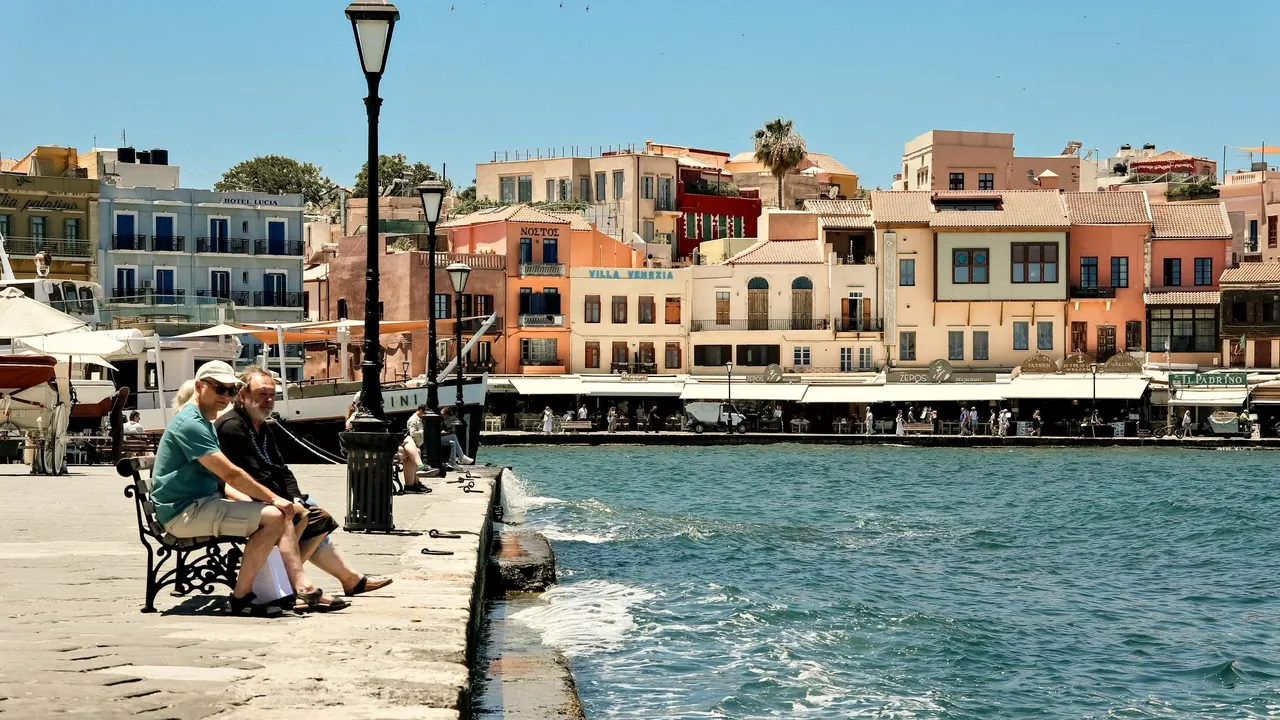
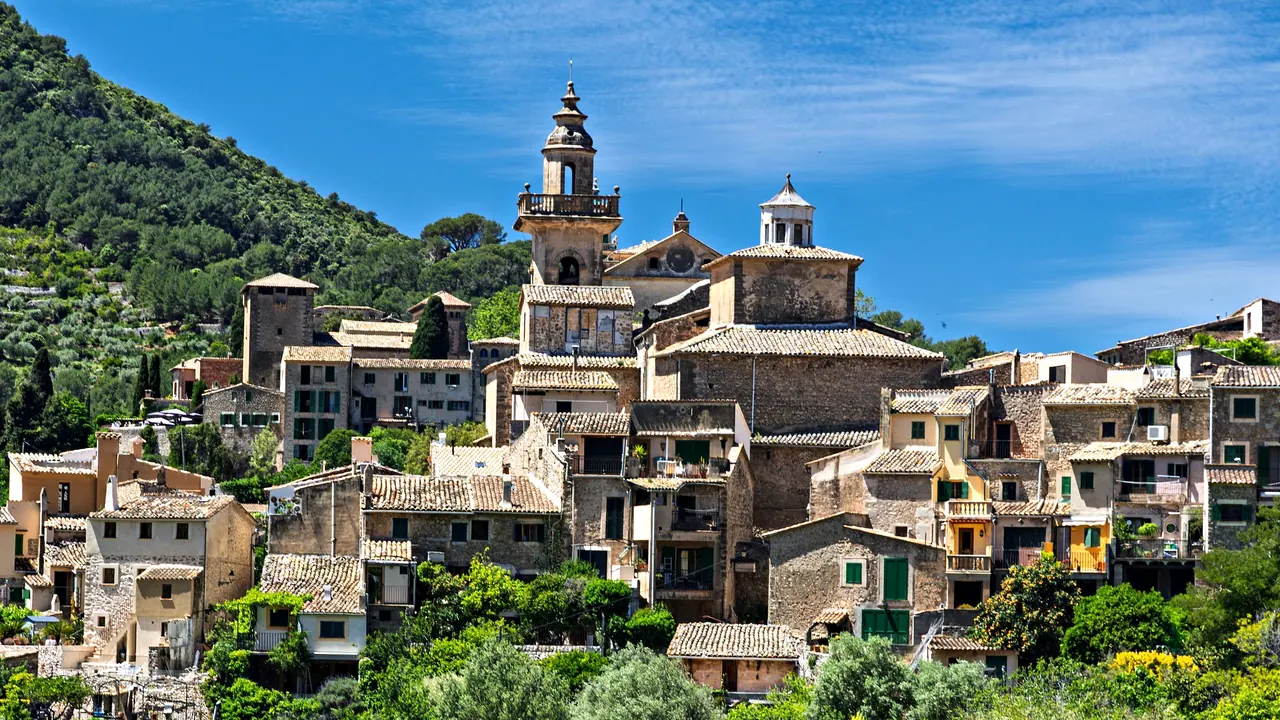
Photos: Crete by Piotr Baranowski, Pexels License; Mallorca by Guerrero De la Luz, Pexels License.
Crete or Mallorca?
Our verdict in twelve categories, each scored against the same fixed benchmark cities, and the climate month by month, so you can choose for your trip.
Choose Crete for
- culture and sights
- prices
- food and drink
Crete is the island for travellers who want history and food to shape the trip. Knossos and the Minoan treasures in Heraklion, Chania's Venetian harbour, mountain villages and tavernas that end the meal with raki give it more depth than Mallorca outside the beach. It also costs less, especially in the countryside. The price is effort: it is a big island, and you will spend long hours driving winding roads.
Choose Mallorca for
- shopping
- getting around
- families
Mallorca asks much less of you. Distances are short, the northern bays are built around children, and Palma is a real city for shopping, late nights and the odd concert, with buses and the Sóller train covering more ground than Crete's network does. Summer is dearer, but for a family beach week, or coves mixed with city life, it is the easier choice.
Scoreboard
Twelve categories on one fixed scale from 0 to 100. The shaded stretch is the gap between the two.
Your match
Pick a travel style or drag the sliders, and both match scores follow your weighting.
Wins on culture and sights and prices with your weighting.
Wins on shopping and getting around with your weighting.
What matters to you?
Category by category
What the scores mean for a trip.
Beaches & swimming
Both islands have top-class beaches, so the choice is about style. Crete's best are wilder and further apart. There is the pink sand and lagoon at Elafonissi, the turquoise bay at Balos and sunset at Falassarna in the far west. On the Libyan Sea, the pebble coves of the south coast are reached by boat or on foot.
Mallorca's strength is its calas: small white-sand inlets between pines in the southeast, plus the long dunes of Es Trenc. The shallow northern bays suit long, lazy days. Its Tramuntana coves are pebbly and better for snorkelling than lying on a towel.
Food & drink
Crete eats better across the whole island. Its cooking is one of the Mediterranean's most distinctive: wild greens, graviera and mizithra cheeses, slow-cooked goat and dakos. Often the best of it is found in an ordinary village taverna rather than in the towns.
Mallorca's rustic pork-and-oil cooking, sobrassada and ensaïmadas are good, but the rewarding meals cluster in Palma's tapas bars and in the cellers of Inca and Sineu. On both islands, avoid eating on the resort strips.
Culture & sights
Crete has the deeper history. It was the home of the Minoans, and Knossos, Phaistos and the frescoes in the Heraklion museum are the reason to come. On top of that sit Venetian harbours and walls, Ottoman balconies in Rethymno, Spinalonga and frescoed Byzantine chapels. The catch is that seeing it all means crossing the island by car.
Mallorca's heritage is concentrated in Palma, where La Seu cathedral, the Almudaina, round Bellver Castle and the Miró studios can be seen in a couple of days. Beyond the capital come smaller pleasures, such as Chopin's cell at Valldemossa and the Bronze Age villages near Artà.
Nightlife
Mallorca has more nights out to choose from. Palma's old town and Santa Catalina have wine and cocktail bars, and the clubs along the Paseo Marítimo run until dawn in summer. Magaluf and Playa de Palma are party resorts on a bigger scale than anything on Crete.
Crete divides the same way, with Malia and Hersonissos as its party strips. Its grown-up side is spread across three towns: Chania's harbour, Rethymno's waterfront and Heraklion's café-bar quarter. Greek students and locals fill them, so they do not depend on visitors alone.
Nature & outdoors
Both islands are excellent for the outdoors, but the landscapes differ. Crete's mountains are higher and wilder, rising above 2,400m and holding snow into spring. Gorges such as Samaria run down to the Libyan Sea, vultures circle the cliffs, and a European long-distance path crosses the whole island.
Mallorca's Tramuntana is lower and more compact, dropping sheer into the sea, with the Dry Stone Route linking its stone villages. Road cyclists come for the Sa Calobra hairpins, climbers come for deep-water soloing on the sea cliffs, and birdwatchers visit the S'Albufera wetlands in spring.
Day trips
Mallorca's outings are easier to manage. Almost every town is within about an hour and a half, the old wooden train runs to Sóller, and the weekly markets at Sineu and Santanyí make a day in themselves. Boats go to Cabrera, and a ferry crosses to Menorca.
Crete has just as much variety, with its wine villages around Archanes, Anogia in the mountains and boats to Chrissi and Gramvousa. Distances are much longer, though: getting from one end of the island to the other takes most of a day. The fast ferry to Santorini is popular, but it makes for a long day.
Good for families
Mallorca is the more natural choice with children. The bays of Alcúdia, Pollença and Cala Millor shelve gently into calm water, with flat promenades and resorts built for families. Short drives to the water parks, the aquarium and the boat ride through the Caves of Drach keep the days easy.
Crete works well if you stay put on the north coast or near Chania, and the shallow lagoon at Elafonissi is ideal for toddlers. Midsummer heat and long, winding drives make it harder going for little ones, though.
Getting around
On Crete a hire car is close to essential. Buses link the four northern towns well, but the gorges, southern beaches and mountain villages lie down steep roads that take far longer than the map suggests. Some villages can only be reached by summer boats.
Mallorca is small enough to cross in about an hour and a half, and Palma's buses, the regional network and the rail lines are enough for a resort stay with a few outings. You will still want a car for the coves, and parking at them in summer can be a struggle.
Shopping & style
Mallorca is better for shopping because it has a real city. Palma's Passeig des Born and Avinguda Jaume III carry fashion labels, and the old-town lanes have espadrille makers and delicatessens. There is leather from Inca and pearls from Manacor.
Crete is about bringing home what the island produces: thyme honey, olive oil and raki from Heraklion's market street, knives and leather from Chania's old lanes, and pottery from Margarites.
Affordability
Crete is the cheaper island, and the gap is widest for travellers who go independently. Moving between family-run rooms and village tavernas, where generous plates often end with raki and dessert on the house, costs noticeably less than a similar trip on Mallorca. Two things narrow the gap: Elounda's luxury resorts and Chania's old town in high summer, and a hire car you can hardly do without, which costs more in July and August.
On Mallorca it works the other way round. The big package resorts in the northern bays and on the east coast are the cheapest way to stay, and from there you can get around by bus and train. Summer costs climb with the independent choices: a boutique hotel in Palma, a Tramuntana country estate or a room near the best coves. Set lunch menus and the inland cellers are where you eat for less.
Live music & performing arts
Neither island is a place to come for the stage, but Mallorca offers more formal culture. Palma's nineteenth-century Teatre Principal has a short opera season and the Balearic Symphony plays through the winter. In summer there are concerts in Bellver's courtyard and the Chopin festival in Valldemossa.
Crete's music is folk rather than concert hall. Lyra players and improvised mantinades fill the music tavernas of Rethymno and Chania, and village saints' days end in dancing. Anogia is the place to hear it at its best.
Wellness & relaxation
The two are much alike: neither has its own bathing tradition, so the spas are in hotels. Crete's best gather around Elounda and the Gulf of Mirabello. Mallorca has the small Roman-era spring at Font Santa, though only one hotel spa uses it.
The real rest differs. Crete offers boat-only Loutro and hill villages among olive groves, while Mallorca has its converted country estates and yoga retreats.
When should you go?
Pick your month. The climate figures are measured averages, not a forecast.
Crete in July
Mallorca in July
Daytime high, °C
Rainfall in the month, mm
Temperature and rainfall are climate normals, averaged over the years shown. Crete: 1991-2020 normals, Heraklion Airport (3.6 km from centre). Mallorca: 1991-2020 normals, Palma De Mallorca (3.6 km from centre).
Both islands are beach islands from June to October, with the sea warm through those months and at its warmest in August. Both get hot in July and August, around 29°C by day, which makes midday sightseeing and hill walking hard work. The difference lies in the rain. Around Crete's north coast the summer is almost completely dry and very sunny, and the rain comes in a concentrated winter, close to 96mm in December. Mallorca's rain is spread more evenly. It never quite stops in summer, and its wettest spell comes early, with autumn storms peaking at about 74mm in October.
That shapes the shoulder seasons. Crete is the better bet for late-season swimming, because October stays drier there and the sea holds about 23°C. Mallorca makes the better winter or early-spring escape for walking and cycling, with drier, sunnier days from January to March than Crete gets. For both, May and late September are the most comfortable months for combining beaches with getting out and about.
Which traveller are you?
For a culture and arts trip, Crete gives you more to explore. Its history runs from Europe's first civilisation through Roman Gortyn to the monastery of Arkadi, and the lyra music is still a living tradition. Mallorca's sights are mostly in Palma and take only a few days.
On a family trip with young children, Mallorca is the gentler choice. The island feels safe, outings rarely mean more than a short drive, and the wooden train to Sóller, with its tram down to the port, is a day out in itself. Crete suits older children better.
On a trip on a tight budget, Crete goes further, especially if you travel independently. Its prices sit well below the famous Cycladic islands, and Rethymno or Heraklion make cheap bases with good old-town eating. On Mallorca, summer savings depend more on staying in a large resort.
Before you go
| Measure | Crete | Mallorca |
|---|---|---|
| Official language | Greek | Spanish |
| Currency | Euro (EUR) | Euro (EUR) |
| Sockets | CF230 V, 50 Hz | CF230 V, 50 Hz |
| Driving side | Right | Right |
| Time zone | UTC+2, UTC+3 in summer | UTC+1, UTC+2 in summer |
| Emergency number | 112 | 112 |
| Main airport | Heraklion International Nikos Kazantzakis Airport (HER)129 non-stop destinations | Palma de Mallorca Airport (PMI)201 non-stop destinations |
| Public holidays this year | 15 days | 13 days |
By the numbers
| Measure | Crete | Mallorca |
|---|---|---|
| Population | 623,065 | 949,047 |
| People per km² | 75 | 262 |
| Swim season, months above 21 °C | 5 months | 5 months |
Where else could you go?
Every comparison below shares a destination with this one, so you can follow Crete or Mallorca somewhere new.