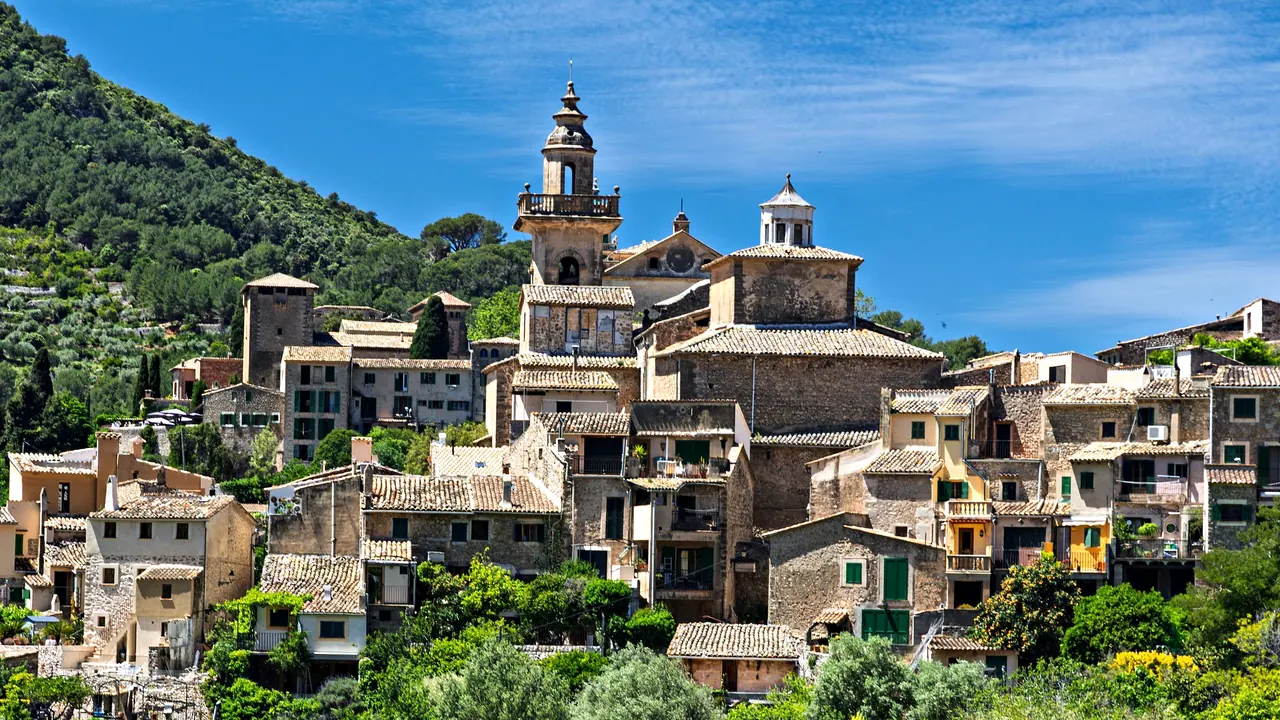
Photos: Mallorca by Guerrero De la Luz, Pexels License.
Costa del Sol or Mallorca?
Our verdict in twelve categories, each scored against the same fixed benchmark cities, and the climate month by month, so you can choose for your trip.
Choose Costa del Sol for
- day trips
- prices
- getting around
Pick the Costa del Sol if the beach is only half the plan. From a base in Málaga or along the coast you can be at the Alhambra, the Mezquita in Córdoba or Seville's old town within a day, and come back to the sea in the evening. Málaga stays a real Spanish city all year, with museums, tapas and late nights, and the package resorts between Torremolinos and Fuengirola keep the bill lower than on the island.
Choose Mallorca for
- nature and the outdoors
- beaches
- families
Mallorca is the better choice when the coast and the mountains are the trip. Its coves have whiter sand and clearer water, the sea is warmer in late summer, and the Tramuntana gives walkers and cyclists a range that drops straight into the sea. You give up the great mainland cities, and a summer stay costs more, but in return you get an island with more variety than any single stretch of shore.
Scoreboard
Twelve categories on one fixed scale from 0 to 100. The shaded stretch is the gap between the two.
Your match
Pick a travel style or drag the sliders, and both match scores follow your weighting.
Too close to call, 2 points apart
Wins on day trips and prices with your weighting.
Wins on nature and the outdoors and beaches with your weighting.
What matters to you?
Category by category
What the scores mean for a trip.
Beaches & swimming
The Costa del Sol has quantity: one almost unbroken line of beach from Nerja to Estepona, backed by beach bars and rows of sunbeds. The sand is coarse and grey-gold, and the central resorts get crowded in high summer. The clearest water is in the coves below the cliffs at Maro.
Mallorca's beaches are prettier and more varied. The southeast has narrow white-sand calas with turquoise water, Es Trenc is a long, undeveloped dune beach, and the shallow bays of Alcúdia and Pollença suit long, easy days. The sea also runs a few degrees warmer by August.
Food & drink
Both coasts eat about equally well, but from different larders. The Costa del Sol cooks from the sea: espetos of sardines grilled over beach fires, fried fish in the old fishing districts of Pedregalejo and El Palo, and barrel wine in Málaga's tiled taverns. Marbella adds a fine-dining tier.
Mallorca's cooking comes from the farm, built on sobrassada, pa amb oli, tumbet and ensaïmadas at breakfast. Its best meals are in Palma and in the old cellers of Inca and Sineu, where the island's own wines are poured. In both places, the resort seafronts are where you eat least well.
Culture & sights
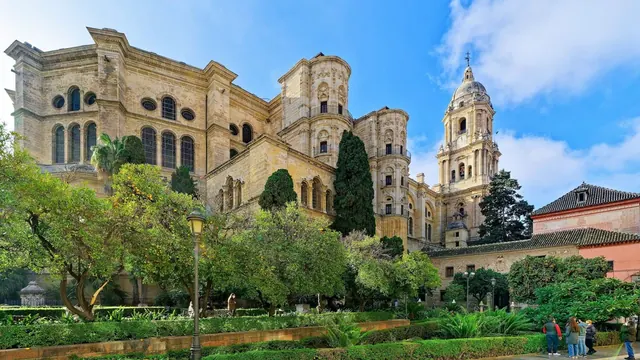
On the Costa del Sol, the draw is Málaga and above all its museums: the Picasso Museum in the painter's home city, the Carmen Thyssen collection and the Pompidou branch on the port. The Alcazaba climbs above a Roman theatre nearby. Outside the city, the resorts add little beyond Nerja's cave and Marbella's whitewashed old town.
Mallorca's heritage is more about monuments, and it is spread further. Palma has La Seu over the sea wall, the Almudaina palace and the round Bellver Castle. The rest of the island adds Chopin's charterhouse at Valldemossa, Alcúdia's medieval walls and the Bronze Age villages near Artà, all easy to fit around beach days.
Nightlife
Both have a lot going on after dark, in different styles. The Costa del Sol ranges from the superyacht beach clubs of Puerto Banús to Torremolinos, one of Spain's oldest gay scenes, and Málaga's long tapas nights around Calle Larios.
Mallorca's going out splits more sharply. Palma has wine bars in Santa Catalina and seafront clubs, while Magaluf and Playa de Palma are mass party resorts aimed at young British and German crowds. The north and the villages go quiet after dinner. On both, only the main city stays lively out of season.
Nature & outdoors
Mallorca is the better outdoor destination. The Tramuntana rises to about 1,400m and drops straight into the sea, with terraced olive slopes, the village-to-village GR221 and some of Europe's best-known road-cycling climbs. The coast adds kayaking, sailing and climbing on the sea cliffs.
On the Costa del Sol the landscape sits behind the resorts rather than meeting the sea. There are still fine walks, such as wading up the Río Chíllar gorge, climbing La Concha, or going inland to the Caminito del Rey and El Torcal, while golf is the main activity on the coast itself.
Day trips
This is where the Costa del Sol pulls clearly ahead. From Málaga, high-speed trains reach Córdoba and Seville, Granada's Alhambra is a drive away, and Ronda and Gibraltar are close to the western end. White villages such as Frigiliana and Casares fill the shorter days.
Mallorca's outings are pleasant but smaller in scale: stone villages in the Tramuntana, the old wooden train to Sóller, weekly markets at Sineu and Santanyí, and a boat to Cabrera or a ferry to Menorca for a longer day.
Good for families
The Costa del Sol fills family days with organised outings. There is the tropical zoo at Fuengirola, the marine park with sea lions and the cable car at Benalmádena, water parks at Torremolinos and Mijas, and a drive-through safari park in the hills above Estepona. The stretch between Torremolinos and Fuengirola makes the easiest base.
On Mallorca, the day revolves more around the resort itself. In the north bays of Alcúdia and Pollença and at Cala Millor in the east, hotels are built around kids' clubs and flat promenades. The boat ride across the underground lake in the Caves of Drach is an outing children remember, and the short distances mean little time in the car.
Getting around
Neither is fully easy without a car, but the mainland coast has the edge for those relying on public transport. A commuter train runs from Málaga airport through Torremolinos to Fuengirola, and Málaga's flat, pedestrian centre connects to the high-speed line. Beyond that, the buses to Marbella and Nerja are slow in summer traffic.
Mallorca is compact, and buses and a few rail lines cover the main towns. However, the coves and mountain villages really call for a hire car, which means narrow hairpin roads and car parks that fill early.
Shopping & style
Brand names or island-made goods is the real choice here. The Costa del Sol is mostly about fashion and convenience: luxury houses on the Puerto Banús waterfront, Spanish chains and a national department store around Málaga's marble-paved Calle Larios, and large malls beside the motorway. Local craft runs to little more than painted pottery and esparto work from the inland villages.
Mallorca has more that is made on the island itself: shoes and leather from around Inca, cultured pearls from Manacor, striped roba de llengües cloth and olive-wood carving. Palma's Passeig des Born and its old-town lanes cover fashion, and the weekly markets at Sineu and Pollença are worth a morning in their own right.
Affordability
The Costa del Sol is easier on the wallet. Apart from Marbella and the Golden Mile, the coast is built for package travel, and competition keeps the hotels and apartments between Torremolinos and Fuengirola reasonable. Beachside fish, weekday set lunches and the local trains are all cheap.
Summer on Mallorca costs more than on the mainland. Palma's boutique hotels, the Tramuntana estates and the rooms near the best coves are expensive, and car hire and sunbeds add up. On both, the shoulder months bring prices down noticeably.
Live music & performing arts
Neither is a major stage, and the Costa del Sol has only a slight lead. Its distinctive offer is flamenco in Málaga's peñas, which is far more authentic than the dinner shows in the resorts, along with the orchestra and touring productions at the Teatro Cervantes and big open-air pop concerts around Marbella in summer.
Mallorca leans classical, with a short opera season at Palma's Teatre Principal and summer concerts in the Bellver Castle courtyard, Valldemossa and the cloister at Pollença.
Wellness & relaxation
Spa time is a little easier to arrange on the mainland coast. The hills between Marbella and Estepona hold large spa hotels and residential clinics for fasting and detox stays of a week or more, and Arab-style bathhouses near Málaga's old town offer warm pools and steam rooms in the Moorish manner. Mild, sunny winters also bring visitors for long, slow stays on the promenades.
Mallorca's calm depends more on where you sleep. Old country estates in the Tramuntana and on the central plain sit quietly among almond and olive groves, and yoga retreats run mostly in spring and autumn. The small spring at Font Santa near Es Trenc, used since Roman times, is the island's only thermal water, and it serves a single hotel spa.
When should you go?
Pick your month. The climate figures are measured averages, not a forecast.
Costa del Sol in July
Mallorca in July
Daytime high, °C
Rainfall in the month, mm
Temperature and rainfall are climate normals, averaged over the years shown. Costa del Sol: 1991-2020 normals, Malaga / Aeropuerto (5.4 km from centre). Mallorca: 1991-2020 normals, Palma De Mallorca (3.6 km from centre).
Both are beach destinations from June to September, but they peak differently. The Costa del Sol is the hotter of the two, with August afternoons around 32°C, and it is almost completely dry from June to August. Mallorca is a little cooler on land but has the warmer sea, reaching about 26°C in August against roughly 23°C on the mainland coast, so swimming stays comfortable well into September.
Spring is the best time in both for walking the streets or the hills, with warm and mostly dry days in April and May. Midsummer is too hot for long days on foot, especially around Málaga. Autumn turns wet sooner on the island. The rain returns in September, and October and November are Mallorca's wettest months, at about 74mm. On the Costa del Sol, September stays mostly dry and the rain builds through late autumn to a peak of about 88mm in December, though winters there are slightly milder and sunnier.
Which traveller are you?
On an outdoors trip, Mallorca is the stronger choice. The Tramuntana has the long-distance Dry Stone Route, the gorge of the Torrent de Pareis and the famous cycling climbs to Sa Calobra, and kayaking and sea-cliff climbing are close at hand along the coast.
On a tight budget, the Costa del Sol goes further. The package hotels and apartments around Torremolinos, Benalmádena and Fuengirola compete hard for business, cheap commuter trains link them to Málaga, and fish grills and tapas cost little. Mallorca's summer prices run higher.
For travellers who want to see Granada, Córdoba and Seville without giving up the beach, the Costa del Sol has no rival here. The Alhambra, the Mezquita and Seville's cathedral are all within a day trip, either by high-speed train from Málaga or by road. On Mallorca, day trips stay on the island.
Before you go
| Measure | Costa del Sol | Mallorca |
|---|---|---|
| Official language | Spanish | Spanish |
| Currency | Euro (EUR) | Euro (EUR) |
| Sockets | CF230 V, 50 Hz | CF230 V, 50 Hz |
| Driving side | Right | Right |
| Time zone | UTC+1, UTC+2 in summer | UTC+1, UTC+2 in summer |
| Emergency number | 112 | 112 |
| Main airport | Málaga-Costa del Sol Airport (AGP)165 non-stop destinations | Palma de Mallorca Airport (PMI)201 non-stop destinations |
| Public holidays this year | 12 days | 13 days |
By the numbers
| Measure | Costa del Sol | Mallorca |
|---|---|---|
| Population | 1,364,837 | 949,047 |
| People per km² | - | 262 |
| Swim season, months above 21 °C | 3 months | 5 months |
Where else could you go?
Every comparison below shares a destination with this one, so you can follow Costa del Sol or Mallorca somewhere new.
- Ibizavs Mallorca
- Formenteravs Mallorca
- Menorcavs Mallorca
- Barcelonavs Mallorca
- Costa Bravavs Mallorca
- Costa Blancavs Mallorca