Spain
Marbella
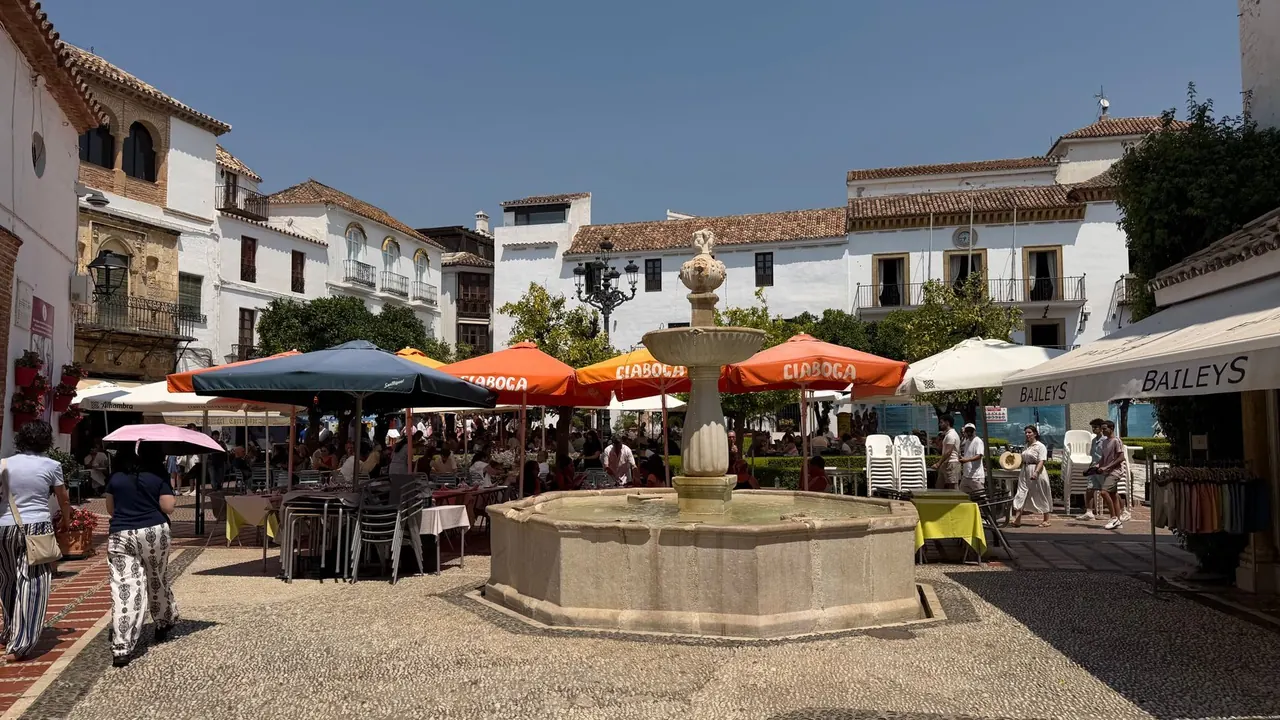
The Plaza de los Naranjos and its fountain in the old town
- Day trips77
- Beaches76
- Nature & outdoors70
Photo: Décio Franchini, Pexels License
Match
55
Every category weighted equally
- Beach & sun58
- Culture & arts48
- Food & nightlife51
- Family trip57
- Outdoors60
- Relax & unwind57
- Shopping & style52
- On a budget52
Marbella in twelve categories
Our verdict on each, scored 0 to 100 against the same fixed benchmark cities, so a score means the same thing on every page.
Beaches & swimming. Scores 76 out of 100.
Food & drink. Scores 60 out of 100.
Culture & sights. Scores 32 out of 100.
Nightlife. Scores 64 out of 100.
Nature & outdoors. Scores 70 out of 100.
Day trips. Scores 77 out of 100.
Good for families. Scores 70 out of 100.
Getting around. Scores 38 out of 100.
Shopping & style. Scores 58 out of 100.
Affordability. Scores 30 out of 100.
Live music & performing arts. Scores 30 out of 100.
Wellness & relaxation. Scores 52 out of 100.
Marbella category by category
Beaches & swimming
76The beach is why most people come. The municipality has more than two dozen beaches strung along roughly 27km of shore, from the central town beaches of La Venus and El Fuerte to the long stretches towards Puerto Banús, San Pedro and the quieter dunes at Cabopino in the east. The sand is fine and greyish rather than white, and the shore is lined with sun loungers, beach clubs and chiringuitos grilling sardines on skewers over open fires.
The sea sits close to the Strait of Gibraltar, so it is cooler than further east in the Mediterranean, reaching about 22°C to 23°C in August and staying swimmable from June to early October. A westerly wind can bring sudden cold water for a day or two. The water is generally calm and clear, and the season is long enough that beach days are realistic well into autumn.
Food & drink
60Eating in Marbella splits in two. On the beach and in the old town it is Andalusian: sardines grilled on skewers over driftwood fires, fried fish, gazpacho and ajoblanco in summer, and tapas bars around the Casco Antiguo and the streets behind the Alameda. At the other end there is a genuine high-end tier, with several acclaimed tasting-menu kitchens along the Golden Mile and around Puerto Banús, alongside a long list of international restaurants serving a wealthy, cosmopolitan clientele.
The middle ground is weaker. Many restaurants near the port and seafront serve the same expensive, forgettable menu to passing visitors. The best food is found by going a few streets inland, into the old town or the working neighbourhoods, or along the beach in the eastern districts. Local wines come from the Sierras de Málaga and Ronda hills.
Culture & sights
32Marbella's heritage is small but real. The Casco Antiguo is a tangle of whitewashed lanes and flower-pots around the Plaza de los Naranjos, with its 16th-century town hall, the Church of the Incarnation and fragments of the old Moorish castle walls. The Museo del Grabado Español, in a former hospital, holds a respectable collection of Spanish prints, and the Avenida del Mar is lined with bronze sculptures by Dalí.
Outside the centre there is a Roman villa with mosaics at Río Verde and the early Christian basilica of Vega del Mar near San Pedro. An afternoon covers it all; the major monuments of Andalusia are a drive away.
Nightlife
64In summer Marbella is one of Spain's best-known places to go out, and it runs on the Spanish clock: dinner late, drinks after midnight, clubs until dawn. Puerto Banús is the centre of the glamorous side, with yachts moored in front of champagne bars and clubs that fill with an international, moneyed crowd. Daytime beach clubs with DJs drift into evening parties along the Golden Mile and towards Elviria.
The old town offers a gentler alternative of terraces and small bars around the squares. The character is polished, expensive and see-and-be-seen rather than underground. Out of season the scene shrinks sharply, and from November to March most evenings end with a quiet drink.
Nature & outdoors
70The mountains come down almost to the sea here. Sierra Blanca rises straight behind the town, and the climb to La Concha, the peak that dominates the skyline, is a demanding half-day hike with views across to Gibraltar and the Rif mountains of Morocco on clear days. Further inland, the Sierra de las Nieves national park has Spanish fir forests, limestone gorges and ibex, about 45 minutes by car.
Within a couple of hours lie the karst formations of El Torcal and the cliff walkway of the Caminito del Rey. Along the coast there is a seaside path for walking and cycling, the dunes at Cabopino, paddleboarding, sailing and dolphin-watching boats. The mild winters make this a year-round walking base, though the coastal strip itself is heavily built up.
Day trips
77Marbella makes a good base for Andalusia's southern edge. Ronda, the town split by a deep gorge and an 18th-century bridge, is about an hour away on a winding mountain road. Málaga, with its cathedral, Alcazaba and Picasso Museum, is around 45 minutes along the coast. Gibraltar, with its rock and very British high street, is about an hour west.
Closer still are the white villages: Mijas, Casares on its hilltop and Benahavís with its restaurants. Nerja and Frigiliana lie further east, and Granada and the Alhambra are a long but possible day at about two hours each way. A car makes all of this far easier, as there is no train and buses are slow.
Good for families
70Marbella works well for families who come for a beach vacation. The town beaches are sheltered, lifeguarded in season and lined with places to eat, the promenade is flat and long enough for scooters and buggies, and Spanish culture welcomes children at the table late into the evening. Many resorts and apartment complexes are built around pools and family stays.
The bigger attractions sit along the coast rather than in town: a safari-style animal park in Estepona, a zoo in Fuengirola, water parks, an aquarium and a marine park around Benalmádena and Torremolinos, where a cable car also climbs the mountain above the coast. These are easy by car but awkward by bus. July and August are hot, and Puerto Banús at night is not aimed at children.
Getting around
38Marbella is a long, thin place. The old town, the Alameda and the central seafront are compact and pleasant on foot, and the coastal promenade lets you walk or cycle for kilometres. Beyond that the town stretches along the motorway from San Pedro to Cabopino, with hotels, villas and beach clubs spread far apart.
Local buses run along the coast and coaches connect to Málaga and its airport in about an hour, but there is no train, and the inland villages and day trips are much easier with a car. Many visitors hire one, or use taxis between the town, the port and their accommodation.
Shopping & style
58Shopping in Marbella means luxury. Puerto Banús has a dense strip of international fashion and jewellery boutiques facing the yachts, and a large department store and shopping centre stand next to the port, with a further mall on the edge of town. The old town has small fashion shops, linen and leather, ceramics and gifts in its lanes.
The weekly street markets sell clothes, produce and household goods to residents, and a craft-and-antiques market brings some character. Independent design and local crafts are limited, though, and once you set aside the big-name labels there is not much to browse.
Affordability
30Marbella is an expensive place to stay by Spanish standards, and in July and August hotel and villa rates climb steeply. Beach clubs, sunbeds in prime spots and dinner around Puerto Banús or the Golden Mile cost far more than elsewhere on the coast.
It can be done more cheaply. Tapas bars in the old town and the inland neighbourhoods charge ordinary Andalusian prices, buses are cheap, and apartments and hotels fall sharply outside summer. Staying in a neighbouring town and visiting Marbella for the day is a common way to keep costs down.
Live music & performing arts
30Live performance in Marbella is seasonal. In summer an outdoor festival in an old quarry amphitheatre brings big international pop and rock acts, and beach clubs and hotels host concerts and DJs. Flamenco shows are staged in the old town and in restaurants, though these are aimed at visitors rather than being a deep local tradition.
The small municipal theatre has a modest programme of plays and concerts, mostly in Spanish. For opera, classical concerts or serious flamenco, visitors head to Málaga or further afield.
Wellness & relaxation
52Marbella has a long tradition as a place where the wealthy come to rest, and spa resorts, wellness retreats and medical detox clinics are scattered across the Golden Mile and the hills behind it, many with large spas, treatment menus and yoga. A few Arab-style bathhouses offer hot and cold pools in the Andalusian tradition, but there is no public bathing culture.
The restorative side depends on the season. From October to May the town is calm, mild and sunny, with long promenade walks, golf and unhurried lunches. In high summer the crowds, heat and party scene make it far less restful.
When should you go?
Pick a month to see what it is like. The climate figures are measured averages, not a forecast.
Marbella in July
Daytime high, °C
Rainfall in the month, mm
The whole year
Shaded against this city’s own year: the deepest cell is its best month for that figure and the palest its weakest.
Where the figures come from
Marbella's temperatures are measured 40 km from the centre, at Malaga / Aeropuerto.
Marbella has no rain gauge within 25 km of the centre, so its rainfall comes from a gridded climate dataset read at the city rather than from a gauge further away.
Temperature and rainfall are climate normals, averaged over the years shown. Marbella: 1991-2020 normals, Malaga / Aeropuerto (39.7 km from centre).
Before you go
| Measure | Marbella |
|---|---|
| Official language | Spanish |
| Currency | Euro (EUR) |
| Sockets | CF230 V, 50 Hz |
| Driving side | Right |
| Time zone | UTC+1, UTC+2 in summer |
| Emergency number | 112 |
| Elevation | 22 m |
| Main airport | Málaga-Costa del Sol Airport (AGP)39 km from centre166 non-stop destinations |
| Public holidays this year | 12 days |
By the numbers
| Measure | Marbella |
|---|---|
| City population | 159,786 |
| People per km² | 1,398 |
| Museums within 10 km | 6 |
| UNESCO World Heritage sites within 50 km | 0 |
| Swim season, months above 21 °C | 3 months |
Compare Marbella with
Every comparison with a written verdict behind it.