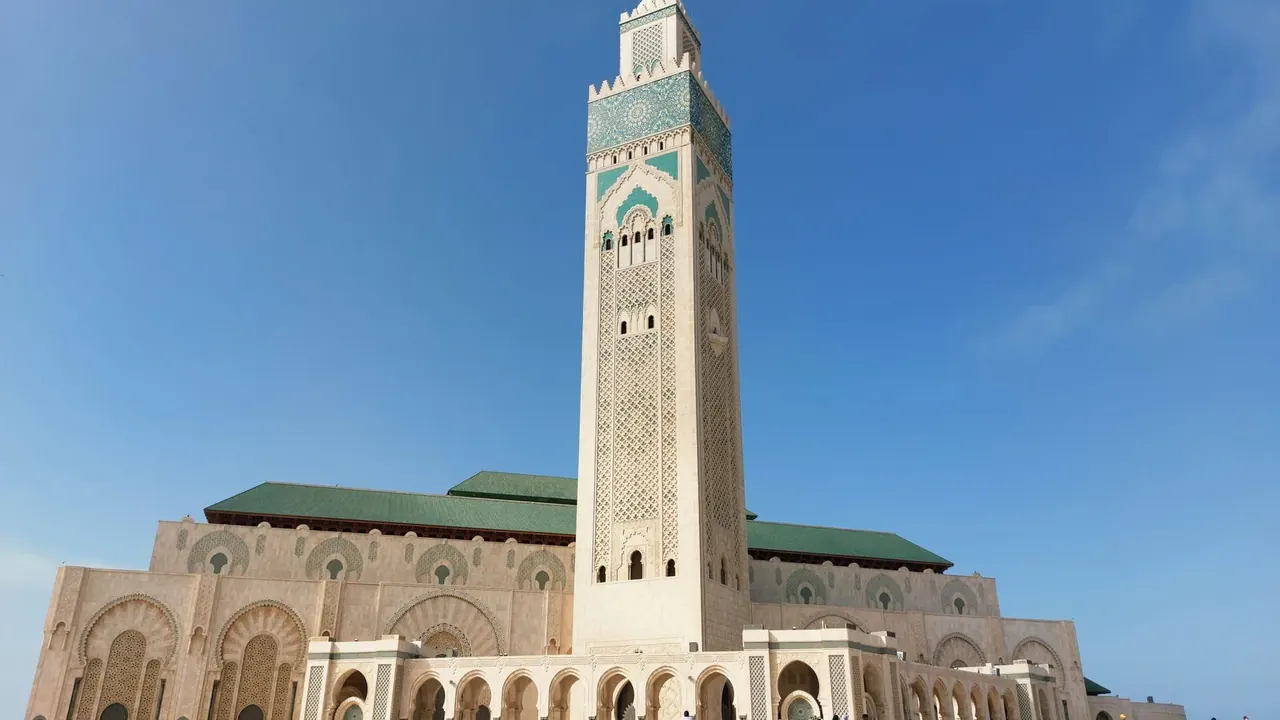
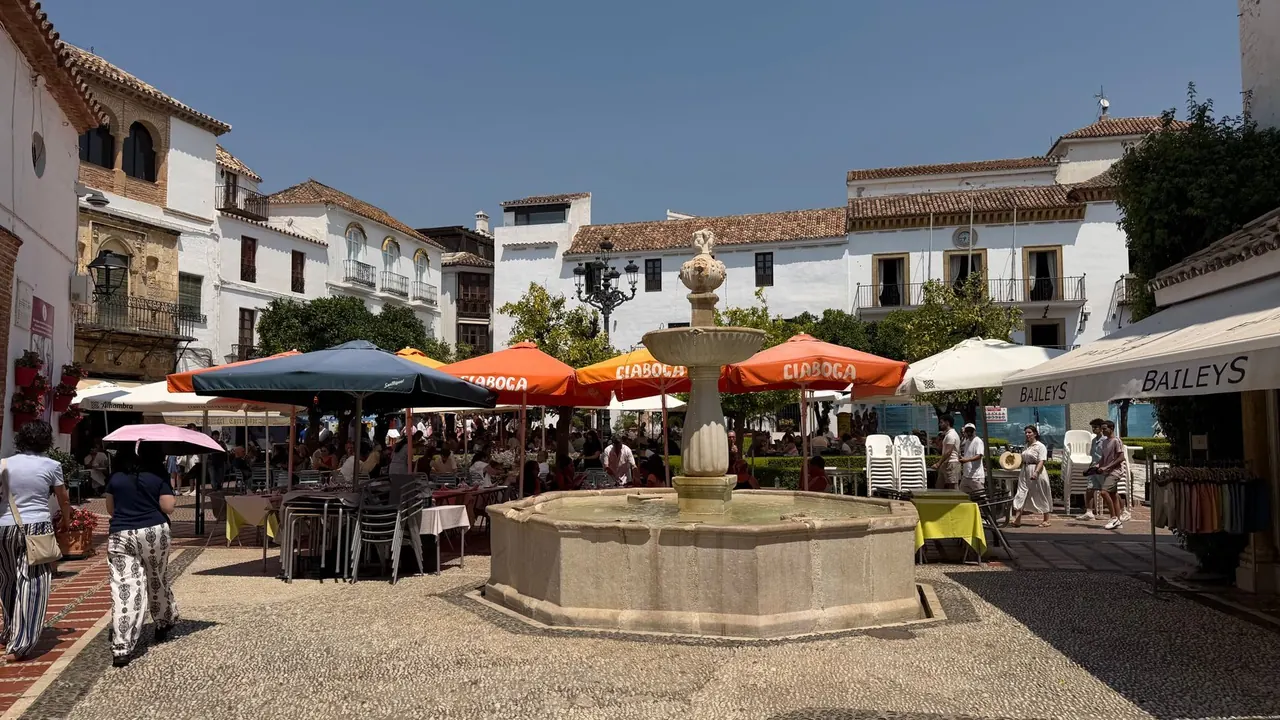
Photos: Casablanca by Samir Bakkah, Pexels License; Marbella by Décio Franchini, Pexels License.
Casablanca or Marbella?
Our verdict in twelve categories, each scored against the same fixed benchmark cities, and the climate month by month, so you can choose for your trip.
Choose Casablanca for
- prices
- culture and sights
- live music and the arts
Casablanca suits the traveller who wants a real working city rather than a resort. Its strengths are the Hassan II Mosque, the Art Deco boulevards of the protectorate era and everyday life that costs little, with fast trains to Rabat and the rest of Morocco close at hand. It works best as two or three days at the start or end of a longer journey through the country, and less well as a place to spend a week on the sand.
Choose Marbella for
- nature and the outdoors
- families
- beaches
Anyone planning a classic sun-and-sea week will find Marbella the easier choice. It has calm beaches along the whole shore, mountains rising straight behind the town and a summer night scene in Puerto Banús and the beach clubs. Families and walkers get much more out of it, and with a hire car Ronda, Málaga and the white villages are all within reach. The trade-off is cost, which runs high in summer.
Scoreboard
Twelve categories on one fixed scale from 0 to 100. The shaded stretch is the gap between the two.
Your match
Pick a travel style or drag the sliders, and both match scores follow your weighting.
Wins on prices and culture and sights with your weighting.
Wins on nature and the outdoors and families with your weighting.
What matters to you?
Category by category
What the scores mean for a trip.
Beaches & swimming
Casablanca's beach is the Corniche at Ain Diab. It is a long stretch of sand, but the swell is strong and the currents unpredictable, so many locals swim in beach-club pools instead. For a proper beach day you drive out to Dar Bouazza or Bouznika.
Marbella is built around its shore. Its beaches line about 27km of coast, from La Venus in the centre to the dunes at Cabopino. The water is generally calm and clear, and chiringuitos grill sardines right on the sand. Here the beach is the reason for the trip, not a spare afternoon.
Food & drink
Both cities eat well, but their strengths lie at opposite ends. Casablanca is best at its simplest: fish chosen at the Marché Central and grilled next door, harbour seafood, msemen in the Old Medina and Friday couscous, with French-style brasseries in Maarif and Gauthier for a change. Alcohol is available but kept discreet.
Marbella's best eating is either barefoot or formal. You get sardines grilled over driftwood on the beach and tapas in the Casco Antiguo, or acclaimed tasting menus along the Golden Mile. The tourist middle around the port is the part to skip.
Culture & sights
Casablanca gives you more to see. The Hassan II Mosque, built out over the ocean, is one of the few in Morocco that non-Muslims can enter. Around it are the Art Deco and neo-Moorish streets of the French era, the 1930s Habous quarter and the Museum of Moroccan Judaism.
Marbella's heritage fits into one afternoon: the whitewashed lanes around the Plaza de los Naranjos, a museum of Spanish prints, the Dalí bronzes on the Avenida del Mar and a Roman villa at Río Verde. Its bigger cultural draw is the rest of Andalusia within driving distance.
Nightlife
In summer Marbella is a well-known place to go out. Dinner is late, drinking starts after midnight in Puerto Banús, and the beach clubs along the Golden Mile carry day parties into the night. There are gentler terrace bars in the old town too. From November to March, though, the scene mostly closes down.
Casablanca goes out more than any other Moroccan city, but quietly. Smart lounges and clubs on the Corniche are busy mainly at weekends, there are hotel bars downtown, and you take a taxi between them, with no street life to wander through.
Nature & outdoors
This is one of the widest gaps between the two. Marbella has mountains right at its back. You can hike up La Concha with views to Gibraltar and the Rif, see fir forests and ibex in the Sierra de las Nieves, and walk the Caminito del Rey within a couple of hours, with mild winters that allow walking all year.
Casablanca sits on a flat plain. Outdoors means a run along the Corniche, a walk among the eucalyptus of the Bouskoura forest, or surf lessons at Ain Diab, which is the one thing it offers that Marbella's calm sea does not.
Day trips
Marbella has more within easy reach. Ronda's gorge, Málaga's Alcazaba and Picasso Museum, Gibraltar and the hilltop white villages are all within about an hour, and Granada is possible in a long day. You really need a car, because there is no train.
Casablanca has fewer options but better trains. Rabat, with the Kasbah des Oudayas and the Chellah, is about an hour away by rail. El Jadida's Portuguese cistern and Azemmour's riverside medina are easy outings to the south. Marrakech and Fes are too far for a day and work better as onward stops.
Good for families
Marbella is set up for families. It has sheltered, lifeguarded town beaches, a long flat promenade for buggies, resorts built around pools and a string of zoos, water parks and marine parks along the coast. The things to avoid are midsummer heat and Puerto Banús at night.
Casablanca welcomes children warmly, and the Corniche mall's aquarium and the Ain Diab amusement park fill a day or two. Beyond those, dense traffic, broken pavements and a sea too rough for young swimmers make it better suited to older children passing through.
Getting around
Neither city is easy to get around, for different reasons. Casablanca is a big, sprawling city, but trams link downtown, the stations and the Ain Diab Corniche, and cheap red petits taxis cover the gaps. Fast trains also reach the rest of Morocco, though crossing its huge roundabouts on foot takes nerve.
Marbella is a long, thin strip. Its old town and seafront promenade are pleasant on foot or by bike, but the hotels and beach clubs are spread far apart, and with no train most visitors end up hiring a car.
Shopping & style
For fashion and big labels, Marbella comes out a little ahead. Puerto Banús has a strip of luxury boutiques facing the yachts and a department store beside the port, and the old-town lanes sell linen, leather and ceramics.
Casablanca is Morocco's centre for modern retail, with a vast mall on the Corniche and designer streets in Maarif. It adds things Marbella cannot match: low-pressure craft shopping in the Habous quarter and the sprawling Derb Ghallef flea market. Serious carpet hunters, though, should save their buying for the older medinas.
Affordability
Casablanca is the far cheaper place to spend your days. Transport, market seafood, café terraces and simple meals cost little. Hotels aimed at business travellers and the Corniche dining scene are the main exceptions.
Marbella is expensive by Spanish standards, and in July and August rooms, sunbeds and dinners around the Golden Mile get much pricier. It becomes reasonable outside summer, or if you stay in a neighbouring town and eat in the old-town tapas bars.
Live music & performing arts
Neither city is a destination for the stage, but Casablanca has a bit more of its own. A large theatre on Place Mohammed V hosts concerts and dance, there is a long-running jazz festival and an urban music festival rooted in local hip-hop, and the city is a home of chaabi and gnawa.
Marbella's performances are mostly summer entertainment: big pop acts in an old quarry amphitheatre, DJs at beach clubs and flamenco staged for visitors. For opera or serious flamenco, you go to Málaga.
Wellness & relaxation
Both cities do well here, in very different ways. In Casablanca, relaxing is part of daily life: every neighbourhood has a public hammam for a black-soap scrub, and there are seafront thalassotherapy centres. The noisy city around them is the drawback.
Marbella offers resort wellness instead, with large spas, yoga retreats and detox clinics on the Golden Mile and in the hills, and no public bathing culture. From October to May it is calmer than Casablanca ever gets, while summer crowds make it much less restful.
When should you go?
Pick your month. The climate figures are measured averages, not a forecast.
Casablanca in July
Marbella in July
Daytime high, °C
Rainfall in the month, mm
Where the figures come from
Marbella's temperatures are measured 40 km from the centre, at Malaga / Aeropuerto.
Marbella has no rain gauge within 25 km of the centre, so its rainfall comes from a gridded climate dataset read at the city rather than from a gauge further away.
Temperature and rainfall are climate normals, averaged over the years shown. Casablanca: 1991-2020 normals, Casablanca (5.6 km from centre). Marbella: 1991-2020 normals, Malaga / Aeropuerto (39.7 km from centre).
Casablanca's Atlantic setting keeps it mild all year. Summer highs stay around 26°C, there is almost no rain from May to September, and walking the downtown streets is comfortable even in August. June to September is the time for the beach, though the sea stays cool, reaching only about 23°C at its warmest in August. Rain returns in October and is steadiest from November to January, but winter days here are still sunnier than in Marbella.
Marbella has hotter summers and wetter winters. July and August reach about 32°C under long, cloudless days, which is good for the beach and hard work for afternoon sightseeing. Its sea is a little cooler than Casablanca's all year, but it is calm and swimmable from June to early October. Winter is wetter than in Casablanca, with rain peaking at 115mm in December. Spring and October are the best times for hiking and for walking the old town in Marbella, while Casablanca stays pleasant for city walks right through the summer.
Which traveller are you?
On a trip on a tight budget, Casablanca goes much further. The tram, petits taxis, grilled fish at the Marché Central and café terraces all cost little. In Marbella, summer rooms and beach clubs are expensive, and only the old-town tapas bars charge ordinary prices.
For an outdoors trip, choose Marbella. You can climb Sierra Blanca to La Concha straight from town, and the gorges of the Sierra de las Nieves are close. Casablanca's flat coastal plain offers surf breaks and the Bouskoura forest, and little else.
On a family trip with children, Marbella is far easier. It has sheltered, lifeguarded beaches, a flat promenade for scooters and water parks and zoos along the coast. In Casablanca, heavy traffic and rough Atlantic currents mean that children mostly swim in beach-club pools.
Before you go
| Measure | Casablanca | Marbella |
|---|---|---|
| Official language | Arabic, Standard Moroccan Tamazight | Spanish |
| Currency | Moroccan Dirham (MAD) | Euro (EUR) |
| Sockets | CE50 Hz | CF230 V, 50 Hz |
| Driving side | Right | Right |
| Time zone | UTC+1 | UTC+1, UTC+2 in summer |
| Emergency number | Police 19/112, ambulance 15, fire 15 | 112 |
| Elevation | 115 m | 22 m |
| Main airport | Mohammed V International Airport (CMN)26 km from centre112 non-stop destinations | Málaga-Costa del Sol Airport (AGP)39 km from centre166 non-stop destinations |
| Public holidays this year | 11 days | 12 days |
By the numbers
| Measure | Casablanca | Marbella |
|---|---|---|
| City population | 3,215,935 | 159,786 |
| People per km² | 8,375 | 1,398 |
| Museums within 10 km | 3 | 6 |
| UNESCO World Heritage sites within 50 km | 0 | 0 |
| Swim season, months above 21 °C | 5 months | 3 months |
Where else could you go?
Every comparison below shares a destination with this one, so you can follow Casablanca or Marbella somewhere new.