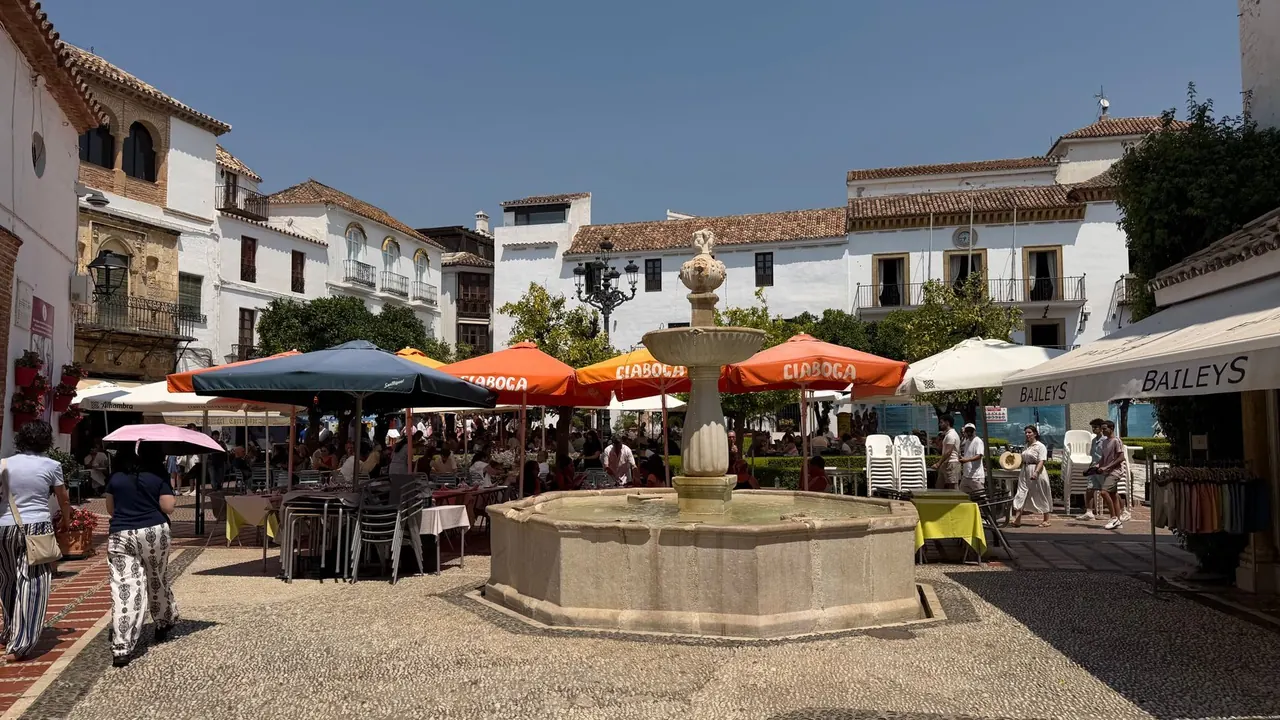

Photos: Marbella by Décio Franchini, Pexels License; Valencia by Francesco Ungaro, Pexels License.
Marbella or Valencia?
Our verdict in twelve categories, each scored against the same fixed benchmark cities, and the climate month by month, so you can choose for your trip.
Choose Marbella for
- nature and the outdoors
- wellness
- day trips
Marbella suits a sun-and-sea vacation with a car and a generous budget. The mountains rise straight behind the beaches, and Ronda, Gibraltar and the white villages are an easy drive away. The resort spas and quiet winters make it a good place to rest. Its glamour around Puerto Banús draws some people and keeps others away, and the old town is pretty but quickly seen.
Choose Valencia for
- getting around
- culture and sights
- prices
Choose Valencia if you want a real city as well as a beach. The old town, the City of Arts and Sciences, a serious food culture built on rice and the Mercado Central, and an opera house give you days of things to do. Flat streets, bikes and trams mean you never need a car, and the city is noticeably kinder on the wallet.
Scoreboard
Twelve categories on one fixed scale from 0 to 100. The shaded stretch is the gap between the two.
Your match
Pick a travel style or drag the sliders, and both match scores follow your weighting.
Wins on nature and the outdoors and wellness with your weighting.
Wins on getting around and culture and sights with your weighting.
What matters to you?
Category by category
What the scores mean for a trip.
Beaches & swimming
Both have long sandy shores where you can swim from June into autumn, so the choice comes down to the kind of beach day you want. Marbella's greyish sand runs for some 27km, from the town beaches to the dunes at Cabopino, lined with beach clubs, sunbeds and chiringuitos grilling sardines. Being near the Strait, the water stays on the cool side.
Valencia's beaches are golden, wider and shallower, the water is warmer, and the city is right behind them. Malvarrosa and Las Arenas are a tram ride from the centre, and the pine-backed dunes of El Saler give you a wilder stretch to the south.
Food & drink
Valencia is the better place to eat. As the home of paella it has a whole culture of rice dishes, from arroz negro to all i pebre in the Albufera villages. It also has the Mercado Central, horchata in Alboraya and a creative restaurant scene in Ruzafa.
Marbella grills good sardine skewers on the beach and has a top tier of tasting-menu kitchens on the Golden Mile. The everyday middle is patchy, though, and near the port you need to head inland to eat well.
Culture & sights
Here the gap is wide. Valencia's Ciutat Vella fits the Lonja de la Seda, the cathedral with its Holy Grail chalice, the Torres de Serranos and the ceramics museum into a short walk. Add the City of Arts and Sciences, the Bellas Artes and IVAM, and you have two or three full days.
Marbella's heritage is charming but slight: the Plaza de los Naranjos, a Roman villa with mosaics, the Dalí bronzes on the Avenida del Mar and a museum of prints, all covered in an afternoon. For major monuments you drive to Ronda or Granada.
Nightlife
Both keep late Spanish hours and both make for good nights out, but in very different styles. Marbella is about glamour and money: yachts and champagne bars at Puerto Banús, and daytime beach clubs with DJs that turn into evening parties. The scene largely shuts down from November to March.
Valencia feels local. It centres on the cocktail and wine bars of Ruzafa, the rougher bars of El Carmen and the cheaper student streets, with open-air clubs by the sea in summer and street parties during Fallas in March. It stays lively for the rest of the year too.
Nature & outdoors
Marbella has the more dramatic setting. Sierra Blanca rises straight behind the town, with a demanding hike to La Concha and views to Morocco. The Sierra de las Nieves, with its fir forest and ibex, is under an hour away, and El Torcal and the Caminito del Rey are within a drive.
Valencia's nature is flat and watery: the lagoon and rice fields of the Albufera, with herons and sunset boat trips, the pine dunes of the Devesa, and the Turia gardens for running. For real hills, such as the gorge at Chulilla, you need a car.
Day trips
Marbella has the richer choice within easy reach: Ronda on its gorge, Málaga, Gibraltar, and white villages such as Casares and Mijas, with Granada possible on a long day. The catch is that you really need a car.
Valencia has fewer outings of the same calibre, but most are easier by train. Roman Sagunto is half an hour away, Xàtiva has its castle and the high-speed line takes you to Cuenca's hanging houses. Peñíscola and Elche are further out.
Good for families
Marbella is made for a beach-and-pool family stay, while Valencia gives children a city full of attractions they can reach without a car. In Marbella the town beaches are sheltered and lifeguarded, the promenade is flat enough for scooters, and many resort complexes are built around pools. The animal parks, water parks and Benalmádena cable car are spread along the coast and much easier to reach by car.
Valencia keeps its big attractions in town: the Oceanogràfic, the science museum and Bioparc. There is also the Gulliver playground in the Turia gardens and the shallow city beaches, and you can reach all of it by tram, by bike or on foot.
Getting around
Valencia is far easier without a car. The centre is flat and compact, the Turia gardens give you a car-free cycle route across town, and metro and tram lines run to the airport, the port and the beaches.
Marbella stretches thinly along the motorway from San Pedro to Cabopino. The old town and the promenade are good on foot, but there is no train and the buses are slow, so most visitors hire a car or use taxis.
Shopping & style
Neither city is worth visiting for the shopping alone, and the difference lies in what you find. Marbella means luxury labels, with fashion and jewellery boutiques facing the yachts at Puerto Banús. Beyond the linen, leather and ceramics of the old town there is little independent design.
Valencia has high-street chains and luxury boutiques around Calle Colón, plus vintage and design shops in El Carmen and Ruzafa. For things to take home there are Manises ceramics, fans and silk, and saffron and turrón from the Mercado Central.
Affordability
Valencia is clearly the cheaper stay. Set lunch menus with wine, inexpensive tapas, cheap transport and fairly priced hotels in the centre and Ruzafa keep most days modest. Costs spike during Fallas.
Marbella is expensive by Spanish standards, especially in July and August, and its beach clubs and dinners around Puerto Banús cost far more than elsewhere on the coast. Old-town tapas and off-season rates help, and many visitors save by staying in a neighbouring town.
Live music & performing arts
Valencia has far more to go and see. The Palau de les Arts stages a full opera and ballet season with its own orchestra, and the Palau de la Música is home to the city orchestra. There is also a small jazz circuit, and the region's wind bands play all through Fallas.
In Marbella, most live performance happens in summer: big pop and rock acts in the quarry amphitheatre, plus flamenco shows aimed at visitors. For opera or serious flamenco you go to Málaga.
Wellness & relaxation
Marbella is the better choice if you want pampering. The wealthy have long come here to rest, and there are resort spas, detox clinics and yoga across the Golden Mile and the hills behind it. From October to May the town is calm, sunny and mild, though high summer is anything but restful.
Valencia relaxes you in a different way, with long lunches, the seafront promenade and the shade of the Turia gardens. It has hotel spas and Arab-style baths but no retreat culture of its own.
When should you go?
Pick your month. The climate figures are measured averages, not a forecast.
Marbella in July
Valencia in July
Daytime high, °C
Rainfall in the month, mm
Where the figures come from
Marbella's temperatures are measured 40 km from the centre, at Malaga / Aeropuerto.
Marbella has no rain gauge within 25 km of the centre, so its rainfall comes from a gridded climate dataset read at the city rather than from a gauge further away.
Temperature and rainfall are climate normals, averaged over the years shown. Marbella: 1991-2020 normals, Malaga / Aeropuerto (39.7 km from centre). Valencia: 1991-2020 normals, Valencia (1.6 km from centre).
Both cities have the usual Spanish coastal pattern of hot, dry summers and mild winters. July and August highs pass 30°C in each, which makes midday sightseeing hard work, so spring and autumn are the comfortable months for walking. The real differences are in the water and the rain. Marbella's sea, close to the Strait, peaks at only about 22°C in August, so swimming feels brisk outside July to September. Valencia's shallow bay warms to about 26°C and stays pleasant from June well into October.
Marbella is the sunnier of the two all year and almost dry from May to September, but its winter is properly wet, with December the rainiest month at around 115mm. Valencia is drier through winter and spring. Its wettest spell comes in September and October, at about 70mm a month, when heavy showers can interrupt a beach day.
Which traveller are you?
On a culture and arts trip, Valencia is the clear choice. Marbella's old lanes fill a morning, but major monuments mean a drive. Valencia fills several days on foot, from Gothic landmarks to modern architecture, with evenings at the opera.
For an outdoors trip, Marbella wins. Steep trails start at the edge of town, so you can fit a morning climb and an afternoon swim into one day. Valencia's outdoors is gentler, mostly flat cycling and birdwatching, with real hills a drive away.
On a tight budget, Valencia is far easier. Marbella can be done cheaply, but only by steering around its expensive side and timing your stay outside summer. In Valencia the ordinary way of eating, getting about and staying central is already modest.
Before you go
| Measure | Marbella | Valencia |
|---|---|---|
| Official language | Spanish | Spanish |
| Currency | Euro (EUR) | Euro (EUR) |
| Sockets | CF230 V, 50 Hz | CF230 V, 50 Hz |
| Driving side | Right | Right |
| Time zone | UTC+1, UTC+2 in summer | UTC+1, UTC+2 in summer |
| Emergency number | 112 | 112 |
| Elevation | 22 m | 15 m |
| Main airport | Málaga-Costa del Sol Airport (AGP)39 km from centre166 non-stop destinations | Valencia Airport (VLC)9 km from centre109 non-stop destinations |
| Public holidays this year | 12 days | 13 days |
By the numbers
| Measure | Marbella | Valencia |
|---|---|---|
| City population | 159,786 | 840,792 |
| People per km² | 1,398 | 6,242 |
| Museums within 10 km | 6 | 45 |
| UNESCO World Heritage sites within 50 km | 0 | 2 |
| Swim season, months above 21 °C | 3 months | 5 months |
Where else could you go?
Every comparison below shares a destination with this one, so you can follow Marbella or Valencia somewhere new.