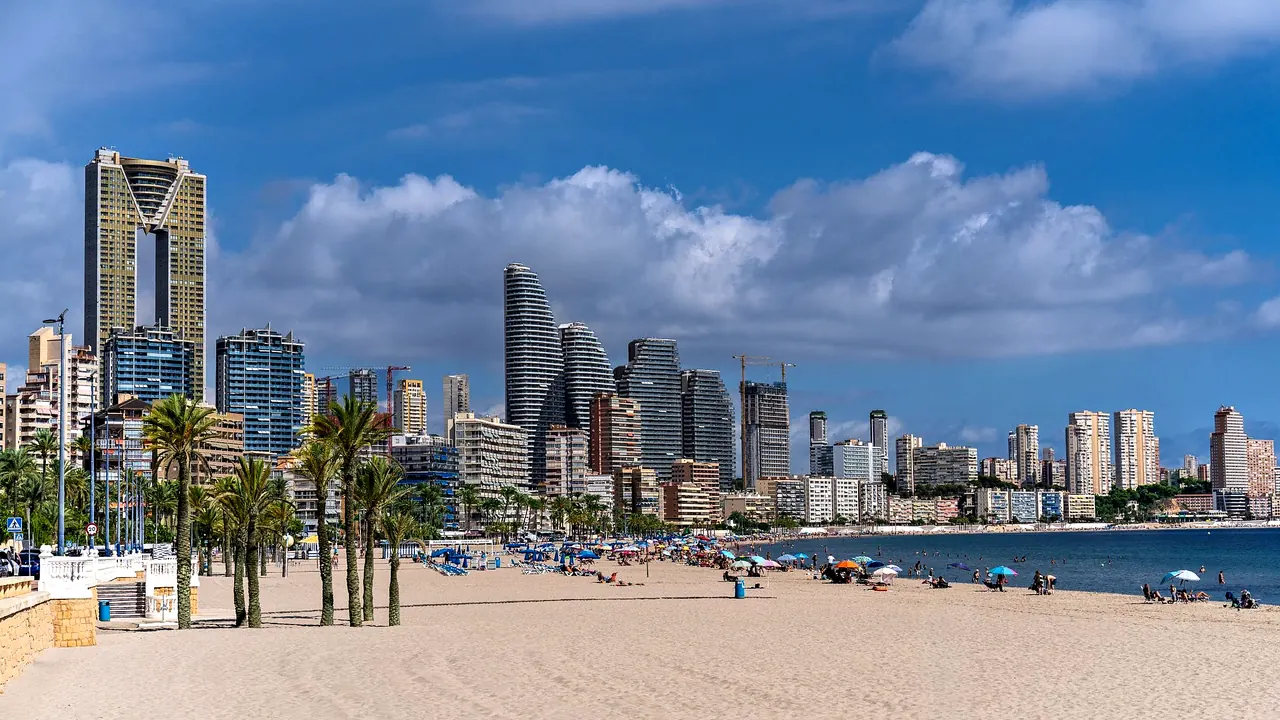
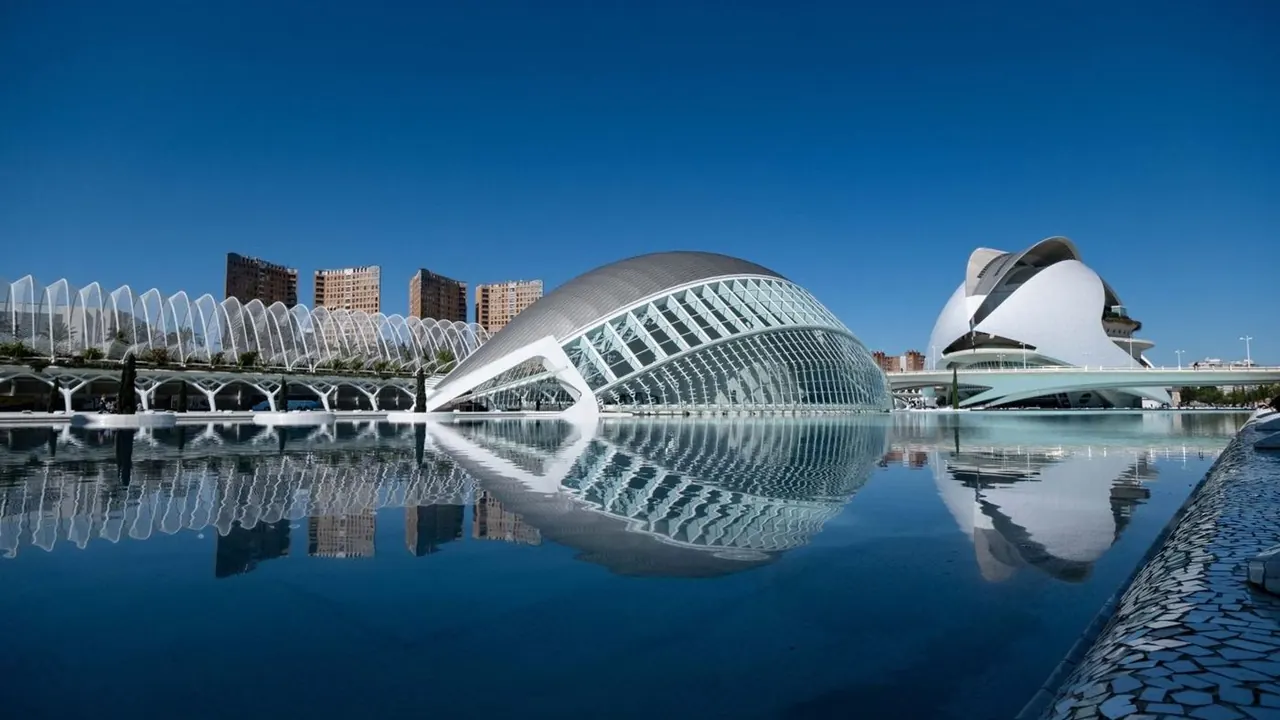
Photos: Benidorm by Emilio Sánchez Hernández, Pexels License; Valencia by Francesco Ungaro, Pexels License.
Benidorm or Valencia?
Our verdict in twelve categories, each scored against the same fixed benchmark cities, and the climate month by month, so you can choose for your trip.
Choose Benidorm for
- prices
- beaches
- nightlife
Benidorm suits a vacation built around the sand and the evening. Its two long bays sit right in front of the hotels, the water is calm enough for small children, a cluster of theme and water parks waits on the edge of town, and the night out behind Levante is loud, cheap and easy. It is the cheaper and sunnier of the two, and the mountains behind it give walkers real terrain. What it cannot offer is history, serious eating or much of a city.
Choose Valencia for
- culture and sights
- food and drink
- shopping
If you want a real city that also has a good beach, go to Valencia. The Lonja, the cathedral and the City of Arts and Sciences fill two or three days of sightseeing. This is where paella comes from, and the Mercado Central shows it. There is also opera, proper shopping, and flat streets and the Turia gardens to cycle through. The sand is wide and uncrowded, though it is a tram ride from the old town rather than outside your door.
Scoreboard
Twelve categories on one fixed scale from 0 to 100. The shaded stretch is the gap between the two.
Your match
Pick a travel style or drag the sliders, and both match scores follow your weighting.
Wins on prices and beaches with your weighting.
Wins on culture and sights and food and drink with your weighting.
What matters to you?
Category by category
What the scores mean for a trip.
Beaches & swimming
Both have fine, shallow sand and the same warm sea, so the difference is in how you reach it. In Benidorm the beach is the town. Levante and Poniente run right below the hotels, and the Mal Pas cove and the rocky coves under the Serra Gelada add variety a short walk or drive away. That makes Benidorm the easier beach vacation, though in high summer the sand is packed from morning to evening.
Valencia's Las Arenas and Malvarrosa are about twenty minutes from the centre by tram, but there is far more room to spread out on them. South of the port, El Saler and La Devesa lie behind pine woods and dunes and are wilder than anything near Benidorm.
Food & drink
Valencia is much the better place to eat. Paella valenciana, arroz negro and all i pebre come from here, the beachfront rice houses at Las Arenas and the villages of the Albufera serve them properly, and the Mercado Central is one of Europe's great food halls. Add horchata in Alboraya and the creative cooking in Ruzafa, and a food lover could spend the whole trip eating.
Benidorm's seafront and the Rincón de Loix mostly serve full breakfasts, roasts and pizza for package visitors. The good meals are in the old town's tapas lane and the coastal rice restaurants, and you have to look for them.
Culture & sights
There is a wide gap here. Valencia's Ciutat Vella has the Gothic Lonja de la Seda, a cathedral with a bell tower to climb, two massive medieval gates and a ceramics museum in a baroque palace. At the other end of the old riverbed is the white architecture of the City of Arts and Sciences, and the Bellas Artes and IVAM add strong painting collections.
In Benidorm, the sightseeing is a stroll through the whitewashed lanes on the headland, the blue-domed church and the view from the Balcón del Mediterráneo, and it takes an afternoon at most. Anyone in Benidorm who wants heritage has to take a day trip, and Valencia itself is one of the best.
Nightlife
Benidorm has more going out packed into a small area, and the whole town is set up for it. The streets behind Levante are full of themed pubs, karaoke, drag cabaret and stag groups in fancy dress, and the big clubs on the edge of town stay open until dawn. It is an uncomplicated party, and it quietens a lot outside summer.
Valencia's nights are more varied and more local. There are cocktail and wine bars in Ruzafa, older and rougher bars in El Carmen, cheap student places around Benimaclet and open-air clubs by the sea in summer. Unlike Benidorm, it stays lively all year, and Fallas in March turns whole neighbourhoods into street parties.
Nature & outdoors
Benidorm has the more dramatic scenery close at hand. The Serra Gelada cliffs rise straight from Levante beach, and Puig Campana, the Bernia ridge and the Aitana range offer proper hiking and climbing within half an hour. There is also snorkelling and diving around the island offshore.
Valencia's nature is flat and watery. The Albufera lagoon, with its rice fields, herons and boat trips at sunset, starts about 10km from the centre, and the Turia gardens and the coast make cycling easy. For mountains, though, you need to drive to the Sierra Calderona or the gorge at Chulilla.
Day trips
The day trips are about equally good, but they are different kinds of outing. From Benidorm they are short hops: Altea and Villajoyosa are minutes away, Guadalest's castle is the classic trip into the hills, and the coastal tram reaches Alicante.
From Valencia the trains lead to history. Sagunto's Roman theatre and Xàtiva's castle are each about half an hour away, and Cuenca's hanging houses are about an hour on the high-speed line. Both places can reach Elche's palm grove, and Benidorm is the closer of the two.
Good for families
Both are easy with children, with gentle beaches and a Spanish welcome for families at dinner, and Benidorm has a slight edge. It has a ready-made cluster of parks: a big theme park, a long-established water park, a marine park and a zoo, all close to beaches that slope gently into calm water. Stay near Poniente to keep away from the adult streets behind Levante.
Valencia's attractions involve more learning: the huge Oceanogràfic aquarium, the hands-on science museum, Bioparc, and the giant Gulliver figure in the Turia gardens for children to climb on. It has no big theme park, though.
Getting around
In Benidorm you walk the flat seafront promenades, and the coastal tram runs along the coast. Hotels on the hill behind Levante can mean steep climbs, and the mountains and the Algar waterfalls really need a car or an organised excursion.
Valencia is easier to get around. Its compact, flat centre can be seen on foot, and it is one of Spain's best cities for cycling, with the car-free Turia route and bike lanes everywhere. Metro and tram lines reach the airport and the beaches, so you never need a car in the city.
Shopping & style
Valencia is the place to shop. The Ensanche around Calle Colón has Spanish chains, international labels, luxury boutiques and the department store. El Carmen and Ruzafa add independent fashion and vintage shops, and there are Manises ceramics, fans and silk to bring home.
Benidorm sells beachwear, sunglasses, souvenirs and fakes at its weekly markets, plus some local ceramics and turrón in the old town. People staying there take the tram to Alicante for anything more.
Affordability
Benidorm is the cheaper of the two. A huge supply of hotel rooms and apartments keeps rates low, all-inclusive packages are normal, and eating and drinking cost little every day. Winter is cheap enough for many visitors to stay for weeks. The costly parts are July, August and a day at the parks.
Valencia is good value for a big city, with its set lunch menus, cheap tapas and inexpensive public transport. Rooms cost more in summer near the beach and far more during Fallas.
Live music & performing arts
Valencia has proper culture on stage. The Palau de les Arts stages opera and ballet with its own orchestra, the Palau de la Música is home to the city orchestra, and the Teatro Principal puts on theatre. There is also a small jazz scene, and the wind bands play through Fallas.
In Benidorm, entertainment means a big dinner show and every night tribute acts, comedians and drag cabaret in the bars. It is fun, but it is all light entertainment, and for classical music people go to Valencia.
Wellness & relaxation
Neither place has thermal springs or a living bathing tradition, but Valencia makes the calmer stay. You can take long walks along the shady Turia gardens and the seafront promenade, and the city has Arab-style bath houses as well as hotel spas.
Benidorm's wellness is in hotel spas, plus some spa hotels for longer stays, and summer there is loud. From November to March, though, it settles into mild, sunny days of promenade walks, and Poniente is always the quieter side of town.
When should you go?
Pick your month. The climate figures are measured averages, not a forecast.
Benidorm in July
Valencia in July
Daytime high, °C
Rainfall in the month, mm
Where the figures come from
Benidorm's temperatures are measured 38 km from the centre, at Alicante.
Benidorm has no rain gauge within 25 km of the centre, so its rainfall comes from a gridded climate dataset read at the city rather than from a gauge further away.
Temperature and rainfall are climate normals, averaged over the years shown. Benidorm: 1991-2020 normals, Alicante (38.1 km from centre). Valencia: 1991-2020 normals, Valencia (1.6 km from centre).
The two share a calendar for swimming. The sea in both warms to 26°C in August and stays pleasant from late June into October, and afternoons in July and August reach about 31°C, which is better for the beach than for long walks around the streets. Spring and October are the best seasons for walking and sightseeing in either place.
Benidorm is the drier and sunnier of the two all year round. Its wettest months, September to November, bring only about 40mm each, while Valencia gets up to 70mm in September and stays damper through the winter. Winter days are mild in both, around 17°C, but Benidorm gets more sun from November to February. That is why it makes the better winter escape, while Valencia's cooler months suit a city break more than a stay in the sun.
Which traveller are you?
For a beach and sun trip, choose Benidorm. Levante and Poniente are right in front of the hotels, the sea is shallow and calm, and the town gets more sunshine and less rain than Valencia in every month of the year.
On a culture and arts trip, Valencia is clearly the better choice. It has the UNESCO-listed silk exchange, the Grail chalice in the cathedral, the medieval gates, the City of Arts and Sciences and an opera house with its own orchestra. Benidorm has a small old village and its skyline.
On a trip with a tight budget, Benidorm makes your money go further. There is a huge supply of rooms and all-inclusive packages, drinks and set lunches are cheap, and winter is very cheap. Valencia is good value for a city, but it costs more, especially at Fallas.
Before you go
| Measure | Benidorm | Valencia |
|---|---|---|
| Official language | Spanish | Spanish |
| Currency | Euro (EUR) | Euro (EUR) |
| Sockets | CF230 V, 50 Hz | CF230 V, 50 Hz |
| Driving side | Right | Right |
| Time zone | UTC+1, UTC+2 in summer | UTC+1, UTC+2 in summer |
| Emergency number | 112 | 112 |
| Elevation | 15 m | 15 m |
| Main airport | Alicante-Elche Miguel Hernández Airport (ALC)48 km from centre126 non-stop destinations | Valencia Airport (VLC)9 km from centre111 non-stop destinations |
| Public holidays this year | 13 days | 13 days |
By the numbers
| Measure | Benidorm | Valencia |
|---|---|---|
| City population | 77,327 | 840,792 |
| People per km² | 2,008 | 6,242 |
| Museums within 10 km | 5 | 45 |
| UNESCO World Heritage sites within 50 km | 1 | 2 |
| Swim season, months above 21 °C | 5 months | 5 months |
Where else could you go?
Every comparison below shares a destination with this one, so you can follow Benidorm or Valencia somewhere new.
- Alicantevs Benidorm
- Alicantevs Valencia
- Zaragozavs Valencia
- Madridvs Valencia
- Barcelonavs Valencia
- Toledovs Valencia