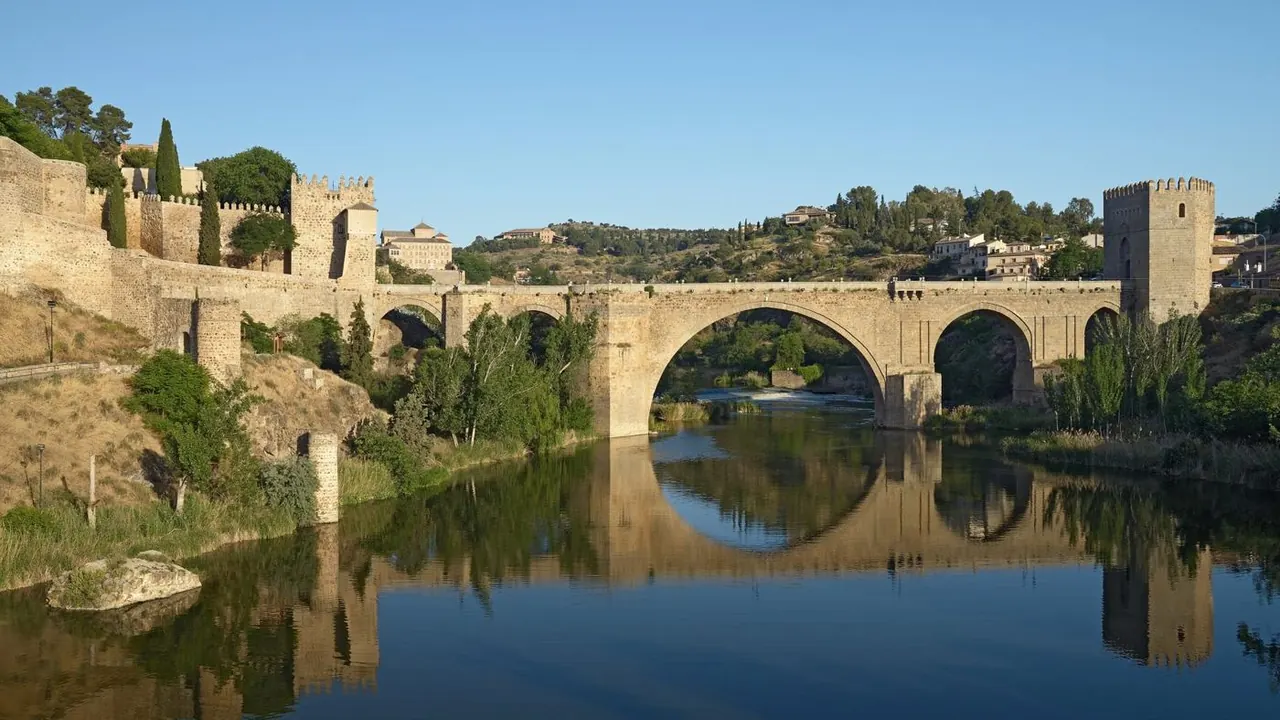
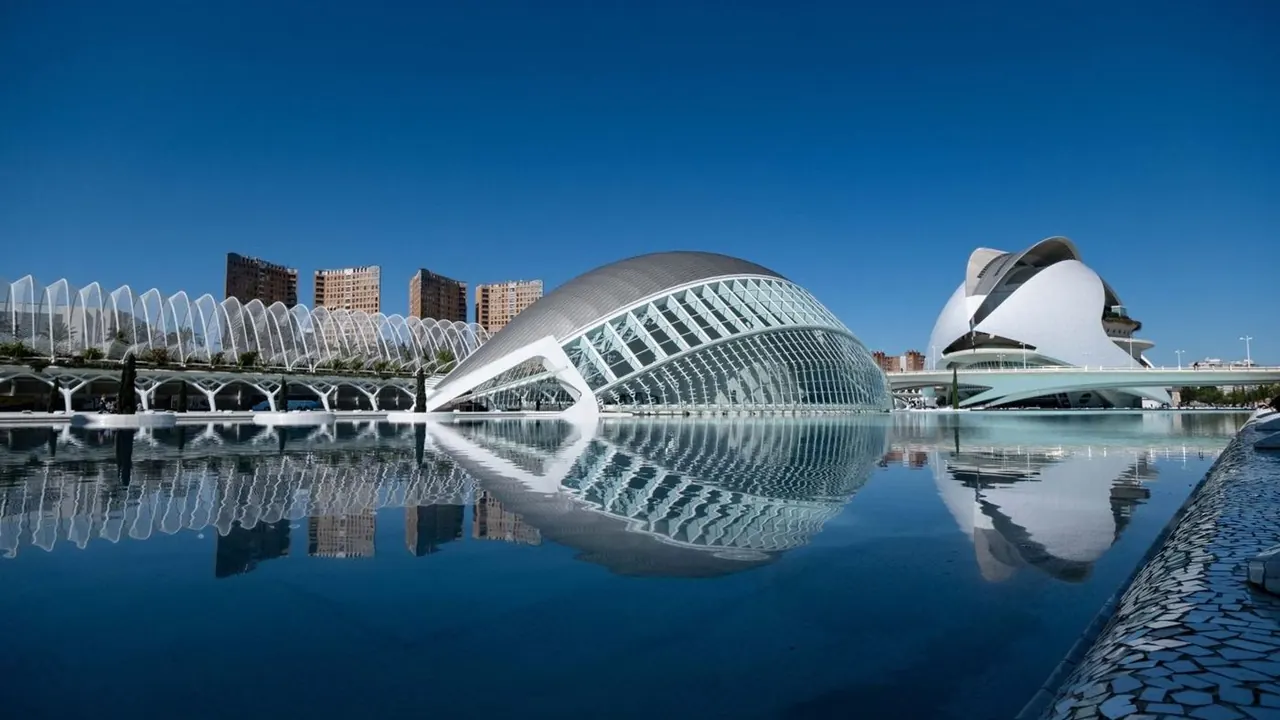
Photos: Toledo by Ввласенко, CC BY-SA 3.0, cropped; Valencia by Francesco Ungaro, Pexels License.
Toledo or Valencia?
Our verdict in twelve categories, each scored against the same fixed benchmark cities, and the climate month by month, so you can choose for your trip.
Choose Toledo for
- culture and sights
- day trips
- prices
Toledo is for travellers who want history packed tightly onto one hill: synagogues, a mosque, a great Gothic cathedral and El Greco's paintings, all within a short walk of each other. It suits a two- or three-night stop, especially as part of a wider route through central Spain, with Madrid and the castles of La Mancha within easy reach. Evenings are quiet and the food is hearty regional cooking.
Choose Valencia for
- beaches
- nightlife
- food and drink
Valencia gives you a full city vacation with the sea attached. Wide sandy beaches, the home of paella, late nights in Ruzafa and a flat centre made for cycling make it the better choice for a week, for families and for anyone who wants the days to mix sightseeing with swimming and long lunches. Its monuments are fine, but they are only part of what the city offers.
Scoreboard
Twelve categories on one fixed scale from 0 to 100. The shaded stretch is the gap between the two.
Your match
Pick a travel style or drag the sliders, and both match scores follow your weighting.
Wins on culture and sights and day trips with your weighting.
Wins on beaches and nightlife with your weighting.
What matters to you?
Category by category
What the scores mean for a trip.
Beaches & swimming
Toledo has no beach at all. The Tagus runs through a rocky gorge that nobody swims in, and the nearest coast is several hours away, so a summer swim means a hotel or municipal pool.
Valencia is a real beach city. Las Arenas, Malvarrosa and Patacona form a long band of fine sand with calm, shallow water, and the wilder dunes of El Saler lie south inside the Albufera park. You can spend the morning in the old town and the afternoon in the sea.
Food & drink
Toledo cooks the robust dishes of La Mancha: partridge in wine and vinegar, game from the Montes de Toledo, carcamusas and Manchego, with convent marzipan to finish. It makes for a few good meals, but the range is narrow and the lanes by the cathedral are full of set menus for day-trippers.
Valencia gives food a much bigger place in a trip. Rice dishes from paella to arroz negro are eaten at beachfront restaurants and in the Albufera villages, the Mercado Central is a sight in its own right, and Ruzafa adds creative cooking and vermouth bars. Summer horchata in Alboraya is a ritual Toledo has no match for.
Culture & sights
Toledo's whole old town is a monument, with Visigothic, Islamic, Jewish and Christian Spain stacked on one granite hill inside a loop of the Tagus. The cathedral and its El Greco sacristy, the mosque of Cristo de la Luz, the synagogues of Santa María la Blanca and El Tránsito and the cloister of San Juan de los Reyes lie a few minutes apart, so you pass from one faith and century to the next every few streets.
Valencia has fine monuments too, led by the Gothic silk exchange of the Lonja, the cathedral with its Grail chalice and the medieval Serranos and Quart gates. Its strength is range rather than density: the futuristic City of Arts and Sciences sits at the far end of the old riverbed, and the Museo de Bellas Artes and IVAM cover Spanish painting and modern art. For a concentrated walk through the past, though, Toledo stays ahead.
Nightlife
After the day-trippers leave, Toledo goes quiet. An evening means late dinner and tapas around Zocodover, a few student bars at weekends and no clubs, and anyone wanting more takes the train to Madrid.
Valencia goes out properly. Ruzafa's cocktail and wine bars stay busy past midnight, El Carmen has older bars and students, and in summer the open-air venues by the port and Malvarrosa run until dawn. In March, Fallas turns whole neighbourhoods into a street party for days.
Nature & outdoors
Toledo's best outdoor moment is the footpath along the Tagus gorge below the walls, with views back from the cigarrales on the far bank. Beyond that lie the dry plains of La Mancha, and the wooded Montes de Toledo and Cabañeros, with its red deer, need a car.
Valencia has more on its doorstep. The Albufera lagoon, with its rice fields, herons and sunset boat trips, starts about 10km from the centre, the Devesa pine woods have trails to the dunes, and the Turia gardens give 9km of green space for running and cycling. The climbing gorge at Chulilla is about an hour inland.
Day trips
Toledo's trump card is Madrid, half an hour away by high-speed train, with the Prado, the Reina Sofía and the royal palace. Aranjuez and El Escorial are close, and the windmills of Consuegra and the theatre town of Almagro open up La Mancha for anyone with a car.
Valencia has a good list as well: the Roman theatre and castle at Sagunto, the ridge-top castle of Xàtiva, and the cellars of Requena. It also reaches Cuenca faster, in about an hour by train against roughly two from Toledo. Without a capital city next door, though, its outings do not quite match Toledo's.
Good for families
Children like Toledo's walls, swords and castle-like Alcázar, and the history theme park on the outskirts is made for them. But the steep cobbled lanes defeat pushchairs, summer afternoons are fierce, and churches and paintings hold young attention only briefly.
Valencia is far easier. The Oceanogràfic, the hands-on science museum and Bioparc fill several days, the giant Gulliver playground in the Turia gardens is free fun, and shallow sandy beaches suit small children. The flat centre takes scooters and buggies without trouble.
Getting around
Both centres are best on foot, but they feel very different underfoot. Toledo's old town is tiny, yet its lanes are steep, twisting and cobbled, so walking is tiring. Public escalators help on arrival, and the station lies across the river, a bus ride from the centre.
Valencia's historic core, Ruzafa and the Ensanche are flat and easy to walk. Cycling is the local way to get about, with bike lanes and the car-free Turia corridor, and metro and tram lines reach the beaches, the port and the airport.
Shopping & style
Toledo's shopping is narrow but distinctive: damascene jewellery of gold thread on black steel, Toledo blades and armour, convent marzipan and Talavera ceramics. Much of it near the cathedral is souvenir stock, so look for workshops that make their own.
Valencia offers a proper city range. Calle Colón has the chains, luxury boutiques and department store, while El Carmen and Ruzafa add vintage and design shops. Saffron and turrón from the Mercado Central, along with Manises ceramics, make good gifts.
Affordability
The two cost about the same overall, but the money goes in different places. In Toledo, eating is cheap because a drink often brings a free tapa, while separate entry fees at the cathedral, synagogues and El Greco sites add up over a day and view hotels in the old town are dear.
In Valencia, the old town's museums are cheap or free and bikes and transport cost little. The bigger expenses are the City of Arts and Sciences attractions, beachfront rice lunches and rooms during Fallas.
Live music & performing arts
Toledo's stage is the nineteenth-century Teatro de Rojas, with a regional programme, plus occasional organ and choral music in the churches. Its big moment is the Corpus Christi procession, and on most evenings there is little on.
Valencia has a real season. The Palau de les Arts stages opera and ballet with its own fine orchestra, the Palau de la Música hosts the city orchestra, and Ruzafa has a steady jazz circuit. Anyone who wants an evening performance will find one.
Wellness & relaxation
Neither city has a bathing tradition, and both rely on Arab-style bath houses and hotel spas for pampering. Toledo's form of calm is the hush of its lanes and terraces in the early morning and after dark, which suits a quiet night or two.
Valencia relaxes you in a more sustained way: long lunches, evening strolls on the seafront promenade, shady paths along the Turia and a mild climate most of the year make slowing down easy over a longer stay.
When should you go?
Pick your month. The climate figures are measured averages, not a forecast.
Toledo in July
Valencia in July
Daytime high, °C
Rainfall in the month, mm
Temperature and rainfall are climate normals, averaged over the years shown. Toledo: 1991-2020 normals, Toledo (2.3 km from centre). Valencia: 1991-2020 normals, Valencia (1.6 km from centre).
Toledo sits on the inland plateau, and its seasons are extreme. July and August reach about 35°C under almost constant sun, far too hot for climbing the cobbled lanes in the afternoon, and winter days fall to around 12°C. The good months are April to early June and late September to October, when the walking is comfortable. October is the wettest month, though even then the rain is modest.
Valencia's sea keeps its weather milder all year. Winter days stay near 17°C, pleasant for a city stay, and the beach season runs from June into early October, with the sea reaching about 26°C in August. Its summers are hot but less fierce than Toledo's. The catch comes in autumn, when September and October bring the heaviest rain of the year, up to about 70mm, often in short heavy bursts.
Which traveller are you?
On a beach and sun trip, Valencia is the only real option. Its city beaches at Las Arenas and Malvarrosa are a short tram ride from the centre, while Toledo is hours from the coast and cooling off there means a pool.
For a culture and arts trip built around monuments and painting, Toledo is the stronger pick. Its walled old town layers Jewish, Islamic and Christian Spain, El Greco's work fills several sites, and Madrid's great museums are half an hour away by train.
For a food and nightlife trip, Valencia wins clearly. You get paella eaten where it was invented, the Mercado Central, and Ruzafa's bars running past midnight, while Toledo offers partridge stew and a quiet round of tapas before an early night.
Before you go
| Measure | Toledo | Valencia |
|---|---|---|
| Official language | Spanish | Spanish |
| Currency | Euro (EUR) | Euro (EUR) |
| Sockets | CF230 V, 50 Hz | CF230 V, 50 Hz |
| Driving side | Right | Right |
| Time zone | UTC+1, UTC+2 in summer | UTC+1, UTC+2 in summer |
| Emergency number | 112 | 112 |
| Elevation | 523 m | 15 m |
| Main airport | Adolfo Suárez Madrid–Barajas Airport (MAD)80 km from centre239 non-stop destinations | Valencia Airport (VLC)9 km from centre109 non-stop destinations |
| Public holidays this year | 13 days | 13 days |
By the numbers
| Measure | Toledo | Valencia |
|---|---|---|
| City population | 87,216 | 840,792 |
| People per km² | 376 | 6,242 |
| Museums within 10 km | 13 | 45 |
| UNESCO World Heritage sites within 50 km | 2 | 2 |
| Swim season, months above 21 °C | - | 5 months |
Where else could you go?
Every comparison below shares a destination with this one, so you can follow Toledo or Valencia somewhere new.