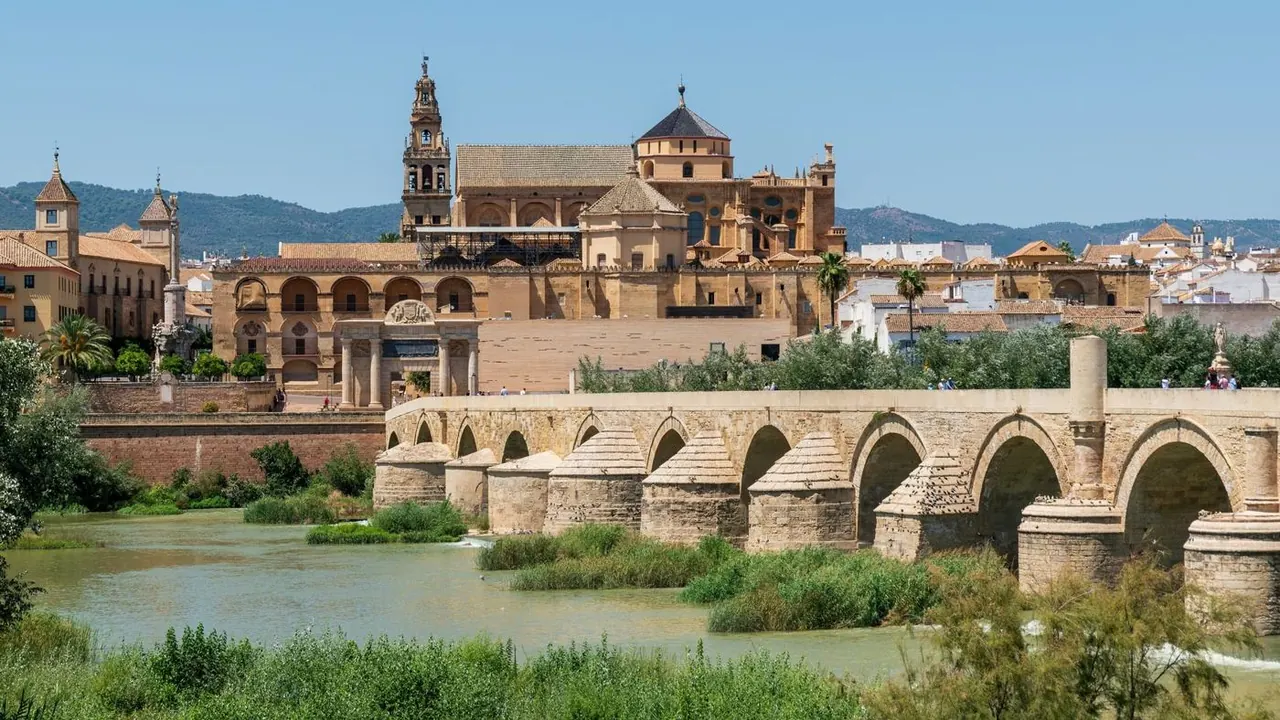
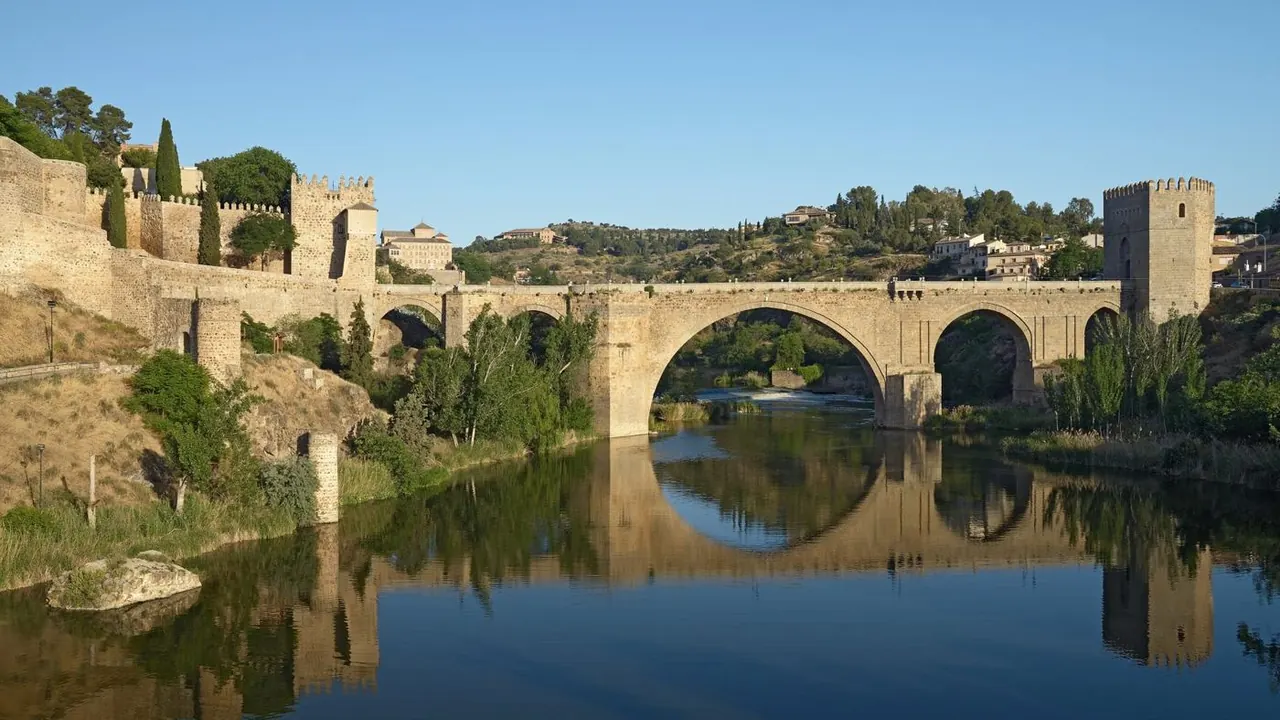
Photos: Cordoba by Jose María Ligero Loarte, CC BY-SA 4.0, cropped; Toledo by Ввласенко, CC BY-SA 3.0, cropped.
Cordoba or Toledo?
Our verdict in twelve categories, each scored against the same fixed benchmark cities, and the climate month by month, so you can choose for your trip.
Choose Cordoba for
- live music and the arts
- food and drink
- nightlife
Cordoba is the better choice for a slower stay of three or four nights where eating and evenings matter as much as monuments. The tapas rounds in Santa Marina and San Agustin, the late terraces around the Corredera and the flamenco peñas give it a life after dark that Toledo lacks. Fast trains to Seville, Granada and Malaga also make it the stronger base for seeing more of Andalusia.
Choose Toledo for
- families
Toledo suits travellers who want an entire hilltop town as the sight, layered with synagogues, a great Gothic cathedral and the paintings of El Greco, seen in two full days. It works well as a pairing with Madrid, half an hour away by train, and its quiet evenings after the day-trippers leave appeal to anyone who would rather wander empty lanes than go out.
Scoreboard
Twelve categories on one fixed scale from 0 to 100. The shaded stretch is the gap between the two.
Your match
Pick a travel style or drag the sliders, and both match scores follow your weighting.
Wins on live music and the arts and food and drink with your weighting.
Wins on families with your weighting.
What matters to you?
Category by category
What the scores mean for a trip.
Beaches & swimming
Neither city is a beach destination, but Cordoba at least makes the sea possible. The fast train reaches Malaga in about an hour, so a long day on the Costa del Sol beaches is feasible, and the Sierra Morena reservoirs offer a freshwater dip by car.
Toledo sits on the Castilian plateau several hours from any coast, and the Tagus in its gorge is not for swimming. Here cooling off means a hotel or municipal pool and nothing more.
Food & drink
Cordoba eats noticeably better. Its tabernas in old patio houses serve dishes born locally, like salmorejo and aubergine with cane honey, alongside Montilla-Moriles wine from just down the road. Santa Marina, San Agustin and the Corredera give real tapas rounds, and the Mercado Victoria adds grazing counters.
Toledo's cooking is the hearty game and stews of La Mancha, partridge, venison and carcamusas, with convent marzipan for dessert. It is good for a few regional meals, but the range is narrow and the lanes by the cathedral lean on set menus for day-trippers.
Culture & sights
These two are evenly matched, but they offer different experiences. Cordoba centres on one overwhelming building, the Mezquita with its forest of striped arches and a cathedral set inside it, backed by the Juderia, the Alcazar gardens, the patios of Viana and San Basilio, and the caliphal ruins of Medina Azahara.
In Toledo the whole hilltop is the monument, with synagogues, a small mosque and one of Spain's great Gothic cathedrals packed inside the Tagus loop. It also offers what Cordoba does not: painting, with El Greco in Santo Tomé, his museum and the cathedral sacristy.
Nightlife
Cordoba has the livelier evenings, though neither is a clubbing city. In summer the terraces around Las Tendillas, the Corredera and the river stay busy late, students fill bars at weekends, and the May fair keeps the casetas dancing until dawn.
Toledo winds down once the Madrid day-trippers leave, leaving a late dinner, a few tapas bars near Zocodover and little else. Those wanting a proper night out take the train to Madrid.
Nature & outdoors
Neither city is a base for big landscapes, and the difference is mostly one of distance. Toledo's best outdoor walk starts at its walls, a path through the Tagus gorge with views back from the cigarrales, while the Montes de Toledo and Cabañeros, with its red deer, need a car.
Cordoba has more varied country further out: cork and holm oak in the Sierra Morena, raptors in Hornachuelos, and limestone gorges in the Subbeticas about an hour's drive away. Almost all of it needs a car.
Day trips
Cordoba is the stronger base, because Seville, Granada and Malaga are all an hour or so away by high-speed train, without a car or a change of hotel. With wheels, Ubeda, Baeza, Carmona and the Montilla bodegas add more.
Toledo's great asset is Madrid, half an hour away, which makes the Prado and the royal palace an easy morning. Beyond that, Aranjuez, Consuegra's windmills and Talavera are close, but Segovia, Ávila and Cuenca make for long days, mostly by car.
Good for families
Neither city is built around children, and each poses its own challenge. Toledo has more that sparks young imaginations, with armour shops, the fortress-like Alcázar and a large history-show theme park on the outskirts, but its steep cobbled lanes are hard work with a pushchair.
Cordoba's centre is flat, safe and largely car-free, so children can roam, and the Alcazar fountains, the royal stables horse show and Almodovar castle please them. Both need spring or autumn visits and a long midday break.
Getting around
Both are walking cities with the sights packed close together, and the difference lies in the ground underfoot. Cordoba's old town is flat, with the railway station a walk or short taxi ride away, so the main nuisance is wheeling a case over cobbles.
Toledo crowns a steep hill, and its twisting lanes are tiring. Public escalators help on arrival from the car parks, but the station sits across the river, a bus ride or a climb below the centre.
Shopping & style
Both are about crafts rather than fashion, and Cordoba offers a little more. Silver filigree, embossed guadameci leather and workshop guitars are its specialities, and Cruz Conde and Las Tendillas cover high-street needs with Spanish chains and a department store.
Toledo's damascene gold-on-steel work, swords, convent marzipan and Talavera ceramics make fine souvenirs, but souvenir stock crowds the streets around the cathedral, and for fashion people head to Madrid.
Affordability
The two cost much the same day to day, with Cordoba a touch kinder overall, and the real difference is where the bill climbs. In Cordoba it is a question of timing: for most of the year rooms are fair, eating in the tabernas is cheap and the sights sit close enough that you spend nothing on getting between them. May is the exception, when the patio festival, the crosses and the fair all fall together and rooms become both dear and scarce, so a visit outside that month saves a good deal. Even sightseeing can come cheap, with free early-morning entry to the Mezquita on some days.
Toledo's extra costs build up over the day rather than over the calendar. Each monument, from the cathedral to the synagogues and the El Greco sites, takes its own ticket, and hotels with river views inside the walls charge more at weekends. Food is where it stays modest, with a free tapa alongside most drinks and set lunches in the taverns away from the cathedral, and sleeping below the hill or just outside the walls keeps the room cost down.
Live music & performing arts
Cordoba has far more on stage, mostly thanks to flamenco. Old-town tablaos and the peñas where aficionados gather offer evenings throughout the year, with the guitar festival and the all-night Noche Blanca del Flamenco as highlights. The Gran Teatro also hosts the city orchestra.
Toledo's Teatro de Rojas has a modest regional programme, and Corpus Christi brings processions and music. On an ordinary evening, though, there is little to see without going to Madrid.
Wellness & relaxation
Cordoba is the easier place to unwind. Its Arab-style bath houses near the old Caliphal Baths offer pools and massage under horseshoe arches, and the courtyards with fountains and orange trees, combined with the summer midday shutdown, set a slow pace.
Toledo has a few similar baths and hotel spas, but its rest comes mainly from quiet early mornings and evenings on the terraces above the Tagus, which makes for a peaceful night or two rather than a restorative stay.
When should you go?
Pick your month. The climate figures are measured averages, not a forecast.
Cordoba in July
Toledo in July
Daytime high, °C
Rainfall in the month, mm
Temperature and rainfall are climate normals, averaged over the years shown. Cordoba: 1991-2020 normals, Cordoba / Aeropuerto (7.6 km from centre). Toledo: 1991-2020 normals, Toledo (2.3 km from centre).
Neither city is near the sea, so the calendar is about walking weather. Both are at their best in April, May and October, when days are warm without being punishing. In July and August Cordoba reaches about 37°C and Toledo about 35°C, both under almost constant sun, so sightseeing shrinks to early mornings and late evenings, with a pool in between. Cordoba is the slightly hotter of the two from late spring to early autumn.
The real difference comes in winter. Cordoba stays milder, but it is noticeably wetter from October to December, with around 91mm of rain in December. Toledo is drier through the cold months but cooler, with highs near 12°C in December and January, which suits brisk walks on its hill better than long evenings outdoors.
Which traveller are you?
For a food and nightlife trip, Cordoba is the clear pick. Its tabernas pour chilled Montilla with salmorejo and flamenquin, the squares fill after ten in summer, and the May fair runs until dawn, while Toledo's old town goes quiet early.
On a relaxing and wellness trip, Cordoba also has the edge. Arab-style baths under horseshoe arches, courtyards with fountains and orange trees, and a gentle, flat old town make slow afternoons easy. Toledo's calm is real but limited to its evenings and early mornings.
On a family trip with children, Toledo pulls slightly ahead thanks to its castle-like Alcázar, windows full of swords and armour, and the history-show theme park outside town. Cordoba's flatter, traffic-free lanes are easier with a pushchair, though.
Before you go
| Measure | Cordoba | Toledo |
|---|---|---|
| Official language | Spanish | Spanish |
| Currency | Euro (EUR) | Euro (EUR) |
| Sockets | CF230 V, 50 Hz | CF230 V, 50 Hz |
| Driving side | Right | Right |
| Time zone | UTC+1, UTC+2 in summer | UTC+1, UTC+2 in summer |
| Emergency number | 112 | 112 |
| Elevation | 120 m | 523 m |
| Main airport | Córdoba Airport (ODB)8 km from centre3 non-stop destinations | Adolfo Suárez Madrid–Barajas Airport (MAD)80 km from centre239 non-stop destinations |
| Public holidays this year | 12 days | 13 days |
By the numbers
| Measure | Cordoba | Toledo |
|---|---|---|
| City population | 323,262 | 87,216 |
| People per km² | 258 | 376 |
| Museums within 10 km | 16 | 13 |
| UNESCO World Heritage sites within 50 km | 2 | 2 |
Where else could you go?
Every comparison below shares a destination with this one, so you can follow Cordoba or Toledo somewhere new.