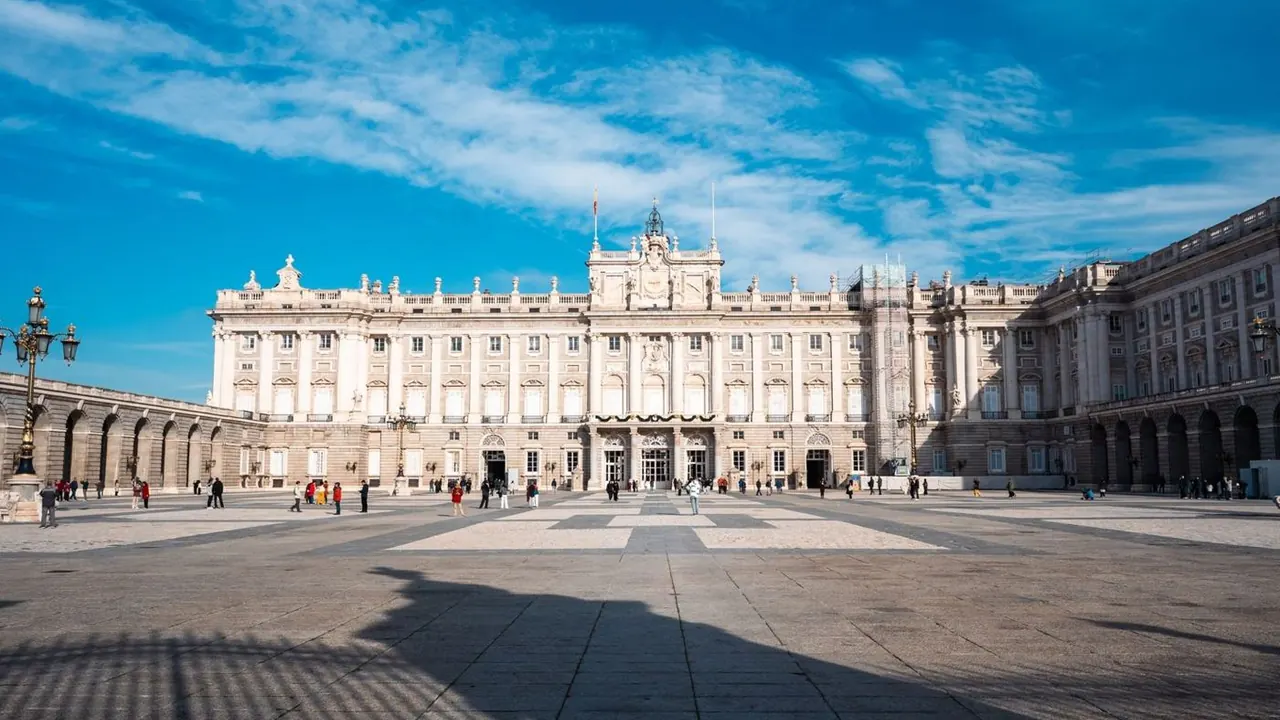
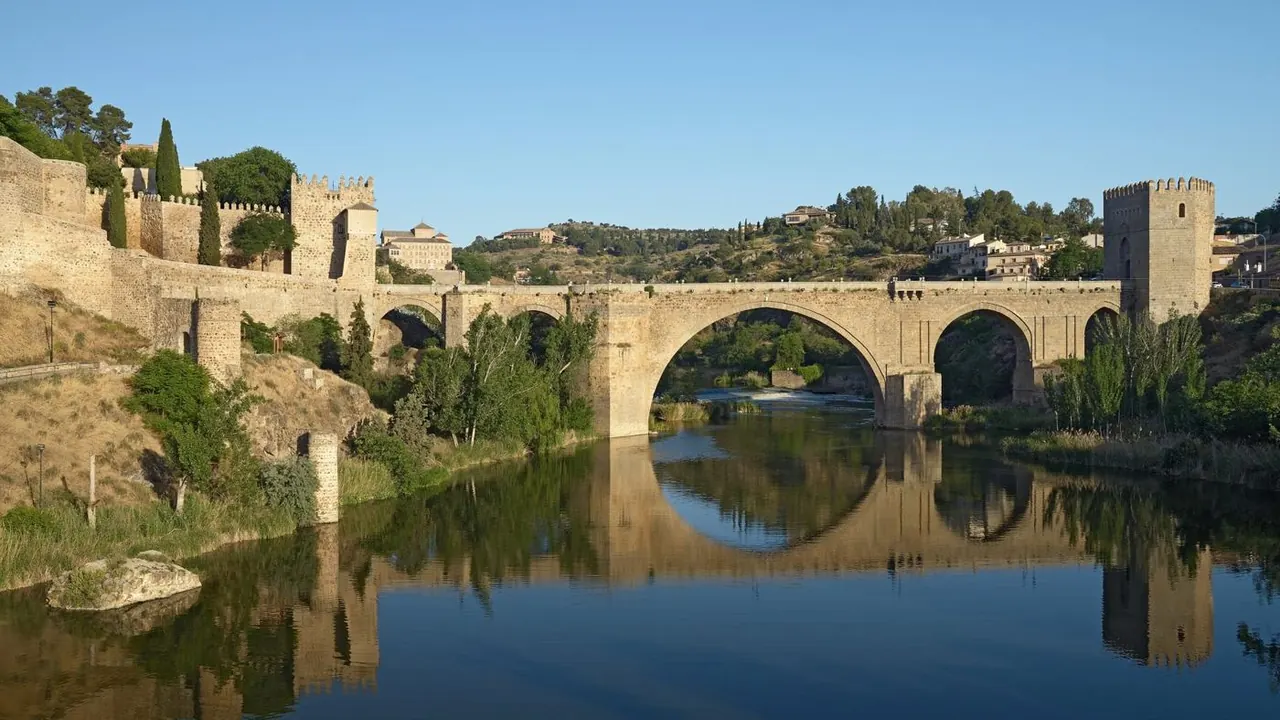
Photos: Madrid by Mert Ocak, Pexels License; Toledo by Ввласенко, CC BY-SA 3.0, cropped.
Madrid or Toledo?
Our verdict in twelve categories, each scored against the same fixed benchmark cities, and the climate month by month, so you can choose for your trip.
Choose Madrid for
- nightlife
- live music and the arts
- shopping
Madrid is the better choice for a longer trip that mixes great art, serious eating and late nights. The Prado, the Reina Sofía and the Thyssen can fill several days on their own. The tapas counters of La Latina and Lavapiés stay full past midnight, and opera, flamenco and clubs take care of the evenings. Fast trains reach Toledo, Segovia and Ávila in a day, so the capital also works as a base for the whole of central Spain.
Choose Toledo for
- prices
Toledo suits travellers who want one concentrated dose of Spanish history and quiet evenings. Its walled hilltop packs a mosque, two synagogues, a great Gothic cathedral and El Greco's paintings into a town small enough to cross on foot, and it goes calm once the day-trippers leave. Meals cost a little less, but two or three nights are usually enough. Anyone who wants more food, shopping or nightlife ends up on the train to Madrid.
Scoreboard
Twelve categories on one fixed scale from 0 to 100. The shaded stretch is the gap between the two.
Your match
Pick a travel style or drag the sliders, and both match scores follow your weighting.
Wins on nightlife and live music and the arts with your weighting.
Wins on prices with your weighting.
What matters to you?
Category by category
What the scores mean for a trip.
Beaches & swimming
Neither city has a beach, and the coast is several hours from both. In summer the difference is in how you cool off. Madrid has big municipal open-air pools, and the reservoirs below the Sierra de Guadarrama are a drive away. In Toledo the Tagus runs through a rocky gorge that nobody swims in, so it comes down to a hotel pool or a municipal one.
Food & drink
Madrid is the place to eat. As the capital it draws in the whole country, so Galician seafood and Basque grills sit beside cocido, callos and calamari sandwiches. A serious tier of tasting menus sits on top, and market halls such as San Miguel and Antón Martín fill the gaps between meals.
Toledo has a few good things to try: partridge stewed in wine and vinegar, game from the Montes de Toledo, carcamusas and convent marzipan. The choice is narrow, though, and the lanes by the cathedral are given over to set menus for day-trippers. Count on a few good regional meals there rather than a food trip.
Culture & sights
Both are first-rate, but Madrid has the greater depth. Along the Paseo del Prado, the Prado, the Reina Sofía and the Thyssen hold Velázquez, Goya, Bosch and Guernica within a short walk of each other, enough for days. Around them stand the Royal Palace and Habsburg Plaza Mayor. The city's weak point is medieval history, of which it has little.
Toledo has exactly what Madrid lacks. Its whole walled old town is one layered monument, with the mosque of Cristo de la Luz, the synagogues of Santa María la Blanca and El Tránsito, the cathedral and El Greco's paintings in Santo Tomé. The town is smaller, though, and its main sights fit into two full days.
Nightlife
These two could hardly be further apart after dark. In Madrid the bars fill after midnight and the clubs around Gran Vía and Sol run past dawn. Each district has its own scene: rock in Malasaña, the gay scene in Chueca, terraces in La Latina.
Toledo's night is a late dinner and a round of tapas bars around Zocodover. After that the old town falls quiet, which many visitors like. There is no club scene, and the usual advice for a proper night out is the half-hour train back to Madrid.
Nature & outdoors
Madrid has the real outdoors within reach. About an hour north, the Sierra de Guadarrama rises above 2,400m, with the granite boulders of La Pedriza, glacial lakes below Peñalara and modest winter skiing. In the city itself, the Retiro, Casa de Campo and Madrid Río are good for running and cycling.
Toledo's best outdoor moment is on its doorstep: the footpath around the Tagus gorge and the views back from the cigarrales on the far bank. Beyond that lie the flat La Mancha plain, the low wooded Montes de Toledo and Cabañeros national park about two hours away. There are no mountains.
Day trips
Madrid sits at the hub of the high-speed network, which gives it the edge. Toledo and Segovia are each about half an hour away by fast train, and Salamanca and Cuenca are within an hour or two. El Escorial, Aranjuez and Alcalá de Henares are closer still, all without a car.
Toledo's best day out is Madrid itself, half an hour away for the Prado and the palace. Beyond that it looks south into La Mancha, to the windmills of Consuegra, Almagro's Golden Age theatre and the ceramics of Talavera. Those trips work best with a car, and Segovia or Ávila make long days from here.
Good for families
Children are welcome in restaurants and plazas late into the evening in both cities, but Madrid has far more for them to do. There are the Retiro's rowing boats and puppet shows, the zoo, aquarium, funfair and cable car in Casa de Campo, and Faunia and a Warner Bros park further out. The flat centre and the metro's lifts make it easy with a pushchair.
Toledo's swords, armour and castle-like Alcázar catch young imaginations, and a large history-show theme park sits on the outskirts. Otherwise the steep cobbled lanes and the church-heavy sights wear children out quickly, so a short stay works best.
Getting around
Madrid is the easier city to move around. The centre from the Royal Palace to the Prado is flat and walkable, and one of Europe's largest metro systems, air-conditioned and running to the airport, covers the rest.
Toledo is tiny by comparison, with almost everything inside a walled town you can cross in twenty minutes. That town sits on a steep hill of narrow cobbled lanes, though. The station lies across the river at the bottom, and the public escalators from the car parks only take the edge off the climb.
Shopping & style
Madrid offers proper shopping by district. Luxury houses line Calle Serrano in Salamanca, flagships and department stores fill Gran Vía and Preciados, Malasaña and Conde Duque have independent and vintage shops, and El Rastro flea market takes over La Latina on Sunday mornings.
Toledo is about crafts rather than fashion: gold-inlaid damascene work, steel blades, Talavera ceramics and convent marzipan. Much of the stock near the cathedral is souvenirs, so it pays to seek out workshops that make their own. For clothes, people go to Madrid.
Affordability
Toledo is the somewhat cheaper stay. A small tapa often comes with each drink, the taverns away from the cathedral serve good-value set lunches, and rooms below the walls are moderately priced. The catch is that the cathedral, the synagogues and the El Greco sites each charge separate entry.
Madrid's hotels cost what you would expect in a big capital. Its free museum hours, cheap metro and the midday menú del día keep the daily spend in check, but overall it costs a little more.
Live music & performing arts
Madrid has a full stage life of its own. Opera plays at the Teatro Real, the national orchestra at the Auditorio Nacional and zarzuela at its own theatre. Gran Vía has long-running musicals, and serious flamenco is on in the tablaos every night, with jazz and indie venues in Malasaña.
Toledo has the nineteenth-century Teatro de Rojas with a regional programme, occasional organ and choral music in the churches, and the great Corpus Christi procession. On an ordinary evening there is little on, and serious performances mean the train to the capital.
Wellness & relaxation
Neither city is built for a restful stay, and both offer the same basic option: an Arab-style bathhouse with warm and cold pools under old vaults, or a hotel spa. The calm comes in different forms. Madrid is loud and late, and its slow hours are found in the shade of the Retiro or the Botanical Garden. Toledo is quiet by default in the early mornings and evenings, when the tour groups have gone and the terraces over the Tagus empty out.
When should you go?
Pick your month. The climate figures are measured averages, not a forecast.
Madrid in July
Toledo in July
Daytime high, °C
Rainfall in the month, mm
Temperature and rainfall are climate normals, averaged over the years shown. Madrid: 1991-2020 normals, Madrid (1.7 km from centre). Toledo: 1991-2020 normals, Toledo (2.3 km from centre).
The two cities share the same plateau climate, but Toledo runs a couple of degrees warmer all year and is slightly drier and sunnier. In both, the best months for walking the streets are April, May, late September and October, when days are warm without being punishing. Midsummer is hard work for sightseeing in both. Madrid peaks around 33°C in July, and Toledo's steep, sun-trapped lanes reach about 35°C in July and August, so the middle of the day is for shade and a long lunch. Neither city has a beach season.
October is the wettest month in both, with about 64mm in Madrid and less in Toledo, and late autumn stays showery. Winter is cool and mostly bright, with highs near 10°C in Madrid and 12°C in Toledo. That is pleasant for museums in the capital, though chilly on Toledo's exposed hilltop in the evenings.
Which traveller are you?
On a food and nightlife trip, Madrid wins easily. The capital gathers the cooking of every Spanish region, and its bars and clubs run until dawn. Toledo offers a few regional dishes and goes quiet soon after dinner.
On a family trip with young children, Madrid is the easier choice. Its parks and attractions give children far more to do, and the flat centre suits a pushchair. Toledo's steep lanes and church-heavy sights tire young legs quickly.
On a trip on a tight budget, Toledo makes the money go a little further, mostly at the table, where everyday eating costs less than in the capital. Staying overnight instead of coming for the day also spreads the cost of its sights.
Before you go
| Measure | Madrid | Toledo |
|---|---|---|
| Official language | Spanish | Spanish |
| Currency | Euro (EUR) | Euro (EUR) |
| Sockets | CF230 V, 50 Hz | CF230 V, 50 Hz |
| Driving side | Right | Right |
| Time zone | UTC+1, UTC+2 in summer | UTC+1, UTC+2 in summer |
| Emergency number | 112 | 112 |
| Elevation | 663 m | 523 m |
| Main airport | Adolfo Suárez Madrid–Barajas Airport (MAD)14 km from centre239 non-stop destinations | Adolfo Suárez Madrid–Barajas Airport (MAD)80 km from centre239 non-stop destinations |
| Public holidays this year | 12 days | 13 days |
By the numbers
| Measure | Madrid | Toledo |
|---|---|---|
| City population | 3,506,730 | 87,216 |
| People per km² | 5,801 | 376 |
| Museums within 10 km | 88 | 13 |
| UNESCO World Heritage sites within 50 km | 4 | 2 |
Where else could you go?
Every comparison below shares a destination with this one, so you can follow Madrid or Toledo somewhere new.