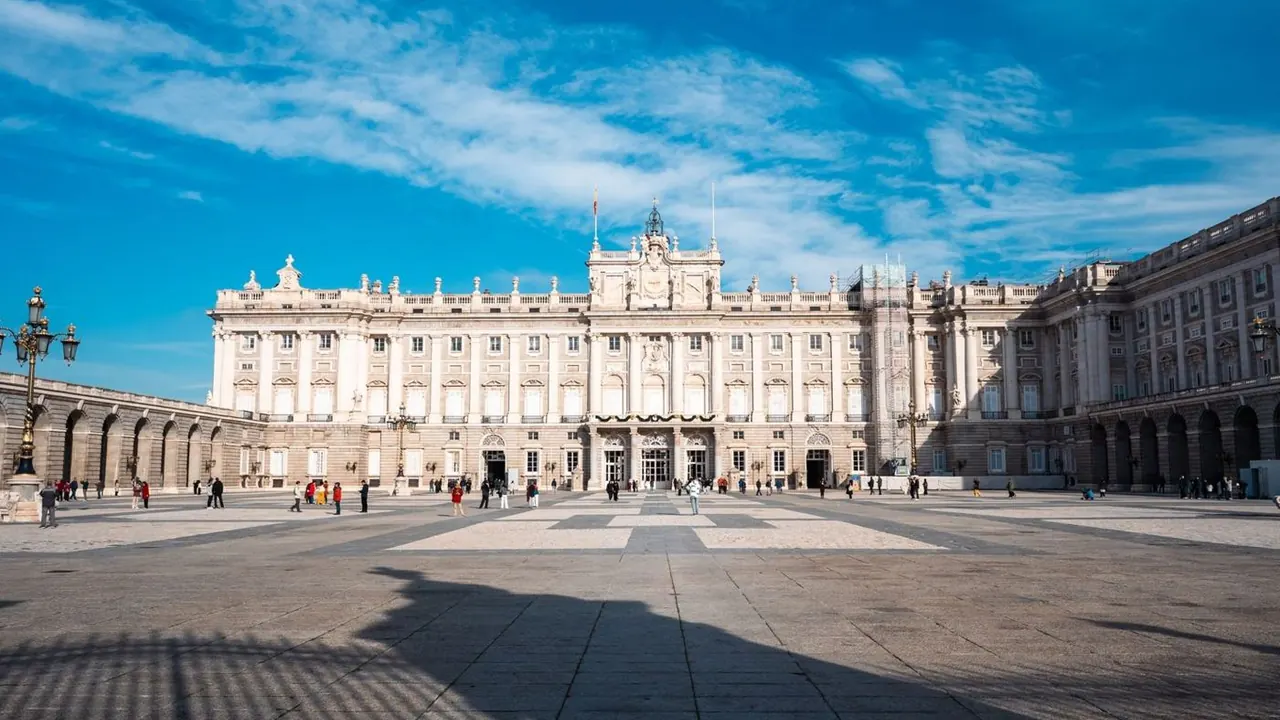
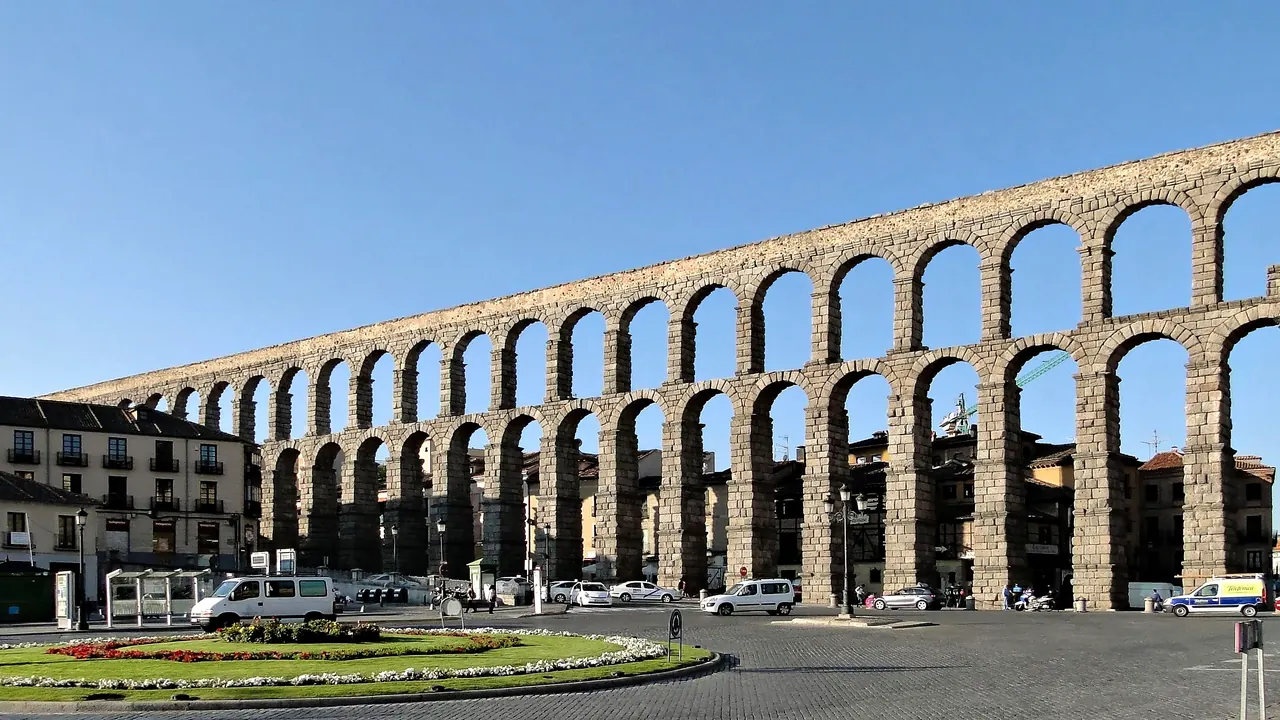
Photos: Madrid by Mert Ocak, Pexels License; Segovia by Bernard Gagnon, CC BY-SA 3.0, cropped.
Madrid or Segovia?
Our verdict in twelve categories, each scored against the same fixed benchmark cities, and the climate month by month, so you can choose for your trip.
Choose Madrid for
- nightlife
- shopping
- live music and the arts
Madrid is for the traveller who wants a capital to live in for a few days: the Prado and the Reina Sofía by day, a tapas crawl through La Latina in the evening and bars that don't fill until after midnight. Shopping, flamenco, opera and a metro that reaches everywhere make it the easier choice for a longer stay, for families and for anyone who wants plenty of choice.
Choose Segovia for
- nature and the outdoors
- prices
Segovia suits someone happy to swap that range for a single, very beautiful ridge of stone. The aqueduct, the cathedral and the Alcázar can be walked in a morning, the Guadarrama pine forests and trails start half an hour away, and once the day visitors leave the town turns quiet. It is the better pick for walkers and slow travellers, and for anyone after a cheaper midweek stay with a roast lunch at its centre.
Scoreboard
Twelve categories on one fixed scale from 0 to 100. The shaded stretch is the gap between the two.
Your match
Pick a travel style or drag the sliders, and both match scores follow your weighting.
Wins on nightlife and shopping with your weighting.
Wins on nature and the outdoors and prices with your weighting.
What matters to you?
Category by category
What the scores mean for a trip.
Beaches & swimming
Neither city will give you a beach. Both sit on the landlocked Castilian plateau, a long way from any coast. The difference lies in how you cool off: Madrid has large municipal open-air pools in the city, while Segovia's alternatives are hotel pools and the cold reservoirs and river pools of the Guadarrama foothills, closer to hand but much chillier.
Food & drink
Madrid offers far more choice. Beyond its own cocido, callos and late-night churros, the capital draws in the cooking of every Spanish region, from Galician seafood to Basque grills, with market halls like San Miguel and a serious tier of tasting menus on top.
Segovia is a place for one memorable meal rather than a week of variety. Wood-roasted cochinillo and lechazo, La Granja's judiones beans and ponche segoviano are worth a trip, and Ribera del Duero wines come from close by. After a couple of days, though, the narrow range shows.
Culture & sights
Madrid comes out ahead on the strength of its painting. The Prado, the Reina Sofía and the Thyssen-Bornemisza along one avenue add up to days of Velázquez, Goya and Picasso, and the Royal Palace and Habsburg Plaza Mayor fill out a grand but mostly post-medieval city.
Segovia offers what Madrid lacks: older stone. A Roman aqueduct, a late Gothic cathedral, the Alcázar and a run of Romanesque churches and a Jewish quarter make up a single UNESCO townscape. Its museums are modest, and a day or two covers it well.
Nightlife
This is the widest gap between the two. Madrid runs on a late clock, with rock bars in Malasaña, the gay scene in Chueca, terraces in La Latina and big clubs around Gran Vía that keep going past dawn.
Segovia's night is a tapas round and a terrace on Plaza Mayor, with a few student bars at weekends. On weeknights and in winter it is quiet early.
Nature & outdoors
Both look to the Sierra de Guadarrama, but Segovia sits at its foot. The Valsaín forests and the high passes are within half an hour, the mountains fill the view from the Alcázar, and the Hoces del Duratón gorge with its vultures is within reach.
Madrid's own green spaces, the Retiro, Casa de Campo and Madrid Río, are good for a run or a bike ride. For La Pedriza or the lakes below Peñalara, though, you need a trip of about an hour north.
Day trips
Both make good bases, but Madrid's reach is wider. Fast trains fan out to Toledo, Segovia itself, Salamanca and Cuenca, with El Escorial, Aranjuez and Alcalá de Henares closer in and Córdoba possible on a long day.
Segovia's best outings are near and royal, with La Granja's fountain gardens twenty minutes away and Riofrío close by. With a car, the walled villages of Pedraza and Sepúlveda and the Ribera del Duero vineyards are easy days out, although Toledo and Salamanca are a stretch.
Good for families
Madrid gives children far more to do. The Retiro's rowing boats and puppet shows, the zoo, aquarium and funfair in Casa de Campo, and Faunia and a theme park further out fill several days, and the flat centre with metro lifts is easy with a pushchair.
Segovia has one big draw for children, the turreted Alcázar on its cliff, plus the aqueduct and the gardens at La Granja. Steep cobbles and no zoo or theme park keep it to a day or two.
Getting around
Madrid is simpler to get around. Its flat central core is walkable, and a large air-conditioned metro, with a line to the airport, covers the rest without a car.
Segovia's sights all lie along one ridge you can walk in a morning, but the cobbles are steep. The high-speed station is several kilometres out and needs a bus, and the villages and trailheads that make the area special are far easier with a car.
Shopping & style
Only Madrid is worth shopping in. It has luxury houses on Calle Serrano, flagship stores and department stores around Sol and Gran Vía, independent design shops in Malasaña and Conde Duque, and El Rastro on Sunday mornings.
Segovia keeps to souvenirs on Calle Real, local ceramics and embroidery, and boxed ponche or La Granja beans to take home.
Affordability
Segovia is the cheaper stay, especially midweek and in winter, when its small family-run guesthouses cost little. The one splurge is the famous roast by the aqueduct, and weekend rooms in the old town cost more.
Madrid is mid-range for a capital: hotels are priced like a big city, but the midday menu, tapas with a drink and free museum hours keep the days themselves modest.
Live music & performing arts
Madrid has a full stage calendar: opera at the Teatro Real, the national orchestra at the Auditorio Nacional, zarzuela, Gran Vía musicals, jazz clubs and nightly flamenco in the old centre.
Segovia's live arts mostly come with its festivals, chiefly Titirimundi's puppets in spring and summer concerts in churches and palace gardens, with Teatro Juan Bravo for touring shows. Outside those seasons, there is little to see.
Wellness & relaxation
Neither has much of a spa tradition. Madrid has a slight edge thanks to its Arab-style bathhouses under brick vaults in the old centre, though the city around them stays loud and late. Segovia's calm comes from its pace: an emptied old town in the evening, walks along the walls and pine air from the sierra.
When should you go?
Pick your month. The climate figures are measured averages, not a forecast.
Madrid in July
Segovia in July
Daytime high, °C
Rainfall in the month, mm
Temperature and rainfall are climate normals, averaged over the years shown. Madrid: 1991-2020 normals, Madrid (1.7 km from centre). Segovia: 1991-2020 normals, Segovia (0.3 km from centre).
The two share a dry, sunny continental climate, but Segovia sits higher and stays a few degrees cooler all year. In July and August Madrid reaches about 33°C, which makes long walks between districts hard work by early afternoon. Segovia stays nearer 30°C, still hot but easier going on its steep streets. High summer is the driest and sunniest time in both.
Madrid is most pleasant for walking in May and September, when the days are warm rather than hot and the sun is out for long hours, though May brings a few more showers. Its wettest month is October, at 64mm. Segovia's rain comes in two bouts, one peaking in May at 58mm and another in October and November, so June and September are its surest months for the Guadarrama trails. Winter is cold in both and colder on Segovia's ridge, where January highs are around 8°C and the days are noticeably greyer.
Which traveller are you?
For a food and nightlife trip, Madrid wins clearly. Its tapas counters on Cava Baja, market halls, regional seafood houses and tasting menus are followed by bars and clubs that run past dawn, while Segovia's evenings mostly end with a tapas round around Plaza Mayor.
On an outdoors trip, Segovia has the edge. The Valsaín pine forests, the Navacerrada and Cotos passes and the trails to Peñalara are all close by, and the Eresma valley path starts below town. From Madrid the same sierra is an hour's journey each way.
On a tight budget, Segovia stretches the money further, especially midweek and in winter, when small family-run guesthouses are inexpensive. Madrid's menú del día and free museum hours help, but its hotels cost what a big capital charges.
Before you go
| Measure | Madrid | Segovia |
|---|---|---|
| Official language | Spanish | Spanish |
| Currency | Euro (EUR) | Euro (EUR) |
| Sockets | CF230 V, 50 Hz | CF230 V, 50 Hz |
| Driving side | Right | Right |
| Time zone | UTC+1, UTC+2 in summer | UTC+1, UTC+2 in summer |
| Emergency number | 112 | 112 |
| Elevation | 663 m | 1,002 m |
| Main airport | Adolfo Suárez Madrid–Barajas Airport (MAD)14 km from centre241 non-stop destinations | Adolfo Suárez Madrid–Barajas Airport (MAD)68 km from centre241 non-stop destinations |
| Public holidays this year | 12 days | 12 days |
By the numbers
| Measure | Madrid | Segovia |
|---|---|---|
| City population | 3,506,730 | 52,375 |
| People per km² | 5,801 | 320 |
| Museums within 10 km | 88 | 11 |
| UNESCO World Heritage sites within 50 km | 4 | 2 |
Where else could you go?
Every comparison below shares a destination with this one, so you can follow Madrid or Segovia somewhere new.
- Toledovs Madrid
- Toledovs Segovia
- Salamancavs Segovia
- Salamancavs Madrid
- Zaragozavs Madrid
- Bilbaovs Segovia