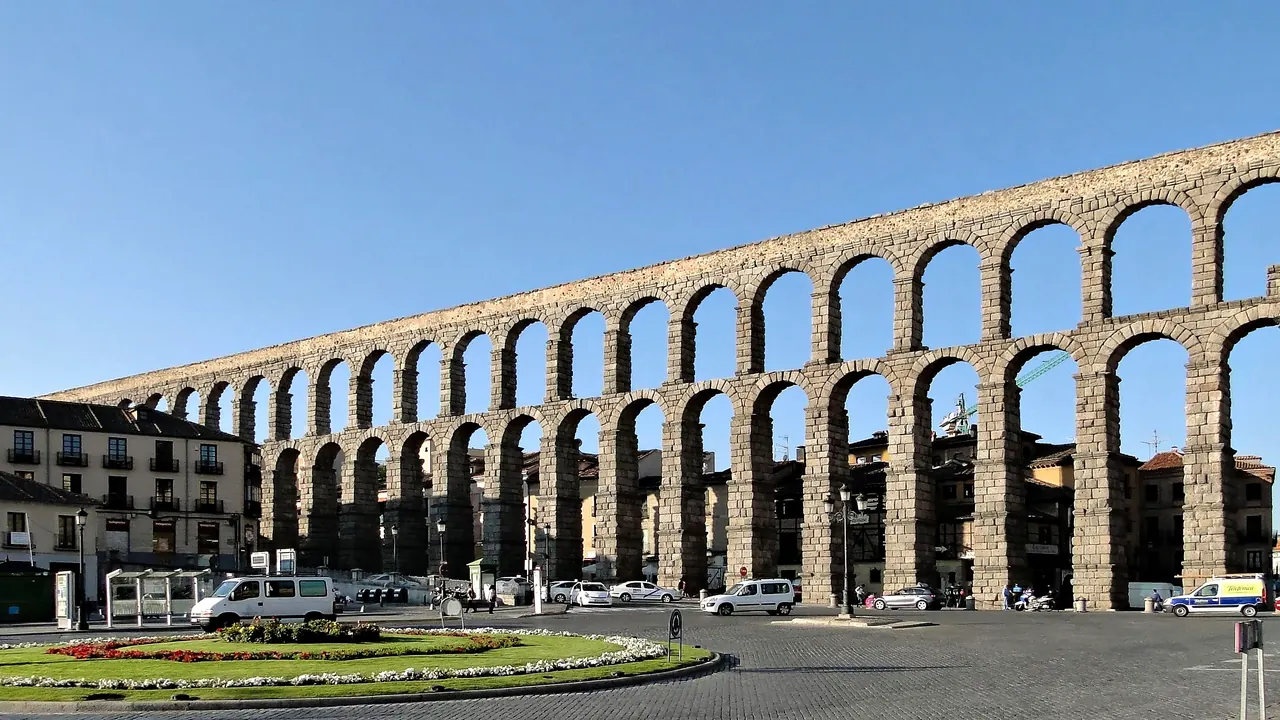
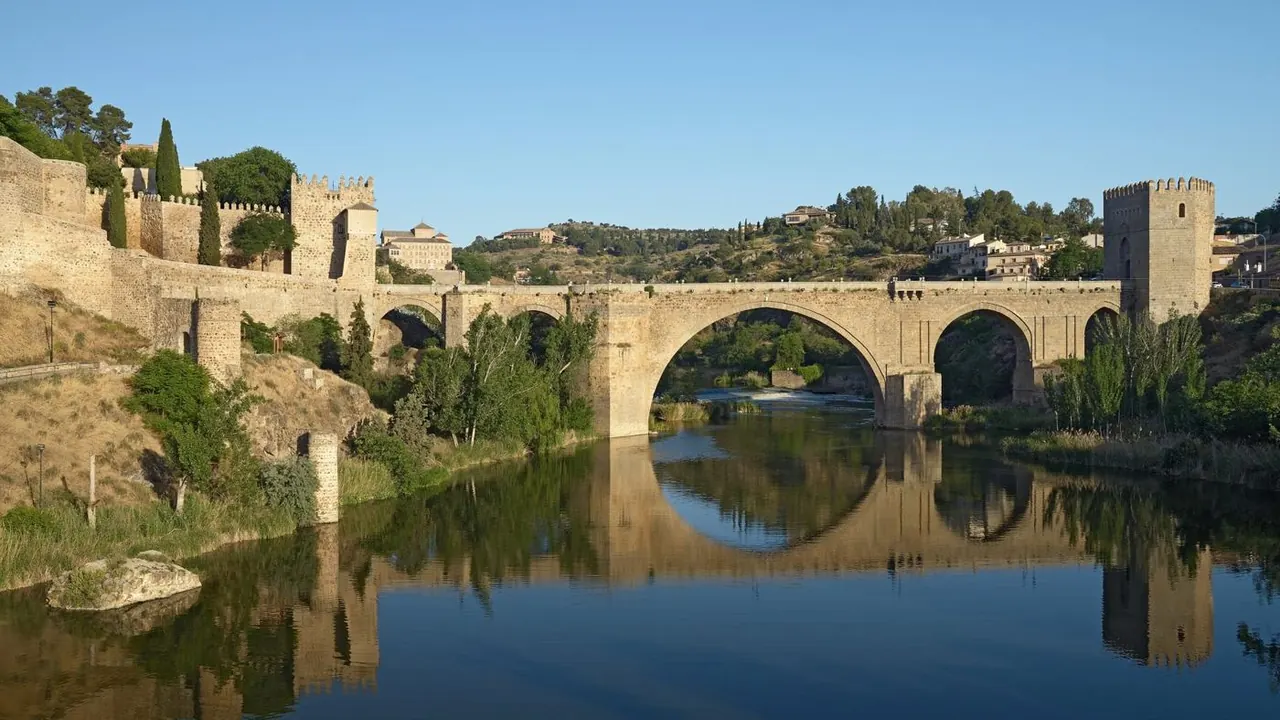
Photos: Segovia by Bernard Gagnon, CC BY-SA 3.0, cropped; Toledo by Ввласенко, CC BY-SA 3.0, cropped.
Segovia or Toledo?
Our verdict in twelve categories, each scored against the same fixed benchmark cities, and the climate month by month, so you can choose for your trip.
Choose Segovia for
- nature and the outdoors
- food and drink
- live music and the arts
Segovia suits the traveller who wants a great Roman and medieval town with the mountains on its doorstep. The aqueduct, the Alcázar and the Romanesque churches fill a day or two, and the Sierra de Guadarrama gives you pine forest and high trails for the days after. It is also the better place to plan meals around, with wood-fired suckling pig and roast lamb as reasons to come in their own right, and its cooler summers make July walking far easier.
Choose Toledo for
- culture and sights
- shopping
- getting around
Toledo is the deeper visit for anyone who travels for history and art. Its layers of Islamic, Jewish and Christian Spain, the cathedral and the El Greco paintings give you more to see and more to think about, and its sword-making and damascene workshops make for better shopping. The countryside around it is flat and dry, so this is a city to explore rather than a base for the outdoors, and it is best in spring or autumn, before or after the summer heat.
Scoreboard
Twelve categories on one fixed scale from 0 to 100. The shaded stretch is the gap between the two.
Your match
Pick a travel style or drag the sliders, and both match scores follow your weighting.
Wins on nature and the outdoors and food and drink with your weighting.
Wins on culture and sights and shopping with your weighting.
What matters to you?
Category by category
What the scores mean for a trip.
Beaches & swimming
Neither city is anywhere near the sea, so for swimming both come down to a hotel or municipal pool. Segovia has one small extra: in summer you can swim in the cold reservoirs and river pools of the Guadarrama foothills. In Toledo the Tagus runs through a gorge and is not a river for swimming.
Food & drink
Segovia gives you more reason to plan a trip around meals. Its asadores roast suckling pig and milk-fed lamb in wood-fired ovens, and these are dishes Spaniards travel to eat. Judiones beans from La Granja and Ribera del Duero wines from close by fill out the table.
Toledo's cooking is the game-heavy food of La Mancha: partridge stewed in wine and vinegar, wild boar, carcamusas and Manchego, with convent marzipan to finish. It is satisfying, but you will remember fewer individual meals, and the set menus around the cathedral are a trap you have to walk past. In both cities the better food is a few streets away from the main monuments.
Culture & sights
Toledo is the richer of the two. In a few lanes it shows Roman, Visigothic, Islamic, Jewish and Christian Spain together: one of the country's great cathedrals, two medieval synagogues, a small mosque, and El Greco's paintings in Santo Tomé, his museum and the Hospital de Tavera. It takes two full days to see properly.
Segovia's best sights are just as spectacular but fewer. The aqueduct, the cathedral and the Alcázar on its cliff line up along a single ridge, with Romanesque porches and Vera Cruz along the way. Its museums are modest, and a day covers most of it.
Nightlife
Evenings are much alike in both cities: a tapas round, a late dinner and quiet streets once the day visitors have gone. Segovia's terraces around Plaza Mayor fill up on summer nights, while Toledo's bars near Zocodover still bring a small tapa with each drink. Students keep a few bars open later at weekends in both, and for clubs you take the train to Madrid from either.
Nature & outdoors
Here Segovia has the clear advantage. The Sierra de Guadarrama rises right behind the Alcázar, and within half an hour you reach Scots pine forest, high passes and the trails to 2,428m Peñalara. There is snow in winter, and further out the Hoces del Duratón gorge has vultures and canoeing.
Toledo's outdoor highlight is the path along the Tagus gorge below its walls, with the views back from the cigarrales on the far bank. Beyond that come olive groves, wheat fields and the low Montes de Toledo, and Cabañeros national park is about two hours' drive away. It is pleasant country, but there are no real mountains.
Day trips
Both are excellent bases, and Madrid is roughly half an hour away by high-speed train from either. Segovia leans north and to the mountains: La Granja's palace gardens are twenty minutes off, the walled villages of Pedraza and Sepúlveda are under an hour, and Ávila and the Ribera del Duero wine country are within reach.
Toledo leans south into La Mancha, with the windmills of Consuegra, the theatre town of Almagro, the palace at Aranjuez and the ceramics of Talavera. A car opens up most of these trips from either city.
Good for families
For families the two come out about even, and both suit a short stay. Each has a castle-like Alcázar that children enjoy and steep cobbled lanes that make a pushchair hard work.
The difference is in what lies beyond the old town. Toledo has a large history-show theme park on its outskirts, but its summer afternoons are very hot. Segovia has no attraction built for children, though the gardens at La Granja give them room to run, and its summers are cooler.
Getting around
Both are compact towns you explore on foot, and both ask for good shoes on cobbled slopes. Segovia's sights run in a line along one ridge, so you walk from the aqueduct to the Alcázar without much route-finding. Its high-speed station is about fifteen minutes out by bus.
Toledo's lanes twist and climb more, so getting lost is part of the visit. Public escalators take you from the car parks below the walls up into the centre, and the station sits just across the river at the foot of the hill.
Shopping & style
Toledo gives you more worth buying. Damascene jewellery and plates of gold thread inlaid in black steel, swords from a long blade-making tradition, Talavera ceramics and convent marzipan are real local crafts, as long as you look for workshops that make their own.
Segovia's shopping is mostly souvenirs along Calle Real, plus some ceramics, embroidery and boxed ponche or La Granja beans. For fashion you go to Madrid from either city.
Affordability
Costs are much the same, with moderate rooms in both and higher prices inside the old towns at weekends. The difference is in where the money goes. In Segovia the big expense is the celebrated roast, especially in the dining rooms by the aqueduct, and midweek winter stays are cheap. In Toledo the free tapa with a drink keeps eating cheap, but separate entry fees for the cathedral, synagogues and El Greco sites add up over a day.
Live music & performing arts
Segovia gives you more chances to catch something live, because its festivals run through three seasons rather than one. Puppet companies from around the world fill its squares and courtyards for Titirimundi in spring, summer brings concerts to churches and palace gardens, and a literary festival follows in autumn. Toledo's year rests on a single feast, Corpus Christi, when the procession of the cathedral's monstrance turns the old town into one great piece of street theatre for the day.
Outside those dates the two are much alike. Each has one historic theatre on its main square, the Juan Bravo in Segovia and the Rojas in Toledo, with touring or regional plays and concerts, and Toledo's churches add the odd recital of sacred music. On an ordinary evening neither has much on, and for opera or a big concert you take the train to Madrid from either city.
Wellness & relaxation
Neither city is a spa destination, and in both the relaxing part is the quiet once the tour groups leave. Toledo has a little more to offer, with a few Arab-style bath houses where you can use warm pools and get a massage under vaulted ceilings. Segovia's calm comes from outdoors instead: evening walks along the walls and pine-scented air from the sierra.
When should you go?
Pick your month. The climate figures are measured averages, not a forecast.
Segovia in July
Toledo in July
Daytime high, °C
Rainfall in the month, mm
Temperature and rainfall are climate normals, averaged over the years shown. Segovia: 1991-2020 normals, Segovia (0.3 km from centre). Toledo: 1991-2020 normals, Toledo (2.3 km from centre).
Segovia sits high on the Castilian plateau and is the cooler of the two all year. Summer highs reach about 30°C in July and August, warm but still fine for walking the ridge and the sierra trails, and those months are also its sunniest and driest. Winters are sharp, with January highs around 8°C, and late spring and autumn bring the most rain, with May the wettest month at about 58mm. The most comfortable months are June and September.
Toledo runs several degrees warmer. July and August reach about 35°C, too hot for climbing its steep lanes in the afternoon, and almost no rain falls. Winter is milder than in Segovia, with January highs near 12°C and more sunshine, so a winter visit is more pleasant here. Spring from March to May and autumn in late September and October are its best seasons. Neither city has a sea to swim in.
Which traveller are you?
On an outdoors trip, choose Segovia. The Valsaín pine forests and the passes of Navacerrada and Cotos are within half an hour, with trails to Peñalara and its glacial lakes. Toledo has the riverside path, then flat plain.
For a culture and arts trip, Toledo goes deeper. The cathedral sacristy, the synagogues, the Cristo de la Luz mosque and El Greco's work across several buildings make up a longer and richer visit than Segovia's aqueduct, Alcázar and Romanesque churches.
On a food and nightlife trip, Segovia is the stronger choice for the table. Its roast suckling pig, lamb and La Granja beans are a real draw, and a tapas round around Plaza Mayor ends the evening. Toledo's game stews are good but narrower, and neither city goes out late.
Before you go
| Measure | Segovia | Toledo |
|---|---|---|
| Official language | Spanish | Spanish |
| Currency | Euro (EUR) | Euro (EUR) |
| Sockets | CF230 V, 50 Hz | CF230 V, 50 Hz |
| Driving side | Right | Right |
| Time zone | UTC+1, UTC+2 in summer | UTC+1, UTC+2 in summer |
| Emergency number | 112 | 112 |
| Elevation | 1,002 m | 523 m |
| Main airport | Adolfo Suárez Madrid–Barajas Airport (MAD)68 km from centre241 non-stop destinations | Adolfo Suárez Madrid–Barajas Airport (MAD)80 km from centre241 non-stop destinations |
| Public holidays this year | 12 days | 13 days |
By the numbers
| Measure | Segovia | Toledo |
|---|---|---|
| City population | 52,375 | 87,216 |
| People per km² | 320 | 376 |
| Museums within 10 km | 11 | 14 |
| UNESCO World Heritage sites within 50 km | 2 | 2 |
Where else could you go?
Every comparison below shares a destination with this one, so you can follow Segovia or Toledo somewhere new.
- Madridvs Toledo
- Madridvs Segovia
- Salamancavs Segovia
- Salamancavs Toledo
- Cordobavs Toledo
- Bilbaovs Segovia