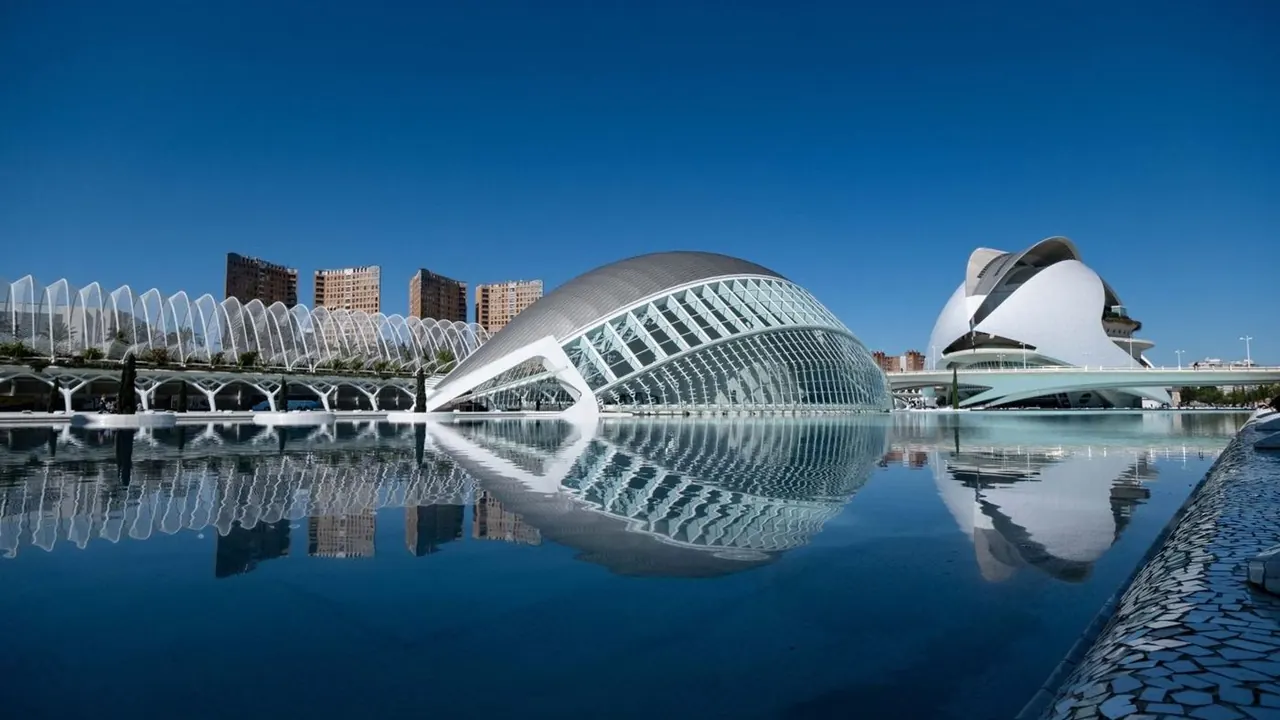
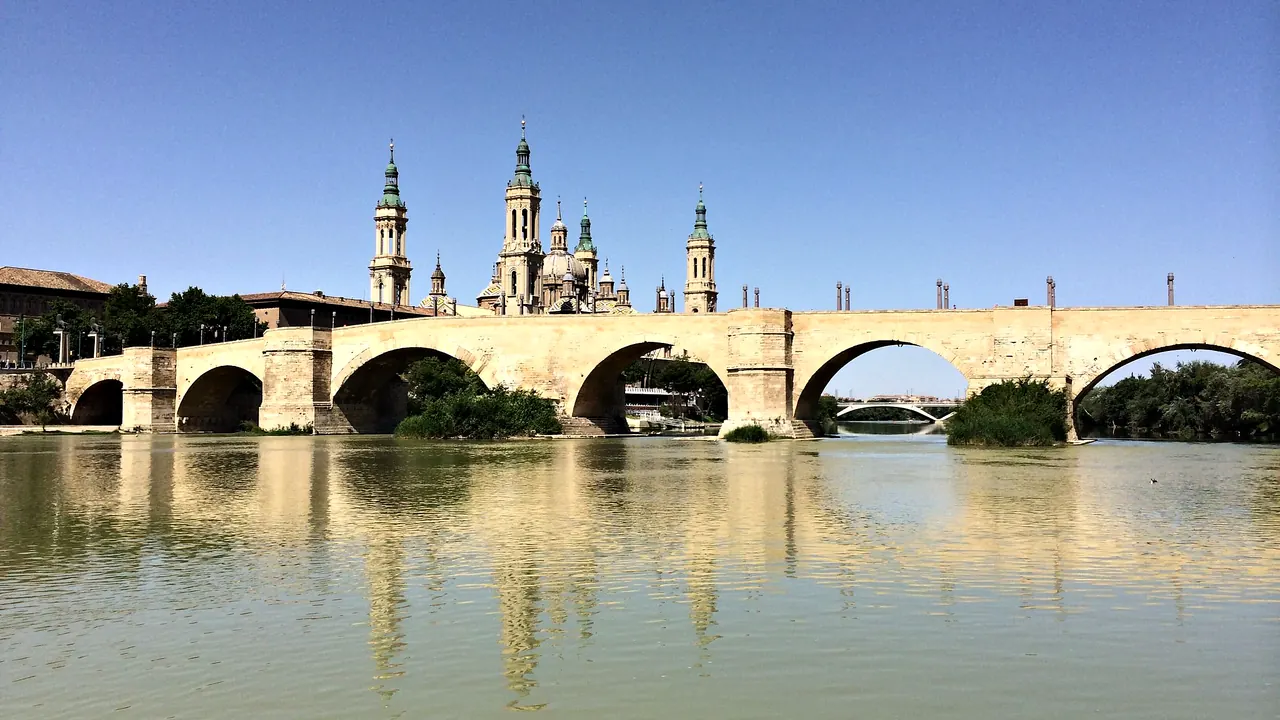
Photos: Valencia by Francesco Ungaro, Pexels License; Zaragoza by Pablo Alejandro Araujo Granda, CC BY-SA 2.0, cropped.
Valencia or Zaragoza?
Our verdict in twelve categories, each scored against the same fixed benchmark cities, and the climate month by month, so you can choose for your trip.
Choose Valencia for
- beaches
- families
- food and drink
Valencia is the pick for a trip that mixes city and sea. Its sandy shoreline is a tram ride from the old town, it is the home of paella and one of Europe's great market halls, its nights in Ruzafa run later, and the Oceanogràfic and the Turia gardens keep children busy. It suits families, beach lovers and anyone who wants a few days of sights and then long lunches by the water.
Choose Zaragoza for
- prices
- day trips
Zaragoza is for the traveller who wants inland Spain at a gentler price. The Aljafería, the Pilar and the Roman remains hold their own against Valencia's old town, and a tapas crawl through El Tubo makes a fine evening. It sits on the high-speed line between Madrid and Barcelona, with castles and Mudéjar towns all around in Aragon, so it is the better base for day trips. There is no beach, so it suits a touring trip more than a summer one.
Scoreboard
Twelve categories on one fixed scale from 0 to 100. The shaded stretch is the gap between the two.
Your match
Pick a travel style or drag the sliders, and both match scores follow your weighting.
Wins on beaches and families with your weighting.
Wins on prices and day trips with your weighting.
What matters to you?
Category by category
What the scores mean for a trip.
Beaches & swimming
Here the two cities are not really in competition. Valencia has a long stretch of fine golden sand on its doorstep. Malvarrosa, Las Arenas and Patacona are close to town, the dune-backed beaches of El Saler lie inside the Albufera park, and the sea is comfortable from June to October.
Zaragoza sits far inland on the Ebro plain, and the river is not for swimming, so in summer people cool off in municipal open-air pools. If you want time by the sea on a Zaragoza trip, you are really planning a separate stay on the coast.
Food & drink
Valencia eats better and more widely. Rice is at the centre of it, from paella valenciana and arroz negro at the beach restaurants of Las Arenas to all i pebre in the Albufera villages. The Mercado Central, horchata in Alboraya and a creative restaurant scene in Ruzafa give it real range.
Zaragoza's strength is the tapas crawl through El Tubo, where each counter has its one speciality. Add hearty Aragonese dishes such as ternasco lamb and migas, and generous, cheap reds. Both cities have a fine modernista market hall, but Zaragoza has little fine dining and little beyond local cooking.
Culture & sights
The two are close, and both reward two or three days rather than a week, so the choice comes down to period. Valencia's old town is mainly Gothic, with the twisted columns of the Lonja silk exchange, the medieval Serranos and Quart gates and the cathedral's Holy Grail chalice. The white City of Arts and Sciences adds a modern counterweight.
Zaragoza reaches further back. Roman Caesaraugusta survives under its streets in a set of underground museums, the Aljafería is an eleventh-century Islamic palace, La Seo carries Mudéjar brickwork, and the Pilar has ceilings painted by a young Goya.
Nightlife
Valencia has the bigger and more varied nightlife. Ruzafa's grid of cocktail bars and terraces stays busy well past midnight, El Carmen and Benimaclet cater to students, and in summer open-air clubs near the port and Malvarrosa run until dawn.
Zaragoza's evenings are smaller and more driven by students. They move from the tapas of El Tubo to the bars around Plaza San Felipe and Santa Marta, there are only a few clubs, and weeknights are quiet. Each city's year peaks in a different month: Fallas in March in Valencia and the Fiestas del Pilar in October in Zaragoza.
Nature & outdoors
Neither city is a great base for the outdoors, and the difference is one of kind. Valencia's nature is flat and watery, and all of it is close to the centre. There is the Albufera lagoon with its rice fields, herons and sunset boat trips, the pine dunes of the Devesa, and the 9km of Turia gardens for running and cycling.
Zaragoza's landscapes are drier and more dramatic, but further away. Beyond the windswept steppe, an hour or more out by car, lie Moncayo's beech forests, the red towers of the Mallos de Riglos, the Bardenas Reales badlands and eventually the Pyrenees. Valencia's hills need a drive too, mainly to the Sierra Calderona and the gorge at Chulilla.
Day trips
Valencia has a good set of outings. Roman Sagunto and the ridge-top castle at Xàtiva are short train rides away, Cuenca's hanging houses are about an hour by fast train, and Peñíscola and the Costa Blanca lie along the coast.
Zaragoza does better still. Its place on the high-speed line puts both Madrid and Barcelona about an hour and a half away. Aragon around it is full of strong outings, including Loarre castle, the Civil War ruins of Belchite, Goya's birthplace at Fuendetodos, Mudéjar Tarazona and, with an early start, Albarracín. A hired car opens up much more.
Good for families
Valencia is the easier choice with children. The Oceanogràfic, the hands-on science museum and the Hemisfèric dome all sit together in the City of Arts and Sciences. Bioparc shows African animals without visible bars, and Gulliver, the giant climbing figure in the Turia gardens, is a favourite.
Zaragoza is calm and flat, with a river-themed aquarium at the old Expo site, the playgrounds of the Parque del Agua and, during the October fiestas, parades of giants and big heads. Its sights mean more to adults, though, and July and August are hard going with small children.
Getting around
Valencia has the fuller network, and it needs one. The historic centre is easy on foot, but a trip here is spread across three places: the old town, the sea and the City of Arts and Sciences. That means a tram or metro ride to the sand and a long stroll or a short pedal down the old riverbed to the white buildings. The city is flat and well laid out for bikes, so many visitors find cycling the quickest way to link them.
Zaragoza asks less of you because there is less ground to cover. The Pilar, the Casco and the Aljafería all sit in one flat core, so most days need nothing but your feet. A single tram line and the buses handle the rest, and the one ride you are likely to notice is out to Delicias for the fast trains. Neither city needs a car unless you are heading out into the hills or rural Aragon.
Shopping & style
Valencia gives you more to browse. Calle Colón and Poeta Querol have the chains, luxury boutiques and the department store, and El Carmen and Ruzafa add vintage and independent design. Manises ceramics, hand-painted fans and silk make distinctive things to take home.
Zaragoza's shopping is the everyday Spanish sort, along Paseo de la Independencia, with older shops and pastry makers on Calle Alfonso I and a large complex on the southern edge. Its best souvenirs are things to eat and drink, such as candied frutas de Aragón and local wine, plus pottery from Muel.
Affordability
Zaragoza is the cheaper stay. Valencia is reasonable for a large city, with its set lunch menus and cheap transport and bike hire. Still, summer stays near the beach, rice lunches by the sea and tickets for the City of Arts and Sciences add up.
In Zaragoza the central hotels, tapas and wine all cost less, the main sights are cheap to visit and the Pilar basilica is free. In both cities, the festival weeks are the time a budget traveller should avoid.
Live music & performing arts
Valencia has the more serious stage. The Palau de les Arts gives it a proper opera and ballet season with a highly regarded orchestra, the Palau de la Música by the Turia is home to the city orchestra, and village wind bands play all through Fallas.
Zaragoza's Auditorio brings in touring orchestras and jazz, and the Teatro Principal stages plays and dance, but there is less on, so check the programme before you go. Its own sound is the jota, Aragon's leaping folk song and dance, which is easiest to see during the October fiestas.
Wellness & relaxation
Neither city is a spa destination, and both offer much the same instead: a slow Spanish rhythm of long lunches and evening walks, with hotel spas and Arab-style bathhouses for the rest. Valencia's calm comes from the seafront promenade and the shade of the Turia, and its mild winters suit an unhurried stay out of season.
Zaragoza is a place to unwind along the Ebro and in Parque Grande, but its summer heat and the cierzo wind wear you out. Its one advantage is the thermal waters of Alhama de Aragón, a day out a little over an hour away.
When should you go?
Pick your month. The climate figures are measured averages, not a forecast.
Valencia in July
Zaragoza in July
Daytime high, °C
Rainfall in the month, mm
Temperature and rainfall are climate normals, averaged over the years shown. Valencia: 1991-2020 normals, Valencia (1.6 km from centre). Zaragoza: 1991-2020 (rainfall 1971-2000) normals, Zaragoza / Aeropuerto (11.2 km from centre).
Valencia has the softer climate. Winters stay mild, with daytime highs around 17°C, which is comfortable for walking the old town. The sea is warm enough for swimming from June into October and reaches 26°C in August. July and August are hot, very sunny and almost dry. The rain comes in autumn, and September and October are the wettest months, with up to 70mm.
Zaragoza has bigger swings. Its winters are colder, with highs near 11°C in December and January, and its summers are hotter, reaching 33°C in July under long hours of sun on an open plain. Rain is light all year, with a little more in April and May. The best months for walking the streets are April, May, late September and October. In those months Valencia is pleasant too, but its beach season is either just starting or winding down.
Which traveller are you?
On a beach and sun trip, Valencia wins outright. The city beaches are a tram ride from the centre, the sea stays warm all summer and the days are long and sunny, so a morning in the old town and an afternoon on the sand fit together easily. Zaragoza has only swimming pools.
On a family trip with young children, Valencia gives you more days of easy entertainment, from the aquarium and the science museum to the shallow beaches, with the flat Turia gardens linking them. Zaragoza is calm and manageable, but it has no sea and fiercer summer heat.
On a trip on a tight budget, Zaragoza makes your money go further. Central hotels are good value, tapas and set lunches are generous, the local reds cost little and the great basilica is free to enter. Valencia is reasonable, but summers near the beach cost more.
Before you go
| Measure | Valencia | Zaragoza |
|---|---|---|
| Official language | Spanish | Spanish |
| Currency | Euro (EUR) | Euro (EUR) |
| Sockets | CF230 V, 50 Hz | CF230 V, 50 Hz |
| Driving side | Right | Right |
| Time zone | UTC+1, UTC+2 in summer | UTC+1, UTC+2 in summer |
| Emergency number | 112 | 112 |
| Elevation | 15 m | 200 m |
| Main airport | Valencia Airport (VLC)9 km from centre111 non-stop destinations | Zaragoza Airport (ZAZ)13 km from centre12 non-stop destinations |
| Public holidays this year | 13 days | 12 days |
By the numbers
| Measure | Valencia | Zaragoza |
|---|---|---|
| City population | 840,792 | 693,091 |
| People per km² | 6,242 | 712 |
| Museums within 10 km | 45 | 22 |
| UNESCO World Heritage sites within 50 km | 2 | 1 |
| Swim season, months above 21 °C | 5 months | - |
Where else could you go?
Every comparison below shares a destination with this one, so you can follow Valencia or Zaragoza somewhere new.
- Alicantevs Valencia
- San Sebastianvs Zaragoza
- Biarritzvs Zaragoza
- Bilbaovs Zaragoza
- Barcelonavs Zaragoza
- Madridvs Zaragoza