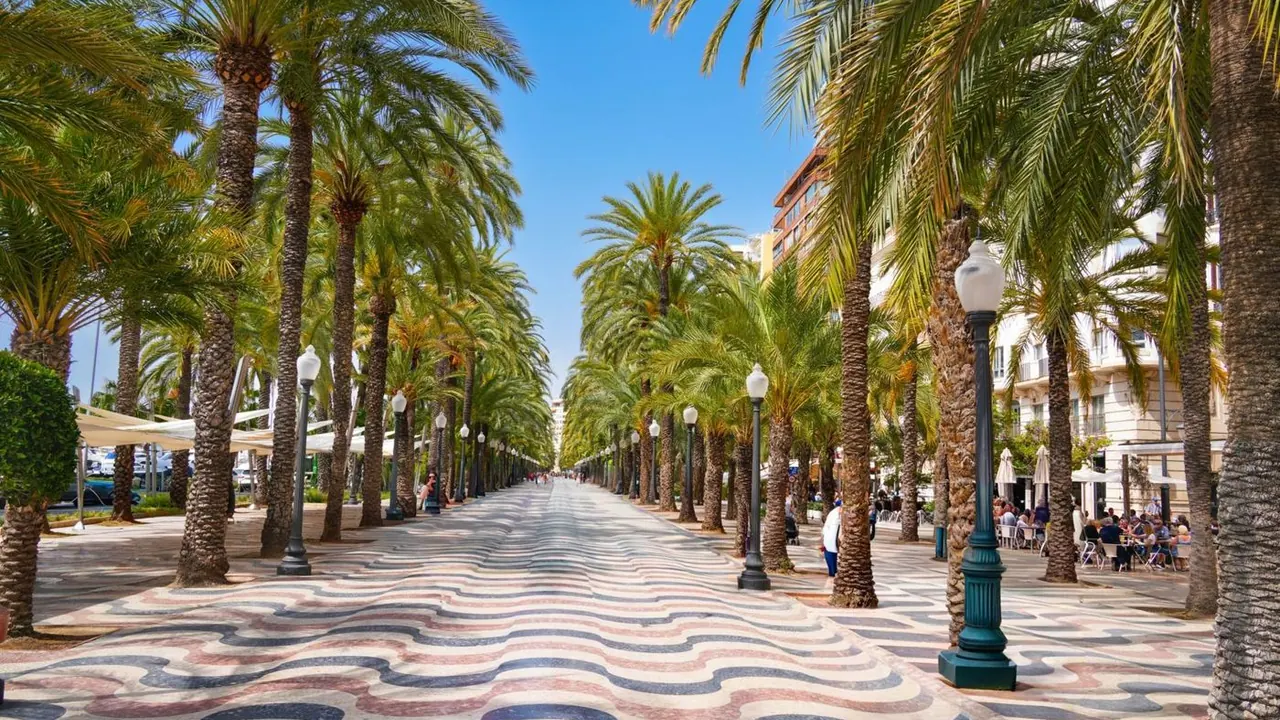
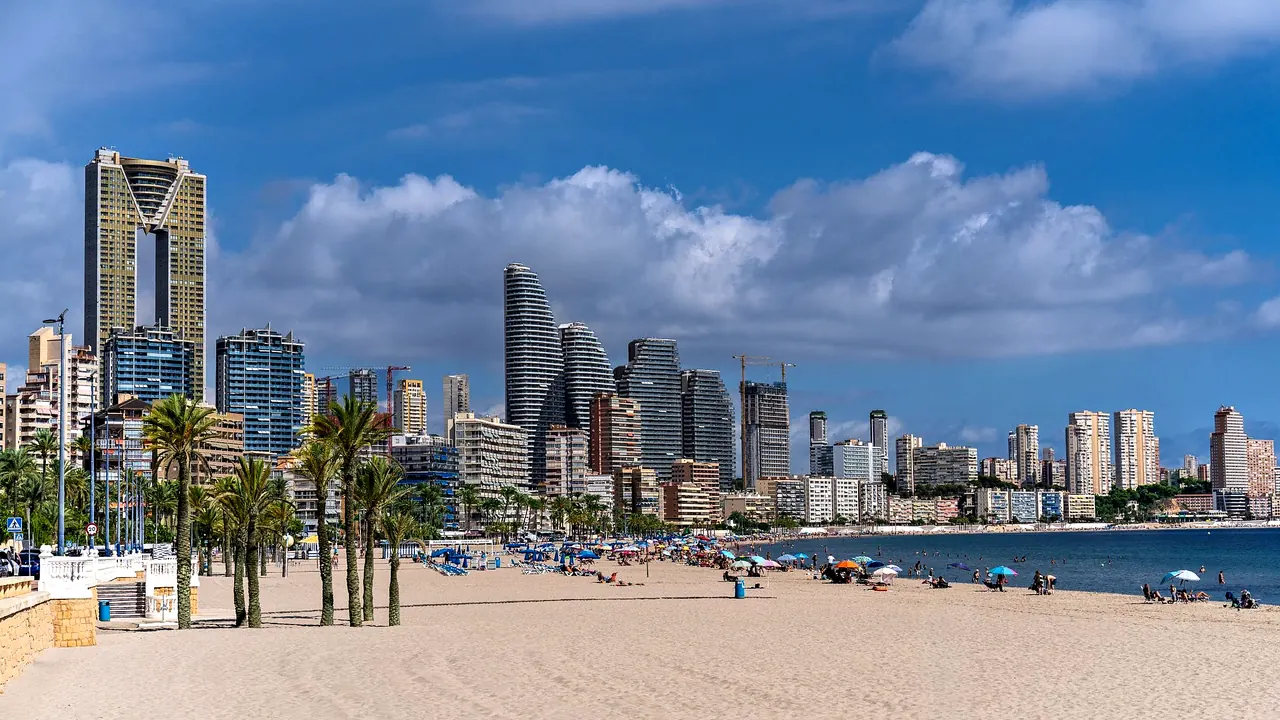
Photos: Alicante by Emilio Sánchez Hernández, Pexels License; Benidorm by Emilio Sánchez Hernández, Pexels License.
Alicante or Benidorm?
Our verdict in twelve categories, each scored against the same fixed benchmark cities, and the climate month by month, so you can choose for your trip.
Choose Alicante for
- culture and sights
- food and drink
- shopping
Alicante suits travellers who want a proper Spanish city with a good beach attached. There is a castle above the old quarter, the MARQ to fill a morning, long rice lunches at tables full of locals and tapas around the Mercado Central. It works best for couples and independent travellers who like to mix swimming with eating well and a few sights, and regular trains put Elche, Murcia and Valencia within easy reach.
Choose Benidorm for
- nightlife
- families
- prices
Pick Benidorm when the vacation is about the beach, the children or the night out. Its two long sandy bays sit right below the hotels, the theme, water and marine parks are on the edge of town, and the bars behind Levante stay open long after midnight. Everyday costs stay low, but anyone hoping for history, or a good meal on every corner, will end up taking the tram to Alicante.
Scoreboard
Twelve categories on one fixed scale from 0 to 100. The shaded stretch is the gap between the two.
Your match
Pick a travel style or drag the sliders, and both match scores follow your weighting.
Wins on culture and sights and food and drink with your weighting.
Wins on nightlife and families with your weighting.
What matters to you?
Category by category
What the scores mean for a trip.
Beaches & swimming
Both have fine sand, shallow calm water and the same warm summer sea, so the difference is how the beach fits into the day. In Alicante, Postiguet is a short walk from the old town for a quick swim, the long Playa de San Juan is a tram ride out, and a boat takes you to the rocky, clear water around Tabarca.
In Benidorm the beach is the town. Levante and Poniente run for kilometres right below the hotel towers, with Levante the livelier of the two and Poniente broader and calmer. The coves under the Serra Gelada and the pebble beach at Albir are close by. Both are packed in July and August, but cramped little Postiguet feels it most.
Food & drink
Alicante is much the better place to eat. Rice is taken seriously at lunchtime all over the city, from arroz a banda to the egg-crusted arroz con costra. The Mercado Central and the tapas bars around it make good everyday eating easy without any planning.
Benidorm cooks the same coastal rice dishes, but you have to go looking for them. Along the seafront and in the Rincón de Loix, menus are mostly full breakfasts, pizzas and grills for package visitors. The better food is concentrated in the old town's lane of tapas bars.
Culture & sights
Neither is a heritage city, but Alicante gives you far more to see. The Castillo de Santa Bárbara, the flowerpot-lined steps of Santa Cruz, the basilica and co-cathedral, and the MARQ's Iberian and Roman finds fill two days comfortably.
Benidorm's old headland village, with its blue-domed church and the Balcón del Mediterráneo, takes an hour or two. The tower skyline at sunset is its other sight, and anyone wanting more history usually heads inland or down the coast to Alicante.
Nightlife
Benidorm is the bigger night out. Around the Rincón de Loix, a few streets are packed with themed pubs, karaoke and drag cabaret, stag and hen groups keep things loud well past midnight, and the clubs on the edge of town run until dawn. The old town offers a calmer, more Spanish evening on the terraces.
Alicante's nights are smaller and more local. People eat late, then move on to the bars and steps of El Barrio, the dressier clubs at the port or, in summer, the terraces at San Juan. Students keep the city going through the winter, when Benidorm goes quiet, and the Hogueras in late June turn the whole city into a street party.
Nature & outdoors
Alicante's easiest outdoor days are by the sea: the walk round Cabo de las Huertas, snorkelling in the Tabarca marine reserve and flamingos on the Santa Pola salt lagoons. Puig Campana and the Aitana range are about an hour inland, and most trailheads need a car.
Benidorm has its wild coast on the doorstep. The Serra Gelada cliff path starts at the end of Levante beach, and the same mountains, along with the green Algar waterfalls, are about half an hour away. In both towns the summer heat pushes any activity into the mornings.
Day trips
Both are on the same coastal tram line, so many outings are shared: Villajoyosa's painted houses, white Altea, Guadalest on its rock and the boat to Tabarca. Alicante is better placed for the south and for rail travel, with Elche's palm grove half an hour away and regular trains to Murcia, Cartagena and Valencia.
Benidorm is the better base for the northern Costa Blanca. Altea is a few minutes away and Calp, Xàbia and Dénia are just up the coast, but Elche and the southern cities take longer to reach.
Good for families
Benidorm is the easier choice with children. The theme park, water park, marine park and zoo are all on the edge of town rather than a drive away, the beaches shelve gently, and hotels expect families. The adult streets behind Levante are easy to avoid by staying on the Poniente side.
Alicante is pleasant with children, with shallow water at San Juan, a flat promenade for scooters and the lift up to the castle. It has little built specially for them, though, and for the big parks families drive up to Benidorm.
Getting around
Both are easy without a car, and the same coastal tram links them. Alicante's centre is compact, with the old quarter, port, market and Postiguet all a short walk apart, plus trains for longer trips.
Benidorm is a long, flat strip along two promenades, with buses out to the parks. Some hotels sit at the top of steep hills, and parking is scarce, so a car is really only worth having for the inland mountains.
Shopping & style
Neither is a shopping destination, but Alicante has a real city centre: chains and department stores around Avenida Maisonnave, a few independent shops in the old quarter, edible souvenirs at the Mercado Central, and Elche's shoe outlets half an hour away. Benidorm sells beachwear, souvenirs, cheap electronics and market fakes, and its visitors take the tram to Alicante for anything more.
Affordability
Both are moderately priced for the Mediterranean, but Benidorm is somewhat cheaper from day to day. Its huge supply of rooms and its all-inclusive packages keep accommodation low for much of the year, and drinks and breakfasts cost less than in most resorts. A family day at the parks soon adds up, though.
In Alicante the savings come from good-value lunch menus, cheap trams and free sights such as the castle grounds. Rooms near the beaches cost far more in summer and during the Hogueras. In both towns, winter is the cheapest time to stay.
Live music & performing arts
For a play or a concert, Alicante is the place. The nineteenth-century Teatro Principal puts on drama, dance and touring musicals, mostly in Spanish, and the ADDA concert hall is home to the provincial symphony orchestra. Benidorm's evenings are dinner-show spectaculars, tribute acts, comedians and drag cabaret in the bars, a fun night out rather than an evening of theatre or music.
Wellness & relaxation
Neither has a bathing tradition, so rest in both means hotel spas and the slow Mediterranean routine. Alicante has the edge: the palm-shaded Explanada and the old quarter stay unhurried for most of the year, and the thermal springs at Archena and Fortuna, used since Roman times, are about an hour away. Benidorm's spa hotels suit long winter stays, when the town quietens, but in summer only Poniente offers much calm.
When should you go?
Pick your month. The climate figures are measured averages, not a forecast.
Alicante in July
Benidorm in July
Daytime high, °C
Rainfall in the month, mm
Where the figures come from
Benidorm's temperatures are measured 38 km from the centre, at Alicante.
Benidorm has no rain gauge within 25 km of the centre, so its rainfall comes from a gridded climate dataset read at the city rather than from a gauge further away.
Temperature and rainfall are climate normals, averaged over the years shown. Alicante: 1991-2020 normals, Alicante (2.8 km from centre). Benidorm: 1991-2020 normals, Alicante (38.1 km from centre).
These two towns sit on the same stretch of the Costa Blanca and have almost identical weather. The sea is warm enough for swimming from June into October and peaks at 26°C in August. July and August bring daytime highs of around 31°C, almost no rain and very long sunny days, so walking around at midday is hard work in both. May, and late September into October, are the easiest months for combining the beach with sightseeing or hiking.
Winter stays mild, at about 17°C by day with plenty of sun. That is good weather for a stroll along the Explanada or Benidorm's promenades, but the sea drops to around 14°C and only the hardy swim. The one real difference is the autumn rain. Alicante's comes to a sharper peak, with September the wettest month at 52mm, while Benidorm's is spread more evenly from September to November.
Which traveller are you?
On a culture and arts trip, Alicante is the clear choice. It has a hilltop castle, the MARQ's Iberian and Roman collections, an old quarter worth wandering and a real concert hall. Benidorm's heritage amounts to one small headland village and a famous lookout.
On a family trip with young children, Benidorm is the easier choice. The theme park, water park, marine park and zoo are a few minutes from beaches that shelve gently into calm water, and the whole town is set up for families. In Alicante the big attractions mean a drive.
For a food and nightlife trip, it depends which half matters more. Alicante has far better eating, with rice at lunch and tapas around the market before a late night in El Barrio. Benidorm has the louder, longer party, but mostly package-tourist food.
Before you go
| Measure | Alicante | Benidorm |
|---|---|---|
| Official language | Spanish | Spanish |
| Currency | Euro (EUR) | Euro (EUR) |
| Sockets | CF230 V, 50 Hz | CF230 V, 50 Hz |
| Driving side | Right | Right |
| Time zone | UTC+1, UTC+2 in summer | UTC+1, UTC+2 in summer |
| Emergency number | 112 | 112 |
| Elevation | 3 m | 15 m |
| Main airport | Alicante-Elche Miguel Hernández Airport (ALC)10 km from centre126 non-stop destinations | Alicante-Elche Miguel Hernández Airport (ALC)48 km from centre126 non-stop destinations |
| Public holidays this year | 13 days | 13 days |
By the numbers
| Measure | Alicante | Benidorm |
|---|---|---|
| City population | 366,221 | 77,327 |
| People per km² | 1,819 | 2,008 |
| Museums within 10 km | 8 | 5 |
| UNESCO World Heritage sites within 50 km | 2 | 1 |
| Swim season, months above 21 °C | 5 months | 5 months |
Where else could you go?
Every comparison below shares a destination with this one, so you can follow Alicante or Benidorm somewhere new.
- Valenciavs Benidorm
- Valenciavs Alicante
- Granadavs Alicante
- Granadavs Benidorm
- Toledovs Alicante
- Zaragozavs Benidorm