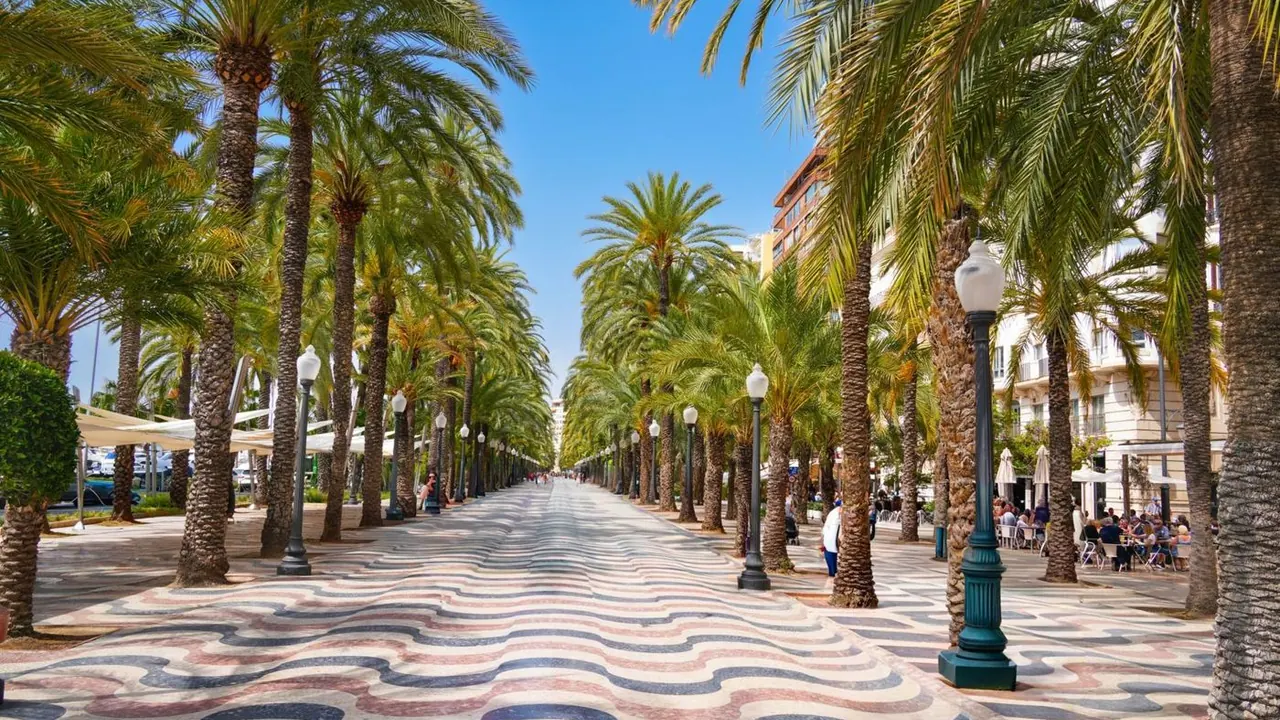
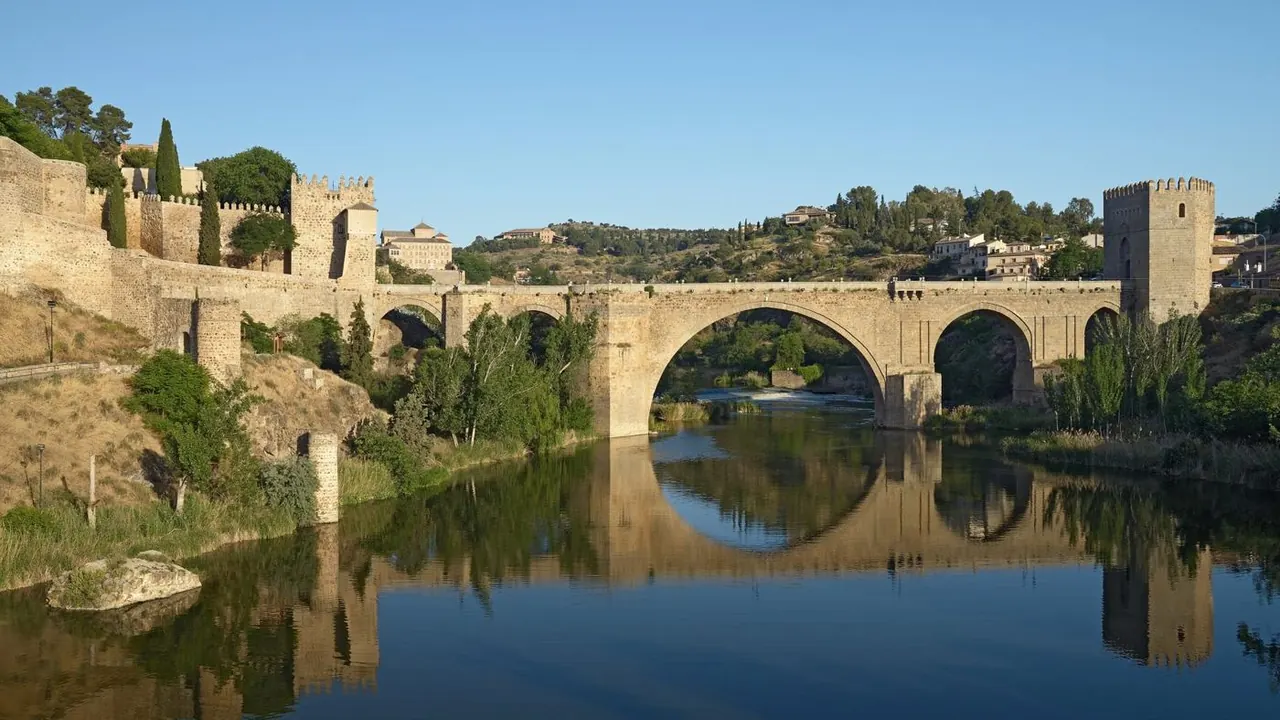
Photos: Alicante by Emilio Sánchez Hernández, Pexels License; Toledo by Ввласенко, CC BY-SA 3.0, cropped.
Alicante or Toledo?
Our verdict in twelve categories, each scored against the same fixed benchmark cities, and the climate month by month, so you can choose for your trip.
Choose Alicante for
- beaches
- nightlife
- food and drink
Alicante is the choice for a warm-weather vacation built around the sea. Long sandy beaches sit a tram ride from the centre, the rice dishes and tapas bars give you good eating every day, and the old quarter keeps going late into the night. It suits couples, groups of friends and families who want sun, swimming and easy evenings, with a castle and a couple of museums to fill the odd morning.
Choose Toledo for
- culture and sights
- day trips
Toledo is for travellers who come for history rather than heat. Its walled hill town brings together Roman, Islamic, Jewish and Christian Spain, with El Greco's paintings and one of the country's great cathedrals all within a short walk. Madrid is close by train for bigger museums and a night out. It works best as a short, focused stay of two or three days, and is quietest once the day visitors have left.
Scoreboard
Twelve categories on one fixed scale from 0 to 100. The shaded stretch is the gap between the two.
Your match
Pick a travel style or drag the sliders, and both match scores follow your weighting.
Wins on beaches and nightlife with your weighting.
Wins on culture and sights and day trips with your weighting.
What matters to you?
Category by category
What the scores mean for a trip.
Beaches & swimming
This is the widest gap between the two. Alicante has sand on its doorstep. Postiguet lies at the edge of the old town, the tram runs to the long, shallow bay at Playa de San Juan, and a boat crosses to Tabarca for clear water among the rocks. The one drawback is the crowds on the city beaches in high summer.
Toledo sits on the plateau several hours from any coast, and the Tagus in its gorge is not for swimming. On a hot afternoon your choice is a hotel pool or a municipal one.
Food & drink
Alicante eats better and more widely. Its rice dishes, arroz a banda, black rice and the egg-crusted arroz con costra, are worth planning a long lunch around, and the Mercado Central has red prawns, mojama and counters where you can stop for a drink. The tapas bars near the market and in the old town are where the good everyday eating is.
Toledo's cooking is heavier inland fare: partridge, venison, carcamusas, Manchego and convent marzipan. It is satisfying for a few meals, but the choice is narrow, and the set menus near the cathedral are best avoided in favour of taverns a few streets away.
Culture & sights
Toledo is the far stronger city for sightseeing. The whole hilltop old town is the attraction, with the Gothic cathedral and its El Greco and Goya canvases, the synagogues of Santa María la Blanca and El Tránsito, the mosque of Cristo de la Luz and San Juan de los Reyes all packed into a short walk. Few places in Spain show its mixed past so clearly.
Alicante has a good castle with a view over the bay, the whitewashed steps of Santa Cruz and the well-presented MARQ archaeology museum. These make pleasant mornings on a beach trip, but they are not the reason to go.
Nightlife
Alicante has a real night out. Dinner starts after nine, El Barrio's small bars spill onto the steps until the early hours, and the port and San Juan's beach bars keep busy through the summer. The Hogueras in late June turns the whole city into a street party, though dedicated clubbers will find the choice thin.
Toledo goes quiet once the Madrid day visitors have left. An evening means tapas around Zocodover and perhaps a student bar at the weekend, and anyone wanting more takes the train to the capital.
Nature & outdoors
Alicante offers more variety outdoors. You can snorkel in the Tabarca marine reserve, paddle round the bay, walk Cabo de las Huertas or watch flamingos on the Santa Pola salt lagoons. Within an hour, Puig Campana, the Sierra de Aitana and the crags at Sella give proper mountain hiking and climbing, though you will need a car.
Toledo's best outdoor moment is the riverside path through the Tagus gorge and the view back from the cigarrales. Beyond that lie the open La Mancha plain, the low Montes de Toledo and, further off, Cabañeros with its deer and birds of prey.
Day trips
Toledo has the edge, mostly because Madrid is so close. Half an hour on the high-speed train brings the Prado and the royal palace within reach, and Aranjuez, El Escorial, the Consuegra windmills and Almagro's theatre all make full days. Segovia and Cuenca are possible too, if you accept long days.
Alicante's list is shorter but still good. The UNESCO-listed palm grove at Elche is half an hour away, the coastal tram reaches painted Villajoyosa and white Altea, and Guadalest perches above its reservoir. Valencia is about two hours away by train.
Good for families
Alicante is much easier with children. Playa de San Juan has shallow, calm water and room to spread out, the palm-lined promenade suits scooters and pushchairs, and the theme and water parks near Benidorm are under an hour away by car.
Toledo's swords, armour and castle-like Alcázar will catch a child's imagination for a while, and the history-show theme park on the outskirts is a real draw. But the steep cobbled lanes are hard work with a pushchair, and a day of churches and paintings tests young patience.
Getting around
Both centres are easy on foot, but the walking feels very different. Alicante's old quarter, market, port and beach are all on fairly flat ground within fifteen minutes of each other, with a lift up to the castle, and the coastal tram reaches the beaches and towns to the north.
Toledo is smaller still, but it sits on a steep hill of twisting cobbled lanes, so the walking is tiring even though distances are short. Escalators help you up from the car parks, and the station sits across the river, a bus ride or a steep walk from the centre.
Shopping & style
Neither city is a shopping destination, but Alicante is the more practical place to shop. The streets around Avenida Maisonnave have department stores and Spanish chains, the market sells turrón and saffron to take home, and Elche's shoe factory outlets are half an hour away.
Toledo's appeal is craft. There is damascene work in gold on black steel, Toledo blades and Talavera ceramics, but many shops near the cathedral sell souvenirs of mixed quality, so look for workshops that make their own.
Affordability
Costs are much the same, but you pay for different things. In Alicante the cheap tram, near-free castle and good-value rice lunches keep days inexpensive, while beach rooms cost far more in July, August and during the Hogueras, and much less from October to May.
In Toledo eating is the easy part, with a tapa served free with each drink, but the cathedral, synagogues and El Greco sites each charge for entry, so a full day of sightseeing adds up. Hotels with Tagus views inside the walls are the expensive option.
Live music & performing arts
Alicante has a little more on stage. The Teatro Principal puts on drama, musicals and dance, and the ADDA auditorium is home to the provincial symphony orchestra and visiting jazz acts, although most theatre is in Spanish.
Toledo's Teatro de Rojas runs a regional programme, and organ music sometimes fills its churches. Its standout event is Corpus Christi, when the monstrance is carried through streets hung with tapestries. On most nights, serious concerts mean a trip to Madrid.
Wellness & relaxation
Neither city has a spa tradition of its own, and Alicante's way of resting is simply the more relaxing of the two. Seafront walks, a long lunch and a siesta make up the day, and the Roman-era thermal springs at Archena and Fortuna are about an hour away by car.
Toledo offers a few Arab-style bath houses with warm pools under vaulted ceilings, and the quiet of its lanes early in the morning and late in the evening. That makes a calm night or two rather than a restful week.
When should you go?
Pick your month. The climate figures are measured averages, not a forecast.
Alicante in July
Toledo in July
Daytime high, °C
Rainfall in the month, mm
Temperature and rainfall are climate normals, averaged over the years shown. Alicante: 1991-2020 normals, Alicante (2.8 km from centre). Toledo: 1991-2020 normals, Toledo (2.3 km from centre).
Alicante is the gentler of the two all year. The sea is warm enough for swimming from June into October and peaks around 26°C in August, when the beaches are at their best and the afternoons are hot but rarely punishing. Winters stay mild, with days around 17°C and plenty of sun, which makes the months from November to March pleasant for walking and cycling. Rain is scarce, though September brings the heaviest month at about 52mm.
Toledo's inland climate swings much harder. July and August reach about 35°C, too hot to climb its steep lanes after mid-morning, and in winter days drop to around 12°C, cool and often grey. The best months for sightseeing are April to early June and late September to October, though October is also its wettest month. In short, Alicante is at its best in summer, and Toledo is better visited either side of it.
Which traveller are you?
On a beach and sun trip, Alicante is the clear answer. San Juan's long sandy bay and Postiguet below the castle make swimming part of every day, and the coves towards Villajoyosa are easy to reach. Toledo has no sea at all.
For a culture and arts trip, Toledo is far richer. The cathedral, the synagogues, the Cristo de la Luz mosque and El Greco's paintings at Santo Tomé fill two full days, and Madrid's Prado is only half an hour away by train.
On a food and nightlife trip, Alicante gives you more. Rice dishes at long lunches, the Mercado Central and late nights in El Barrio make better evenings than Toledo's quiet tapas round, which winds down once the day visitors have left.
Before you go
| Measure | Alicante | Toledo |
|---|---|---|
| Official language | Spanish | Spanish |
| Currency | Euro (EUR) | Euro (EUR) |
| Sockets | CF230 V, 50 Hz | CF230 V, 50 Hz |
| Driving side | Right | Right |
| Time zone | UTC+1, UTC+2 in summer | UTC+1, UTC+2 in summer |
| Emergency number | 112 | 112 |
| Elevation | 3 m | 523 m |
| Main airport | Alicante-Elche Miguel Hernández Airport (ALC)10 km from centre126 non-stop destinations | Adolfo Suárez Madrid–Barajas Airport (MAD)80 km from centre239 non-stop destinations |
| Public holidays this year | 13 days | 13 days |
By the numbers
| Measure | Alicante | Toledo |
|---|---|---|
| City population | 366,221 | 87,216 |
| People per km² | 1,819 | 376 |
| Museums within 10 km | 8 | 13 |
| UNESCO World Heritage sites within 50 km | 2 | 2 |
| Swim season, months above 21 °C | 5 months | - |
Where else could you go?
Every comparison below shares a destination with this one, so you can follow Alicante or Toledo somewhere new.