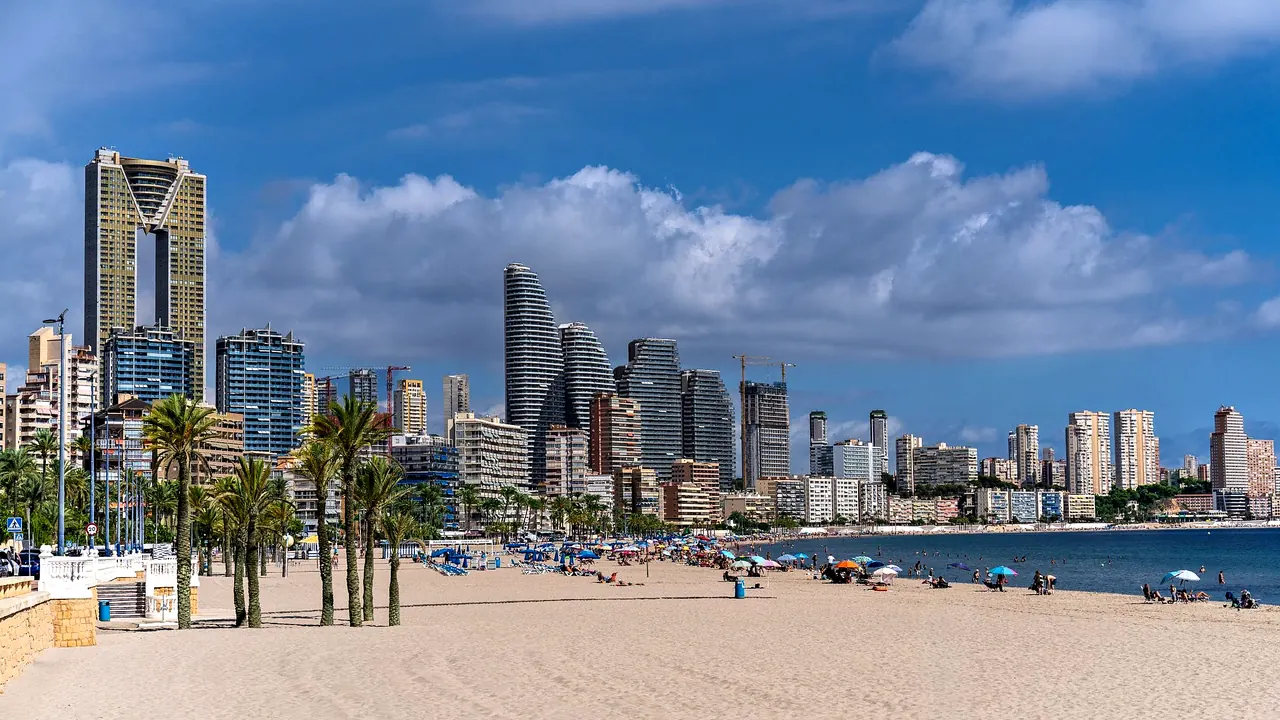
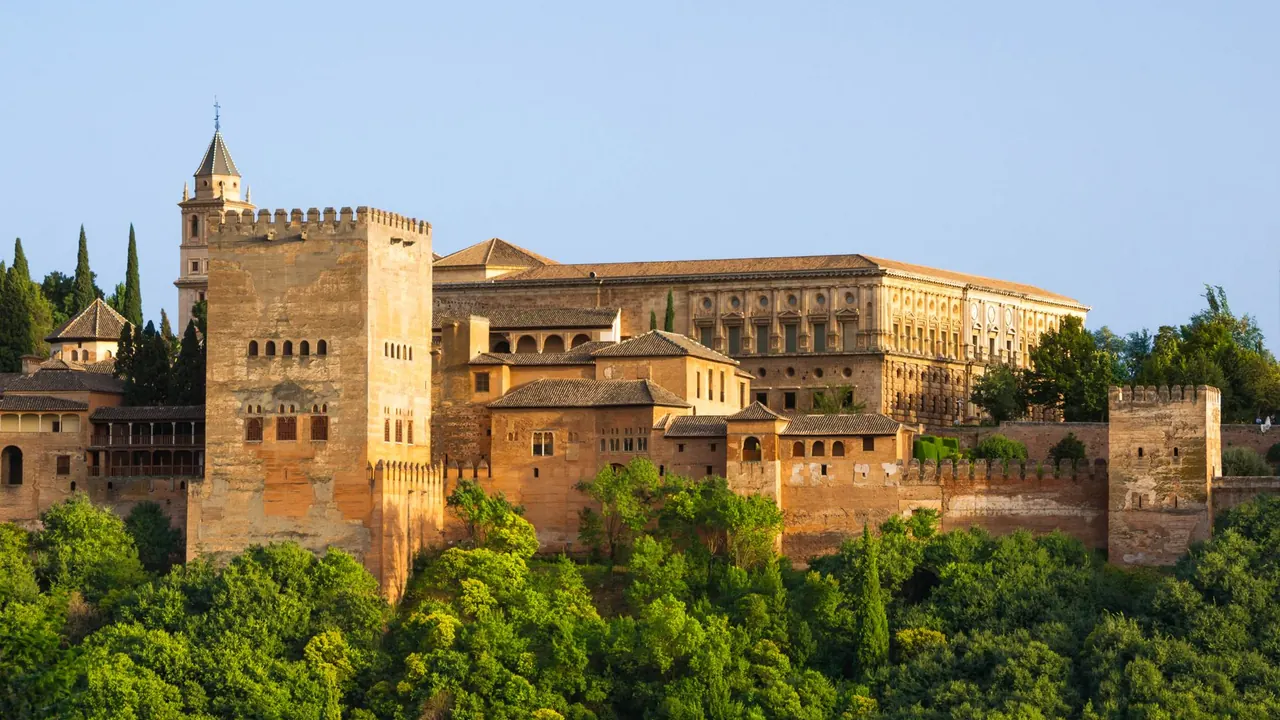
Photos: Benidorm by Emilio Sánchez Hernández, Pexels License; Granada by Jebulon, CC0.
Benidorm or Granada?
Our verdict in twelve categories, each scored against the same fixed benchmark cities, and the climate month by month, so you can choose for your trip.
Choose Benidorm for
- beaches
- families
- nightlife
Benidorm is the choice for a sun and sand trip where the days go on the beach and the evenings in a bar. Two long beaches of fine sand with gentle, shallow water, flat promenades and a cluster of theme and water parks make it easy with children. The winter months suit anyone who wants mild weather and a slow routine at modest cost. Don't come looking for history, though. Apart from a few lanes on the headland, the town is towers and seafront.
Choose Granada for
- culture and sights
- live music and the arts
- food and drink
Travellers who want to see something extraordinary and eat well along the way are better off in Granada. The Alhambra and the Albaicín give it a depth of heritage that Benidorm can't approach. The free tapa with every drink turns an evening into a slow crawl between bars, and the Sierra Nevada brings hiking in summer and skiing in winter. The sea, though, is an hour away over the mountains, so it is a poor base for a beach vacation.
Scoreboard
Twelve categories on one fixed scale from 0 to 100. The shaded stretch is the gap between the two.
Your match
Pick a travel style or drag the sliders, and both match scores follow your weighting.
Wins on beaches and families with your weighting.
Wins on culture and sights and live music and the arts with your weighting.
What matters to you?
Category by category
What the scores mean for a trip.
Beaches & swimming
Benidorm was built around its beaches. Levante and Poniente are long crescents of fine sand with shallow, clear water. Mal Pas cove sits under the old town, and the coves below the Serra Gelada and the pebble beach at Albir are close by when you want a change.
Granada has no beach of its own. The Costa Tropical, with its pebble and dark-sand bays at Salobreña, Almuñécar and La Herradura, is an hour's drive over the mountains. It makes a good day out for snorkelling, but on most days in the city a swim means a hotel pool.
Food & drink
Granada eats better. Its tapas round, with a plate arriving with every drink in the bars of the Realejo, Calle Navas and the lower Albaicín, gives every evening a shape. The Moorish teterías along Calderería Nueva add mint tea and pastries that Benidorm has no answer to.
Benidorm's seafront is full of full breakfasts and pizza made for package visitors. Its best eating is the paella, arroz a banda and arroz negro of the Alicante coast, and the tapas lane in the old town, so good meals take some looking for.
Culture & sights
The two are a world apart here. In Benidorm, history is the whitewashed old village on the headland, the blue-domed church and the view from the Balcón del Mediterráneo. Beyond that, the sight is the skyline of towers itself, best at sunset.
Granada has one of Europe's great monuments. The Nasrid palaces, the Alcazaba and the Generalife stand facing the Albaicín's lanes and garden houses, and below them are the cathedral, the Royal Chapel with the tombs of Ferdinand and Isabella, the Carthusian monastery and the cave houses of Sacromonte.
Nightlife
Benidorm goes harder and later. The streets behind Levante and around the Rincón de Loix are packed with themed pubs, karaoke and drag cabaret, stag and hen groups crowd the pavements after midnight, and big clubs on the edge of town run until dawn. It is loud, cheap and unashamed, and it fades quickly out of season.
Granada's night is a student one. It runs from tapas to the bars of Calle Elvira and Plaza Nueva and on to the pubs around Pedro Antonio de Alarcón. It is friendlier and more Spanish, with fewer big clubs, and it thins out in summer when the university empties.
Nature & outdoors
Granada has the bigger landscape. The Sierra Nevada rises straight behind the city, with skiing above Pradollano in winter and summer routes towards Mulhacén, the highest peak in mainland Spain. The terraced valleys and old mule paths of the Alpujarras lie along its southern side.
Benidorm still has plenty. The Serra Gelada cliff path starts at the end of Levante, while Puig Campana, the Bernia ridge and the Algar waterfalls are within half an hour inland. It also has the sea, with diving and snorkelling round the island offshore and kayaking under the cliffs.
Day trips
Granada's day trips carry more weight. Córdoba's Mezquita is an hour and a half away by fast train, the Renaissance towns of Úbeda and Baeza and the dolmens of Antequera are UNESCO-listed, and there are the white villages of the Alpujarras and the cave quarter of Guadix.
Benidorm's outings are shorter and gentler. Altea's white old quarter and the painted houses of Villajoyosa are minutes away, Guadalest's rock-top castle is a short drive into the hills, and the tram runs to Alicante. Valencia is about two hours away, a long day.
Good for families
Benidorm is the easier choice with children. Calm, gently shelving water, flat promenades and a resort full of Spanish families make the days simple. A theme park, a water park, a marine park and a zoo cover the days off the beach. Staying near Poniente keeps you away from the adult nightlife behind Levante.
Granada works best with older children. The Parque de las Ciencias, with its planetarium and butterfly house, fills a day, and the Alhambra's fountains hold young attention. The steps and cobbles of the Albaicín, though, are hard work with a pushchair.
Getting around
Both are easy on foot, but the walking differs. Benidorm is mostly flat promenade between the two beaches and the old town, with buses to the parks and a coastal tram to Alicante and Altea. Steep streets only matter if your hotel sits up behind Levante.
Granada's lower town is flat, but the sights sit on hills of cobbles and steps. The small red minibuses up to the Alhambra, the Albaicín and Sacromonte save a lot of effort. In both places a car is mainly useful for the mountains.
Shopping & style
Neither is a shopping destination, but Granada has more worth bringing home. There is taracea inlaid woodwork, blue and green Fajalauza pottery and guitars from local workshops, and the old silk market of the Alcaicería is a pleasant place to browse even if much of it is souvenirs. The Spanish chains and a department store line Calle Recogidas.
Benidorm's shopping is beachwear, sunglasses and the weekly open-air markets. For anything more, people take the tram to Alicante.
Affordability
Both are easy on the wallet, for different reasons. Benidorm's huge stock of rooms and all-inclusive packages keeps stays cheap, especially in winter, though July, August and park tickets push the bill up.
In Granada the savings come from the free tapa and cheap rooms in the lower town and the Realejo. Prices rise around the Alhambra, at boutique stays in the Albaicín and at terraces with palace views.
Live music & performing arts
Granada has a real cultural life. Zambra flamenco is danced in the Sacromonte caves, with rawer evenings in the peñas, and the city has the legacy of Lorca and Falla. Since 1952 a summer festival has staged music and dance in the Alhambra's palaces and the Generalife's open-air theatre, and the city orchestra plays through the year.
Benidorm's entertainment is light and constant: a big dinner show, plus nightly drag acts, comedians and tribute singers in the bars. For classical music or theatre you would have to go to Alicante or Valencia.
Wellness & relaxation
Granada has the stronger bathing tradition. Hammams in the lower Albaicín recreate the Moorish sequence of warm, tepid and cold pools under vaulted ceilings, and the thermal waters of Lanjarón and Alhama de Granada are within an hour.
Benidorm's wellness is hotel spas with indoor pools and saunas. Its real draw for rest is the season: between November and March the town turns quiet and mild, and Poniente stays calm all year.
When should you go?
Pick your month. The climate figures are measured averages, not a forecast.
Benidorm in July
Granada in July
Daytime high, °C
Rainfall in the month, mm
Where the figures come from
Benidorm's temperatures are measured 38 km from the centre, at Alicante.
Benidorm has no rain gauge within 25 km of the centre, so its rainfall comes from a gridded climate dataset read at the city rather than from a gauge further away.
Temperature and rainfall are climate normals, averaged over the years shown. Benidorm: 1991-2020 normals, Alicante (38.1 km from centre). Granada: 1991-2020 normals, Granada / Caserío Hospicio (5 km from centre).
Benidorm is a coastal climate with mild extremes. The sea is warm enough for proper swimming from June to October and peaks at about 26°C in August. July and August are hot but not punishing on the shore, with very little rain and the longest sunshine. Winter stays gentle at around 17°C by day, good for promenade walks and sunbathing though too cool for most swimmers. The wettest stretch, still modest, runs from September to November.
Granada swings much harder. July and August reach about 35°C, too hot for climbing the Alhambra hill or the Albaicín in the afternoon, though they are almost rainless. Winter days fall to around 13°C under the snow-capped Sierra, and late autumn is the wettest time, with about 51mm in November. For walking the city, April, May, late September and October are the months to aim for. In midsummer Benidorm is the more comfortable of the two, and in winter it is clearly the milder.
Which traveller are you?
For a beach and sun trip, Benidorm is the obvious answer. Levante and Poniente put kilometres of groomed sand and calm water outside the hotel door. In Granada the nearest beach, a pebbly cove on the Costa Tropical, means an hour's drive over the mountains.
On a culture and arts trip, Granada wins comfortably. The Alhambra, the Albaicín, the cathedral and the Royal Chapel fill several unhurried days, and evenings bring flamenco in Sacromonte or summer concerts in the palaces. Benidorm offers one viewpoint and a small museum.
On a family trip with young children, Benidorm is easier. Its beaches shelve gently, the promenades are flat for pushchairs, and theme, water and marine parks sit on the edge of town. Granada's steep cobbled hills and hot summer afternoons are harder going with children.
Before you go
| Measure | Benidorm | Granada |
|---|---|---|
| Official language | Spanish | Spanish |
| Currency | Euro (EUR) | Euro (EUR) |
| Sockets | CF230 V, 50 Hz | CF230 V, 50 Hz |
| Driving side | Right | Right |
| Time zone | UTC+1, UTC+2 in summer | UTC+1, UTC+2 in summer |
| Emergency number | 112 | 112 |
| Elevation | 15 m | 693 m |
| Main airport | Alicante-Elche Miguel Hernández Airport (ALC)48 km from centre126 non-stop destinations | F.G.L. Airport Granada-Jaén Airport (GRX)16 km from centre14 non-stop destinations |
| Public holidays this year | 13 days | 12 days |
By the numbers
| Measure | Benidorm | Granada |
|---|---|---|
| City population | 77,327 | 233,975 |
| People per km² | 2,008 | 2,659 |
| Museums within 10 km | 5 | 20 |
| UNESCO World Heritage sites within 50 km | 1 | 1 |
| Swim season, months above 21 °C | 5 months | - |
Where else could you go?
Every comparison below shares a destination with this one, so you can follow Benidorm or Granada somewhere new.
- Alicantevs Benidorm
- Malagavs Granada
- Valenciavs Benidorm
- Cordobavs Granada
- Marbellavs Granada
- Rondavs Granada