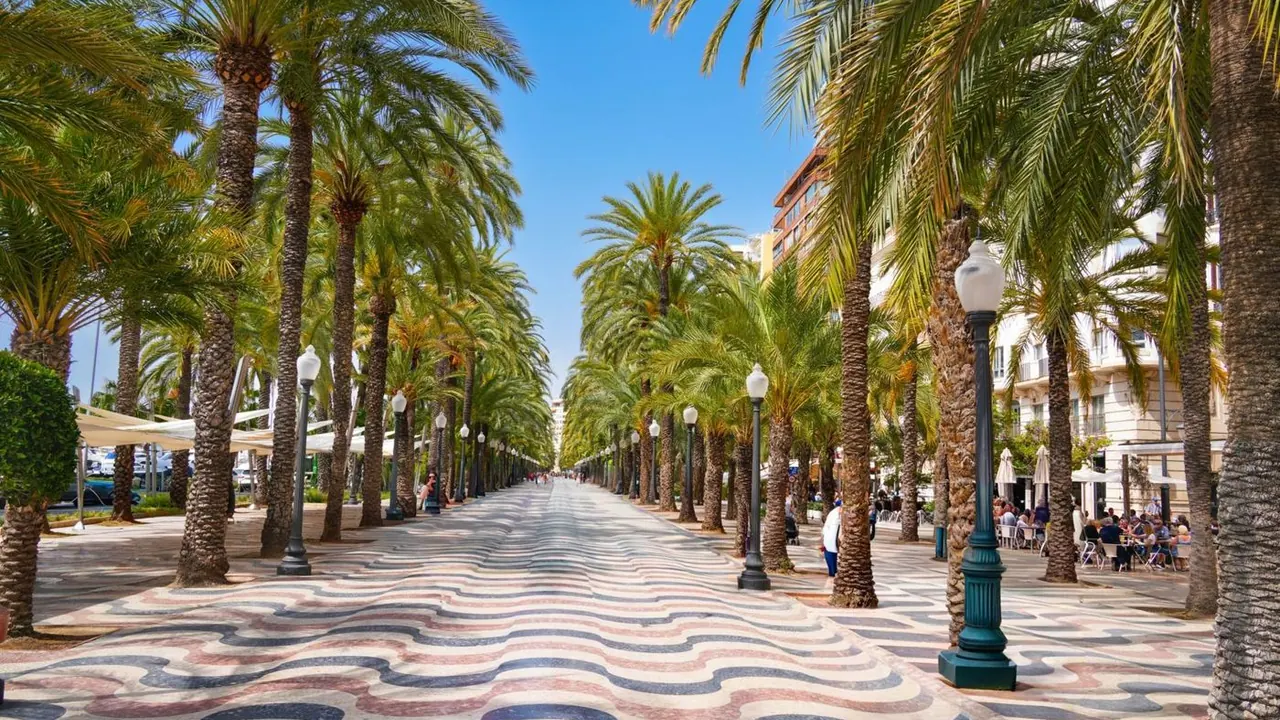
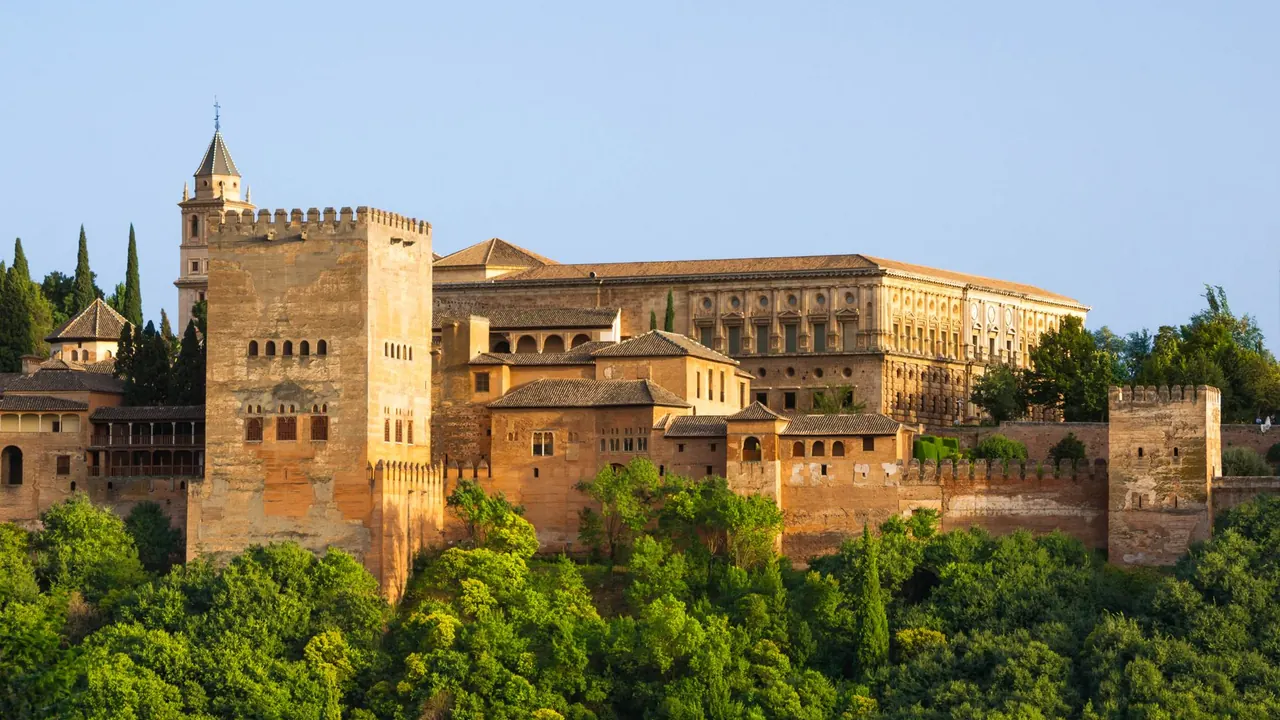
Photos: Alicante by Emilio Sánchez Hernández, Pexels License; Granada by Jebulon, CC0.
Alicante or Granada?
Our verdict in twelve categories, each scored against the same fixed benchmark cities, and the climate month by month, so you can choose for your trip.
Choose Alicante for
- beaches
- families
- food and drink
Alicante suits a slower vacation that keeps returning to the sea. Postiguet sits at the end of the old town, the tram takes you to the long sand at San Juan, and the shallow water and flat promenades make it easy with children. Add rice lunches, a late night in El Barrio and day trips along the Costa Blanca, and it works well for a week of sun with a little sightseeing.
Choose Granada for
- culture and sights
- live music and the arts
- nature and the outdoors
Granada is the better choice if you care more about history and landscape than about swimming. The Alhambra, the Albaicín and the Renaissance city below give it far more to see. The Sierra Nevada brings real mountains close, with hiking in summer and skiing in winter, and flamenco in Sacromonte gives the evenings a character Alicante can't match. The sea is an hour away over the mountains, so treat it as an outing.
Scoreboard
Twelve categories on one fixed scale from 0 to 100. The shaded stretch is the gap between the two.
Your match
Pick a travel style or drag the sliders, and both match scores follow your weighting.
Too close to call, 1 point apart
Wins on beaches and families with your weighting.
Wins on culture and sights and live music and the arts with your weighting.
What matters to you?
Category by category
What the scores mean for a trip.
Beaches & swimming
Here the two cities are furthest apart. In Alicante, the beach is part of every day. Postiguet is a short walk from the old town, and the tram runs out to the long pale sand of San Juan, where the water is shallow and calm. There is also the boat to Tabarca and the coves up the Costa Blanca.
Granada has no beach of its own. The Costa Tropical is about an hour south over the mountains, with pebble and dark sand around Salobreña and La Herradura and clear coves for snorkelling. It makes a good day out, but in the city a swim means a pool.
Food & drink
The two are broadly level, but you eat very differently in each. Alicante is a rice city. Arroz a banda and black rice are long lunches for two or more, and the modernist Mercado Central has red prawns, mojama and counters for a drink.
Granada eats in rounds. A free tapa comes with each drink, so an evening means moving from bar to bar through the Realejo and around Calle Navas. The Moroccan tea houses of Calderería Nueva add something Alicante has nothing like.
Culture & sights
Granada has far more to see. The Nasrid palaces and Generalife gardens of the Alhambra are among the great monuments of Europe. Around them are the Albaicín, the cathedral and Royal Chapel, the Carthusian monastery and the cave houses of Sacromonte, enough to fill several unhurried days.
Alicante's sightseeing centres on the Santa Bárbara castle, the flowerpot steps of Santa Cruz and the excellent MARQ archaeological museum. It is enjoyable, but two days covers it, and it makes a pleasant addition to a beach stay rather than a reason to go.
Nightlife
Both cities go out late, and neither is a clubbing destination. Alicante's nights are in El Barrio's small bars on the steps below the castle, with dressier bars at the marina and beach terraces at San Juan. It is at its liveliest in summer.
In Granada, the university sets the pace. The night runs from tapas to Calle Elvira and the student bars and clubs of Pedro Antonio de Alarcón, so it is busiest in term time and quieter once the students leave for the summer.
Nature & outdoors
Granada has the bigger landscape. The Sierra Nevada rises right behind the city, with skiing above Pradollano in winter and summer routes towards Mulhacén, the highest peak in mainland Spain. The Alpujarras add terraced valleys and old mule paths between villages.
Alicante's outdoors is mostly about the coast. You can snorkel and dive in the Tabarca marine reserve, paddle around the bay and see flamingos on the Santa Pola salt lagoons. The limestone peaks of Aitana and the crags at Sella offer good hiking and climbing, but you need a car to reach them.
Day trips
Both cities have rewarding trips, of different kinds. From Alicante, the coastal tram reaches the painted houses of Villajoyosa and the white town of Altea. Elche's UNESCO palm grove is half an hour away, and Valencia makes a longer day by train.
Granada's trips are richer in monuments. Córdoba and its Mezquita are about an hour and a half away by fast train, and Úbeda, Baeza and the Antequera dolmens are all UNESCO-listed. The white villages of the Alpujarras add mountain scenery.
Good for families
Alicante is the easier family base. Children can paddle in the shallow water at San Juan, ride scooters along the palm-lined promenade and take the boat to Tabarca. A theme park, water parks and a marine park near Benidorm are less than an hour away by car.
Granada has one strong draw in the Parque de las Ciencias, with its planetarium and butterfly house. But the Alhambra hill and the Albaicín are steep, cobbled and stepped, which is hard work with a pushchair, especially on a hot afternoon.
Getting around
Both are easy to get around, but the effort comes in different places. Alicante is a flat seafront city. You can stroll between the old town, the port, the market and the town beach, and the one real climb, up to the castle, is done for you by lift. The coastal tram adds a lot. It is slow, but it follows the shore out to San Juan and on up the Costa Blanca, and trains reach Elche and Valencia.
Granada's flat lower town is just as easy, but its best sights are up on the hills. Getting to the Alhambra, the Albaicín and Sacromonte means steep cobbled lanes or the small red minibuses that climb them. The light rail serves the suburbs and the station rather than the sights. Access to the old centre is restricted, so a car there is more trouble than help. It only earns its keep once you head out to the Alpujarras and the mountain villages.
Shopping & style
Neither city is worth choosing for its shops, and both have Spanish chains for everyday needs. The difference is in what you bring home. Alicante's best souvenirs are edible, such as Jijona turrón and saffron from the Mercado Central, and Elche's shoe outlets are half an hour away.
Granada's finds are crafts: taracea inlaid woodwork, blue and green Fajalauza ceramics and guitars from local workshops. You can browse around the Alcaicería, though much of what it sells is souvenirs.
Affordability
Both are reasonably priced by Spanish standards. Granada's free tapa with every drink makes an evening out especially cheap. In Alicante, the savings come from set lunches and from free sights such as the castle grounds.
Where you pay more also differs. In Alicante, beachside rooms in July and August cost more. In Granada, prices rise around the Alhambra, with boutique stays in the Albaicín, terraces with palace views and busy spring weekends.
Live music & performing arts
Granada has much more live culture. Flamenco runs from the zambra in the Sacromonte caves to rawer evenings in Albaicín bars. Its summer music and dance festival, held since 1952, puts concerts and ballet inside the Alhambra palaces and the Generalife's open-air theatre.
Alicante offers Spanish-language drama at the Teatro Principal and orchestral concerts at the ADDA. These make a pleasant evening, but there is nothing to plan a trip around.
Wellness & relaxation
Granada has the edge, with a bathing tradition you can actually use. Hammams in the lower Albaicín recreate the Moorish sequence of warm, tepid and cold pools. The spa towns of Lanjarón and Alhama de Granada are both within an hour.
Rest in Alicante means the sun and the seafront, a slow lunch and a siesta. Its nearest thermal springs are across the border in Murcia, and otherwise there are hotel spas.
When should you go?
Pick your month. The climate figures are measured averages, not a forecast.
Alicante in July
Granada in July
Daytime high, °C
Rainfall in the month, mm
Temperature and rainfall are climate normals, averaged over the years shown. Alicante: 1991-2020 normals, Alicante (2.8 km from centre). Granada: 1991-2020 normals, Granada / Caserío Hospicio (5 km from centre).
Alicante has the easier climate all year. Winter days are mild at around 17°C, and the sun shines generously even in December. The sea is warm enough for swimming from June, peaks at about 26°C in August and stays pleasant into October. July and August are hot for walking the streets, but the sea breeze helps. Rain is scarce and comes mostly in short bursts in autumn, with September the wettest month at around 52mm.
Granada is inland and higher up, so it has bigger extremes. July reaches about 35°C and the valley bakes, while January days only reach around 13°C, often with snow on the Sierra Nevada behind the city. Summer is almost completely dry, and most of the rain falls between October and April. For walking the steep lanes, May, late September and October are best. In Alicante, spring and autumn are also good, and the sea makes high summer work too.
Which traveller are you?
For a beach and sun trip, Alicante is the clear pick. It has a town beach under the castle, the fine sand of San Juan a tram ride away and warm, calm water for five months. From Granada, the sea means a day out over the mountains.
On a culture and arts trip, Granada wins easily. The Alhambra, the Moorish lanes of the Albaicín, the Royal Chapel and the Carthusian monastery fill several days. Its flamenco and summer festival in the palaces give the evenings a depth Alicante's small stage scene lacks.
On a family trip with young children, Alicante is easier. Shallow water at San Juan, flat palm-lined promenades for pushchairs, and theme and water parks near Benidorm keep children busy. Granada's steep cobbled hills and fierce summer afternoons are harder going.
Before you go
| Measure | Alicante | Granada |
|---|---|---|
| Official language | Spanish | Spanish |
| Currency | Euro (EUR) | Euro (EUR) |
| Sockets | CF230 V, 50 Hz | CF230 V, 50 Hz |
| Driving side | Right | Right |
| Time zone | UTC+1, UTC+2 in summer | UTC+1, UTC+2 in summer |
| Emergency number | 112 | 112 |
| Elevation | 3 m | 693 m |
| Main airport | Alicante-Elche Miguel Hernández Airport (ALC)10 km from centre126 non-stop destinations | F.G.L. Airport Granada-Jaén Airport (GRX)16 km from centre13 non-stop destinations |
| Public holidays this year | 13 days | 12 days |
By the numbers
| Measure | Alicante | Granada |
|---|---|---|
| City population | 366,221 | 233,975 |
| People per km² | 1,819 | 2,659 |
| Museums within 10 km | 8 | 20 |
| UNESCO World Heritage sites within 50 km | 2 | 1 |
| Swim season, months above 21 °C | 5 months | - |
Where else could you go?
Every comparison below shares a destination with this one, so you can follow Alicante or Granada somewhere new.