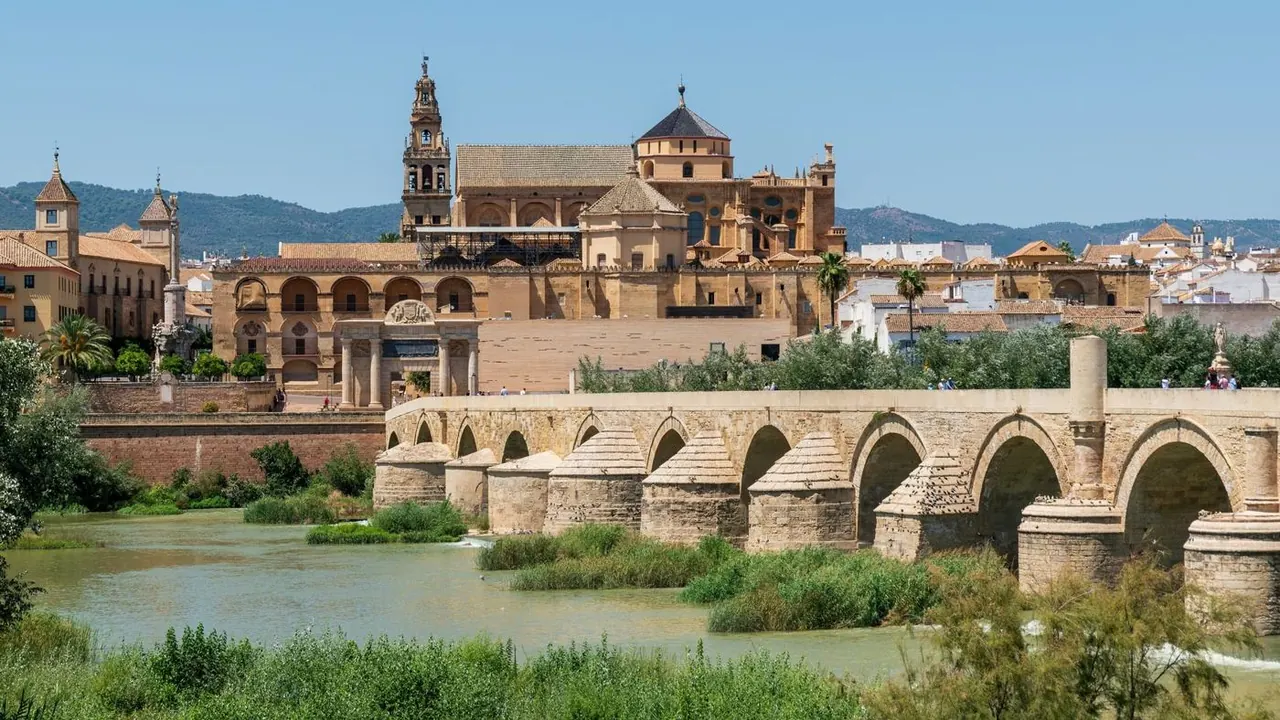
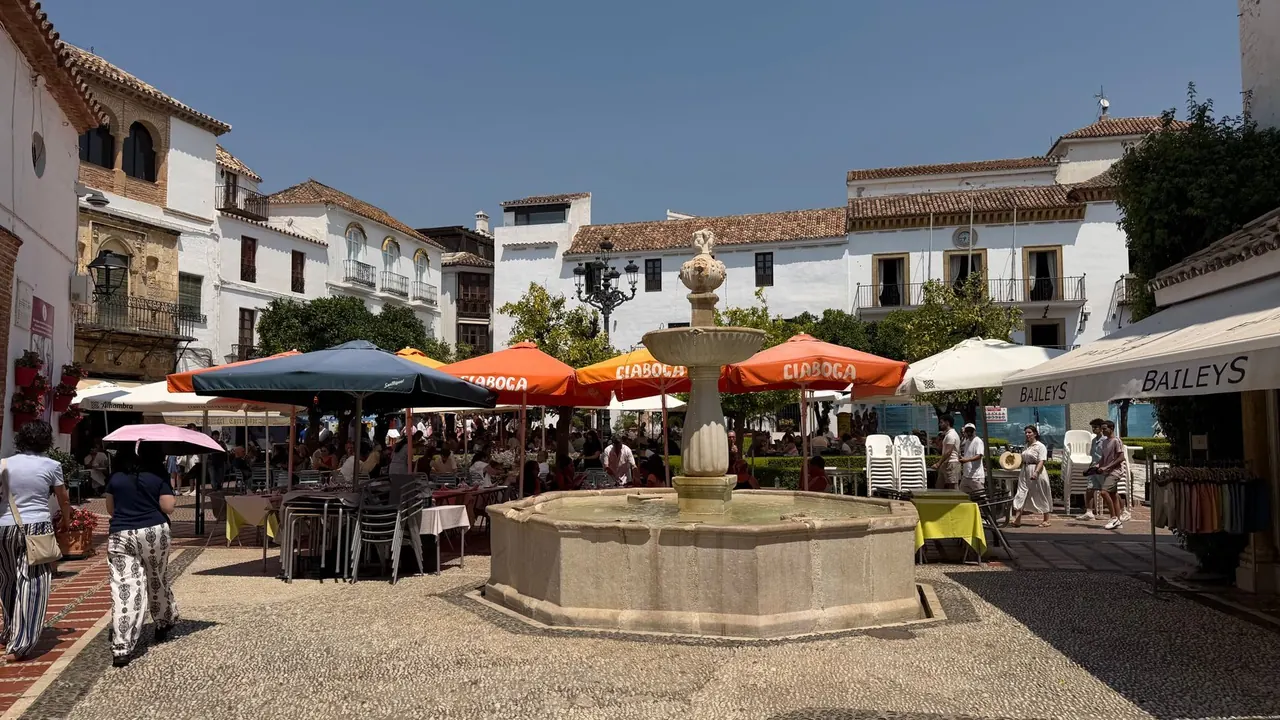
Photos: Cordoba by Jose María Ligero Loarte, CC BY-SA 4.0, cropped; Marbella by Décio Franchini, Pexels License.
Cordoba or Marbella?
Our verdict in twelve categories, each scored against the same fixed benchmark cities, and the climate month by month, so you can choose for your trip.
Choose Cordoba for
- culture and sights
- prices
- getting around
Cordoba is the choice for a trip built around history. The Mezquita-Cathedral, the Juderia and Medina Azahara reward two or three unhurried days. The whole centre is walkable, and fast trains put Seville, Granada and Malaga within easy reach. It is also the cheaper of the two, and its tabernas and flamenco peñas feel rooted in the city rather than staged for visitors.
Choose Marbella for
- beaches
- families
- nature and the outdoors
Travellers who want the sea, the mountains and a polished evening out will be happier in Marbella. Its long run of beaches, Sierra Blanca rising behind the town, the family-friendly promenade and the nightlife of Puerto Banús make it a resort rather than a city of monuments. Expect to pay more, and to find it easier with a car.
Scoreboard
Twelve categories on one fixed scale from 0 to 100. The shaded stretch is the gap between the two.
Your match
Pick a travel style or drag the sliders, and both match scores follow your weighting.
Wins on culture and sights and prices with your weighting.
Wins on beaches and families with your weighting.
What matters to you?
Category by category
What the scores mean for a trip.
Beaches & swimming
Cordoba lies well inland in the Guadalquivir valley. In summer, swimming means a hotel or municipal pool or a reservoir in the Sierra Morena. A day on the Costa del Sol by fast train is possible but long, so beach lovers based there should add a few nights on the coast.
Marbella is built around the sea. About 27km of shore holds more than two dozen beaches, from La Venus and El Fuerte in the centre to the dunes at Cabopino. The sand is fine and greyish, and the water is calm and clear, cooler than further east in the Mediterranean.
Food & drink
The two eat about equally well, but in different ways. Cordoba has the stronger local identity: tabernas with tiled patios, salmorejo and flamenquin, fried aubergine with cane honey and chilled Montilla-Moriles. It is best enjoyed on a tapas round through Santa Marina or San Agustin.
Marbella has what Cordoba lacks at the top end: acclaimed tasting menus on the Golden Mile and around Puerto Banús, and plenty of international cooking. Its everyday seafront restaurants are uneven, so the best meals are sardines on the beach and the tapas bars of the old town.
Culture & sights
Here Cordoba is in another class. The Mezquita-Cathedral, with its striped arches and a Renaissance cathedral set inside, is one of the great monuments of Spain. Around it are the Juderia and its synagogue, the Roman bridge, the Alcazar gardens, the patios of San Basilio and the Palacio de Viana, with Medina Azahara just outside the city.
Marbella's Casco Antiguo around the Plaza de los Naranjos is pretty, and the print museum, the Dalí sculptures and the Roman mosaics at Río Verde add interest. Still, an afternoon covers it, where Cordoba needs two or three full days.
Nightlife
A night out in Cordoba means late tapas and drinks on the terraces around the Corredera, Las Tendillas and the riverside, starting after ten. Clubs are few, and only the May fair keeps the whole city up until dawn.
Marbella gives you far more to plan a night around, at least in summer. There are champagne bars facing the yachts at Puerto Banús, Golden Mile beach clubs that drift into evening parties, and clubs open until morning. The scene is polished and expensive, and from November to March it quietens much as Cordoba does.
Nature & outdoors
Cordoba's outdoors are gentle: the cork and holm oak hills of the Sierra Morena just north, birds of prey in Hornachuelos and the limestone Subbeticas an hour's drive south. The summer heat limits walking to spring and autumn.
Marbella has the more dramatic setting. Sierra Blanca rises straight behind the town, and the hike to La Concha looks across to Gibraltar and the Rif mountains on clear days. The fir forests and ibex of the Sierra de las Nieves, El Torcal and the Caminito del Rey are within reach, and the sea adds paddleboarding, sailing and dolphin-watching.
Day trips
Both make good bases, but Cordoba has the edge thanks to the high-speed railway. Seville is under an hour away, Malaga about an hour and the Alhambra in Granada about an hour and a half, all without a car. Drivers can add Ubeda, Baeza, Carmona and the bodegas of Montilla.
Marbella's own list is strong: Ronda and its gorge, Málaga, Gibraltar and white villages such as Casares and Mijas. Without a train, though, everything depends on the road, and Granada is a long day at about two hours each way.
Good for families
Cordoba's centre is small, safe and largely traffic-free. Children enjoy the Alcazar fountains, the horse show at the royal stables and the castle at Almodovar del Rio. Most sights are aimed at adults, though, and the summer heat is hard on the young.
Marbella is the easier choice with children. Its town beaches are sheltered and lifeguarded, the long flat promenade suits scooters and buggies, and many apartment complexes are built around pools. Animal parks, water parks and an aquarium lie along the coast, best reached by car.
Getting around
Cordoba is the simpler place to be without a car. The Mezquita, the Juderia, the Alcazar, the Roman bridge and the patio quarters are all a short walk apart, and the station is close to the old town. Only Medina Azahara and the countryside need wheels.
Marbella stretches along the motorway from San Pedro to Cabopino. Beyond the compact old town and the promenade you depend on coastal buses, taxis or a hire car, especially if you stay out towards the port or the eastern beaches.
Shopping & style
Cordoba is for well-chosen crafts rather than a shopping spree: silver filigree, embossed cordobán leather, ceramics and guitars from local workshops. Spanish chains cluster around Cruz Conde and Las Tendillas.
Marbella has the bigger shopping scene, and it centres on luxury. At Puerto Banús, international fashion and jewellery boutiques line the harbour beside a large department store, and the old town adds linen, leather and small fashion shops. Local craft is thinner than in Cordoba.
Affordability
Cordoba is clearly the cheaper of the two. Rooms are good value for most of the year, and the compact centre means you seldom pay to get around. The real exception is May, when the patio festival, the crosses and the fair drive prices up steeply.
Marbella is expensive even by Spanish standards, and in July and August hotel and villa rates climb steeply. A sunbed in a prime spot costs more than almost anywhere else on the coast. To keep costs down, come outside summer, when rooms fall sharply, eat in the old town and inland neighbourhoods, where tapas bars charge ordinary Andalusian prices, or stay in a neighbouring town and come in for the day.
Live music & performing arts
Cordoba has the deeper live culture, and it is rooted in flamenco. There are small tablaos in the old town, peñas where aficionados gather, a respected guitar festival and the free all-night Noche Blanca del Flamenco. The Gran Teatro adds the city orchestra and touring theatre.
Marbella's stage life is mostly a summer affair, with big pop and rock acts in a quarry amphitheatre and concerts at beach clubs and hotels. Its flamenco is staged for visitors, and anyone after the real thing or classical music heads to Málaga.
Wellness & relaxation
In Cordoba, rest comes from the slow pace. There are a few Arab-style bath houses under horseshoe arches and some hotel spas, but mostly it means long pauses in courtyards with fountains and orange trees.
Marbella has far more dedicated wellness: spa resorts, retreats and detox clinics along the Golden Mile and in the hills, plus yoga, golf and long promenade walks. It is most restful from October to May, once the summer crowds and the party scene have gone.
When should you go?
Pick your month. The climate figures are measured averages, not a forecast.
Cordoba in July
Marbella in July
Daytime high, °C
Rainfall in the month, mm
Where the figures come from
Marbella's temperatures are measured 40 km from the centre, at Malaga / Aeropuerto.
Marbella has no rain gauge within 25 km of the centre, so its rainfall comes from a gridded climate dataset read at the city rather than from a gauge further away.
Temperature and rainfall are climate normals, averaged over the years shown. Cordoba: 1991-2020 normals, Cordoba / Aeropuerto (7.6 km from centre). Marbella: 1991-2020 normals, Malaga / Aeropuerto (39.7 km from centre).
Cordoba is at its best in May, when the days are warm, the rain is easing and the sun shines for long hours. April is fine for walking but still about as showery as midwinter. October is comfortable again once the heat has broken, but at 79mm it is one of the wetter months, and it opens a rainy spell that lasts until December. From June to early September the city bakes. July and August reach 37°C under almost unbroken sun with barely any rain, so sightseeing shrinks to the early morning and late evening.
Marbella is milder at both ends of the year. Summer highs stay in the low thirties, and the sea is warmest at about 22°C in August, so beach days run from June into early October. Winters are a few degrees warmer than Cordoba's and still sunny, which suits walks on the promenade and in the hills. They are also wetter, and the rain peaks at 115mm in December. May is a good month for walking, though the sea is still cool. September is the easiest month to combine the two, with the water still warm and the worst of the heat gone.
Which traveller are you?
For a beach and sun trip, Marbella is the clear pick. More than two dozen beaches line its shore, with chiringuitos grilling sardines and a swimming season from June into October. Inland Cordoba has only pools, reservoirs and a long day out to the coast.
On a culture and arts trip, Cordoba wins comfortably. The Mezquita-Cathedral, the Juderia, the Alcazar gardens and Medina Azahara make up one of Andalusia's great sets of monuments, with flamenco peñas in the evening. Marbella's old town fills an afternoon.
On a trip with a tight budget, Cordoba makes your money go further. Tapas with a glass of Montilla cost little, hotels are good value most of the year and you walk everywhere. In Marbella, the beach clubs, the dinners at Puerto Banús and summer rooms add up fast.
Before you go
| Measure | Cordoba | Marbella |
|---|---|---|
| Official language | Spanish | Spanish |
| Currency | Euro (EUR) | Euro (EUR) |
| Sockets | CF230 V, 50 Hz | CF230 V, 50 Hz |
| Driving side | Right | Right |
| Time zone | UTC+1, UTC+2 in summer | UTC+1, UTC+2 in summer |
| Emergency number | 112 | 112 |
| Elevation | 120 m | 22 m |
| Main airport | Córdoba Airport (ODB)8 km from centre3 non-stop destinations | Málaga-Costa del Sol Airport (AGP)39 km from centre166 non-stop destinations |
| Public holidays this year | 12 days | 12 days |
By the numbers
| Measure | Cordoba | Marbella |
|---|---|---|
| City population | 323,262 | 159,786 |
| People per km² | 258 | 1,398 |
| Museums within 10 km | 16 | 6 |
| UNESCO World Heritage sites within 50 km | 2 | 0 |
| Swim season, months above 21 °C | - | 3 months |
Where else could you go?
Every comparison below shares a destination with this one, so you can follow Cordoba or Marbella somewhere new.