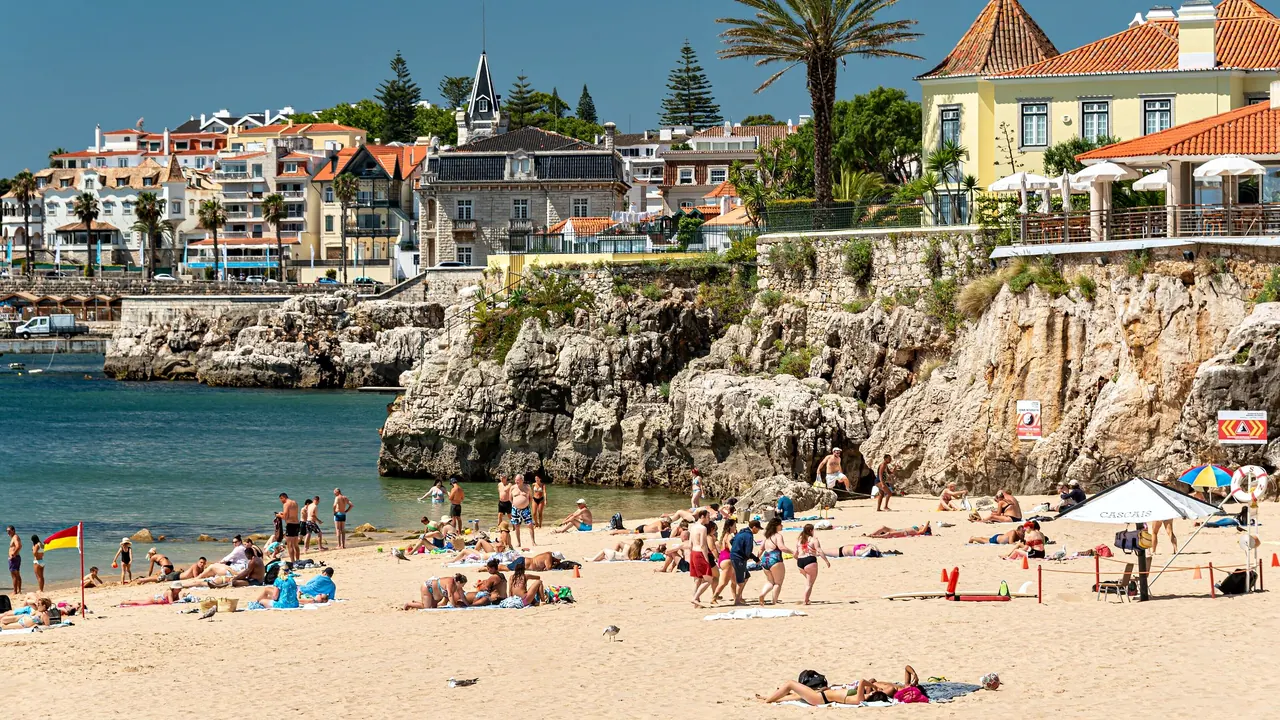
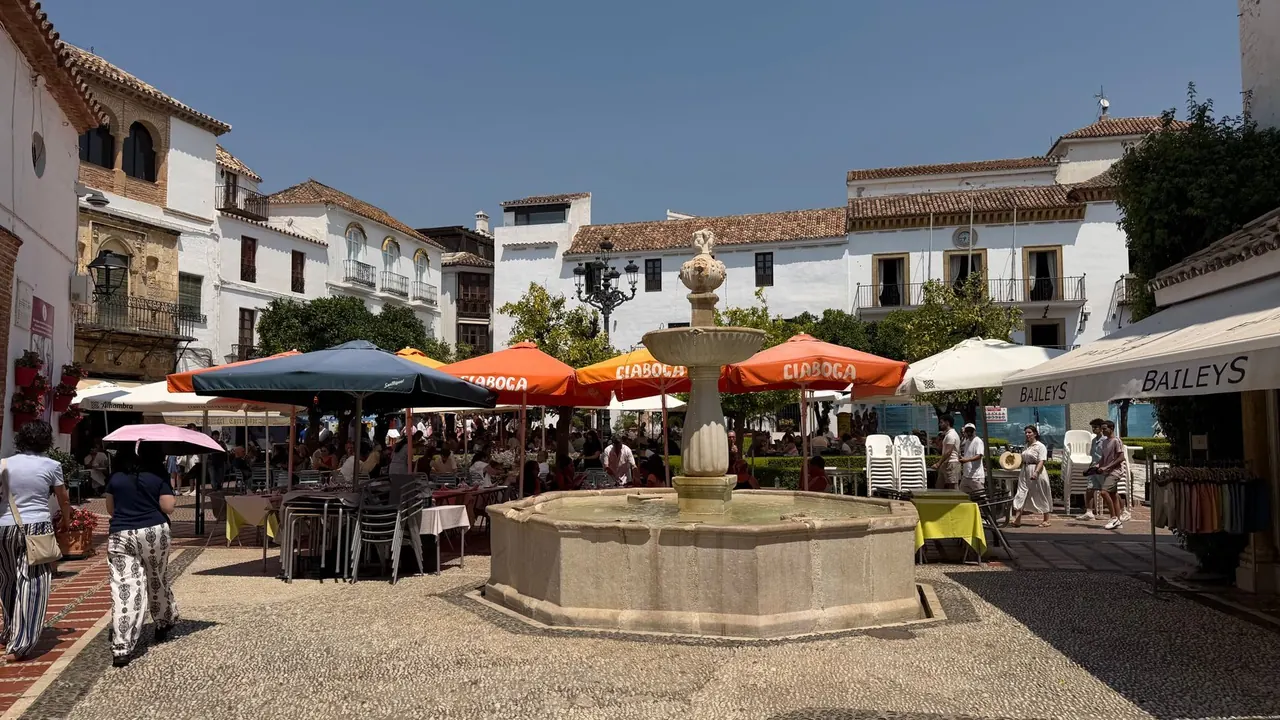
Photos: Cascais by Jorge Franganillo, CC BY 2.0, cropped; Marbella by Décio Franchini, Pexels License.
Cascais or Marbella?
Our verdict in twelve categories, each scored against the same fixed benchmark cities, and the climate month by month, so you can choose for your trip.
Choose Cascais for
- getting around
- nature and the outdoors
- prices
Cascais suits travellers who want a quiet, walkable base by the sea with plenty to see nearby. The coves, harbour and promenade are all reachable on foot, the train runs along the shore to Lisbon, and the wild coast at Guincho and the forested Serra de Sintra are close behind the town. It is the better pick for walkers, surfers and anyone planning to spend half their days in Lisbon and Sintra, and it is a little gentler on the budget.
Choose Marbella for
- nightlife
- shopping
- beaches
Marbella is the stronger choice when the beach and the evenings are the point of the trip. The water is warmer and the season longer, the sand stretches for kilometres, and in summer the nights run late from the old town terraces to the clubs of Puerto Banús. Families will find more to do along the coast, and shoppers get a proper luxury strip. In exchange the town is spread out and most outings need a car.
Scoreboard
Twelve categories on one fixed scale from 0 to 100. The shaded stretch is the gap between the two.
Your match
Pick a travel style or drag the sliders, and both match scores follow your weighting.
Wins on getting around and nature and the outdoors with your weighting.
Wins on nightlife and shopping with your weighting.
What matters to you?
Category by category
What the scores mean for a trip.
Beaches & swimming
What separates the two is the water. In Cascais the beaches are close at hand: the coves of Conceição, Duquesa and Rainha lie just below the old town, the promenade leads on to Estoril, and surfers take the train a few stops to Carcavelos. But the Atlantic stays bracing even in August, so a swim is a quick, cold plunge. At windswept Guincho the currents keep most people on the sand.
Marbella is better for long days by the sea. The water is a few degrees warmer and stays pleasant for swimming well into autumn, and the shore runs for kilometres, from La Venus and El Fuerte in town past Puerto Banús to the quieter dunes at Cabopino. The sand is grey rather than white, but there is always a sunbed or a beach grill with sardines on skewers nearby.
Food & drink
Marbella offers the wider range. You can have tapas and fried fish in the old town, ajoblanco in summer and genuine fine dining along the Golden Mile. Its weak spot is the middle ground around the port, so it pays to walk a few streets inland.
Cascais is narrower and more devoted to the sea. You get grilled bream, clams and the harbour's daily catch, the Mercado da Vila in the morning and long seafood lunches on the road to Guincho. Anyone who wants ambitious cooking takes the train to Lisbon.
Culture & sights
Neither town is a heavyweight for sights, and both fill an easy day, but they differ in kind. Cascais has the elegance of a former royal summer retreat, with aristocratic villas, the Citadel and the Paula Rego museum in its red towers. Marbella's heritage is older and Andalusian: whitewashed lanes around the Plaza de los Naranjos, Moorish wall fragments, a Roman villa with mosaics and Dalí bronzes along the Avenida del Mar.
Nightlife
Marbella is the place for a real night out in summer. It keeps Spanish hours, with beach clubs whose DJs carry on into the evening and polished, moneyed clubs at Puerto Banús that stay open until dawn. The scene shrinks sharply from November.
Cascais is far quieter. It has pubs, wine bars and cocktail terraces in a few old-town streets, plus the casino at Estoril for a dressier evening. For anything later you need Lisbon and a plan for the last train home.
Nature & outdoors
Cascais has the edge for wild scenery close at hand. You can cycle from town past Boca do Inferno to the dunes and wind-blown surf of Guincho, walk the cliffs at Cabo da Roca and follow misty trails through the Serra de Sintra. Kitesurfers and windsurfers come for the steady summer wind.
Marbella's outdoors is more about mountains. You can climb La Concha above town and drive to the fir forests of the Sierra de las Nieves or the Caminito del Rey. Its mild winters make it a good walking base in the cooler months, though the coast itself is heavily built up.
Day trips
Cascais is the stronger base, mainly because Lisbon and Belém are a train ride along the shore and Sintra's palaces are just over the ridge. Mafra, Ericeira and Óbidos fill further days, and you can reach Évora on a long one.
Marbella's list is also tempting, with Ronda's gorge, Málaga's Alcazaba and Picasso Museum, Gibraltar and white villages like Casares. Without a train, though, nearly all of it means hiring a car.
Good for families
Marbella gives families more to fill the days. It has lifeguarded town beaches, warmer water, resorts built around pools and a culture that welcomes children at dinner. Animal parks, water parks and an aquarium lie along the coast, though you need a car to reach them.
Cascais is calmer and smaller, with shallow coves, a flat promenade and the peacocks of the Marechal Carmona park. The cold sea and the lack of attractions in town make it better for toddlers than for older children who want to be kept busy.
Getting around
Cascais is much easier without a car. The harbour, coves, old centre and promenade are all within walking distance, and the coastal train takes you straight into Lisbon. A car only becomes useful for the hills and the far coast.
Marbella stretches from San Pedro to Cabopino along a motorway. Only the old town and central seafront work on foot, there is no train, and most visitors end up hiring a car or relying on taxis.
Shopping & style
Marbella is the place for shoppers who want big labels. Puerto Banús lines international fashion and jewellery boutiques up opposite the yachts, with a department store beside the port. Away from the luxury brands there is little to browse.
Cascais offers a pleasant wander instead, with surf brands, azulejo tiles, cork goods and tinned fish in decorative tins. For serious fashion you go to Lisbon.
Affordability
Both are upmarket resorts that are dear for their countries, but Cascais is somewhat easier on the wallet. Its back-street set lunches and cheap train into Lisbon help keep costs down. In Marbella, beach clubs, prime sunbeds and dinners around Puerto Banús add up quickly, and summer room rates climb steeply. In both towns, going outside July and August makes the biggest difference.
Live music & performing arts
Neither town is a destination for the stage, and both send serious audiences to the nearest city: Lisbon for fado and opera, Málaga for classical music and real flamenco. The difference is in the summer offer. Cascais has its long jazz tradition and the Teatro Experimental's plays in Estoril. Marbella has big pop and rock acts in its quarry amphitheatre and flamenco shows aimed at visitors.
Wellness & relaxation
Both towns are best for an unhurried stay out of season, but they reach it differently. Cascais relies on its quiet pace and Estoril's old spa and thalassotherapy tradition. Marbella has more dedicated retreats, detox clinics and Arab-style bathhouses in the hills and along the Golden Mile, along with mild, sunny winters for golf and long lunches.
When should you go?
Pick your month. The climate figures are measured averages, not a forecast.
Cascais in July
Marbella in July
Daytime high, °C
Rainfall in the month, mm
Where the figures come from
Marbella's temperatures are measured 40 km from the centre, at Malaga / Aeropuerto.
Marbella has no rain gauge within 25 km of the centre, so its rainfall comes from a gridded climate dataset read at the city rather than from a gauge further away.
Temperature and rainfall are climate normals, averaged over the years shown. Cascais: 1991-2020 normals, Lisboa / Geof (23.6 km from centre). Marbella: 1991-2020 normals, Malaga / Aeropuerto (39.7 km from centre).
Both towns have a dry, sunny summer and a wet late autumn and winter, but Marbella runs warmer at every stage. For swimming, Marbella's season runs from June to early October, with the sea reaching about 22°C in August. In Cascais the Atlantic stays near 18°C even in high summer, so a swim is bracing and July to September is really the only time for it. Peak heat is also different: Cascais tops out around 28°C, comfortable for walking all day, while Marbella's August afternoons climb past 30°C and are better spent near the water.
The wet months fall slightly differently. Cascais turns rainy from October to January, with November the wettest month, while Marbella's heaviest rain comes in December. Winter days stay a couple of degrees milder and a little sunnier on the Costa del Sol, which makes Marbella the better winter walking base. Spring and early autumn are the pleasant time for sightseeing in both, and Cascais in May or late September has mild, bright days with little rain.
Which traveller are you?
On a beach and sun trip, Marbella is the clear choice. It has a long shoreline of fine sand, calm water a few degrees warmer than the Atlantic at Cascais, and a swimming season that lasts well into autumn, so you get full days on the beach rather than a quick dip.
For a food and nightlife trip, Marbella also wins. It has Andalusian tapas in the Casco Antiguo, serious tasting-menu kitchens on the Golden Mile and a summer scene that runs until dawn around Puerto Banús. Cascais is mostly in bed by midnight, and its best dinners are in Lisbon.
For a short city break, Cascais works far better. You can walk from the station to the harbour and coves, and the coastal train puts you in Lisbon quickly. Marbella is spread along a motorway, and without a car you spend much of a short stay in taxis or on buses.
Before you go
| Measure | Cascais | Marbella |
|---|---|---|
| Official language | Portuguese | Spanish |
| Currency | Euro (EUR) | Euro (EUR) |
| Sockets | CF230 V, 50 Hz | CF230 V, 50 Hz |
| Driving side | Right | Right |
| Time zone | UTC, UTC+1 in summer | UTC+1, UTC+2 in summer |
| Emergency number | 112 | 112 |
| Elevation | 0 m | 22 m |
| Main airport | Lisbon Humberto Delgado Airport (LIS)26 km from centre157 non-stop destinations | Málaga-Costa del Sol Airport (AGP)39 km from centre165 non-stop destinations |
| Public holidays this year | 14 days | 12 days |
By the numbers
| Measure | Cascais | Marbella |
|---|---|---|
| City population | 214,124 | 159,786 |
| People per km² | 2,198 | 1,398 |
| Museums within 10 km | 6 | 6 |
| UNESCO World Heritage sites within 50 km | 3 | 0 |
| Swim season, months above 21 °C | None | 3 months |
Where else could you go?
Every comparison below shares a destination with this one, so you can follow Cascais or Marbella somewhere new.
- Sintravs Cascais
- Lisbonvs Cascais
- Rondavs Marbella
- Malagavs Marbella
- Jerez de la Fronteravs Marbella
- Cadizvs Marbella