Photos: Cascais by Jorge Franganillo, CC BY 2.0, cropped; Sintra by Chabe01, CC BY-SA 4.0, cropped.
Cascais or Sintra?
Our verdict in twelve categories, each scored against the same fixed benchmark cities, and the climate month by month, so you can choose for your trip.
Choose Cascais for
- nightlife
- families
- beaches
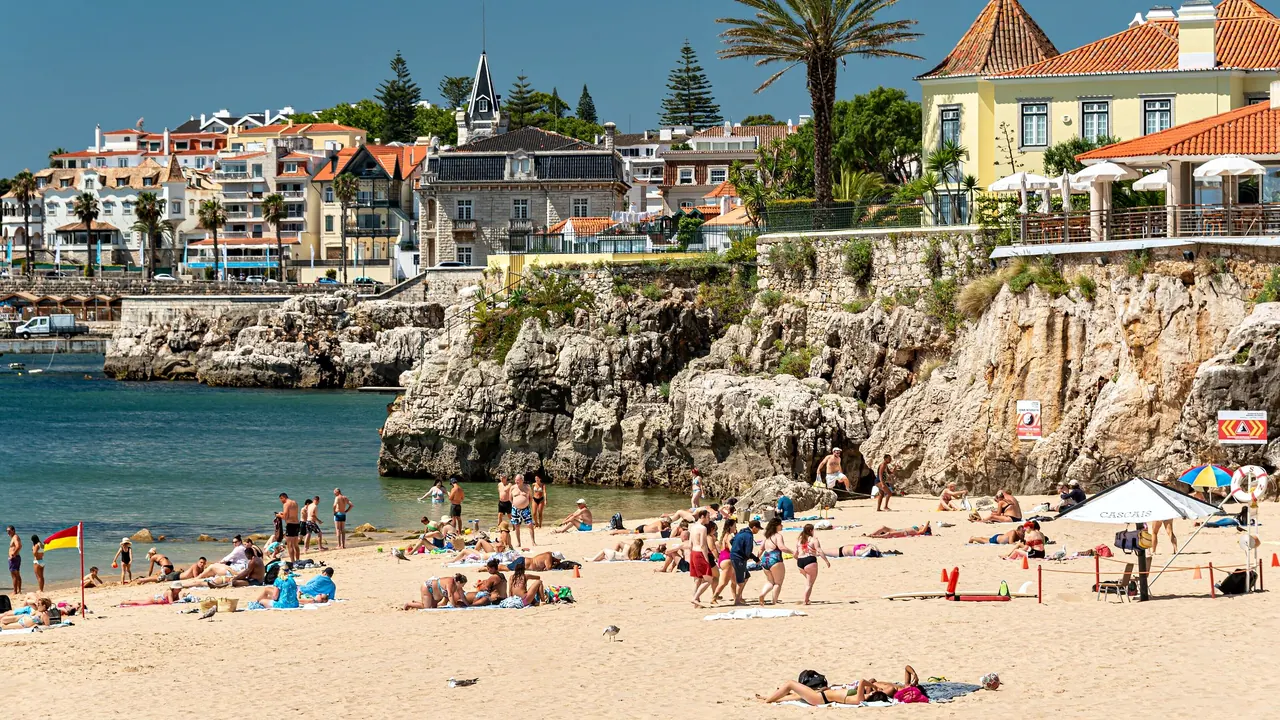
Cascais suits a relaxed seaside stay where the beach is a few minutes from your room. It has sheltered coves below the old town, a flat promenade to Estoril, a fishing harbour that supplies the restaurants and a fast train into Lisbon for dinner or a night out. It is the easier choice with small children and the better base for anyone who wants sand, sea and evening terraces as well as the wild coast to the west.
Choose Sintra for
- culture and sights
- prices
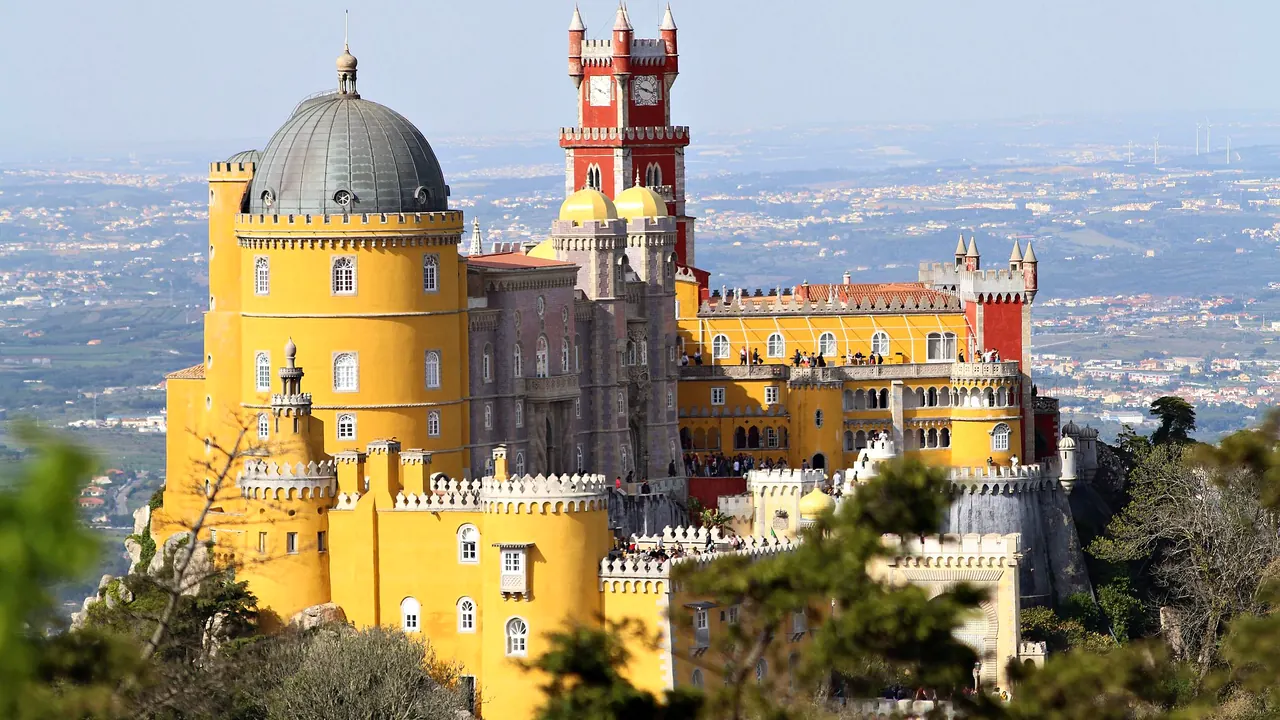
Travellers who come for the sights will do better in Sintra. Its palaces, castle ramparts and strange, beautiful gardens are scattered through a forested ridge a short walk or bus ride from your bed, while Cascais can only visit them for the day. Evenings are very quiet and the beaches are a ride away. But staying overnight lets you reach Pena and Regaleira before the crowds, and rooms in the outlying villages cost less than a seafront hotel down the hill.
Scoreboard
Twelve categories on one fixed scale from 0 to 100. The shaded stretch is the gap between the two.
Your match
Pick a travel style or drag the sliders, and both match scores follow your weighting.
Wins on nightlife and families with your weighting.
Wins on culture and sights and prices with your weighting.
What matters to you?
Category by category
What the scores mean for a trip.
Beaches & swimming
Cascais lives on its beaches. The coves of Conceição, Duquesa and Rainha are a short walk from the centre, the promenade carries on to the longer sands at Estoril, and the south-facing bay is usually calm enough for an easy swim. Surfers have Carcavelos up the train line and the wind-blown sweep of Guincho to the west.
Sintra's beaches face the open ocean on the far side of the hills. Praia Grande, Praia das Maçãs and Adraga are handsome stretches of sand under dark cliffs, and Azenhas do Mar has its tidal pool. Heavy surf and sea fog make them an afternoon out rather than a daily routine. The water is equally cold off both towns.
Food & drink
Cascais eats better, mainly because of its harbour. The daily catch goes to the grills around the port, the Mercado da Vila is worth a morning, and the seafood restaurants on the road to Guincho serve long lunches with a view over the waves.
Sintra's strength is sweeter and narrower: warm travesseiros and queijadas from the old pastry houses. The restaurants in its centre mostly serve day-trippers, so the better meals are the grilled fish in Azenhas do Mar and Praia das Maçãs. In both towns the most ambitious cooking means a train to Lisbon.
Culture & sights
This is where Sintra pulls far ahead. Its UNESCO-listed hills hold Pena Palace, the Moorish Castle, the National Palace with its giant kitchen chimneys, Quinta da Regaleira's Initiation Well and the gardens of Monserrate, all within a few square kilometres and enough for two full days.
Cascais has the charm of a former royal summer resort. Its aristocratic villas, the Citadel and the Paula Rego museum in its red pyramid towers can all be seen on a single day's stroll. Many visitors staying in Cascais spend a day in Sintra for the grand sights.
Nightlife
Neither town is built for late nights, but Cascais at least has an evening. In summer the lanes of its old centre fill with wine bars, pubs and cocktail terraces, and the casino at Estoril offers a dressier night.
Sintra goes quiet once the day-trippers leave, with a few bars and café terraces and nothing open late. From either town, a proper night out means Lisbon and keeping an eye on the last train back.
Nature & outdoors
Both towns border the same natural park, so the outdoors is equally rich. The difference is which side of it you start from. Cascais faces the sea: a cycle path runs past Boca do Inferno and the dunes to Guincho, where steady wind and waves draw kitesurfers, windsurfers and surfers.
Sintra sits in the forest itself, with trails leading straight from town to Pena Park, Cruz Alta and Peninha. The paths run through mossy, shaded woods that stay pleasant for walking in summer. The cliff paths at Cabo da Roca are easy to reach from both.
Day trips
Both towns make excellent bases, and their reach overlaps almost completely. Lisbon is about 40 minutes by train from each, and Ericeira and Óbidos are easy drives. What differs is the near neighbour. From Cascais the coastal line passes the monuments of Belém on the way into the capital, and Sintra's palaces make the obvious day out over the ridge.
From Sintra the short outing runs the other way, down to the beaches and resort life of Cascais and Estoril. Sintra is closer to Mafra and the monasteries to the north. Cascais is the handier start for Sesimbra and the Setúbal side of the Tagus.
Good for families
Cascais is the easier town with young children. The coves in the bay are shallow and calm, the flat promenade to Estoril suits pushchairs and scooters, and the Marechal Carmona park has peacocks and a playground.
Sintra appeals more to school-age children, with castle walls to climb and Regaleira's tunnels and spiral well to explore. Its steep cobbled paths, crowded hill buses and rough surf make it hard work with toddlers. Neither town has a zoo or aquarium, so for those it is a trip into Lisbon.
Getting around
Cascais is the simpler place to be without a car. The centre, harbour and beaches are all a short, flat walk apart, and the coastal train runs straight along the shore to Lisbon.
Sintra's historic centre is compact and the station is close by. The palaces, though, sit high above town, reached by a stiff climb or a tourist bus that fills up at busy times. Its narrow one-way roads and scarce parking make driving a trial. For the wider region a car helps in either town, though in Sintra it is best left outside the centre.
Shopping & style
Neither town is a shopping destination, but Cascais has a little more range. Beachwear, surf brands and small boutiques sit alongside the tiles, cork goods and decorated tins of fish, and there is a large shopping centre on the edge of town.
Sintra's old streets lean towards souvenirs, ceramics, linen and boxed pastries. Its more interesting finds come from a few antique dealers and the long-established Sunday fair at São Pedro de Penaferrim. For fashion, both send you to Lisbon.
Affordability
Sintra is the cheaper stay. Rooms in the outlying villages and near its coast cost noticeably less, and tascas, coffee and pastries are inexpensive, although a round of palace tickets soon adds up.
Cascais is an upmarket resort, with seafront hotels and harbour restaurants priced high for Portugal, especially in July and August. Eating in the back streets and coming outside high summer narrow the gap between the two.
Live music & performing arts
Both towns are thin on live performance, but Cascais offers a little more through the year. The long-running Teatro Experimental de Cascais stages plays in Estoril, the casino puts on shows, and summer brings outdoor concerts with a long jazz tradition.
Sintra's high point is its summer festival of classical music and dance, held in palaces and quintas. Outside it, the Olga Cadaval cultural centre carries the year. For opera, orchestras or fado, both towns depend on Lisbon.
Wellness & relaxation
Cascais has the edge for a restful stay. The spa tradition that grew up around Estoril's thermal springs carries on in thalassotherapy and hotel spas, yoga by the sea is easy to find in summer, and slow walks along the seafront do the rest.
Sintra's calm is of a different kind. You find it by staying in a quinta among old gardens and misty forest after the day-trippers have gone. During the day its centre and the road to the palaces are crowded and noisy, so the peace belongs to early mornings and evenings.
When should you go?
Pick your month. The climate figures are measured averages, not a forecast.
Cascais in July
Sintra in July
Daytime high, °C
Rainfall in the month, mm
Temperature and rainfall are climate normals, averaged over the years shown. Cascais: 1991-2020 normals, Lisboa / Geof (23.6 km from centre). Sintra: 1991-2020 (rainfall 1961-1990) normals, Lisboa / Geof (22.7 km from centre).
The two towns share the same pattern of warmth and sunshine, so what differs is mainly the rain. From June to September daytime highs are in the mid to upper twenties, reaching 28°C in July and August, with almost no rain. This is the only real beach season. The Atlantic stays cool all year and only reaches 19°C at its warmest in late summer, so a swim is bracing even then. Spring and autumn, with highs around 20°C, are the most comfortable time for climbing the palace hills or walking the coastal paths.
The rain arrives in October and lasts through winter, but it falls differently in the two towns. Cascais is wetter in late autumn, with over 120mm in November. Sintra is wetter at the start of the year, with February above 120mm. Winter is mild enough for walking in either town but often grey and damp, and the Sintra hills are frequently wrapped in cloud.
Which traveller are you?
On a beach and sun trip, stay in Cascais, where the calm coves below the old town let a swim fit between breakfast and lunch every day. From Sintra, each beach day becomes a ride over the hills to heavy surf.
For a culture and arts trip, Cascais offers its villas, the Citadel and the Paula Rego museum, but Sintra is the better place to sleep. Spread its palaces over two unhurried days: Pena and the Moorish Castle first, then Regaleira and Monserrate.
On a tight budget, Sintra makes your money go further, because Cascais charges resort rates for its rooms. Arrive on the suburban train and stay in an outlying village. Walk the free forest trails towards Peninha, and choose two or three palaces rather than all of them.
Before you go
| Measure | Cascais | Sintra |
|---|---|---|
| Official language | Portuguese | Portuguese |
| Currency | Euro (EUR) | Euro (EUR) |
| Sockets | CF230 V, 50 Hz | CF230 V, 50 Hz |
| Driving side | Right | Right |
| Time zone | UTC, UTC+1 in summer | UTC, UTC+1 in summer |
| Emergency number | 112 | 112 |
| Elevation | 0 m | 193 m |
| Main airport | Lisbon Humberto Delgado Airport (LIS)26 km from centre157 non-stop destinations | Lisbon Humberto Delgado Airport (LIS)22 km from centre157 non-stop destinations |
| Public holidays this year | 14 days | 14 days |
By the numbers
| Measure | Cascais | Sintra |
|---|---|---|
| City population | 214,124 | 385,606 |
| People per km² | 2,198 | 1,208 |
| Museums within 10 km | 6 | 12 |
| UNESCO World Heritage sites within 50 km | 3 | 3 |
| Swim season, months above 21 °C | None | None |
Where else could you go?
Every comparison below shares a destination with this one, so you can follow Cascais or Sintra somewhere new.
- Lisbonvs Sintra
- Lisbonvs Cascais
- Coimbravs Sintra
- Coimbravs Cascais
- Lagos, Portugalvs Cascais
- Lagos, Portugalvs Sintra