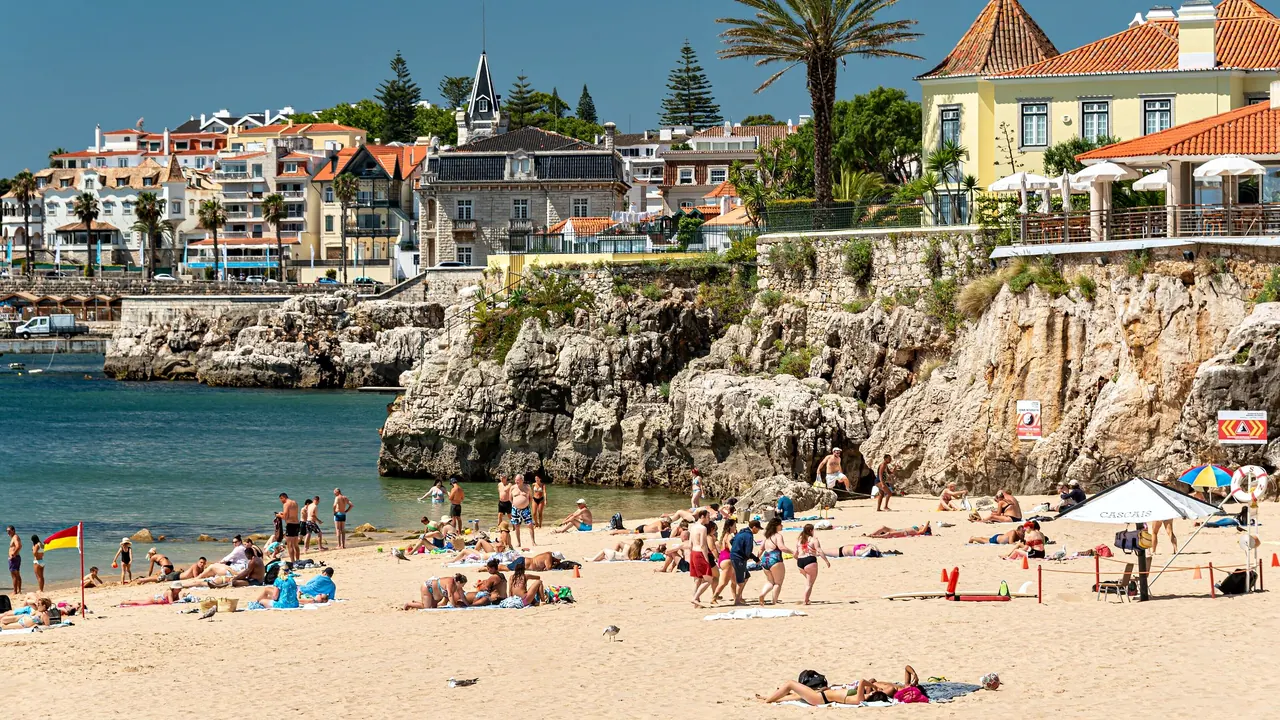
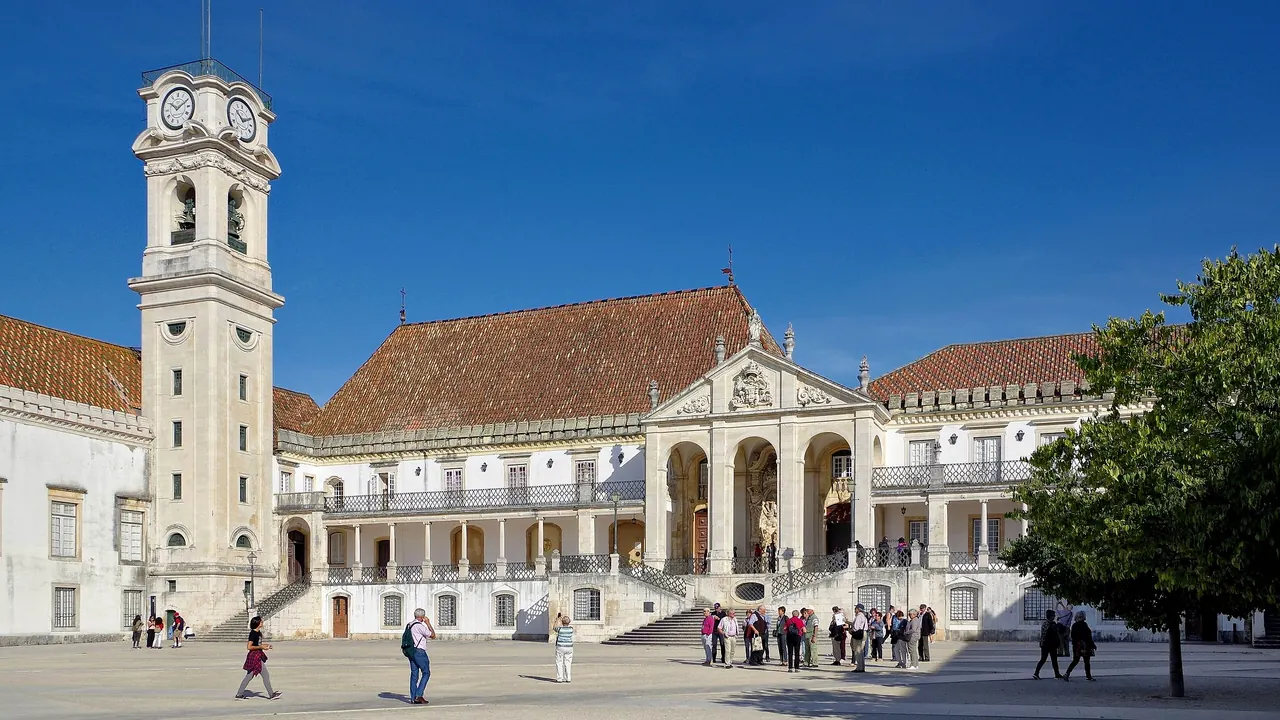
Photos: Cascais by Jorge Franganillo, CC BY 2.0, cropped; Coimbra by Berthold Werner, CC BY-SA 3.0, cropped.
Cascais or Coimbra?
Our verdict in twelve categories, each scored against the same fixed benchmark cities, and the climate month by month, so you can choose for your trip.
Choose Cascais for
- beaches
- nature and the outdoors
- families
Choose Cascais if you want the sea to be part of every day. Sandy coves sit just below the old centre, the wild coast at Guincho and Cabo da Roca is a bike ride away, and the Sintra hills rise behind the town. It is also the easier of the two with small children: flat, calm and compact. The trade-off is cost, and for big museums or a late night you take the train into Lisbon.
Choose Coimbra for
- culture and sights
- prices
- live music and the arts
Coimbra suits travellers who come for history and atmosphere more than for a swim. The old university and its baroque library, the Romanesque cathedral and the royal tombs at Santa Cruz give it far more to see than Cascais. Students keep the bars busy and the fado alive, and a stay costs noticeably less. Its place on the Lisbon to Porto line also makes it a natural stop on a longer route through Portugal.
Scoreboard
Twelve categories on one fixed scale from 0 to 100. The shaded stretch is the gap between the two.
Your match
Pick a travel style or drag the sliders, and both match scores follow your weighting.
Too close to call, 2 points apart
Wins on beaches and nature and the outdoors with your weighting.
Wins on culture and sights and prices with your weighting.
What matters to you?
Category by category
What the scores mean for a trip.
Beaches & swimming
Cascais has the beaches on its doorstep. The calm, south-facing coves of Conceição, Duquesa and Rainha are a few minutes' walk from the old centre, a promenade leads on to Estoril, and surfers have Carcavelos up the line. Guincho is more for watching the waves than for swimming.
From Coimbra the sea is a day out, about an hour to the wide, often windy sand at Figueira da Foz. Its gentler alternative is the river beaches in the hills to the east, where the water feels warmer. The Atlantic is equally cool at both, so neither suits long days in warm water.
Food & drink
Neither city is a food destination in its own right, but they eat very differently. Cascais looks to the sea, with grilled sardines and bream from the fishing harbour and long seafood lunches on the Guincho road. Coimbra looks inland, to roast suckling pig from Mealhada with Bairrada sparkling wine, goat chanfana and convent pastries.
Coimbra's family tascas around the Baixa and the university feel more local than the tourist menus in Cascais's old centre. In both, serious modern cooking is thin on the ground.
Culture & sights
Coimbra is the far richer stop for sightseeing. The hilltop university, set in a former royal palace, holds the gilded Biblioteca Joanina and the Sala dos Capelos. On the way down are the Sé Velha and the Machado de Castro museum above its Roman cryptoportico, and the tombs of Portugal's first kings lie in Santa Cruz. Across the river is the half-excavated convent of Santa Clara-a-Velha.
Cascais offers pleasant seaside heritage rather than landmarks: aristocratic summer villas, the Citadel, and the Paula Rego museum in its red towers. It makes an easy day's walking, and most visitors go on to Lisbon or Sintra for the major monuments.
Nightlife
Coimbra has the livelier nights, at least in term time. Students fill the bars around Praça da República and the upper town until late, a few small clubs carry on, and the Queima das Fitas in May takes over the city for a week. In midsummer it goes much quieter.
Cascais is quieter still. It has wine bars, pubs and cocktail terraces in a few old-town streets, plus the casino at Estoril for a dressier evening. It is busiest in July and August and mostly asleep by midnight, and a proper night out means Lisbon and a plan for getting back.
Nature & outdoors
Cascais has the more dramatic outdoors close to hand. A coastal cycle path runs past Boca do Inferno and the dunes to Guincho, where wind and waves bring kitesurfers and surfers. The cliffs at Cabo da Roca and the misty forest trails of the Serra de Sintra lie just beyond.
Coimbra's landscape is greener and gentler, and most of it lies out of town. There is kayaking on the Mondego from Penacova, the old trees of Buçaco half an hour north, and slate villages in the Serra da Lousã. For real mountains, the Serra da Estrela is two hours away. In town you have the botanical garden and the Choupal woods.
Day trips
Both make excellent bases. The difference is which part of Portugal you can reach. Cascais is built around Lisbon, about 40 minutes by the coastal train past Belém, and Sintra's palaces just over the ridge. Mafra, Ericeira and Setúbal's wine country are further options.
Coimbra sits in the middle of the country. Porto and the canals of Aveiro are each about an hour or less by train, and the mosaics of Conímbriga are just south. The monasteries of Batalha, Alcobaça and Tomar are an easier run from Coimbra than from the coast.
Good for families
Cascais is the easier choice with young children. The coves are shallow and sheltered, the flat promenade to Estoril suits pushchairs and scooters, and the Marechal Carmona park has peacocks and a playground. What it lacks are attractions built for children, and the sea is cold for small swimmers.
Coimbra actually has more made for children: the miniature villages of Portugal dos Pequenitos and the hands-on Exploratório. But the steep, cobbled climb to the old town is hard going with a buggy, and the university sights appeal more to older children.
Getting around
Cascais is the more comfortable place to get about. Town, harbour and beaches lie on level ground along the seafront, and the shoreline train runs straight to Lisbon. A car only helps for the slower routes to the wilder coast and the Sintra hills.
Coimbra is just as compact but built on a hill. The walk from the Baixa up the Quebra-Costas stairways to the university is steep, though a public lift and a funicular help. Buses cross the river, and its station on the main line makes arriving and leaving by rail simple.
Shopping & style
Neither is worth the trip for shopping. Each has a few pedestrian streets and a market, but what you bring home differs. In Cascais that means surf brands, beachwear, azulejo tiles, cork and tinned fish in decorative tins. In Coimbra it means hand-painted faience, convent sweets, Bairrada wine and student souvenirs. For bigger shopping, Cascais sends you to Lisbon, while in Coimbra people head to the malls on the edge of town.
Affordability
Coimbra is clearly the cheaper stay. Because so many of its customers are students, set lunches, coffee and pastries and a round of drinks all cost little. Rooms near the old town are fairly priced except around May's festivities and graduation.
Cascais is one of Portugal's dearer resorts, especially for seafront rooms in July and August. Back-street cafés and the cheap train to Lisbon help, and coming outside high summer makes the biggest difference.
Live music & performing arts
Coimbra has a performance you will not find elsewhere: its own fado, sung by men in black academic capes to the Coimbra guitar. It is heard in small old-town houses most evenings and in serenades on the Sé Velha steps. The Teatro Académico de Gil Vicente and the arts centre in the former São Francisco convent add theatre, film, music and dance.
Cascais offers less. The long-running Teatro Experimental de Cascais performs in Portuguese, the Estoril casino stages cabaret, and summer brings outdoor concerts and jazz. For fado or opera you go to Lisbon.
Wellness & relaxation
Both offer an easy-paced break rather than a true spa vacation, and they unwind in different ways. Cascais is a seaside rest: walks along the promenade, yoga by the water in summer, and Estoril's thalassotherapy and hotel spas. Summer weekends bring crowds from Lisbon.
Coimbra's spa country lies outside the city, at Luso below the Buçaco forest and in the thermal park and Belle Époque hotels of Curia, each good for a restful day or a night. In town, unwinding means the shady botanical garden and evenings by the Mondego.
When should you go?
Pick your month. The climate figures are measured averages, not a forecast.
Cascais in July
Coimbra in July
Daytime high, °C
Rainfall in the month, mm
Temperature and rainfall are climate normals, averaged over the years shown. Cascais: 1991-2020 normals, Lisboa / Geof (23.6 km from centre). Coimbra: 1991-2020 normals, Coimbra (1.6 km from centre).
Both follow the same pattern of mild, wet winters and hot, dry summers, but Cascais is the drier and sunnier of the two, and its summer is almost rainless. For the beach, Cascais is at its best from late June to September, with afternoons around 28°C. The sea only reaches about 19°C, so swims are refreshing even in August. Coimbra is just as warm in July and a little hotter in August, which makes the midday climb to the university hard work. The sea at Figueira da Foz is just as cool, so in summer the river beaches are the more pleasant swim.
The rain comes back in autumn, and Coimbra feels it first. October is its wettest month at about 128mm, while Cascais peaks a month later at around 121mm. Coimbra also has more rain in spring and September. For walking the Sintra hills or exploring Coimbra's old town, April and May are the best months, and the second half of September is good too. After that the wet season sets in for both.
Which traveller are you?
On a beach and sun trip, Cascais is the clear pick. Its sheltered coves sit below the town and Carcavelos is a few stops away. In Coimbra the nearest sand is an hour off at Figueira da Foz, and summers there are less sunny.
For a culture and arts trip, Coimbra gives much more. The UNESCO-listed university, the Biblioteca Joanina, Roman Conímbriga nearby and Coimbra's own student fado outweigh Cascais's villas and small museums, which leave you taking the train to Lisbon or Sintra.
On a trip on a tight budget, Coimbra stretches money much further. Prices in its tascas, cafés and bars are set for students and rooms are fairly priced. Cascais is an upmarket resort where seafront hotels and harbour restaurants charge accordingly.
Before you go
| Measure | Cascais | Coimbra |
|---|---|---|
| Official language | Portuguese | Portuguese |
| Currency | Euro (EUR) | Euro (EUR) |
| Sockets | CF230 V, 50 Hz | CF230 V, 50 Hz |
| Driving side | Right | Right |
| Time zone | UTC, UTC+1 in summer | UTC, UTC+1 in summer |
| Emergency number | 112 | 112 |
| Elevation | 0 m | 43 m |
| Main airport | Lisbon Humberto Delgado Airport (LIS)26 km from centre157 non-stop destinations | Francisco de Sá Carneiro Airport (OPO)117 km from centre133 non-stop destinations |
| Public holidays this year | 14 days | 14 days |
By the numbers
| Measure | Cascais | Coimbra |
|---|---|---|
| City population | 214,124 | 140,816 |
| People per km² | 2,198 | 441 |
| Museums within 10 km | 6 | 10 |
| UNESCO World Heritage sites within 50 km | 3 | 1 |
| Swim season, months above 21 °C | None | None |
Where else could you go?
Every comparison below shares a destination with this one, so you can follow Cascais or Coimbra somewhere new.
- Sintravs Cascais
- Lisbonvs Cascais
- Portovs Coimbra
- Lisbonvs Coimbra
- Sintravs Coimbra
- Lagos, Portugalvs Cascais