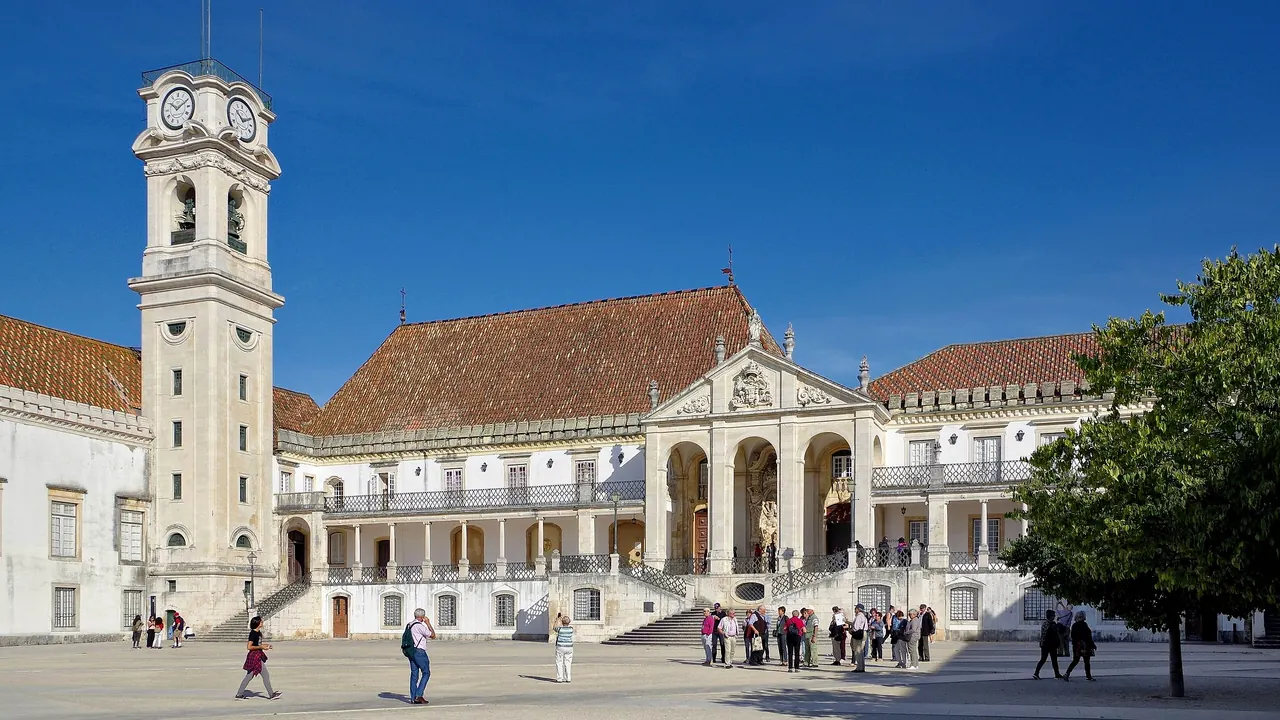

Photos: Coimbra by Berthold Werner, CC BY-SA 3.0, cropped; Lisbon by Riccardo Toso, Pexels License.
Coimbra or Lisbon?
Our verdict in twelve categories, each scored against the same fixed benchmark cities, and the climate month by month, so you can choose for your trip.
Choose Coimbra for
- prices
- wellness
Coimbra suits a slower, cheaper trip built around one great university hill, a student town's own fado and the green country around it. It also makes a sensible stop on a rail journey between Lisbon and Porto, with Roman Conímbriga, Aveiro and the central monasteries in easy reach, and the old spa towns of Luso and Curia close by for quiet days.
Choose Lisbon for
- nightlife
- food and drink
- shopping
Choose Lisbon for a fuller city vacation. There is more to see across Belém, Alfama and the Baixa, the eating and drinking are far better, nights run late in Bairro Alto and Cais do Sodré, and beaches are a commuter train ride away. It costs more, rooms especially, and the old quarters are noisier, but there is enough to fill a week without repeating yourself.
Scoreboard
Twelve categories on one fixed scale from 0 to 100. The shaded stretch is the gap between the two.
Your match
Pick a travel style or drag the sliders, and both match scores follow your weighting.
Wins on prices and wellness with your weighting.
Wins on nightlife and food and drink with your weighting.
What matters to you?
Category by category
What the scores mean for a trip.
Beaches & swimming
Neither is a beach city, but Lisbon makes the sea much easier to reach. The Cascais line runs straight to Carcavelos, Estoril and Cascais, Costa da Caparica is just across the river, and anyone with a car can drive to the sheltered Arrábida coves for the calmest water.
From Coimbra the coast takes a whole outing: about an hour to the broad sands of Figueira da Foz and Buarcos, where the open Atlantic is rougher. What Coimbra has instead is its river beaches in the hills to the east, where the water is calmer and feels warmer than the ocean.
Food & drink
Lisbon is the better place to eat. It has the same kind of tasca cooking as Coimbra and adds the sea: clams and prawns in the beer halls, sardines in June and bacalhau everywhere, with good regional wine poured cheaply by the glass. Its two big markets double as places to eat.
Coimbra's food is narrower and more rural. The dish worth travelling for is roast suckling pig in the Bairrada towns just north, with the local sparkling wine, along with goat chanfana and convent pastries. Beyond that it is mostly family lunches, with little ambitious or international cooking.
Culture & sights
Lisbon has more heritage, and more variety. There are the Manueline monuments of Belém, the rebuilt Baixa grid and medieval Alfama under the castle, plus museums of real weight in the Gulbenkian, the Tile Museum and the Ancient Art Museum. You need three or four days to see the main sights.
Coimbra's sights are fewer and closer together, stacked on one hill and seen in a day or two. Its peak is the gilded Biblioteca Joanina in the old university, which is famous beyond Portugal. The royal tombs at Santa Cruz and the half-excavated convent of Santa Clara-a-Velha fill out the rest.
Nightlife
Lisbon is the clear choice for going out. Crowds fill Bairro Alto's lanes, drinking outside tiny bars, Cais do Sodré stays open later, and the riverside warehouse clubs run until morning. Príncipe Real adds cocktail bars and the heart of the gay scene.
Coimbra's nights belong to its students: cheap bars around Praça da República, a few small clubs during term and the Queima das Fitas, which takes over the city in May. In July or August the evenings shrink to dinner and a drink by the Mondego.
Nature & outdoors
Lisbon's outdoors is coastal and wilder. There are the misty Sintra hills and the cliffs at Cabo da Roca, kitesurfing at Guincho and surfing at Ericeira, and the Arrábida ridges, with dolphin trips from Setúbal. What it lacks is mountains.
Coimbra's countryside is green and inland. The Buçaco forest is half an hour north, the Serra da Lousã has slate villages and chestnut woods, and you can kayak down the Mondego valley. The Serra da Estrela is about two hours away for real mountain walking.
Day trips
Both make excellent bases and even share some destinations, since Batalha, Alcobaça and Tomar are within reach of either. Coimbra sits on the main line between the two big cities, so Porto and the canals of Aveiro are each an hour or less by train, and the Roman mosaics of Conímbriga are just south of town.
Lisbon's great outing is Sintra, a full day of palaces forty minutes away by train. It also has the seaside at Cascais, the palace-convent at Mafra and walled Évora out in the Alentejo.
Good for families
Lisbon gives children more to do. The Oceanário is one of Europe's large aquariums, with a science centre and a cable car right beside it, and there is a zoo, rides on trams and funiculars, and beach trains for hot days.
Coimbra's highlight is Portugal dos Pequenitos, a park of miniature buildings sized for small children, along with a hands-on science centre and riverside parks. That fills a couple of days. Both cities are steep and cobbled, so a baby carrier works better than a pushchair.
Getting around
Coimbra is small enough to walk, with its sights within a couple of kilometres of each other, but the climb from the Baixa to the university is steep. You can tackle it on foot up the Quebra-Costas stairway, or go up from near the market by the public lift and funicular instead. Buses cross the river to Santa Clara, and a car only pays off for the forests and monasteries outside town.
Lisbon is just as hilly but gives you more help. A four-line metro reaches the airport and the Parque das Nações, and trams, funiculars, a street lift, ferries and suburban trains all run on the same card. The trams are slow and crowded, though, and the metro does not reach Belém.
Shopping & style
Lisbon is far better for shopping. It runs from the luxury houses of Avenida da Liberdade and the old shops of Chiado to Príncipe Real's designers, the Feira da Ladra flea market and LX Factory. Tiles, cork, Burel wool and tinned sardines make distinctive things to take home.
Coimbra has a couple of pedestrian shopping streets in the Baixa and a produce market. The souvenirs worth carrying home are hand-painted Coimbra faience and convent sweets.
Affordability
Coimbra is the cheaper stay. Its bars, cafés and tascas set their prices for students, and rooms are fairly priced even near the old town, except during the May festivities and graduation season. The university ticket is the only notable expense.
In Lisbon, coffee, set lunches and transport are still cheap, but central rooms cost as much as in other southern European capitals, and places aimed at visitors in Baixa and Chiado charge more.
Live music & performing arts
Both cities have fado, but two different kinds. Lisbon's is the mournful original, heard every night over dinner in Alfama, Mouraria and Bairro Alto, and the city also has an opera house, the Gulbenkian orchestra and the Centro Cultural de Belém.
Coimbra's fado is lighter and more lyrical, sung by men in student capes with the Coimbra guitar in a few small houses. Beyond fado there are the university theatre and the arts centre in the Convent of São Francisco, but no opera house or orchestra.
Wellness & relaxation
Neither city has a bathing tradition of its own, but Coimbra is close to real spa country. Luso, below the Buçaco forest, and Curia, with its thermal park and Belle Époque hotels, are about half an hour away, and the city's easy pace outside term helps too.
Lisbon offers hotel spas and quiet gardens such as the Gulbenkian and Estrela. Its old quarters are noisy, though, so for a restful stay most people sleep out along the Cascais coast or in the Sintra hills.
When should you go?
Pick your month. The climate figures are measured averages, not a forecast.
Coimbra in July
Lisbon in July
Daytime high, °C
Rainfall in the month, mm
Temperature and rainfall are climate normals, averaged over the years shown. Coimbra: 1991-2020 normals, Coimbra (1.6 km from centre). Lisbon: 1991-2020 normals, Lisboa / Geof (1.1 km from centre).
The two cities share much the same calendar. Both are good for walking from April to early June and again from late September into October, and both turn wet from late October to March, with more than 100mm a month in the depth of winter. Coimbra is inland and runs slightly hotter in high summer, around 29°C in August, so the afternoon climb to the university is hard work. It also gets a little more rain in spring and autumn.
Lisbon is the sunnier and drier of the two all year, and that matters most in the shoulder months. For swimming, July to September is the window at both, but the Atlantic stays cool off either city, at about 18°C to 19°C at its warmest.
Which traveller are you?
For a food and nightlife trip, Lisbon is the clear pick. Coimbra's student bars go quiet in summer, while Lisbon pairs seafood beer halls, cheap regional wine and June sardines with late nights in Bairro Alto, Cais do Sodré and the riverside clubs.
On a trip on a tight budget, Coimbra makes the money go further. You can sleep in the old town and walk everywhere, spend free afternoons in the Choupal woods or by the Mondego, and take cheap trains to Aveiro or Porto. In Lisbon, central beds swallow much more.
For a relaxing and wellness trip, Coimbra is the calmer choice. The thermal towns of Luso and Curia are about half an hour north, and the botanical garden and the Mondego riverbanks set an easy pace that Lisbon's crowded, noisy old quarters cannot match.
Before you go
| Measure | Coimbra | Lisbon |
|---|---|---|
| Official language | Portuguese | Portuguese |
| Currency | Euro (EUR) | Euro (EUR) |
| Sockets | CF230 V, 50 Hz | CF230 V, 50 Hz |
| Driving side | Right | Right |
| Time zone | UTC, UTC+1 in summer | UTC, UTC+1 in summer |
| Emergency number | 112 | 112 |
| Elevation | 43 m | 100 m |
| Main airport | Francisco de Sá Carneiro Airport (OPO)117 km from centre133 non-stop destinations | Lisbon Humberto Delgado Airport (LIS)7 km from centre156 non-stop destinations |
| Public holidays this year | 14 days | 14 days |
By the numbers
| Measure | Coimbra | Lisbon |
|---|---|---|
| City population | 140,816 | 545,796 |
| People per km² | 441 | 5,453 |
| Museums within 10 km | 10 | 80 |
| UNESCO World Heritage sites within 50 km | 1 | 3 |
| Swim season, months above 21 °C | None | None |
Where else could you go?
Every comparison below shares a destination with this one, so you can follow Coimbra or Lisbon somewhere new.