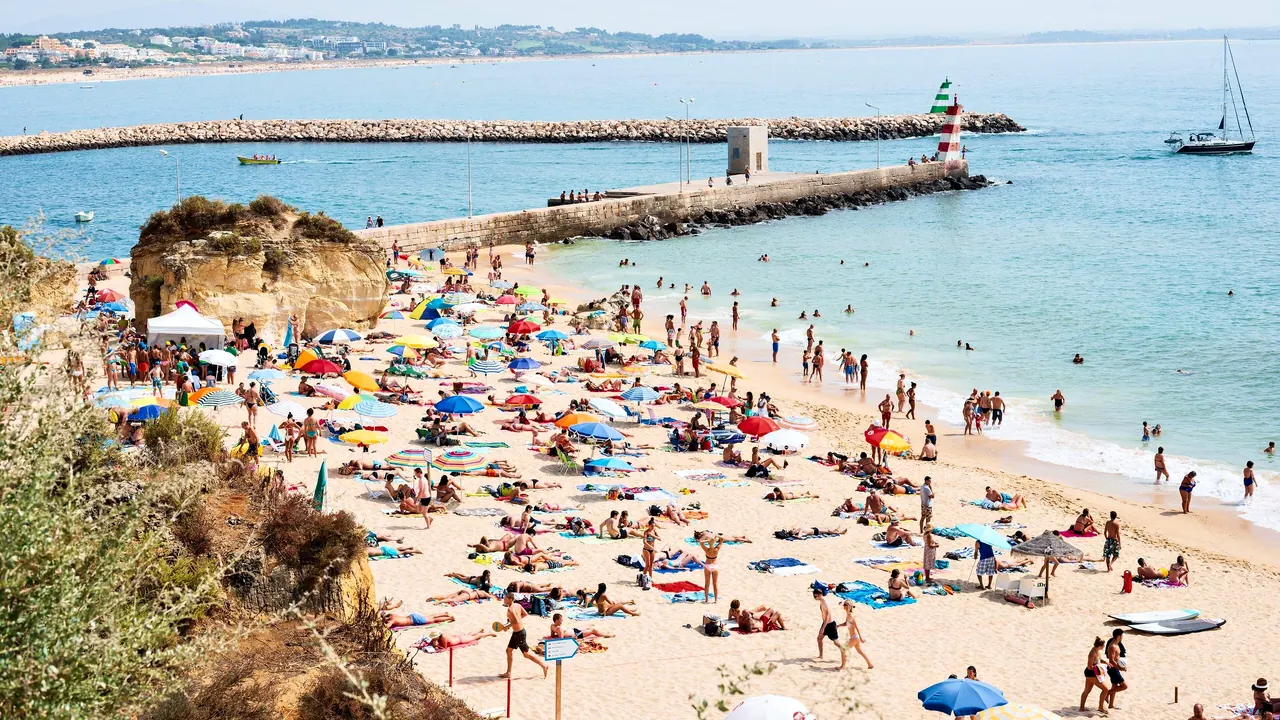
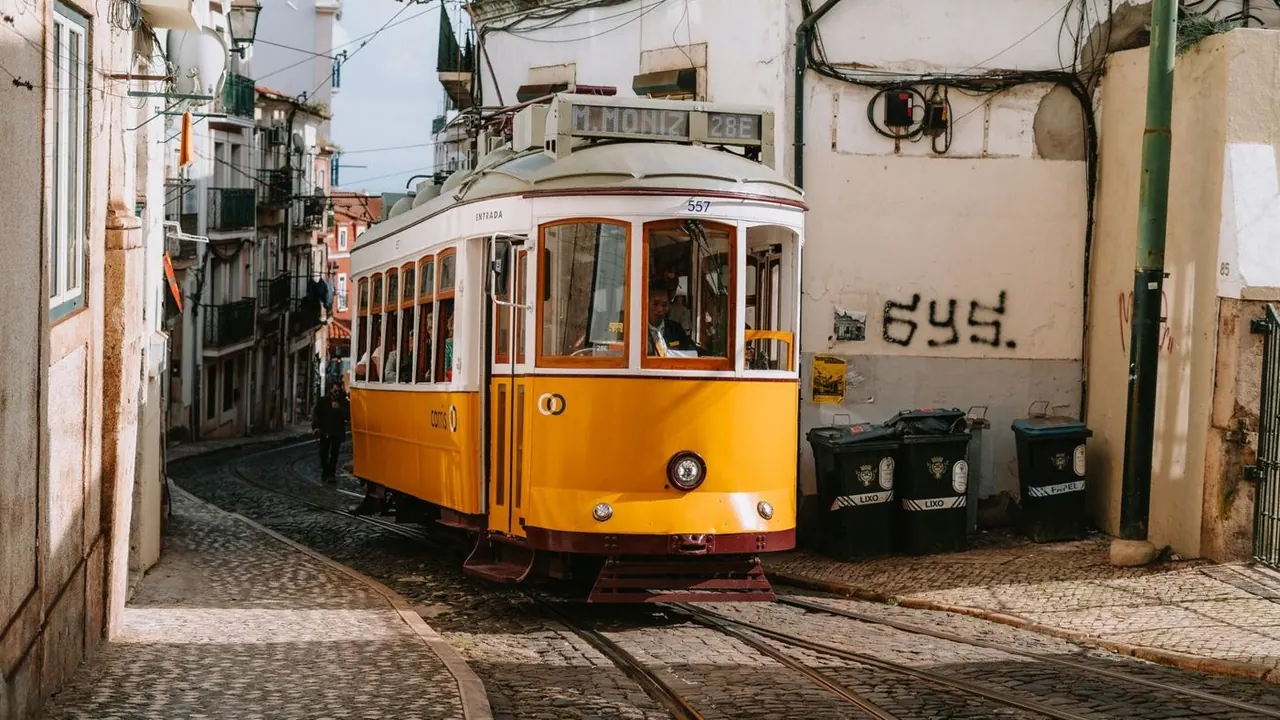
Photos: Lagos, Portugal by Norbert Nagel, CC BY-SA 4.0, cropped; Lisbon by Riccardo Toso, Pexels License.
Lagos, Portugal or Lisbon?
Our verdict in twelve categories, each scored against the same fixed benchmark cities, and the climate month by month, so you can choose for your trip.
Choose Lagos, Portugal for
- beaches
- wellness
- nature and the outdoors
Lagos is for a vacation built around the sea. Golden coves lie below the cliffs a short walk from the old town, the long sands of Meia Praia sit just across the river, and you can kayak into the grottoes at Ponta da Piedade or reach the wild Costa Vicentina. It suits couples, families and surfers who want to swim by day and have a drink in a small, lively bar town at night, and who don't mind hiring a car for anything further away.
Choose Lisbon for
- culture and sights
- live music and the arts
- shopping
Choose Lisbon for a city trip with real depth. It has the monasteries of Belem, the medieval lanes of Alfama, the Gulbenkian, fado in the quarters where it began and much better neighbourhood eating, so there is far more to fill the days and nights. Sintra, Evora and the great monasteries to the north are all within a day's reach. The beaches along the Cascais line make a pleasant afternoon, but they are not the point of the stay.
Scoreboard
Twelve categories on one fixed scale from 0 to 100. The shaded stretch is the gap between the two.
Your match
Pick a travel style or drag the sliders, and both match scores follow your weighting.
Wins on beaches and wellness with your weighting.
Wins on culture and sights and live music and the arts with your weighting.
What matters to you?
Category by category
What the scores mean for a trip.
Beaches & swimming
Lagos has its beaches on the doorstep. Sheltered coves such as Camilo and Dona Ana lie below ochre cliffs and sea stacks a few minutes' walk from the old town, and the open 4km sweep of Meia Praia is across the river. The water in the coves is clear and usually calm, though you have to accept steep stairways and August crowds.
Lisbon has no beach of its own. A swim means a train to Carcavelos or Cascais, a crossing to Costa da Caparica, or an hour's drive to the Arrabida coves. Swell makes several of these better for surfers than for swimmers, so a beach day there is an outing from the city rather than the reason for the trip.
Food & drink
Both kitchens rest on grilled fish and inexpensive Portuguese wine, but Lisbon has far more depth. Its tascas, seafood beer halls, bifana counters and the markets at Ribeira and Campo de Ourique can give you a different good meal every day, and the residential quarters reward anyone who explores them.
Lagos eats well at the harbour, along the road to Meia Praia and in family places off the main lanes, and cataplana is the dish to look for. In a town this size, though, the choice soon runs out, and the photo menus of the old town are hard to avoid.
Culture & sights
Lagos keeps a real piece of the Discoveries story, but on a small scale: stretches of the old walls, the Ponta da Bandeira fort at the harbour mouth, the gilded baroque hidden inside the plain church of Santo António, and the slave market museum, which deals directly with the sale of 1444. A morning's walk covers all of it. After that, the region's history lies in the towns around it.
Lisbon has the heritage of a capital and needs far longer. The Jeronimos Monastery and Belem Tower, the Baixa grid rebuilt after 1755 and Alfama's lanes below the castle are each an outing of their own. The Gulbenkian, the National Tile Museum and the Ancient Art Museum add collections that Lagos has nothing to match, and seeing the main sights takes most visitors three or four days.
Nightlife
Lisbon offers more nights out and more variety. Crowds drink in the lanes of Bairro Alto, the bars of Cais do Sodre stay open later, Principe Real has cocktail bars and the gay scene, and the riverside warehouse clubs run until morning. The scene keeps going all year.
Lagos is a lively bar town for its size, with backpackers, surfers and pub crawls filling the old town on summer nights. It has little club life, though, and goes quiet between November and March.
Nature & outdoors
Both sit on dramatic Atlantic coast and are broadly level outdoors, but the settings differ. In Lagos the outdoors starts at the edge of town: kayaks among the arches at Ponta da Piedade, clifftop paths to Luz, the Fishermen's Trail along the Costa Vicentina and the cork-oak hills of Monchique inland.
From Lisbon the outdoors is spread more widely. There is Monsanto forest park inside the city, the misty Sintra hills down to Cabo da Roca, kitesurfing at Guincho, the surf reserve at Ericeira and hiking above the sea in Arrabida. Both offer dolphin trips, out to sea from Lagos and on the Sado estuary from Setubal.
Day trips
Lisbon is much the better base for excursions. Sintra's palaces are forty minutes away by train, and Evora, Obidos and the UNESCO monasteries of Alcobaca, Batalha and Tomar each make a full day out. Several of these can be done without a car.
From Lagos the best outings are Sagres and Cape St Vincent at Europe's south-western tip, the Moorish castle at Silves and the wooded hills around Monchique. They are pleasant but fewer and smaller, and they nearly always need a hire car.
Good for families
For children the two are broadly even, but in different ways. Lagos is a beach vacation, with the gently shelving sand of Meia Praia, boat trips to the grottoes and a calm marina in the evening. The zoo, water parks and marine park all need a drive.
Lisbon has the stronger attractions in town: the Oceanario and science centre at Parque das Nacoes, the zoo and rides on trams and funiculars. Its steep hills and slippery pavements make pushchairs hard work, and the cobbled lanes and cove stairways of Lagos bring a milder version of the same problem.
Getting around
Lisbon is easier for a trip without a car. The metro, trams, funiculars, suburban trains to Sintra and Cascais and the river ferries all run on one card, even if the hills and crowded trams test your patience.
Lagos is walkable from the old town to the marina and the coves, with a footbridge to Meia Praia. Beyond town, slow trains and infrequent buses push most visitors into a hire car.
Shopping & style
Lisbon has real shopping. Avenida da Liberdade is the luxury boulevard, Chiado has the old established shops, Principe Real has designers and antiques, and there are the Feira da Ladra flea market and the independent shops of LX Factory. Azulejos, Burel wool and port are good things to take home.
Lagos has ceramics, cork goods, surf gear and market honey, figs and medronho. That is enough for gifts, but not a reason to go.
Affordability
Overall costs are much the same in both, and in each the trap is the room. In Lagos the season decides the price: beachside rooms are expensive in July and August, and from October to May the town becomes good value for long stays.
In Lisbon, central hotels and apartments are the main expense all year, while coffee, tasca lunches and transport stay cheap for a capital. Staying a little outside the centre and eating where residents eat keeps the trip reasonable.
Live music & performing arts
Lisbon is far ahead here. Fado in Alfama, Mouraria and Bairro Alto can be heard every night, from polished dining rooms to tiny neighbourhood houses. The Gulbenkian orchestra, the São Carlos opera house and the Centro Cultural de Belém add a formal season.
Lagos has fado and guitar evenings for visitors in summer, cover bands in the bars and a modest programme at its municipal cultural centre, but no opera or orchestra.
Wellness & relaxation
Neither city has a bathing tradition, and in both a spa mostly means a hotel's facilities, so the difference is in the kind of rest. Outside August, Lagos slows to cliff walks and long lunches. Yoga and surf retreats gather towards Luz and the west coast, and the thermal springs of Caldas de Monchique, in use since Roman times, are an hour inland.
In Lisbon, calm is found in the Gulbenkian and Estrela gardens and at the river viewpoints. The old quarters are noisy and hilly, so a truly restful stay usually means sleeping out on the Cascais coast or in the Sintra hills.
When should you go?
Pick your month. The climate figures are measured averages, not a forecast.
Lagos, Portugal in July
Lisbon in July
Daytime high, °C
Rainfall in the month, mm
Where the figures come from
Lagos, Portugal's temperatures are measured 63 km from the centre, at Faro / Aeroporto.
Lagos, Portugal has no rain gauge within 25 km of the centre, so its rainfall comes from a gridded climate dataset read at the city rather than from a gauge further away.
Temperature and rainfall are climate normals, averaged over the years shown. Lagos, Portugal: 1991-2020 normals, Faro / Aeroporto (63.4 km from centre). Lisbon: 1991-2020 normals, Lisboa / Geof (1.1 km from centre).
Both cities follow the same Atlantic pattern: warm, almost rainless summers and mild, wet winters. Neither gets too hot for walking, with summer highs of around 29°C in Lagos and a degree lower in Lisbon. The beach season runs from June to September in both, but the sea stays fresh all summer. It reaches only about 20°C off Lagos and is a little cooler off Lisbon, so swimming is bracing rather than warm.
The real difference comes outside summer. Lagos is the sunnier and drier of the two, and its rain only arrives from October, peaking at around 80mm in December. Lisbon is clearly wetter from October to April, with more than 120mm in November, and that makes its hills and polished pavements harder going. For walking the city, May, June and September are the most reliable months. Lagos stays pleasant for coastal walks well into spring and autumn.
Which traveller are you?
On a beach and sun trip, Lagos is the clear choice. Its cliff-backed coves and the long sands of Meia Praia are a short walk from town, the water in the coves is clear and sheltered, and a hot day never needs a train ride.
For a culture and arts trip, Lisbon has far more to give. The Jeronimos Monastery, Alfama and the Gulbenkian fill several days, fado plays nightly in the old quarters, and Sintra's palaces are a short train ride away.
On a shopping trip, Lisbon is the only real option. It has Avenida da Liberdade for the fashion houses, Chiado and Principe Real for old shops and local designers, and tiles, cork and wool worth carrying home. Lagos offers little beyond souvenirs and surf gear.
Before you go
| Measure | Lagos, Portugal | Lisbon |
|---|---|---|
| Official language | Portuguese | Portuguese |
| Currency | Euro (EUR) | Euro (EUR) |
| Sockets | CF230 V, 50 Hz | CF230 V, 50 Hz |
| Driving side | Right | Right |
| Time zone | UTC, UTC+1 in summer | UTC, UTC+1 in summer |
| Emergency number | 112 | 112 |
| Elevation | 3 m | 100 m |
| Main airport | Faro - Gago Coutinho International Airport (FAO)63 km from centre91 non-stop destinations | Lisbon Humberto Delgado Airport (LIS)7 km from centre157 non-stop destinations |
| Public holidays this year | 14 days | 14 days |
By the numbers
| Measure | Lagos, Portugal | Lisbon |
|---|---|---|
| City population | 31,049 | 545,796 |
| People per km² | 146 | 5,453 |
| Museums within 10 km | 6 | 80 |
| UNESCO World Heritage sites within 50 km | 0 | 3 |
| Swim season, months above 21 °C | None | None |
Where else could you go?
Every comparison below shares a destination with this one, so you can follow Lagos, Portugal or Lisbon somewhere new.
- Sintravs Lisbon
- Cascaisvs Lisbon
- Albufeiravs Lagos, Portugal
- Farovs Lagos, Portugal
- Coimbravs Lisbon
- Cascaisvs Lagos, Portugal