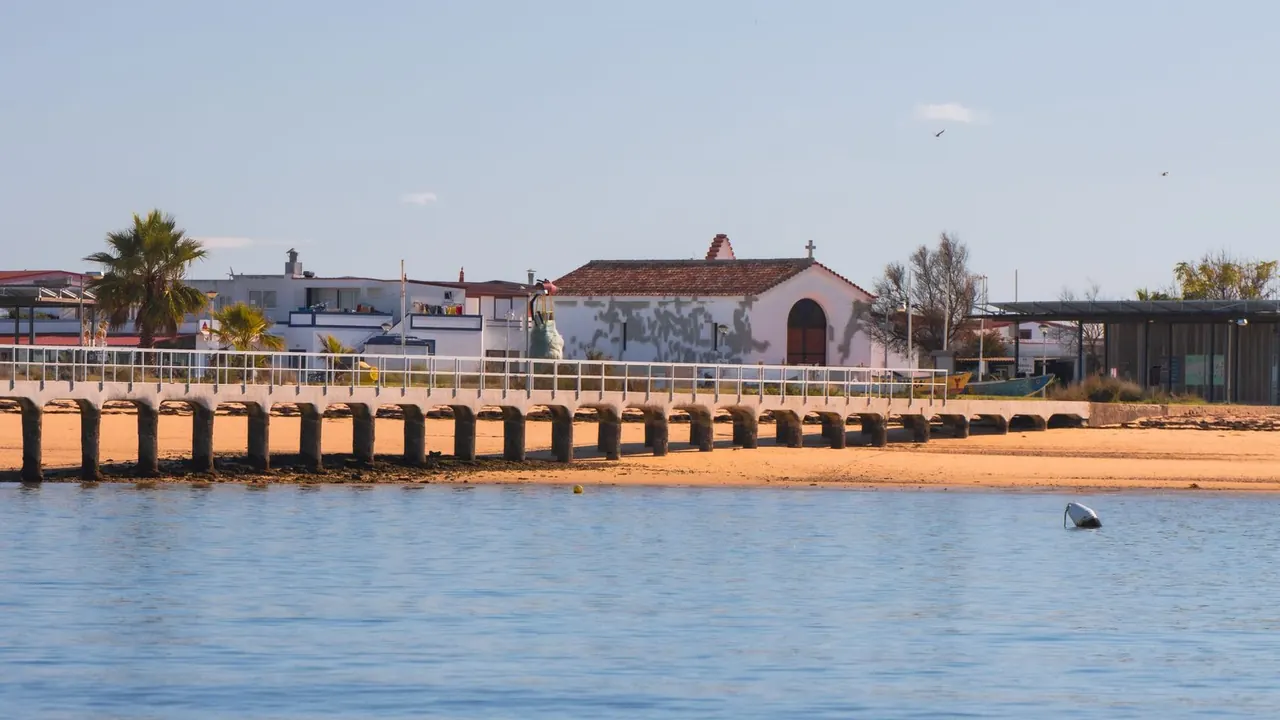
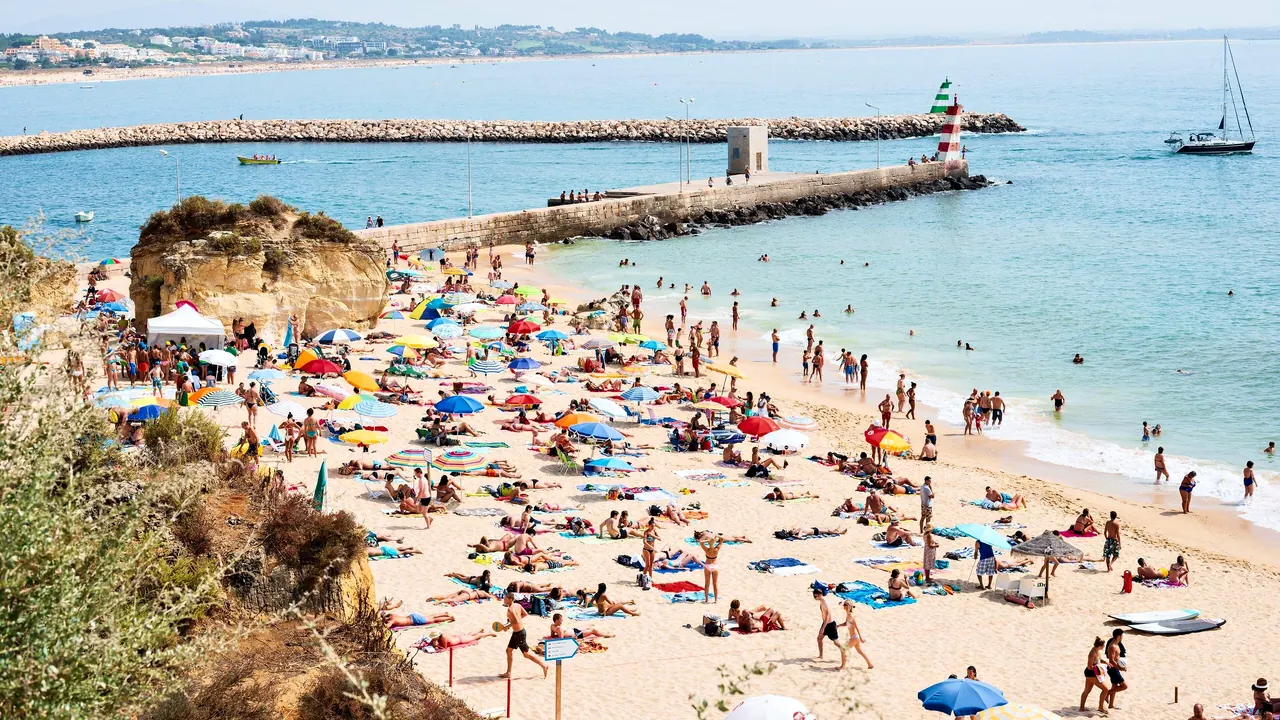
Photos: Faro by Vitor Oliveira, CC BY-SA 2.0, cropped; Lagos, Portugal by Norbert Nagel, CC BY-SA 4.0, cropped.
Faro or Lagos, Portugal?
Our verdict in twelve categories, each scored against the same fixed benchmark cities, and the climate month by month, so you can choose for your trip.
Choose Faro for
- live music and the arts
- day trips
- shopping
Faro suits travellers who want a practical, well-connected base rather than a resort. The airport is on the doorstep, the flat centre is easy on foot, and the train runs east to Olhão and Tavira, so it works well for touring the eastern Algarve, for a few days of old-town walks and lagoon boat trips, and for anyone watching costs. The beaches are on the barrier islands, a bus or ferry ride away, and they are long, quiet and sandy.
Choose Lagos, Portugal for
- nightlife
- nature and the outdoors
- wellness
Lagos is the better pick when the coast itself is the point of the trip. The cliff coves and Meia Praia are a walk from the old town, Ponta da Piedade and the wild Costa Vicentina are close by, and in summer the evenings run later and louder. Choose it for swimming, kayaking, surfing and clifftop walking, and accept that it costs a little more and leaves the rest of the region a longer drive away.
Scoreboard
Twelve categories on one fixed scale from 0 to 100. The shaded stretch is the gap between the two.
Your match
Pick a travel style or drag the sliders, and both match scores follow your weighting.
Too close to call, 1 point apart
Wins on live music and the arts and day trips with your weighting.
Wins on nightlife and nature and the outdoors with your weighting.
What matters to you?
Category by category
What the scores mean for a trip.
Beaches & swimming
Lagos has the stronger beaches, and they are on the doorstep. Golden coves such as Dona Ana and Camilo sit beneath sculpted cliffs within walking distance of the old town, and Meia Praia offers about 4km of open sand across the river.
Faro's beaches are a different kind of place. They are long, flat strands on the Ria Formosa barrier islands, such as Ilha Deserta and Culatra, with dunes behind them and the warmer water of the eastern Algarve, but you always need a bus or ferry to get there.
Food & drink
The two eat much alike, with charcoal-grilled fish, cataplana and almond and fig sweets. The difference is in the setting. Faro leans on the lagoon, with clams, oysters and cockles from the Ria Formosa, and stronger fish markets are a short train ride away in Olhão.
In Lagos the challenge is avoiding the photo-menu restaurants in the old-town lanes and finding the plain family places a street or two back, or the harbour grills.
Culture & sights
Neither town is a heritage destination, and both leave the region's best-known sights to other Algarve towns, but Faro takes a little longer to see. Its walled Cidade Velha, entered through the Arco da Vila, fills a relaxed day: the cathedral tower over the lagoon, a Roman mosaic in a museum set around a Renaissance convent cloister, and the bone-lined Capela dos Ossos at the Igreja do Carmo.
Lagos fits into a morning's walk, and its sights hang together around one story, the fifteenth-century voyages down the African coast. The sixteenth-century walls, the fort at the harbour mouth, the gilded baroque interior of Santo António and the museum on the site of the 1444 slave market all belong to it.
Nightlife
Lagos is clearly livelier after dark. In summer its old-town streets fill with surfers and backpackers moving between bars and pubs, pub crawls are part of the scene, and a few small clubs stay open until close to dawn. Between November and March it goes quiet.
Faro's evenings are calmer and more local. There are terraces on Rua do Prior and near the marina, which are busier when the university is in term, but most visitors call it a night after a long dinner.
Nature & outdoors
Lagos has the more dramatic landscape. The arches and grottoes of Ponta da Piedade are a short walk away, the Costa Vicentina offers the Fishermen's Trail and surf all year round, and the Serra de Monchique rises to about 900m inland.
Faro's outdoors is flatter and quieter. The Ria Formosa begins at the edge of the old town and is ideal for paddling among saltmarsh channels and for watching flamingos and spoonbills at Ludo, but the country around it is gentle rather than striking.
Day trips
Faro is better placed for exploring. Olhão and Tavira are a short train ride away, and Loulé's market hall, the Roman villa at Milreu and Cacela Velha are all close by. Even Seville makes a long day across the border.
From Lagos the standout trip is west to Sagres and Cape St Vincent, with Silves and Monchique inland. The eastern Algarve, however, is a long journey from there, and much of it needs a car.
Good for families
The two are broadly equal for children, but the beaches differ. Faro's island beaches are gentle and sandy, the boat ride out is part of the fun, and there is a small science centre by the water.
Lagos's Meia Praia shelves gently and has plenty of space, though its prettier coves are reached by steep stairways and the cobbled old town is hard work with a pushchair. Both are about forty minutes from the big marine park.
Getting around
Faro is the easier place to arrive and get about without a car. The airport is next door, the flat centre puts the station, marina and old town within a short walk, and buses and ferries reach the beaches.
Lagos is walkable too, but its lanes are cobbled and sometimes steep. It sits at the far western end of a slow railway, and its regional buses are infrequent, so a hire car matters more there.
Shopping & style
Neither town is a shopping destination, but Faro offers more choice. It has a pedestrian high street of Portuguese chains, a large shopping centre for mainstream brands, and lagoon salt flower among the local buys, with Loulé's market nearby.
Lagos is browsing on the way to dinner, with ceramics, cork goods, surf shops and medronho brandy from the market.
Affordability
Faro is the cheaper of the two, because it is a working town first and a gateway to the beaches second. Everyday meals, coffee and buses cost little there.
Lagos charges resort prices on its main streets and for beachside rooms in high summer, although lunches away from those streets stay reasonable. In both towns, rooms outside July and August are far easier on the budget.
Live music & performing arts
Faro offers far more for an evening out at a performance. The ornate nineteenth-century Teatro Lethes stages chamber music and plays, and the Teatro das Figuras brings dance, touring concerts and the regional orchestra.
Lagos has only a modest municipal cultural centre, plus summer guitar and fado evenings aimed at visitors. Serious concert-goers would have to travel to Faro.
Wellness & relaxation
Lagos is better for unwinding with intent. Yoga teachers and surf and wellness retreats gather on its quieter fringes towards Luz, and Caldas de Monchique is a little closer.
Faro's offer is mostly resort spas on the golf coast to the west, together with the simple pleasure of slow sunset walks by the lagoon in the quiet winter months.
When should you go?
Pick your month. The climate figures are measured averages, not a forecast.
Faro in July
Lagos, Portugal in July
Daytime high, °C
Rainfall in the month, mm
Where the figures come from
Lagos, Portugal's temperatures are measured 63 km from the centre, at Faro / Aeroporto.
Lagos, Portugal has no rain gauge within 25 km of the centre, so its rainfall comes from a gridded climate dataset read at the city rather than from a gauge further away.
Temperature and rainfall are climate normals, averaged over the years shown. Faro: 1991-2020 normals, Faro / Aeroporto (2.8 km from centre). Lagos, Portugal: 1991-2020 normals, Faro / Aeroporto (63.4 km from centre).
The two towns share the same climate on land. Daytime highs reach 29°C in July and August, warm enough for the beach from June to September, with October still pleasant. Midsummer afternoons are hot for walking cobbled streets, so spring and autumn are better for sightseeing and hiking, and winter stays mild at around 16°C. Summer is almost completely dry and very sunny in both, and the rain comes from October through the winter.
The differences are small but real. Faro's sea is a degree or two warmer, reaching about 22°C in August against the cooler Atlantic water off Lagos. Faro's wettest month is December, at around 102mm. Lagos has more rain in late winter, with February and March noticeably wetter there than in Faro.
Which traveller are you?
On an outdoors trip, Lagos is the clear choice. You can kayak into the grottoes at Ponta da Piedade, walk the cliff paths towards Luz and Burgau, surf on the Costa Vicentina and hike in the Monchique hills, all close by. Faro's lagoon is gentler and is best for birdwatching.
For a food and nightlife trip, Lagos has the edge. Both towns serve honest grilled fish and cataplana, but after dinner Lagos's old town keeps going past midnight with bars, cocktails and a few late clubs. In Faro most evenings end quietly after the meal.
On a tight budget, Faro stretches the money further. It is a working provincial town where lunches, coffee and buses stay cheap. The airport is close, buses reach the beach, and the train opens up Olhão and Tavira, so you can get by without a hire car.
Before you go
| Measure | Faro | Lagos, Portugal |
|---|---|---|
| Official language | Portuguese | Portuguese |
| Currency | Euro (EUR) | Euro (EUR) |
| Sockets | CF230 V, 50 Hz | CF230 V, 50 Hz |
| Driving side | Right | Right |
| Time zone | UTC, UTC+1 in summer | UTC, UTC+1 in summer |
| Emergency number | 112 | 112 |
| Elevation | 10 m | 3 m |
| Main airport | Faro - Gago Coutinho International Airport (FAO)3 km from centre91 non-stop destinations | Faro - Gago Coutinho International Airport (FAO)63 km from centre91 non-stop destinations |
| Public holidays this year | 14 days | 14 days |
By the numbers
| Measure | Faro | Lagos, Portugal |
|---|---|---|
| City population | 64,560 | 31,049 |
| People per km² | 319 | 146 |
| Museums within 10 km | 2 | 6 |
| UNESCO World Heritage sites within 50 km | 0 | 0 |
| Swim season, months above 21 °C | 3 months | None |
Where else could you go?
Every comparison below shares a destination with this one, so you can follow Faro or Lagos, Portugal somewhere new.
- Albufeiravs Faro
- Albufeiravs Lagos, Portugal
- Cadizvs Faro
- Jerez de la Fronteravs Faro
- Sevillevs Faro
- Lisbonvs Lagos, Portugal