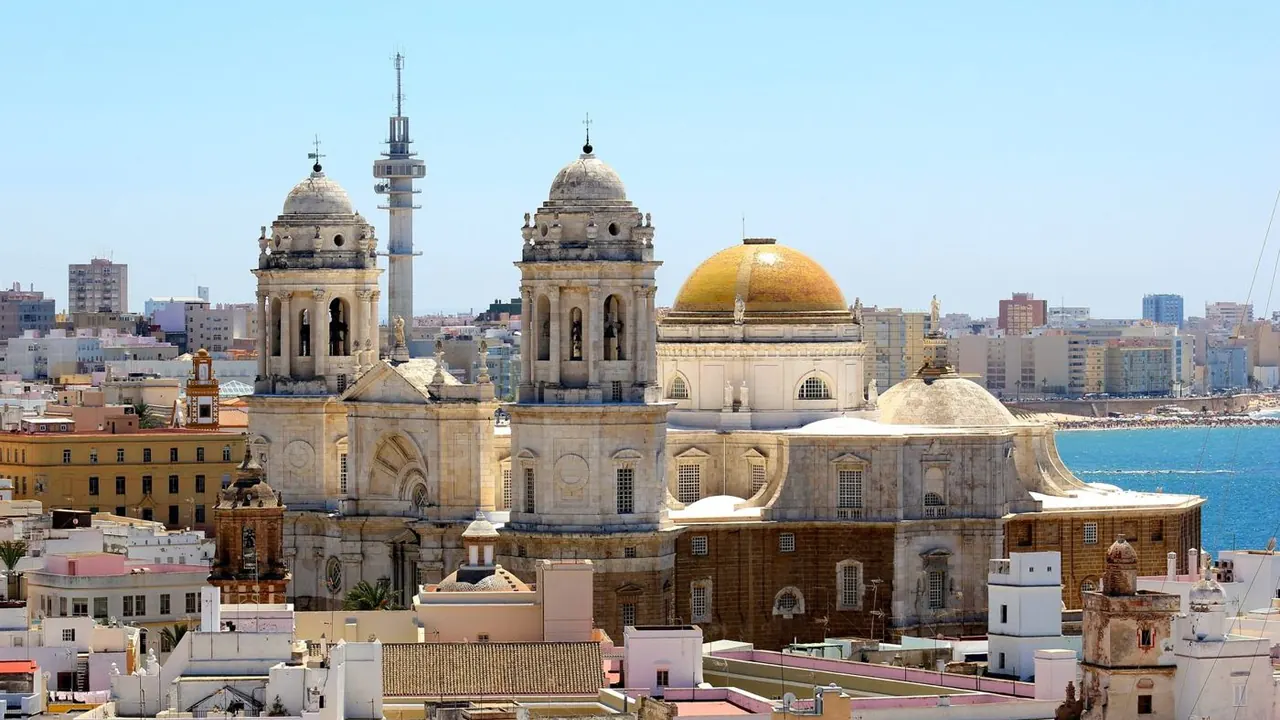
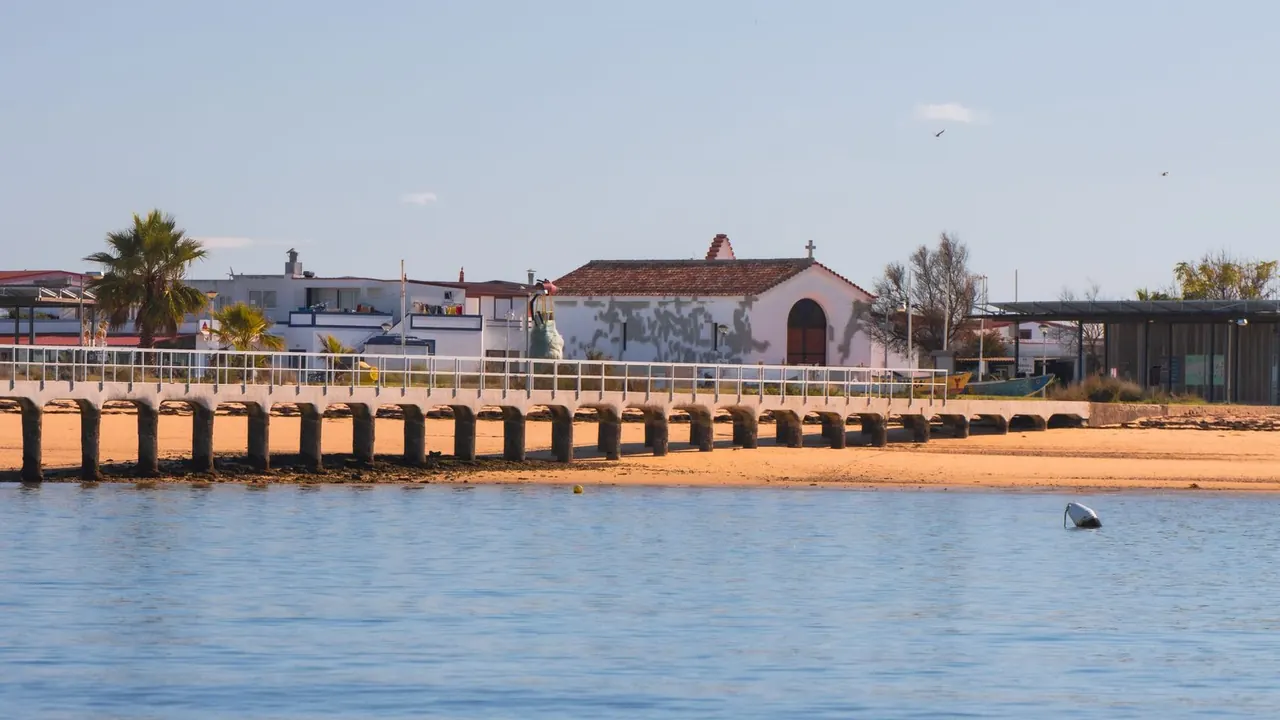
Photos: Cadiz by Bronch, CC BY-SA 3.0 ES, cropped; Faro by Efrem Efre, Pexels License.
Cadiz or Faro?
Our verdict in twelve categories, each scored against the same fixed benchmark cities, and the climate month by month, so you can choose for your trip.
Choose Cadiz for
- culture and sights
- live music and the arts
- food and drink
Cadiz is the stronger choice for most travellers who want a city as well as a beach. The sea is at the end of almost every street. The old town packs three thousand years of history onto a narrow peninsula, the tapas and sherry are some of the best in Andalusia, and trains run straight out to Jerez and Seville. It suits people who want to swim, eat well, see things and go out without needing a car for the core of the trip.
Choose Faro for
- prices
Faro makes more sense as a quiet base at the edge of the Algarve. Its walled old town, the lagoon islands reached by ferry and the airport on the doorstep suit an easy, low-key stay, especially for travellers who plan to hire a car and spread out across the region. Expect to travel to the beach and to make your own evenings. The town itself is calmer and has less going on than Cadiz.
Scoreboard
Twelve categories on one fixed scale from 0 to 100. The shaded stretch is the gap between the two.
Your match
Pick a travel style or drag the sliders, and both match scores follow your weighting.
Wins on culture and sights and live music and the arts with your weighting.
Wins on prices with your weighting.
What matters to you?
Category by category
What the scores mean for a trip.
Beaches & swimming
In Cadiz you can walk to the beach. La Caleta sits between its two castles in the old town, and the wide golden sand of Playa Victoria runs along the newer city. The empty strands of El Palmar, Zahara and Bolonia are less than an hour away. The levante wind is the one thing that can spoil a beach day.
Faro's sand is out on the barrier islands of the Ria Formosa, reached by bus over a bridge to Praia de Faro or by summer ferry to Ilha Deserta and Culatra. These are long, dune-backed beaches with little behind them, and the water there is warm and calm. Still, each beach day is a small outing rather than a stroll from your door.
Food & drink
Both towns cook what comes out of the sea, but Cadiz does it with more depth. It has paper cones from the freidurías, dogfish in adobo, shrimp fritters and bluefin tuna from the old almadraba traps. Manzanilla and fino from the nearby sherry towns go with all of it, and the Mercado Central turns into a place to eat later in the day.
Faro's strengths are clams, oysters and cockles from the lagoon, grilled sardines and cataplana served in plain grill houses, plus almond and fig sweets. It is honest food, but the better seafood is a train ride away in Olhão, and Faro has fewer good tapas streets than Cadiz.
Culture & sights
Cadiz has far more to see. Its old town of watchtowered merchant houses grew rich on the trade with the Americas. Within a short walk are the gold-domed cathedral, the camera obscura in the Torre Tavira, Phoenician sarcophagi in the Museo de Cádiz, the Roman theatre in the Barrio del Pópulo and the Oratorio where the 1812 constitution was signed. That fills two or three days well.
Faro's heritage is gathered inside its walls. You enter through the Arco da Vila to reach the cathedral tower over the lagoon, a Roman mosaic in a convent cloister, and the monks' bone chapel at the Igreja do Carmo just outside. That makes a pleasant day, after which most visitors head off to other parts of the Algarve.
Nightlife
Neither town is a clubbing destination. Even so, Cadiz has more going on after dark: late tapas rounds in La Viña and Plaza de San Francisco, and summer bars along the Playa Victoria promenade that stay open into the early hours. Carnival turns the whole city into a street party for ten nights each February.
Faro's evenings centre on Rua do Prior and the marina, where they are livelier at weekends and during term time. Most people head to bed after dinner, and anyone who wants big clubs has to travel to Albufeira.
Nature & outdoors
The two towns are evenly matched here, and they even share a landscape: both sit beside salt pans and tidal marsh where flamingos and spoonbills feed. In Faro the Ria Formosa begins right at the old town walls, so a kayak, paddleboard or the birding walk at Ludo is minutes away. Inland, the cork-oak hills and the Via Algarviana are gentle country.
Cadiz has more dramatic places within a drive. There is kitesurfing and whale-watching from Tarifa, the cliff-top pines of La Breña, real mountain walking in the Sierra de Grazalema and the wetlands of Doñana across the Guadalquivir.
Day trips
Cadiz is the better base for day trips, mainly because so much is close by rail and ferry. Jerez, with its bodegas and riding school, is half an hour away by train. A catamaran crosses the bay to El Puerto de Santa María, and Seville is under two hours by train. With a car you can also reach the white towns of Vejer and Arcos, and Baelo Claudia by the sea.
Faro's day trips are smaller in scale: Tavira's Roman bridge, the markets of Olhão and Loulé, Silves castle and the villa at Milreu. Lagos and Sagres make longer days out. Seville is about two hours away by road.
Good for families
Families will do equally well in either town, but in different ways. In Cadiz the beach is part of daily life: there are lifeguards on Playa Victoria, the cove at La Caleta is sheltered, and the shady parks are in a flat, car-light old town. There is little built for children, though.
Faro has calm lagoon beaches that children reach by boat, and a small science centre. The bigger draws are the marine park and water parks near Albufeira, which are easy with a car and awkward without one.
Getting around
Getting around is easier in Cadiz. Its old town is mostly closed to traffic and can be walked from shore to shore. Buses run the length of the isthmus, and the station in the old town has direct trains to Jerez and Seville, with a catamaran across the bay.
Faro's centre is just as walkable, and the airport is unusually close. Beyond the town, though, the coastal railway is slow and patchy, and most visitors hire a car for part of their stay. Both towns need a car for the remote beaches and villages.
Shopping & style
What separates the two is what you take home. Cadiz sells the things of Andalusia: hand-painted fans, flamenco fashion and bottles of sherry from the nearby bodega towns. The most enjoyable browsing is at the Mercado Central and the flower stalls beside it. For anything more ambitious, shoppers go to Seville.
Faro's souvenirs are Portuguese: cork goods, tinned fish, pottery and salt flower from the lagoon salt pans. Rua de Santo António is the main street for them, and a large mall on the edge of town covers the mainstream brands. For more choice, Loulé's market is a short drive inland.
Affordability
The two cost much the same. Both are cheap for eating, drinking and getting around locally, and in both the rooms are the main expense, rising in July and August. In Cadiz the old town has few hotels and they fill up for Carnival, so staying near Playa Victoria saves money.
In Faro the extra expense tends to be a hire car for touring the region. Spring and autumn are noticeably cheaper in both towns.
Live music & performing arts
Cadiz is one of the homes of flamenco, and you can hear alegrías sung for knowledgeable audiences in the peñas of Santa María. The Gran Teatro Falla stages the Carnival choir contest, plays all year and an autumn festival of Ibero-American theatre.
Faro's stages are the small, ornate Teatro Lethes and the modern Teatro das Figuras. The regional orchestra plays there often, which is something Cadiz lacks. But fado is a visitor here rather than a local tradition, and on many nights nothing is on.
Wellness & relaxation
Neither town has a bathing tradition of its own, though Cadiz has better options close by. There are Arab-style baths in Jerez, half an hour away, and sea-water resort spas at Novo Sancti Petri. The town also has a slow rhythm of siestas and sunset walks over La Caleta.
Faro's spas are in the golf resorts to the west. The spring-water baths at Caldas de Monchique take well over an hour to reach, so for a quiet stay there you rely on lagoon walks and a quiet winter.
When should you go?
Pick your month. The climate figures are measured averages, not a forecast.
Cadiz in July
Faro in July
Daytime high, °C
Rainfall in the month, mm
Temperature and rainfall are climate normals, averaged over the years shown. Cadiz: 1991-2020 normals, Cadiz Bay / Puntales (5.2 km from centre). Faro: 1991-2020 normals, Faro / Aeroporto (2.8 km from centre).
The two towns share almost the same climate, so the choice comes down to small differences. Both are warm enough for the beach from June to September. Summer days peak at around 28°C in Cadiz and slightly hotter in Faro, and from June to August neither town gets more than a few millimetres of rain. Cadiz has the slightly warmer water in high summer, reaching 23°C, and the sunnier July. Faro's sea cools more slowly into October and November. September and early October are the best time in both, with the sea still warm and the streets comfortable for walking.
The rain returns in October. In Cadiz it is heaviest in November, at 89mm. Faro's wettest month comes later, in December, at around 102mm, though its late winter is drier than Cadiz's. Winters are mild in both, with highs in the mid-teens. That is fine for sightseeing in Cadiz or lagoon walks in Faro, but too cool for swimming. Spring gets drier as it goes on. March can still be showery, especially in Cadiz, while May is dry, bright and warm, a very good month for exploring on foot in either town.
Which traveller are you?
On a culture and arts trip, Cadiz is clearly the better pick. It has a Phoenician and Roman past, a cathedral on the sea, the room where the 1812 constitution was signed, flamenco peñas in Santa María and the Gran Teatro Falla. Faro's walled old town fills a single relaxed day.
For a food and nightlife trip, choose Cadiz. Fried fish from the freidurías, almadraba tuna and cold manzanilla lead into late evenings in La Viña and summer terraces along Playa Victoria, and in February there is Carnival. In Faro, the nights tend to end after a long dinner.
On a family trip with children who like big attractions, Faro has the edge, as long as you hire a car. Boat rides out to the island beaches are fun in themselves, and the marine park and water parks near Albufeira are close by. Cadiz has nothing like them.
Before you go
| Measure | Cadiz | Faro |
|---|---|---|
| Official language | Spanish | Portuguese |
| Currency | Euro (EUR) | Euro (EUR) |
| Sockets | CF230 V, 50 Hz | CF230 V, 50 Hz |
| Driving side | Right | Right |
| Time zone | UTC+1, UTC+2 in summer | UTC, UTC+1 in summer |
| Emergency number | 112 | 112 |
| Elevation | 11 m | 10 m |
| Main airport | Jerez Airport (XRY)31 km from centre25 non-stop destinations | Faro - Gago Coutinho International Airport (FAO)3 km from centre91 non-stop destinations |
| Public holidays this year | 12 days | 14 days |
By the numbers
| Measure | Cadiz | Faro |
|---|---|---|
| City population | 109,950 | 64,560 |
| People per km² | 9,087 | 319 |
| Museums within 10 km | 11 | 2 |
| UNESCO World Heritage sites within 50 km | 0 | 0 |
| Swim season, months above 21 °C | 3 months | 3 months |
Where else could you go?
Every comparison below shares a destination with this one, so you can follow Cadiz or Faro somewhere new.