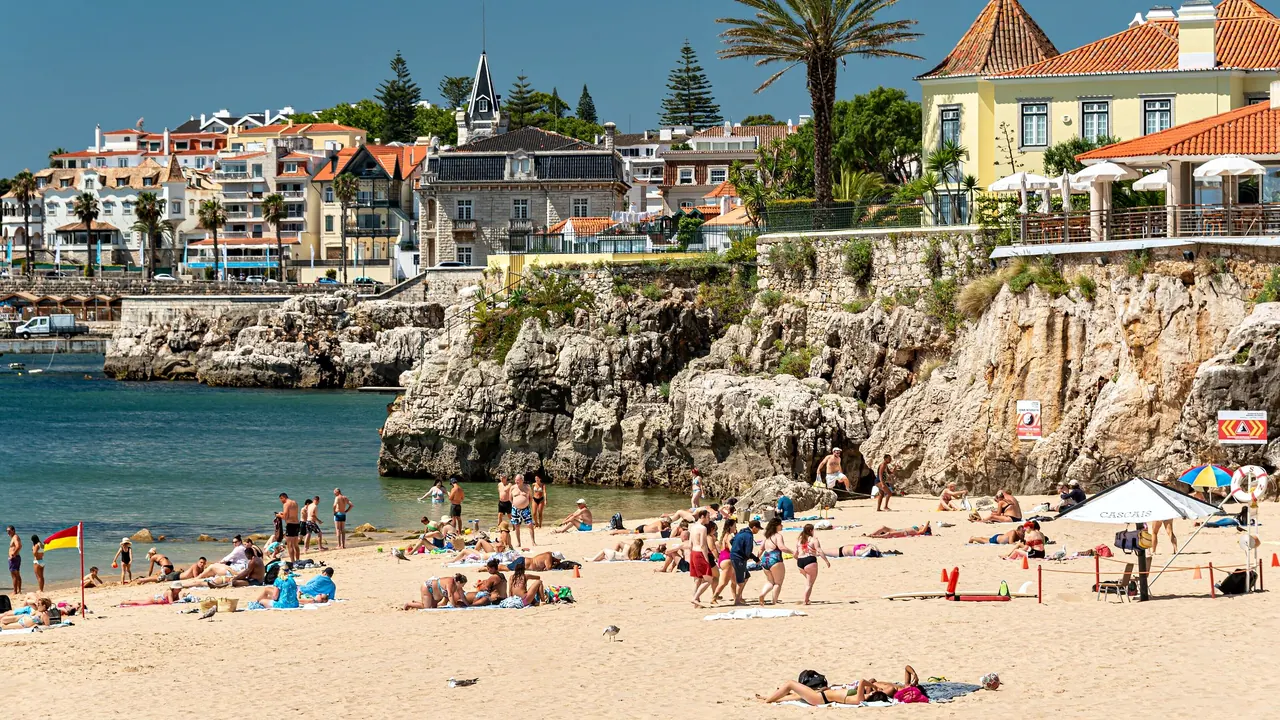
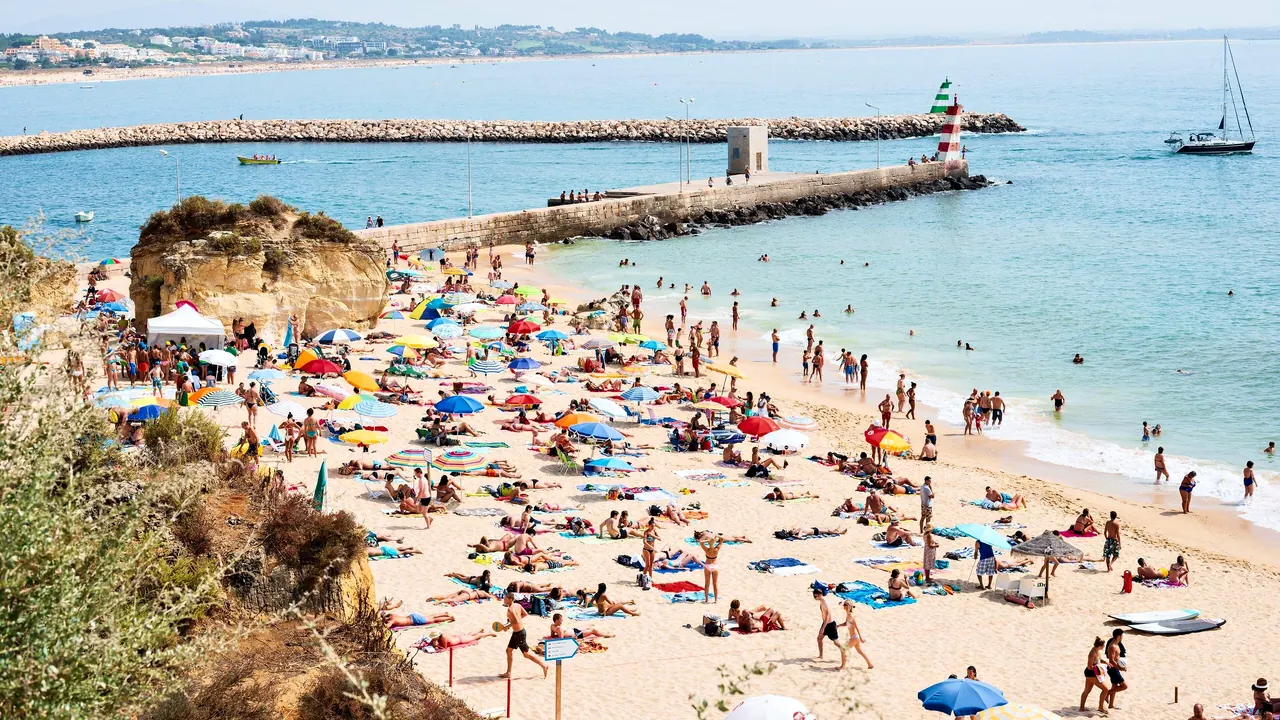
Photos: Cascais by Jorge Franganillo, CC BY 2.0, cropped; Lagos, Portugal by Norbert Nagel, CC BY-SA 4.0, cropped.
Cascais or Lagos, Portugal?
Our verdict in twelve categories, each scored against the same fixed benchmark cities, and the climate month by month, so you can choose for your trip.
Choose Cascais for
- day trips
- getting around
- live music and the arts
Cascais suits travellers who want a comfortable coastal base with Lisbon on the doorstep. The coastal train puts the capital's museums, restaurants and fado within easy reach, Sintra's palaces are just over the ridge, and the town itself is quiet, walkable and polished. It is the better pick if the sea is one part of the trip rather than the point of it.
Choose Lagos, Portugal for
- beaches
- nightlife
- prices
Lagos is the stronger choice when the beach comes first. Its cliff-backed coves and the long sweep of Meia Praia beat the small bay beaches of Cascais, the water is a touch warmer and the summer evenings run later. Rooms cost less too. The trade-off is distance: Lisbon is far away, the region's sights are spread out, and you will want a car to see them.
Scoreboard
Twelve categories on one fixed scale from 0 to 100. The shaded stretch is the gap between the two.
Your match
Pick a travel style or drag the sliders, and both match scores follow your weighting.
Too close to call, 1 point apart
Wins on day trips and getting around with your weighting.
Wins on beaches and nightlife with your weighting.
What matters to you?
Category by category
What the scores mean for a trip.
Beaches & swimming
Lagos has the better beaches by some way. Its coves at Pinhão, Estudantes and Dona Ana sit under honey-coloured cliffs and sea stacks, and Meia Praia's 4km of sand leaves space even in August. The water is a degree or so warmer than at Cascais and the season runs from June to September.
The beaches at Cascais are handier but smaller. The town coves at Conceição, Duquesa and Rainha sit right below the centre, and Carcavelos is a few train stops away. They are calm and convenient for a quick swim, but the water stays cool, they fill with Lisbon families in summer, and the most striking beach, Guincho, is better for watching the surf than for swimming.
Food & drink
The two eat much alike: grilled sardines and sea bream from the local boats, a covered market for fish and produce, and old-town lanes full of menus aimed at visitors. Lagos has cataplana, the clam and pork stew of the Algarve, and its better meals are in family places a street back from the centre.
Where Cascais pulls slightly ahead is in what lies around it. There are seafood lunches with a view of the waves on the Guincho road, and the train runs into Lisbon, where the serious cooking is. A food-minded traveller in Lagos has no such capital to fall back on.
Culture & sights
Neither town has major sights, and each can be seen on foot in a morning or a day. They differ in the history they tell. Cascais is a royal summer resort of aristocratic villas, with the Citadel, the Paula Rego museum in its red pyramid towers and a turreted villa museum by the sea.
Lagos looks back further, to the fifteenth-century voyages along the African coast. It has sixteenth-century walls, a harbour fort, the gilded baroque interior of Santo António and the slave market museum. The bigger difference is what lies close by: Lisbon and Sintra are far nearer to Cascais.
Nightlife
Lagos is the livelier town after dark. In summer, surfers and backpackers move between small bars and pubs in the old town, pub crawls are part of the scene, and a few small clubs stay open until near dawn. It is a bar town, though, and goes quiet from November to March.
Cascais keeps early hours by comparison: wine bars and cocktail terraces in a few old-centre streets, the Estoril casino for a dressier evening, and most people in bed by midnight. A real night out means taking the train into Lisbon and planning the trip back.
Nature & outdoors
Both are excellent for the outdoors, with different kinds of coast. Cascais has the wind-blown Atlantic edge: Boca do Inferno, the cycle path to Guincho for kitesurfing and windsurfing, cliff walks at Cabo da Roca, and the misty forest trails of the Serra de Sintra.
Lagos is more about seeing the cliffs from the water. You can kayak through the grottoes at Ponta da Piedade, take a boat out to look for dolphins, and walk the Fishermen's Trail on the Costa Vicentina. The higher Serra de Monchique is an hour inland. In both places spring and autumn are best for walking.
Day trips
Cascais makes the far better base for days out. Lisbon is a short train ride along the shore and Sintra is just over the hill. Mafra, Ericeira and Óbidos are within about an hour's drive, and Setúbal's wine country and Évora are possible on longer days.
From Lagos the outings are pleasant but fewer: Sagres and Cape St Vincent to the west, Moorish Silves and Monchique inland, and Faro and Tavira as long drives east. Most of them need a car, and many visitors simply go from one beach to the next.
Good for families
Both work well for a calm family vacation by the sea, and both are safe and relaxed. The difference is in the details. The sheltered coves of Cascais and the flat promenade to Estoril are easy with a pushchair, but the cold sea can put small children off.
Lagos has warmer water and Meia Praia's long, gently sloping shore. Its prettiest coves are reached by steep stairways, though, and the water parks and marine park mean a drive. Cascais's nearest equivalents, the Oceanarium and the zoo, are a train ride away in Lisbon.
Getting around
Cascais is easier to get around without a car. The centre, coves and promenade are all walkable, and the shoreline train runs straight to Lisbon. Buses reach Sintra and Guincho, though the wilder coast and the hills are harder work.
Lagos is walkable within town, on cobbled and sometimes steep lanes, with a footbridge over the river to Meia Praia. Beyond town, slow trains and infrequent buses mean most visitors end up hiring a car for the west coast and the hills.
Shopping & style
Neither is worth the trip for shopping, but Cascais has a little more to offer: small boutiques among the surf brands and tile shops, a large shopping centre on the edge of town, and Lisbon's department stores a train ride away. Lagos stops at ceramics, linens, surf gear and honey, figs and medronho brandy from its market.
Affordability
Lagos is the cheaper stay. It costs about what an average Western European resort does, and from October to May its rooms drop sharply, which makes long winter stays affordable.
Cascais is one of the pricier places in Portugal, with a wealthy local population and seafront hotels that fill early for July and August. In both towns the savings are in back-street cafés and in coming outside high summer.
Live music & performing arts
Live performance is limited in both, but Cascais has more to go to. Its long-running Portuguese theatre company plays in Estoril, the casino puts on cabaret, and summer brings outdoor concerts with a long jazz tradition. Above all, Lisbon's opera, orchestras and fado are close.
Lagos has a municipal cultural centre, summer fado and guitar evenings for visitors, and cover bands in the bars. For anything more serious you have to go to Faro or travel all the way to Lisbon.
Wellness & relaxation
Cascais is better for a restful break. Estoril grew up as a spa resort around its thermal springs, and that tradition carries on in its thalassotherapy and hotel spas. For most of the year the seafront mornings and early nights are quiet.
Lagos offers rest of a different kind: yoga teachers and surf retreats on the quieter edges towards Luz and the west coast, and sunset walks along the cliffs once summer ends. Its nearest proper spa is at Caldas de Monchique, an hour inland.
When should you go?
Pick your month. The climate figures are measured averages, not a forecast.
Cascais in July
Lagos, Portugal in July
Daytime high, °C
Rainfall in the month, mm
Where the figures come from
Lagos, Portugal's temperatures are measured 63 km from the centre, at Faro / Aeroporto.
Lagos, Portugal has no rain gauge within 25 km of the centre, so its rainfall comes from a gridded climate dataset read at the city rather than from a gauge further away.
Temperature and rainfall are climate normals, averaged over the years shown. Cascais: 1991-2020 normals, Lisboa / Geof (23.6 km from centre). Lagos, Portugal: 1991-2020 normals, Faro / Aeroporto (63.4 km from centre).
Both towns share the same dry Atlantic summer, with beach weather from June to September and almost no rain. Cascais reaches about 28°C in July and August, and Lagos runs a degree or so warmer, with a little more sun in every month. The sea is cool in both and only slightly milder in Lagos, peaking at about 20°C against 19°C at Cascais. Neither gets too hot for walking the streets, and May and late September are pleasant in both for sightseeing.
The real difference comes in winter. Cascais turns properly wet from October to January, with about 121mm of rain in November, and the days are greyer. Lagos is about a third drier over those months, with its wettest month, December, bringing about 82mm. Its winter days are also noticeably brighter, which makes it the better of the two for an off-season walking trip or a long stay. Both stay mild all year, with no real cold in winter.
Which traveller are you?
On a beach and sun trip, Lagos is the clear choice. The golden coves below the cliffs at Dona Ana and Camilo, the open sand of Meia Praia and slightly warmer water make days on the sand the point of the trip, not a break between other plans.
For a culture and arts trip, Cascais works much better. Its own heritage is modest, but the coastal train reaches Belém and central Lisbon in about 40 minutes, Sintra's palaces are half an hour away, and the capital has the opera, orchestras and fado that Lagos lacks.
On a trip on a tight budget, Lagos goes further. Cascais is one of Portugal's pricier resorts, while Lagos sits nearer the European average and gets much cheaper from October to May, when surfers and walkers settle in for long stays.
Before you go
| Measure | Cascais | Lagos, Portugal |
|---|---|---|
| Official language | Portuguese | Portuguese |
| Currency | Euro (EUR) | Euro (EUR) |
| Sockets | CF230 V, 50 Hz | CF230 V, 50 Hz |
| Driving side | Right | Right |
| Time zone | UTC, UTC+1 in summer | UTC, UTC+1 in summer |
| Emergency number | 112 | 112 |
| Elevation | 0 m | 3 m |
| Main airport | Lisbon Humberto Delgado Airport (LIS)26 km from centre157 non-stop destinations | Faro - Gago Coutinho International Airport (FAO)63 km from centre91 non-stop destinations |
| Public holidays this year | 14 days | 14 days |
By the numbers
| Measure | Cascais | Lagos, Portugal |
|---|---|---|
| City population | 214,124 | 31,049 |
| People per km² | 2,198 | 146 |
| Museums within 10 km | 6 | 6 |
| UNESCO World Heritage sites within 50 km | 3 | 0 |
| Swim season, months above 21 °C | None | None |
Where else could you go?
Every comparison below shares a destination with this one, so you can follow Cascais or Lagos, Portugal somewhere new.
- Sintravs Cascais
- Lisbonvs Cascais
- Albufeiravs Lagos, Portugal
- Farovs Lagos, Portugal
- Lisbonvs Lagos, Portugal
- Coimbravs Cascais