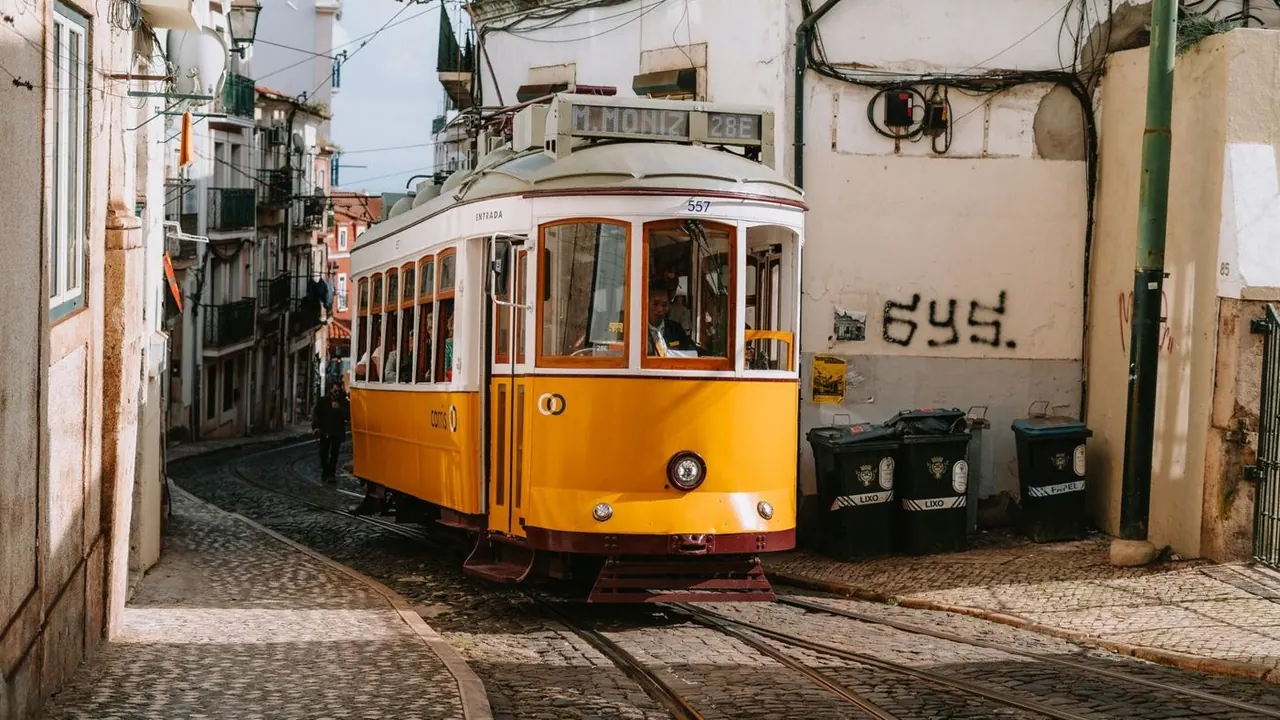
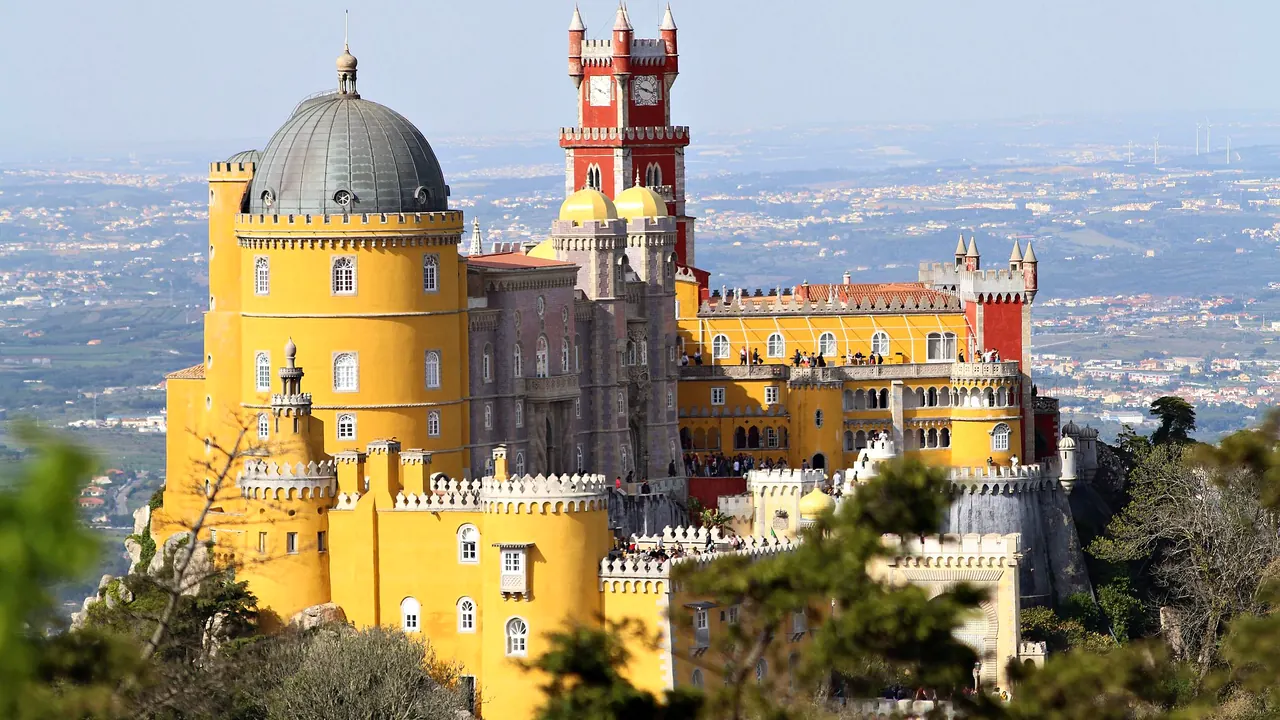
Photos: Lisbon by Riccardo Toso, Pexels License; Sintra by Chabe01, CC BY-SA 4.0, cropped.
Lisbon or Sintra?
Our verdict in twelve categories, each scored against the same fixed benchmark cities, and the climate month by month, so you can choose for your trip.
Choose Lisbon for
- nightlife
- live music and the arts
- food and drink
Lisbon suits travellers who want a full capital around them. You get long lunches in neighbourhood tascas, wine by the glass, fado in Alfama, Bairro Alto's street crowds late into the night, and the monuments of Belem with the Gulbenkian's collections. It is also the easier base with children and the better place to shop, and Sintra is still only a short train ride away.
Choose Sintra for
- wellness
- nature and the outdoors
- day trips
Choose Sintra if the palaces and the forested hills are the reason for the trip and you want to be among them once the day crowds have left. A night or two in a quinta gives you misty early mornings at Pena and Regaleira, trails straight from the door and evenings of near silence. The price is a small choice of restaurants and no nightlife, so for both of those you go to Lisbon.
Scoreboard
Twelve categories on one fixed scale from 0 to 100. The shaded stretch is the gap between the two.
Your match
Pick a travel style or drag the sliders, and both match scores follow your weighting.
Wins on nightlife and live music and the arts with your weighting.
Wins on wellness and nature and the outdoors with your weighting.
What matters to you?
Category by category
What the scores mean for a trip.
Beaches & swimming
Neither place is a beach destination, and both face the same cold Atlantic. Lisbon has the slight edge for a swim, because the Cascais train line runs past a string of beaches, from surfy Carcavelos to the calmer bays at Estoril. Across the river are the long sands of Caparica, and further south the sheltered Arrabida coves.
Sintra's coast is wilder and more dramatic: Praia Grande and Praia das Maçãs, the cove at Adraga under dark cliffs, and the tidal pool below Azenhas do Mar, reached in summer by an old tram. Expect heavy surf and fog that can arrive without warning.
Food & drink
Lisbon is far ahead here. Family tascas grill fish and cook bacalhau and daily stews, the beer halls bring out clams and crab, and the markets at Ribeira and Campo de Ourique combine shopping with eating. Good Alentejo and Douro wine is poured cheaply almost everywhere.
Sintra's real contribution is its pastry, the almond-filled travesseiro and the little queijada, bought warm in the old town. Otherwise the restaurants in the centre cater to day-trippers and quality is uneven. The best plates are grilled fish in the coastal villages, and a serious dinner usually means taking the train back to Lisbon.
Culture & sights
The two are level on heritage but very different in kind. Lisbon's history is spread across separate districts: Manueline Belem with the Jeronimos Monastery and the tower, the rebuilt grid of the Baixa, and medieval Alfama below the castle. It also has proper museums, including the Gulbenkian, the National Tile Museum and the Ancient Art Museum.
Sintra packs its riches into a few square kilometres of hillside: the painted Pena Palace, the Moorish Castle, the National Palace with its huge chimneys, Regaleira, Monserrate and the cork-lined Capuchos convent. It is a landscape of palaces and gardens rather than galleries, and early starts matter more here than in Lisbon.
Nightlife
This is the widest gap between them. Lisbon's evenings start at sunset drinks on a miradouro, spill through the open bar doors of Bairro Alto and the late bars of Cais do Sodre, and end in riverside warehouse clubs that fill after 2am. Principe Real offers calmer cocktails and the centre of the gay scene.
Sintra empties when the last day-trippers' trains leave. A few wine bars and terraces stay open for a while, nothing runs late, and a night out means a train into Lisbon and planning the ride back.
Nature & outdoors
Both are good for the outdoors, but in different ways. Lisbon's strength is range. Inside the city there are Monsanto's shaded trails and a riverside path that runs for kilometres. Further out you can kitesurf at Guincho, surf at Ericeira, hike or kayak along the limestone ridges of Arrabida, take a dolphin boat out of Setubal or watch the wintering flamingos on the Tagus mudflats. Most of that is an outing rather than something on your doorstep.
In Sintra, nature starts where the town ends. Trails climb through mossy oak, cork and fern forest to Pena Park, Cruz Alta and Peninha, with views over the ocean and the estuary. Cliff paths lead out to Cabo da Roca, and riders and mountain bikers use the park. The cooler air under the trees makes it the better choice for walking in high summer.
Day trips
The two are equally strong, and each is the other's best outing. From Lisbon, trains run directly to Sintra and Cascais, and you can also get to Evora and Tomar by rail. Obidos and Mafra are easy by bus. Alcobaca and Batalha have no railway station, so you need a coach or a car, and the Arrabida wineries are realistically a driving day.
From Sintra, Lisbon is a full capital forty minutes away by suburban train, and Cascais is a bus ride over the hills. Mafra and the surf town of Ericeira are a short drive. The monasteries, Obidos, Fatima and Evora are far easier with a car than by public transport from here.
Good for families
Lisbon is the more practical choice with children. The Oceanario's great central tank, the science centre and the cable car all sit together at the Parque das Nacoes, the zoo adds a second full day, and trams and funiculars count as rides. The hills and slippery pavements are still tough with a pushchair.
Sintra's appeal is more like a storybook: climbing castle ramparts and going down Regaleira's well into its tunnels. With steep cobbles, packed hill buses and rough surf on its beaches, it works for a few days with school-age children rather than a long stay with toddlers.
Getting around
Lisbon is easier to get around, even with its seven hills. The metro, the old trams, the funiculars, the suburban trains and the river ferries all run on one rechargeable card, although the metro misses Belem and the trams are slow and crowded.
Sintra's walkable centre is small, and the palaces sit high above it. You reach them by a stiff climb or a tourist bus that fills at busy times, with tuk-tuks and taxis filling the gaps. Narrow one-way roads and almost no parking make driving to the palaces frustrating, but a car kept outside the centre helps for the coast.
Shopping & style
Lisbon wins clearly. It has the luxury boulevard of Avenida da Liberdade, the old shops of Chiado, designers and antiques in Principe Real, and the Feira da Ladra flea market for old tiles and vinyl. Azulejos, Burel wool and decorated sardine tins are among the things worth taking home.
Sintra's shopping is a few old-town streets of tiles, cork, linen and boxed pastries. There are some azulejo dealers, and the Sunday fair at São Pedro de Penaferrim is worth a browse. There are no fashion streets at all.
Affordability
The overall cost is similar, but the money goes in different places. In Lisbon, coffee, set lunches, house wine and transport are cheap, and rooms in the central quarters are the expense, especially in summer.
In Sintra the palace tickets are what adds up, since each charges separately and a full tour can cost more than the meals. Manor-house rooms in the centre are expensive too, while villages towards the coast are noticeably cheaper.
Live music & performing arts
Lisbon has far more on stage. Fado plays every night in Alfama, Mouraria and Bairro Alto, from polished dinner houses to small rooms where neighbours take turns singing. The Gulbenkian's orchestra, the São Carlos opera house and the Belem cultural centre add a formal season.
Sintra's high point is its summer festival of music and dance, held in the palaces and quintas. The rest of the year there is the Olga Cadaval centre and the odd fado night, and little else.
Wellness & relaxation
Neither has a bathing tradition, and spas in both mean hotel wellness floors. The difference is setting. Sintra has the edge for rest, as long as you stay overnight: a quinta among old gardens, mist in the trees, Monserrate in the morning and a silent town at night.
In Lisbon, calm comes in pieces, such as a long lunch, an hour in the Estrela or Gulbenkian gardens, or dusk at a viewpoint, while the old quarters remain loud and steep.
When should you go?
Pick your month. The climate figures are measured averages, not a forecast.
Lisbon in July
Sintra in July
Daytime high, °C
Rainfall in the month, mm
Temperature and rainfall are climate normals, averaged over the years shown. Lisbon: 1991-2020 normals, Lisboa / Geof (1.1 km from centre). Sintra: 1991-2020 (rainfall 1961-1990) normals, Lisboa / Geof (22.7 km from centre).
The climate figures for the two places are identical, so the season you pick depends on the trip rather than the town. June to September is the warm, dry stretch, with highs of about 28°C in July and August and barely any rain (around 5mm in July). These are also the sunniest months and the only real beach season, though the Atlantic stays cold at 18-19°C even at its warmest. The rain comes back in October and peaks in November at about 97mm, and winter highs sit in the mid-teens.
Spring and early autumn are the best times for walking in either place. In high summer, afternoons on Lisbon's steep, exposed streets can be tiring, while Sintra's shaded forest feels cooler. The same hill cloud that keeps Sintra pleasant can hide the views from Pena and bring fog down onto its beaches on days when Lisbon is in full sun.
Which traveller are you?
For a food and nightlife trip, base yourself in Lisbon. A standing bifana at lunch, ginjinha by the shot near Rossio and, in June, sardines on the grill through Alfama all lead easily into a late night. In Sintra the last train back sets your curfew.
On a family trip with children, stay in Lisbon and make Sintra a day out. Children are welcome in Lisbon restaurants late into the evening, and the Cascais train makes a hot afternoon into a beach trip, so nobody has to repack between towns.
On a relaxing and wellness trip, Sintra is the place to sleep. Its cooler, greener hills keep summer walks pleasant, and staying there puts you in the gardens before the tour buses arrive. Lisbon visitors looking for real rest usually end up spending their nights outside the old quarters anyway.
Before you go
| Measure | Lisbon | Sintra |
|---|---|---|
| Official language | Portuguese | Portuguese |
| Currency | Euro (EUR) | Euro (EUR) |
| Sockets | CF230 V, 50 Hz | CF230 V, 50 Hz |
| Driving side | Right | Right |
| Time zone | UTC, UTC+1 in summer | UTC, UTC+1 in summer |
| Emergency number | 112 | 112 |
| Elevation | 100 m | 193 m |
| Main airport | Lisbon Humberto Delgado Airport (LIS)7 km from centre156 non-stop destinations | Lisbon Humberto Delgado Airport (LIS)22 km from centre156 non-stop destinations |
| Public holidays this year | 14 days | 14 days |
By the numbers
| Measure | Lisbon | Sintra |
|---|---|---|
| City population | 545,796 | 385,606 |
| People per km² | 5,453 | 1,208 |
| Museums within 10 km | 80 | 12 |
| UNESCO World Heritage sites within 50 km | 3 | 3 |
| Swim season, months above 21 °C | None | None |
Where else could you go?
Every comparison below shares a destination with this one, so you can follow Lisbon or Sintra somewhere new.