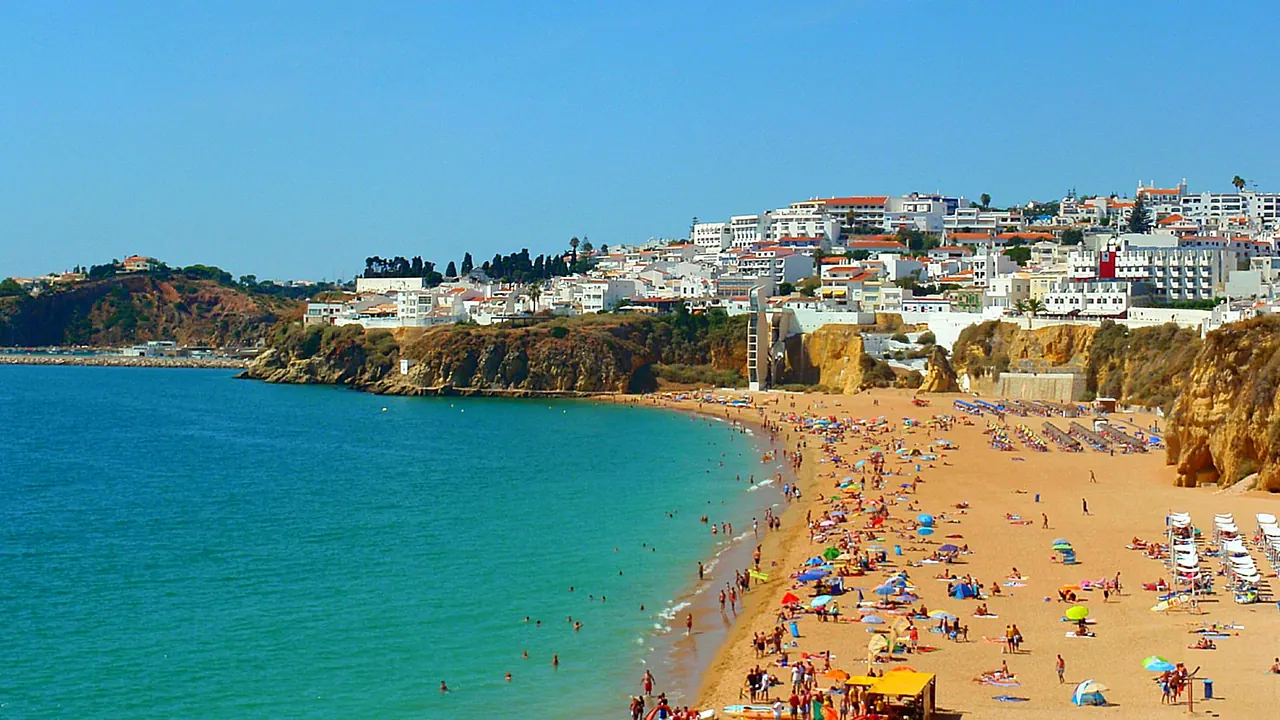
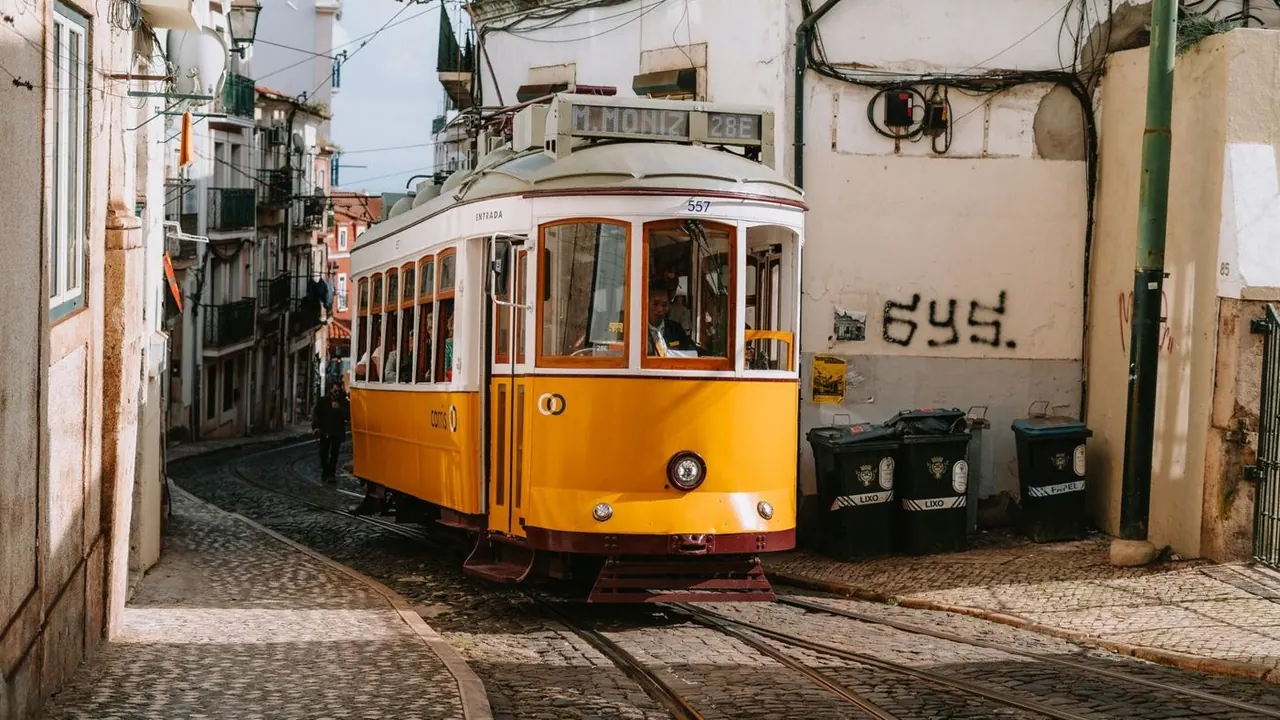
Photos: Albufeira by Jose A., CC BY 2.0, cropped; Lisbon by Riccardo Toso, Pexels License.
Albufeira or Lisbon?
Our verdict in twelve categories, each scored against the same fixed benchmark cities, and the climate month by month, so you can choose for your trip.
Choose Albufeira for
- beaches
- families
- prices
Albufeira is the pick for a sun-and-sand vacation where the day revolves around the beach, the pool and a boat trip to the sea caves. Golden coves start right below the old town, families are well looked after, and the Strip supplies loud, easy nights for groups. Beyond that, there is little to see or hear.
Choose Lisbon for
- culture and sights
- live music and the arts
- shopping
Choose Lisbon if you want a city with substance. It has the monuments of Belém and the medieval lanes of Alfama, fado in the neighbourhoods where it began, much better food and wine, and Sintra or Évora for days out. The beaches are a train ride away rather than outside the door, and the hills turn every walk into a climb.
Scoreboard
Twelve categories on one fixed scale from 0 to 100. The shaded stretch is the gap between the two.
Your match
Pick a travel style or drag the sliders, and both match scores follow your weighting.
Wins on beaches and families with your weighting.
Wins on culture and sights and live music and the arts with your weighting.
What matters to you?
Category by category
What the scores mean for a trip.
Beaches & swimming
Albufeira was built around its beaches. Golden sand and ochre rock stacks begin right below the old town at Pescadores and Peneco, then run east to Falésia, with quieter coves such as São Rafael to the west. The water is generally calm and clear, and in summer most beaches have lifeguards and sunbeds.
Lisbon has no beach of its own. The Cascais train stops at Carcavelos and the bays of Estoril, and Costa da Caparica lies across the river. The sea there is a little cooler and often rougher, so some beaches suit surfing better than swimming. A beach day in Lisbon is a break from the city, not the point of the trip.
Food & drink
Lisbon eats far better. Neighbourhood tascas, seafood beer halls, warm custard tarts at the counter and cheap glasses of Alentejo and Douro wine make every meal part of the trip. The markets at Ribeira and Campo de Ourique are good places to graze.
In the centre of Albufeira, menus lean on full breakfasts, pizza and curry for the package crowd. Real Algarve cooking such as grilled sardines and cataplana can be found near the fishermen's beach and in the villages inland, but you have to look for it. A good fish lunch by the sea is the best Albufeira offers, not what you can expect every day.
Culture & sights
This is where the two differ most. Lisbon has the Manueline Jerónimos Monastery and Belém Tower, the Baixa grid rebuilt after the earthquake of 1755, and the castle above Alfama. Add museums such as the Gulbenkian and the National Tile Museum, and you have enough for three or four full days.
Albufeira's whitewashed old town, clock tower and two small museums fill a morning stroll. Anyone curious about history there ends up driving to Silves or Faro.
Nightlife
Albufeira offers one kind of night and does it hard. The Strip is a summer-long party built for groups who have come to celebrate, with drinks offers and promoters on every corner and clubs open until morning. Oura and the old town square are only a slightly gentler version of the same thing. If that is the plan, it delivers, but one bar is much like the next, and out of season the town goes quiet early.
Lisbon is the better place to go out overall, because it has more range and doesn't depend on the season. A single evening can begin with sunset over the river at a miradouro, move to the street crowds outside Bairro Alto's tiny bars and then to Cais do Sodré. It can end in a warehouse club by the water after 2am, and Príncipe Real offers cocktails and the gay scene instead. You go out among people who live in the city, not in a strip laid on for visitors.
Nature & outdoors
Both are coastal rather than mountain country, and Lisbon has the wider range. Within easy reach are Sintra's misty forests, the wild shore at Cabo da Roca and Guincho, the Arrábida ridges and the surf at Ericeira. That gives walkers, kitesurfers and surfers more variety.
Albufeira's strength is one superb landscape: the golden cliffs, arches and caves around Benagil. The Seven Hanging Valleys walk follows them, and kayak trips go into the grottoes. For gentler hills, the Serra de Monchique is about an hour inland.
Day trips
Lisbon is the better base for days out. Sintra's palaces fill a day and are easy to reach by train. Évora has Roman remains and Alentejo wine, and the monasteries of Alcobaça, Batalha and Tomar add three UNESCO sites.
From Albufeira, the outings are to pleasant towns: Silves with its castle, Loulé with its market, walled Faro and Tavira, all within about an hour. None of them is a major heritage site, though, and most are easiest by car.
Good for families
Albufeira suits the classic family beach vacation. It has Zoomarine, several water parks, calm lifeguarded sand at Oura and Galé, and resort complexes with kids' clubs and shallow pools. Staying east or west of town keeps you away from the noise of the Strip.
Lisbon makes for more varied days out, with the Oceanário, the science centre and tram rides, and restaurants welcome children late into the evening. But its hills, stairways and slippery stone are hard going with a pushchair, so the city works better with older children than with toddlers.
Getting around
Lisbon is much easier without a car. The metro reaches the airport, and trams, funiculars, suburban trains to Sintra and Cascais and the river ferries all run on one card. The hills still call for good shoes.
Albufeira's compact old town is walkable, and a lift and an escalator help with the climb up from the beach. Beyond that, the resort stretches for kilometres through Montechoro, Oura and Galé, and the buses between them are patchy. The railway station is 6km inland, so most visitors rely on taxis and a hire car.
Shopping & style
Lisbon is the place to shop. Chiado has the old shopping streets and glove makers, Príncipe Real has local designers and antiques, and there are the LX Factory, the Feira da Ladra flea market and the luxury labels on Avenida da Liberdade. Azulejo tiles, Burel wool and tinned sardines make distinctive things to carry home.
Albufeira sells beachwear, football shirts and trinkets, and painted pottery and medronho are the more genuine finds. For real choice, visitors drive to the mall at Guia or the market in Loulé.
Affordability
Overall costs come out about even, but the money goes in different places. In Albufeira, competition keeps set menus, beer and wine cheap, and self-catering apartments are plentiful. July and August push up the cost of rooms and taxis sharply, while winter stays are cheap.
In Lisbon, coffee, tasca lunches and transport are cheap, but rooms in the centre cost as much as in other southern European capitals. Staying a little outside the centre keeps a trip reasonable.
Live music & performing arts
Lisbon has a real performing life. Fado plays every night in Alfama, Mouraria and Bairro Alto, in places ranging from polished dining rooms to tiny neighbourhood rooms. There is also the Gulbenkian orchestra, opera at the São Carlos theatre and the programme at the Centro Cultural de Belém.
Albufeira offers tribute acts, hotel cabaret and fado dinner shows put on for visitors. The free summer concerts on the square by the fishermen's beach are the most enjoyable part.
Wellness & relaxation
Neither city has a bathing tradition, and in both a spa means the wellness area of a resort or a large hotel. The difference is the setting. Albufeira's calm cliff-top resorts and its mild, sunny winters suit a slow stay, and there are real thermal waters at Caldas de Monchique, about an hour away.
In Lisbon, rest comes from long lunches, river viewpoints and the shade of the Gulbenkian and Estrela gardens. The old quarters are noisy, though, so for quiet nights most people stay out at Cascais or in the Sintra hills.
When should you go?
Pick your month. The climate figures are measured averages, not a forecast.
Albufeira in July
Lisbon in July
Daytime high, °C
Rainfall in the month, mm
Where the figures come from
Albufeira's temperatures are measured 26 km from the centre, at Faro / Aeroporto.
Albufeira has no rain gauge within 25 km of the centre, so its rainfall comes from a gridded climate dataset read at the city rather than from a gauge further away.
Temperature and rainfall are climate normals, averaged over the years shown. Albufeira: 1991-2020 normals, Faro / Aeroporto (26.4 km from centre). Lisbon: 1991-2020 normals, Lisboa / Geof (1.1 km from centre).
Both cities have the same Atlantic rhythm of dry, sunny summers and wet winters, and in both the swimming season runs from June to September. Albufeira is the warmer, sunnier and drier of the two for most of the year. Its sea stays at around 20°C from July into October, a degree or so warmer than off Lisbon. Its winter rain is also lighter, so a November or February stay on the Algarve still gets plenty of sunshine for walks along the cliffs.
Lisbon peaks at about 28°C in July and August. That is warm on the hills but rarely too hot for sightseeing, and May, June and September are the most comfortable months for walking the old quarters. From October to April the rain sets in properly, with November the wettest month at over 120mm. In those months slippery cobbles and grey days make Lisbon more a city of museums than of streets.
Which traveller are you?
For a beach and sun trip, Albufeira wins clearly. You walk to the sand each morning, swim in calm, clear water from June to early October and can take a boat out to the Benagil caves. From Lisbon, every beach day means a journey out to a cooler, rougher sea.
On a culture and arts trip, Albufeira's sights fill a single morning and its live music means cover bands. Lisbon is the obvious choice, with Belém's monastery and tower, the Gulbenkian, the tile museum and fado every night in Alfama.
On a family trip with young children, Albufeira is easier. Calm lifeguarded beaches, Zoomarine, water parks and resort hotels with kids' clubs keep the days simple. Lisbon has the Oceanário and its trams, but its steep, slippery hills are hard work with a pushchair.
Before you go
| Measure | Albufeira | Lisbon |
|---|---|---|
| Official language | Portuguese | Portuguese |
| Currency | Euro (EUR) | Euro (EUR) |
| Sockets | CF230 V, 50 Hz | CF230 V, 50 Hz |
| Driving side | Right | Right |
| Time zone | UTC, UTC+1 in summer | UTC, UTC+1 in summer |
| Emergency number | 112 | 112 |
| Elevation | 22 m | 100 m |
| Main airport | Faro - Gago Coutinho International Airport (FAO)26 km from centre91 non-stop destinations | Lisbon Humberto Delgado Airport (LIS)7 km from centre157 non-stop destinations |
| Public holidays this year | 14 days | 14 days |
By the numbers
| Measure | Albufeira | Lisbon |
|---|---|---|
| City population | 44,168 | 545,796 |
| People per km² | 314 | 5,453 |
| Museums within 10 km | 1 | 80 |
| UNESCO World Heritage sites within 50 km | 0 | 3 |
| Swim season, months above 21 °C | None | None |
Where else could you go?
Every comparison below shares a destination with this one, so you can follow Albufeira or Lisbon somewhere new.
- Sintravs Lisbon
- Cascaisvs Lisbon
- Farovs Albufeira
- Lagos, Portugalvs Albufeira
- Coimbravs Lisbon
- Cadizvs Albufeira