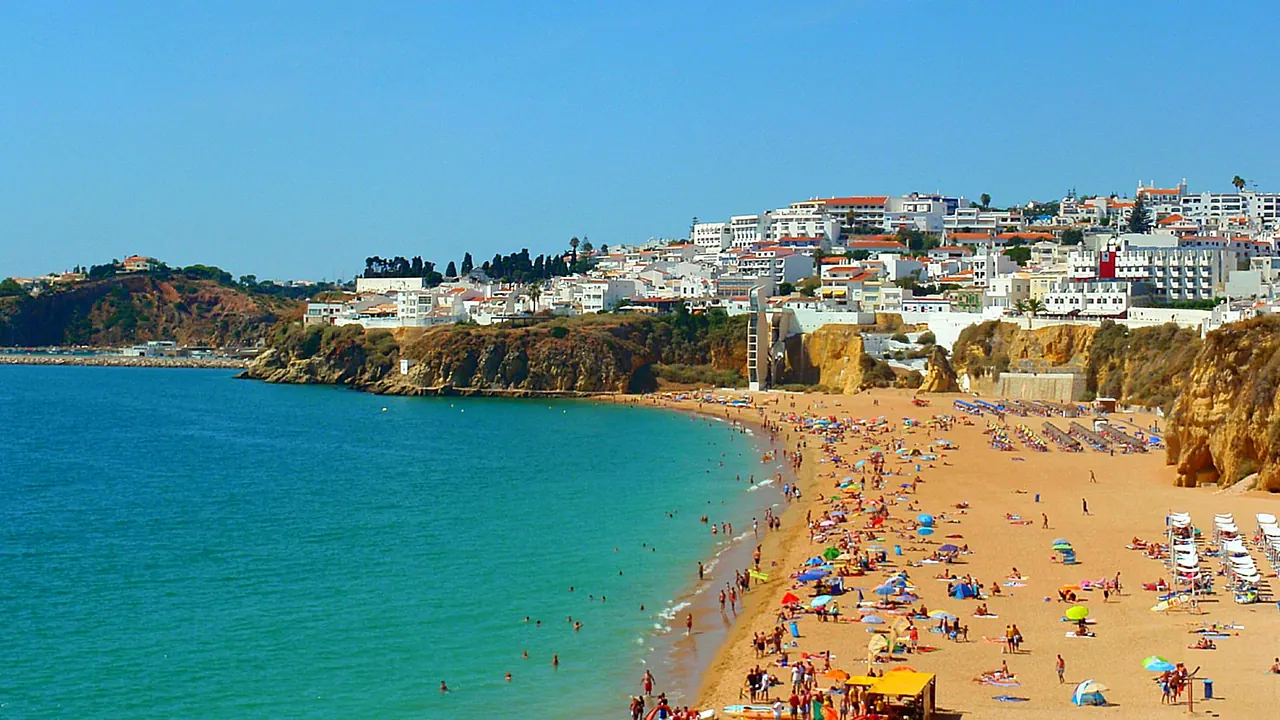
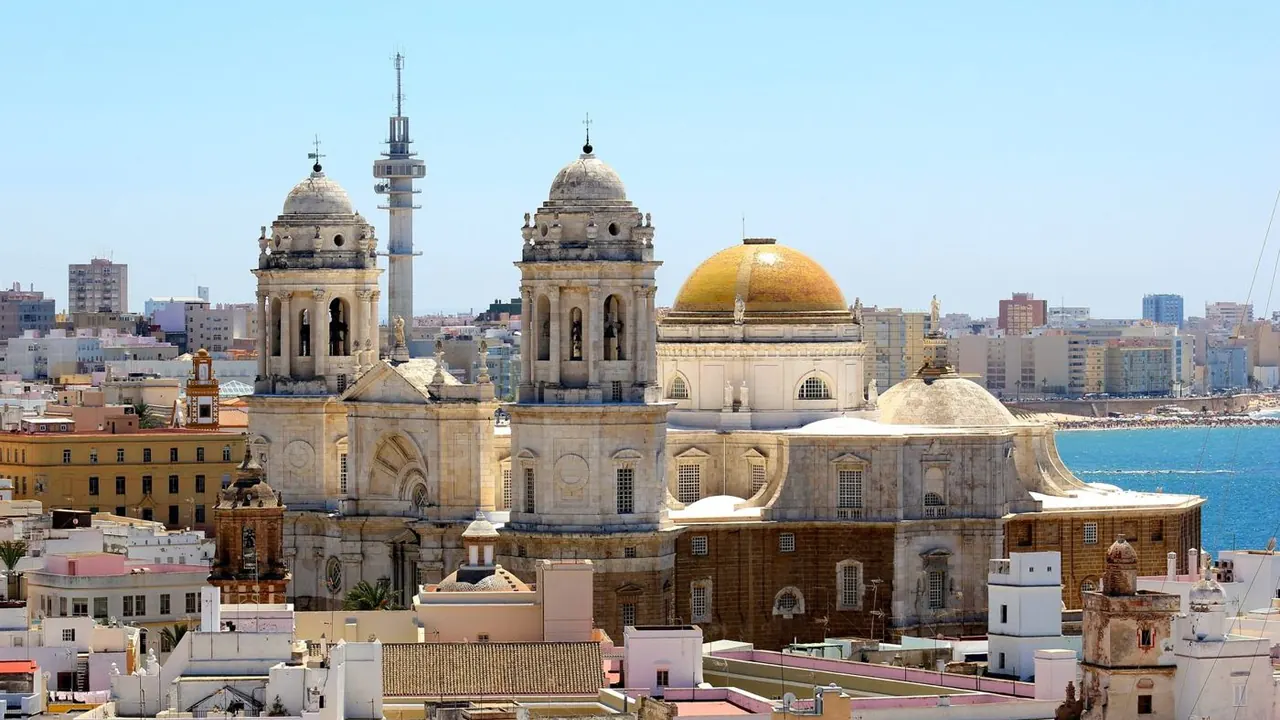
Photos: Albufeira by Jose A., CC BY 2.0, cropped; Cadiz by Bronch, CC BY-SA 3.0 ES, cropped.
Albufeira or Cadiz?
Our verdict in twelve categories, each scored against the same fixed benchmark cities, and the climate month by month, so you can choose for your trip.
Choose Albufeira for
- nightlife
- families
- beaches
Albufeira suits a sun-and-pool vacation where the day ends at the bar rather than in a museum. Families get resort hotels with kids' clubs, Zoomarine and lifeguarded sand at Oura or Falésia, and groups after a loud night out have the Strip. The cliff coast, with its sea caves and the Seven Hanging Valleys walk, is close by. Good local cooking is there too, but you have to look past the tourist menus to find it, and for history you head out to Silves or Faro.
Choose Cadiz for
- culture and sights
- live music and the arts
- getting around
Pick Cadiz if you want the beach to be one part of a trip that also has a three-thousand-year-old city, fried fish and sherry, and flamenco in the peñas of Santa María. The old town is flat and easy to walk, trains reach Jerez and Seville, and the white towns are a short drive away. It has less laid on for children, and outside Carnival the nights are much quieter.
Scoreboard
Twelve categories on one fixed scale from 0 to 100. The shaded stretch is the gap between the two.
Your match
Pick a travel style or drag the sliders, and both match scores follow your weighting.
Wins on nightlife and families with your weighting.
Wins on culture and sights and live music and the arts with your weighting.
What matters to you?
Category by category
What the scores mean for a trip.
Beaches & swimming
Both are serious beach towns with golden Atlantic sand and the same swimming season, but the beaches look quite different. Albufeira's are framed by ochre cliffs and sea stacks. Small coves such as São Rafael and Coelha lie to the west, longer stretches run east from Oura to Falésia, and the water is usually calm.
Cadiz has one long open strand, Playa Victoria, plus the little cove of La Caleta between two castles. With a hire car you can reach the empty, dune-backed beaches of the Costa de la Luz at Bolonia and Zahara. Its sea is a little warmer in late summer, but the levante wind can blast sand across the beach for days at a time.
Food & drink
Cadiz is the place to eat well. It has freidurías selling cones of fried fish and shrimp fritters, almadraba tuna in the tapas bars of La Viña, the counters of the Mercado Central, and cold manzanilla from the sherry towns next door.
In Albufeira the good cooking is there, but you have to get past the Strip's full breakfasts and curry to find grilled sardines and cataplana near the fishermen's beach or in villages inland. Both kitchens revolve around fish, but in Cadiz eating local comes naturally at every meal.
Culture & sights
The gap here is wide. Albufeira's old town of whitewashed lanes, fragments of Moorish wall and the clock tower with its iron bell cage fills a morning, and anyone keen on history spends their time on outings to Silves or Faro.
Cadiz has three thousand years of history to show. There are Phoenician sarcophagi in the Museo de Cádiz, the Roman theatre in the Barrio del Pópulo, the gold-domed cathedral, the Torre Tavira's camera obscura, and the oratory where the 1812 constitution was signed. That is two or three full days inside the city itself.
Nightlife
For a night out that runs until dawn, Albufeira is the stronger choice. The Strip in Montechoro is neon bars, karaoke and clubs full of British and Irish groups, and Oura and the old town square offer calmer terrace bars. It is loud rather than stylish, and much of it shuts in winter.
Cadiz nights mean late tapas in La Viña, warm squares and summer terraces along the Playa Victoria promenade, with only a small club scene. The exception is Carnival in February, when the whole city turns into a costumed street party for ten days.
Nature & outdoors
Both have good outdoors, in different forms. Albufeira's is the eroded limestone coast: the Seven Hanging Valleys trail, boat and kayak trips into the Benagil sea caves, dolphin-watching offshore, and gentle hill walks in the cork oaks of the Serra de Monchique.
Cadiz looks flat at first, with the salt pans and marshes of the Bahía de Cádiz full of flamingos and spoonbills. Within reach, though, lie the cliff-top pines of La Breña, kitesurfing and whale-watching at Tarifa, proper mountain walking in the Sierra de Grazalema, and the wetlands of Doñana.
Day trips
Cadiz is the better base for outings. Jerez is half an hour by train and Seville under two hours, a ferry crosses to El Puerto de Santa María, and the white towns of Vejer and Arcos and the Roman ruins of Baelo Claudia are an easy drive.
From Albufeira you can reach pleasant Algarve towns, such as Silves with its red castle, Faro's walled centre and Tavira's Roman bridge. None of them is a major heritage site, though, and most are hard to reach without a car because the buses are slow.
Good for families
Albufeira is made for a family beach vacation. It has Zoomarine, water parks a short drive away, resort complexes with kids' clubs and shallow pools, and calm, lifeguarded beaches such as Galé. The drawbacks are steep, stepped streets that are hard with a pushchair, and the need to stay well away from the Strip.
Cadiz suits families who enjoy a city rhythm: a flat, car-light old town, shady parks such as the Genovés, and children welcome at late dinners. There are no theme parks or aquariums, though, so days revolve around Playa Victoria, the castle walls and the ferry.
Getting around
Cadiz is far easier without a car. You can cross its flat old town on foot, buses run along the isthmus to Playa Victoria, and trains leave from the old town itself for Jerez and Seville.
Albufeira stretches for kilometres through hotel zones linked by patchy buses. Its old town is steep, and the station is 6km inland. Most visitors take taxis in the evening and hire a car, although you would also need one in Cadiz for the Costa de la Luz beaches.
Shopping & style
Albufeira's shops exist for the resort, so they sell what you need for the beach and little you would remember. The better local crafts are found at the market in Loulé rather than in town, and anything ordinary means driving out to a mall.
Cadiz is still no shopping destination, but its shops serve a living city, so an hour browsing the old town centre feels like part of the visit rather than an errand. Its local crafts, flamenco fashion and sherry are also more distinctive to take home. For anything serious, both send you elsewhere, and from Cadiz that means Seville.
Affordability
Overall costs come out much the same, and in both places it is easy to eat and drink cheaply, whether that means set menus and beer in Albufeira or tapas and sherry in Cadiz. The real difference is in rooms.
Albufeira's huge supply of apartments makes October to May very cheap, though summer sea views and car hire add up. Cadiz has few hotels in the old town, and they fill in high summer and during Carnival. Staying near Playa Victoria saves money, and the cheap trains and buses keep transport costs down.
Live music & performing arts
Cadiz has a real stage culture. It is one of the homes of flamenco, with peñas in the Santa María quarter playing to audiences who know the forms well. The Gran Teatro Falla hosts the Carnival contest of chirigotas, along with plays and concerts all year round.
In Albufeira, live entertainment means tribute acts, hotel cabaret and fado dinners put on for visitors, plus free summer concerts on the square by the fishermen's beach.
Wellness & relaxation
Neither town has a spa tradition of its own, so treatments mean hotel spas in both. Cadiz comes out a little ahead thanks to its slow daily rhythm of sea walls, long lunches and siesta. It also has sea-water resort spas at Novo Sancti Petri and Arab-style baths in Jerez.
In Albufeira, how restful your stay is depends on where you base yourself: the cliff-top resorts west of town and Galé are calm, the Strip is not. The quiet, sunny winter suits a slow stay, and Caldas de Monchique, an hour inland, has genuine thermal waters.
When should you go?
Pick your month. The climate figures are measured averages, not a forecast.
Albufeira in July
Cadiz in July
Daytime high, °C
Rainfall in the month, mm
Where the figures come from
Albufeira's temperatures are measured 26 km from the centre, at Faro / Aeroporto.
Albufeira has no rain gauge within 25 km of the centre, so its rainfall comes from a gridded climate dataset read at the city rather than from a gauge further away.
Temperature and rainfall are climate normals, averaged over the years shown. Albufeira: 1991-2020 normals, Faro / Aeroporto (26.4 km from centre). Cadiz: 1991-2020 (sunshine 1961-1990) normals, Cadiz Bay / Puntales (5.2 km from centre).
Through the year the two follow the same pattern: mild, fairly wet winters and almost rainless summers, with the beach season running from June to early October in both. Albufeira is a touch hotter at the peak, around 29°C in July and August, and has slightly more sun. Its sea stays cooler, though, levelling off at about 20°C. The water off Cadiz warms to around 23°C by July and August, so swimming feels noticeably more comfortable there in late summer.
The rain returns in October. Cadiz is wettest in November at about 89mm, and Albufeira in December at around 95mm. Midday in July and August is hot for walking in both, and more tiring on Albufeira's steep lanes. April, May and late September are the best months for exploring on foot. Winter days are mild and often sunny in both, good for walking but too cool for the sea.
Which traveller are you?
On a family trip with young children, Albufeira is the easier choice. Zoomarine, the water parks nearby and resort hotels with kids' clubs and shallow pools keep children busy, with calm, lifeguarded beaches like Oura close at hand. Cadiz has nothing built on that scale.
For a culture and arts trip, Cadiz wins clearly. Phoenician and Roman remains, the cathedral and the Torre Tavira fill the days, flamenco peñas and the Gran Teatro Falla fill the evenings, and Jerez and Seville are a short train ride away.
For a short city break, Cadiz works far better. You can walk its flat old town from shore to shore, eat fried fish and tapas without planning ahead, and arrive by train. Albufeira spreads along kilometres of coast and really needs a car.
Before you go
| Measure | Albufeira | Cadiz |
|---|---|---|
| Official language | Portuguese | Spanish |
| Currency | Euro (EUR) | Euro (EUR) |
| Sockets | CF230 V, 50 Hz | CF230 V, 50 Hz |
| Driving side | Right | Right |
| Time zone | UTC, UTC+1 in summer | UTC+1, UTC+2 in summer |
| Emergency number | 112 | 112 |
| Elevation | 22 m | 11 m |
| Main airport | Faro - Gago Coutinho International Airport (FAO)26 km from centre91 non-stop destinations | Jerez Airport (XRY)31 km from centre26 non-stop destinations |
| Public holidays this year | 14 days | 12 days |
By the numbers
| Measure | Albufeira | Cadiz |
|---|---|---|
| City population | 44,168 | 109,950 |
| People per km² | 314 | 9,087 |
| Museums within 10 km | 1 | 12 |
| UNESCO World Heritage sites within 50 km | 0 | 0 |
| Swim season, months above 21 °C | None | 3 months |
Where else could you go?
Every comparison below shares a destination with this one, so you can follow Albufeira or Cadiz somewhere new.
- Jerez de la Fronteravs Cadiz
- Farovs Albufeira
- Lagos, Portugalvs Albufeira
- Sevillevs Cadiz
- Rondavs Cadiz
- Marbellavs Cadiz