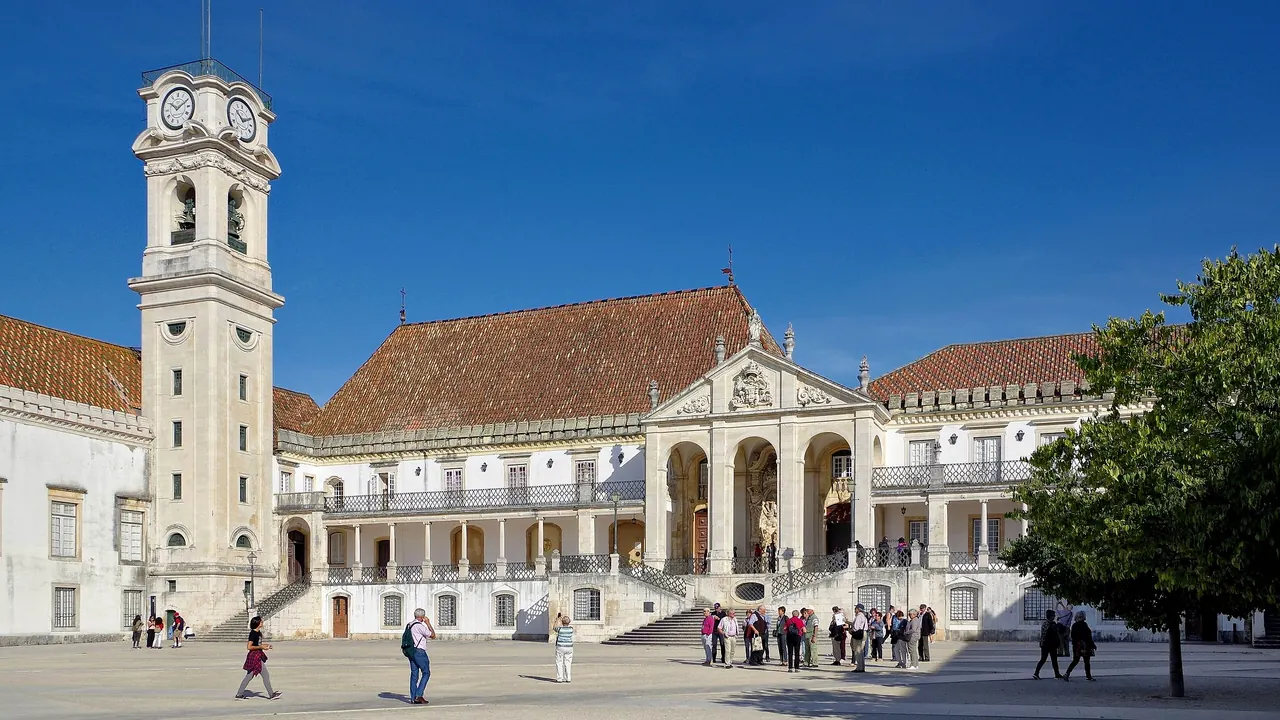
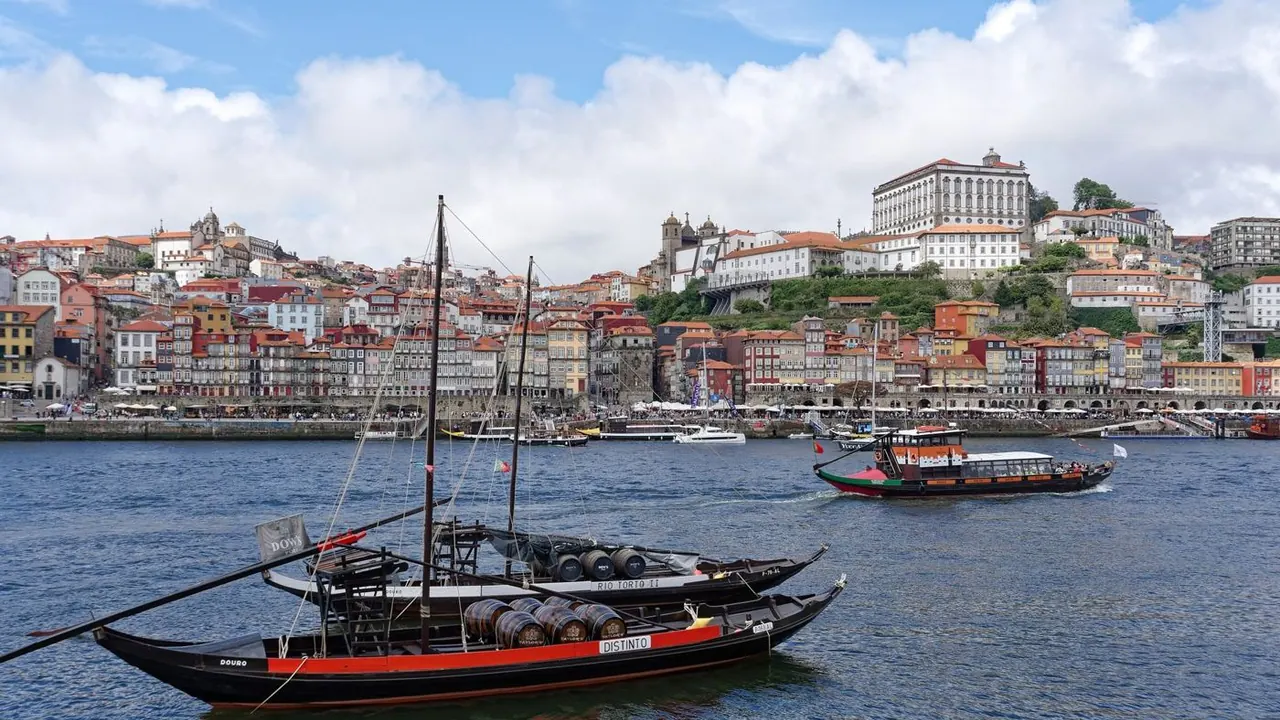
Photos: Coimbra by Berthold Werner, CC BY-SA 3.0, cropped; Porto by Jakub Hałun, CC BY 4.0, cropped.
Coimbra or Porto?
Our verdict in twelve categories, each scored against the same fixed benchmark cities, and the climate month by month, so you can choose for your trip.
Choose Coimbra for
- wellness
- prices
- nature and the outdoors
Coimbra suits a slower, more focused trip. It is a small university city on a hill, where the old university and its baroque library, the royal tombs at Santa Cruz and Coimbra's own student fado fill a couple of unhurried days. After that it works well as a base for central Portugal: the Roman mosaics at Conímbriga, the great monasteries at Batalha, Alcobaça and Tomar, the Buçaco forest and the old spa towns of Luso and Curia. Travellers who want quiet evenings, restful days out and modest spending will like it.
Choose Porto for
- nightlife
- food and drink
- shopping
Porto is the better choice if you want a proper city with a big appetite. Its food is better, with francesinhas, charcoal grills in Matosinhos and port tastings across the river in Gaia. Its weekend nights run until dawn, it has a real concert hall in Casa da Música, and its craft and design shops give you more to browse. A metro reaches the beaches and the airport, and Guimarães, Braga and the Douro vineyards are close by. For a lively, varied week, Porto offers more.
Scoreboard
Twelve categories on one fixed scale from 0 to 100. The shaded stretch is the gap between the two.
Your match
Pick a travel style or drag the sliders, and both match scores follow your weighting.
Wins on wellness and prices with your weighting.
Wins on nightlife and food and drink with your weighting.
What matters to you?
Category by category
What the scores mean for a trip.
Beaches & swimming
Neither city is a beach destination, and in both the Atlantic stays cold and often rough. The difference is in how you get to the sand. Porto has its beaches on the doorstep: Foz do Douro, the broad strand at Matosinhos half an hour away by metro, and the smaller Gaia beaches with boardwalks.
From Coimbra the coast takes an hour's train ride to the wide sands of Figueira da Foz and Buarcos. In return, Coimbra has the praias fluviais in the hills, grassy river beaches where the water is calmer and warmer than anything Porto's sea offers.
Food & drink
Porto is the better place to eat. It has its own dishes in the francesinha and tripas à moda do Porto, whole streets of pavement grills for sardines and octopus in Matosinhos, and port cellar tastings in Gaia. The Douro reds and the vinho verde make everyday drinking a pleasure.
Coimbra eats well but within a narrower range. There are cheap set lunches in tascas around the Baixa and the university, convent pastries like pastéis de Tentúgal, and goat chanfana. Its best dish, the crackling suckling pig of Bairrada, means a drive north to Mealhada rather than a stroll from your hotel.
Culture & sights
The two are well matched, but they offer different kinds of sightseeing. Coimbra's heritage is concentrated on one hill: the UNESCO-listed old university with the gilded Biblioteca Joanina, the Romanesque Sé Velha, the museum over a Roman cryptoportico and, below, the tombs of Portugal's first kings at Santa Cruz. You can see it all in one or two days.
Porto's appeal lies more in the townscape as a whole: the tiled houses stacked above Ribeira, the azulejo hall at São Bento and the gilded interior of São Francisco. It adds a modern layer that Coimbra lacks, in Serralves and Casa da Música, and it needs two or three days.
Nightlife
Porto is the better city for going out. On weekends the bars around Rua da Galeria de Paris and Cândido dos Reis pour into the street until late, and a few clubs keep going until dawn. For something calmer there are wine bars in Ribeira and terraces in Gaia.
Coimbra's nights depend on the student calendar. Praça da República and the upper town come alive during term, and the city peaks during the Queima das Fitas in May. In July and August an evening usually ends with dinner and a drink by the river.
Nature & outdoors
Coimbra's outdoors is green and wooded, while Porto's is granite and sea. From Coimbra you reach the walled monastic forest of Buçaco in half an hour, the slate villages and chestnut woods of the Serra da Lousã, and the wooded Mondego valley, where you can kayak down from Penacova. The Serra da Estrela is close enough for real mountain hiking.
Porto's landscape starts in the city itself: the deep Douro gorge beneath the bridges, a flat path along the rocky shore out to Matosinhos for walking or cycling, and the Parque da Cidade running down to the sea. Its wilder country, the terraced Douro valley and Peneda-Gerês, mostly needs a car.
Day trips
Both make excellent bases, and they cover different halves of the country. From Porto you look north, with Guimarães and Braga each about an hour away by train and the Douro vineyards on a scenic line upriver.
From Coimbra you look to central Portugal: the Roman mosaics of Conímbriga just south, and the monasteries of Batalha, Alcobaça and Tomar by car or coach. Aveiro is easy from either city, and each is an hour from the other by fast train.
Good for families
Families will find the two much alike. Both are easygoing about children and safe, and both are hard work with a pushchair on the steep cobbles. Coimbra has two attractions made for children, the miniature houses of Portugal dos Pequenitos and the Exploratório science centre, plus the Choupal woods and riverside parks. With young children, a couple of days covers the city.
Porto offers a wider spread of easy outings: the aquarium at Foz, river cruises, the Gaia cable car, the peacocks in the Crystal Palace gardens and zoos just outside the city. That is enough to keep a longer family stay varied.
Getting around
Porto is somewhat easier to get around. Its light-rail metro runs from the airport into the centre and out to Matosinhos and Gaia, heritage trams follow the river to Foz, and the Guindais funicular saves a climb.
Coimbra is smaller and mostly walkable, but beyond your feet it relies on buses, a public lift and a funicular to deal with the Quebra-Costas and the climb to the university. In both cities you will feel the hills in your legs.
Shopping & style
Porto gives you much more to browse. Rua de Santa Catarina is a proper high street, and the gallery district around Rua das Flores and Rua de Miguel Bombarda has independent shops selling ceramics, cork, linens and design pieces. Tinned fish from the Bolhão and port from the Gaia lodges make good things to take home.
Coimbra's shopping is mostly the everyday shops along Rua Ferreira Borges and Rua Visconde da Luz. Its best buys are hand-painted Coimbra faience and convent sweets.
Affordability
Both cities are cheap by Western European standards. The difference is where the money goes. In Coimbra, students set the level for meals, coffee and drinks, rooms stay fairly priced even near the old town except in May and graduation season, and the university visit is the one real outlay.
In Porto, everyday eating and drinking cost little too, but central rooms in summer are the big expense. Staying outside the old centre or coming in winter makes a real difference.
Live music & performing arts
Porto has the bigger stage. Casa da Música is home to a symphony orchestra and programmes jazz and electronic music alongside classical. The Teatro Nacional São João, the Rivoli and the Coliseu add drama, dance and touring shows, and the festival of São João fills the streets with music in June.
Coimbra's draw is narrower but entirely its own. Its fado is sung by caped students to the Coimbra guitar, more lyrical than anything heard in Porto's Ribeira fado houses. Beyond that it offers a university theatre and the arts centre in the Convent of São Francisco.
Wellness & relaxation
Coimbra is the better choice for unwinding, mainly because spa country starts half an hour north. In Luso, below the Buçaco forest, there is a thermal spa and a public mineral-water fountain, and Curia has a thermal park and a lake, close enough for an easy afternoon.
Porto has no such spas close by. Vizela and Caldas do Gerês take a day out, so relaxing there means hotel spas, terrace wine above the Douro and the gardens of Serralves.
When should you go?
Pick your month. The climate figures are measured averages, not a forecast.
Coimbra in July
Porto in July
Daytime high, °C
Rainfall in the month, mm
Temperature and rainfall are climate normals, averaged over the years shown. Coimbra: 1991-2020 normals, Coimbra (1.6 km from centre). Porto: 1991-2020 normals, Porto / Serra Do Pilar (2.1 km from centre).
Both cities share the Atlantic pattern of wet winters and dry summers, but Coimbra lies inland, so it runs warmer and a little drier. Its summer days reach about 29°C in August, which makes the steep climb to the university hard work in the middle of the day. Porto tops out nearer 25°C, which is more comfortable for walking the hills, though the cooler coast brings more cloud and fog. From October to December the rain sets in properly. It is heavier in Porto, which gets about 181mm in November against Coimbra's 124mm. Summer sunshine is much the same in the two cities.
For both, the best walking months are May, June and September, when it is dry and warm without being tiring. Coimbra warms up sooner in spring. Neither city is a real beach destination, because the sea stays cold all year and only reaches about 18°C off Figueira da Foz at its warmest. July and August are the only months when a swim feels reasonable.
Which traveller are you?
For a food and nightlife trip, Porto wins comfortably. Coimbra eats and drinks cheaply alongside its students, but the choice is narrow and its bars go quiet in summer. Porto is a real eating city whose weekend nights keep going all year.
On a shopping trip, Porto is the better bet. In Coimbra a hunt for things to take home is done in an afternoon, with little beyond local crafts and sweets. Porto has enough high-street and independent browsing to fill several mornings.
For a relaxing and wellness trip, Coimbra is the gentler choice. Real thermal waters are close enough to fit into a slow day, and outside term the city keeps an unhurried pace. In Porto, calm comes in moments between busier days, and proper baths need a long trip.
Before you go
| Measure | Coimbra | Porto |
|---|---|---|
| Official language | Portuguese | Portuguese |
| Currency | Euro (EUR) | Euro (EUR) |
| Sockets | CF230 V, 50 Hz | CF230 V, 50 Hz |
| Driving side | Right | Right |
| Time zone | UTC, UTC+1 in summer | UTC, UTC+1 in summer |
| Emergency number | 112 | 112 |
| Elevation | 43 m | 104 m |
| Main airport | Francisco de Sá Carneiro Airport (OPO)117 km from centre133 non-stop destinations | Francisco de Sá Carneiro Airport (OPO)12 km from centre133 non-stop destinations |
| Public holidays this year | 14 days | 14 days |
By the numbers
| Measure | Coimbra | Porto |
|---|---|---|
| City population | 140,816 | 273,476 |
| People per km² | 441 | 6,606 |
| Museums within 10 km | 10 | 42 |
| UNESCO World Heritage sites within 50 km | 1 | 3 |
| Swim season, months above 21 °C | None | None |
Where else could you go?
Every comparison below shares a destination with this one, so you can follow Coimbra or Porto somewhere new.
- Lisbonvs Coimbra
- Sintravs Coimbra
- Santiago de Compostelavs Porto
- Salamancavs Porto
- Salamancavs Coimbra
- Sintravs Porto